
Camino del Norte · Self-Guided Caminos · April to October
Full Camino del Norte (from San Sebastián to Santiago)
Walk the whole Camino del Norte, from San Sebastián to Santiago de Compostela. Over 36 walking days you follow the north coast of Spain through the Basque Country, Cantabria, Asturias and Galicia, with your hotels booked and your bags carried.

- Distance
- 813 km
- Duration
- 37 Nights
- Walking days
- 36
- Difficulty
- Moderate +
- Tour Type
- Self-Guided Caminos
- Price
- From €5,528
Activity: Walking, Easy Walking
In short
The full Camino del Norte covers 813km from San Sebastián to Santiago in 38 days, with 36 walking days of 8–32km. You sleep in 36 towns and villages, from Bilbao, Santander and Gijón to Ribadeo and Arzúa. We book your hotels, move your luggage and give you 24/7 support.
Overview
The Full Camino del Norte from San Sebastián to Santiago | 38 Days
Walk the full Camino del Norte, from San Sebastián to Santiago de Compostela. In 38 days you cover 813km along the north coast of Spain. On the way, you cross four regions: the Basque Country, Cantabria, Asturias and Galicia.
The full Camino del Norte is a journey of a lifetime. Every week brings new landscapes, new food and new people. In addition, it is much quieter than the Camino Francés, so you often walk alone with the sea beside you.
Four regions, one coast
First, you walk through the Basque Country, with its pintxos, green hills and the Guggenheim in Bilbao. Next comes Cantabria, with long beaches, boat crossings and the medieval village of Santillana del Mar. After that, you enter Asturias, the land of cider, fishing harbours and the mountains of the Picos de Europa on the horizon.
At Ribadeo you cross into Galicia. Here the Camino turns inland, through Mondoñedo, the Terra Chá and the monastery of Sobrado dos Monxes. Finally, it joins the Camino Francés in Arzúa for the last days to Santiago.
How hard is the full Camino del Norte?
The route is Moderate + on our scale. Most days are 15–30km, with many climbs. As a result, you need good fitness and time to build up. Our fitness plan helps you get ready, and rest days in the big cities help too.
Your Camino made easy
We book all your hotels and move your luggage from town to town. In addition, you get a Holiday Pack with maps and route notes. Our team is also on hand 24/7, so help is always one phone call away. Not ready for five weeks? Then start with a section, such as San Sebastián to Bilbao.


Why walk the full Camino del Norte?
It is one of the great walks of Europe: five weeks of sea, mountains, food and history, far from the crowds.
The Camino del Norte is part of a UNESCO World Heritage Site. It follows the coast from San Sebastián through Bilbao and Santander, past the medieval village of Santillana del Mar and the cider towns of Asturias. Then it turns inland in Galicia, joins the Camino Francés in Arzúa and ends at the cathedral in Santiago. Read what makes the Camino del Norte special.
Is the full Camino del Norte right for you?
Fitness
Most days are 15–30km, with many climbs along the coast. It is Moderate + (4 out of 5 on our scale). Follow our 8-week fitness plan and build up to back-to-back long walks.
First Camino
It is a big first Camino. If you are not sure, try a one-week section first, such as San Sebastián to Bilbao.
Walking alone
The route is waymarked with yellow arrows and shells, and our 24/7 support line is always there.
Time
You need about five and a half weeks. Alternatively, walk it in sections over several trips.
Shorter days
Prefer to walk less each day? Use the Camino planner to add rest days and split the longer stages.
Mobility
Some paths are steep, stony and slippery after rain. Talk to us first if you have knee or balance problems.
Not sure? Read which Camino is best for a beginner, walking the Camino on your own and the Camino with your family.
Choose your tour
How should you walk the full Camino del Norte?
Tour versions compared
| Version | Days / walking | Per day | Best for |
|---|---|---|---|
| ClassicThis tour | 38 / 36 | 8–32km | Walking it in one go |
| Superior Collection | 38 / 36 | 8–32km | 4-star hotels where available |
| Your own pace | Flexible | You choose | Rest days or shorter stages |
| In sections | 1 week each | 14–29km | Several shorter trips |
How many days do you have?
Not ready for five weeks? Walk the Camino del Norte one section at a time.
San Sebastián to Bilbao
125km · 6 walking days
The first week, through the Basque Country.
See tourBilbao to Santander
120km · 5 walking days
The second week, past the beaches of Cantabria.
See tourThe full Camino del Norte
813km · 36 walking days
From San Sebastián all the way to Santiago.
This tourMore in how many days it takes to walk the Camino and our guide to Camino de Santiago stages.
Day by day
Itinerary of the full Camino del Norte from San Sebastián to Santiago
Thirty-six walking days and thirty-seven nights, through the Basque Country, Cantabria, Asturias and Galicia.
Route map
Stage by stage
-
DAY 1
San Sebastián

You arrive in San Sebastián (Donostia in Basque), one of the most beautiful seaside cities in Spain. Stroll along La Concha beach, climb Monte Urgull for the views and end the day with pintxos in the Old Town. Your Camino del Norte starts here tomorrow.
-
DAY 2
San Sebastián to Zarautz
San Sebastián (Donostia in Basque) is a stunning and chic seaside city, as well as a paradise for foodies. Stroll down the Playa de la Concha and treat yourself to one of the city’s many Michelin-starred restaurants before you start your Camino! San Sebastián has 16 Michelin stars, the second highest number per square metre in the world (just after Tokyo).
After your night in San Sebastian, you will follow the Camino route as it leaves San Sebastian and the Bay of Biscay and travels along the coastline through beautiful pastures and gentle hills. You will see the Roman Church of San Martín de Tours before passing charming coastal villages. You will finish today in the beautiful seaside town of Zarautz. Make sure to try the local Txakolí wine.
20km -
DAY 3
Zarautz to Deba
After your night in Zarautz, you will move inland along a quiet rural road before arriving in Getaria with its lovely harbour. After Getaria, the path enters farmlands and passes the harbour town of Zumaia. Today’s section finishes in the lovely seaside village of Deba.
23km -
DAY 4
Deba to Markina
After spending the night in Deba, your Camino trail leaves the coastline for the last time (you will reach it again in Bilbao) as you will head for the mountains. After crossing a river the path climbs quickly into an area of thick vegetation before it reaches the chapel of El Calvario. The narrow footpath (GR-121) passes through a number of charming villages on the way before reaching today’s destination: Markina.
23km -
DAY 5
Markina to Gernika
After your night in Markina, the trail follows a quiet country lane, crossing the river in Bolibar before rising to the medieval monastery at Zenarruza. From here, the trail keeps climbing through sheltered woodland to the top of Gontzegarai and on to the hamlet of Gerrikaitz. After passing the Hermitage of Santiago a sharp descent leads to a small river and the historic town of Gernika, made famous by Picasso’s masterpiece.
23km -
DAY 6
Gernika to Lezama
After your night in Gernika, you will leave the town and soon pass the hermitage of Santa Luzia Zallo shortly before climbing towards a road (PR-173). From here, a cobbled path continues climbing to the village of Morga where you will begin a sharp descent through the hamlets of Goikoletxea and Larrabetzu and once again enter woodland before reaching today’s destination: Lezama.
21km -
DAY 7
Lezama to Bilbao
After your night in Lezama, your path will take you through farmland to the town of Zamudio, the Roman church of San Martin and the Tower of Malpica. From here, there is a gradual climb to the top of Mount Avril, where your efforts will be rewarded with stunning views of Bilbao and the valley below. As you enter the suburbs of Bilbao you should visit the delightful Basilica of Our Lady of Begoña. Your walk reaches its final point in the Plaza de Unamuno, in the old quarter of Bilbao.
Bilbao (or Bilbo in Basque) has reinvented itself in the past 30 years, becoming host to some of the best art exhibitions in the country at the impressive Guggenheim Museum. Explore Bilbao’s old town with its quaint taverns and taste a few of the amazing ‘pintxos’!
15km -
DAY 8
Bilbao to Portugalete
After your night in Bilbao, you will resume following the Camino de Santiago trail as it leaves Bilbao. The trail crosses a suspension bridge and travels along a peaceful route on the banks of the Cadagua River. You will cross the famous ‘Devils’s Bridge’ before arriving at the Hermitage of Santa Águeda. After this, there is a steep climb to the small town of Barakaldo before arriving in Portugalete via a path along the banks of the Galindo River.
21km -
DAY 9
Portugalete to Castro Urdiales
After your night in Portugalete, the Camino, continues along the beautiful rocky coastline. At La Arena, you will cross the wonderful beach of fine red sand. There are some steep little climbs as you hug the coast on your way to Castro Urdiales. Castro Urdiales has a good mix of modern and medieval architecture and as you enter the town you will pass the bullring and the beach.
29km -
DAY 10
Castro Urdiales to Laredo
From Castro Urdiales, the Camino will take you along the breathtaking coastal cliffs of the Cantabrian Sea, passing a medieval castle/lighthouse along the way. You will also pass the Chapel of Santa Isabel and also the Church of La Magdalena on the way to Liendo. Here you are presented with two route options for the rest of the stage to Laredo. You can either take one route across the valley, passing the Church of Nuestra Senora de Liendo in Hazas or you can take the alternative route, climbing to the Chapel of San Julián on the way to Laredo. Laredo itself is famous for its magnificent beaches, energetic atmosphere and the medieval quarter (Puebla Vieja).
29km -
DAY 11
Laredo to Noja
After your night in Laredo, your walk today will be mainly flat but with scenery that is nonetheless fantastic. From Laredo, get the ferry to Santoña, before continuing along the coastal path to Noja (14km).
Alternatively from Laredo, you have the option to follow the inland route which is a bit more challenging (23km) but equally as beautiful. Pass through the towns of Colindres, Escalante and Barrio de Castillo where you can take in the beautiful views of the mountains and the coast before reaching Noja.NB. If you wish to continue along the coastal trail to Noja it is important to take into account the ferry operating hours or any seasonal disruption before you leave Laredo which could impact the service and influence your choice of route. www.excursionesmaritimas.com/horarios15.htm
14km -
DAY 12
Noja to Santander
After your night in Noja you will continue to San Miguel de Meruelo. In Bareyo you will find the magnificent Romanesque Church of Santa María. From Galizano to Somo, you can either take a straight road into town (saving 2km) or follow the coastline which is a longer option but very scenic. To reach the final destination of Santander, you can take a traditional boat called ‘Pedreñera’ across the bay (saving you approximately 3.5km), from the village of Somo (Not included, 2Eur, www.losreginas.com/). The capital of Cantabria, Santander is an elegant city with plenty of beaches, parks, nature, architecture and great food.
27km -
DAY 13
Santander to Arce
The capital of Cantabria, Santander is an elegant city and fantastic place to add extra days if you wish to extend your trip or wish for a rest. With plenty of beaches, parks, nature, architecture and great food. What more could you ask for? After your night in Santander, your Camino heads inland through the towns of Santa Cruz de Bezana, Mompia and Boo de Piélagos. You will follow the estuary at Boo de Piélagos, finishing today in the small village of Arce.
20km -
DAY 14
Arce to Santillana del Mar
Today’s walk on the Camino hugs the beautiful, hilly landscape of the northern coast. You will enter the Miengo region as you reach the town of Miengo. Suance is a beautiful little village and it would be well worth taking some time to explore. Your destination for today is the medieval village of Santillana del Mar. You will walk through lovely meadows and tranquil villages on your way.
27km -
DAY 15
Santillana del Mar to Comillas
From Santillana del Mar you will continue along the wild, rugged coastline of Cantabria. On your way to Comillas you will pass gorgeous little villages such as Cobreces with its Cistercian monastery. Comillas itself has fantastic beaches and incredible architecture. You should take some time to explore the sights in town such as the Pontifical University, the Palace of Sobrellano with its pantheon chapel and most especially the ‘Capricho de Gaudí’.
23km -
DAY 16
Comillas to Unquera
Today you will continue along the coast to Oyambre Natural Park. The park is of huge importance for its wildlife and marine ecosystem, home to many species of bird, molluscs and fish. From here the Camino del Norte heads for Colombres through green fields and woodland, passing the town of San Vicente de la Barquera and a number of small estuaries.
27km -
DAY 17
Unquera to Llanes
Upon leaving Unquera you will enter Asturias, crossing a bridge over the river Deva into Bustio. The pretty town of Colombres is home to several impressive ‘Casas de Indianos‘ built by local emigrants who made fortune in America. From Colombres, you will descend along the Sierra de la Borbolla. The Camino then enters Pendueles along a narrow path that climbs to the Jorcada Pass after crossing the road to Andrín. After this there is another descent to La Portilla and today’s destination: Llanes, a lively town nestled between the coast and the Picos de Europa.
26km -
DAY 18
Llanes to Ribadesella
The first part of today’s stage travels along the coast and the fantastic beaches of Palombina and Barro. After crossing the river Niembro you will start the steady climb up to the Church of San Pedro de Pria. The church sits on top of a hill that overlooks the seven towns of the area. From here you will descend to the river Guadamía where you will cross the medieval stone bridge. You will pass through Sobares on your way to Ribadesella, a nice little town worth exploring: divided in two by the bridge, the east side is home to the charming medieval old town, while the west side has a gorgeous beach and the town’s famous Tito Bustillo cave, home to ancient cave art. Book early if you want to visit the caves, as they have a maximum number of visitors allowed per day.
30km -
DAY 19
Ribadesella to Colunga
From the lively seaside town of Ribadesella, you will head inland briefly towards San Esteban, and then return to the coast, where you will pass exceptional sandy beaches. Your stop for the night is the bustling market town of Colunga (San Cristóbal).
21km -
DAY 20
Colunga to Villaviciosa
Today is quite a short walking day. Starting from Colunga, you will pass many villages along the way. In Priesca, you should stop to check out the 10th Century Church of San Salvador, one of the oldest on the Camino de Santiago.
17km -
DAY 21
Villaviciosa to Gijón
Today is one of the longest and most challenging days on the Camino del Norte, as you will walk up Alto de la Cruz. Most of today’s trail is in lush countryside and you will hit the coast again at Gijón. At Casquita, there will be signs for pilgrims heading for Gijón and continuing on the Camino del Norte, but also signs for those pilgrims heading towards Oviedo to continue on the Camino Primitivo. Take your time to explore the city of Gijón, home to fantastic beaches, great gastronomy, history and heritage (including Roman baths) and where you will find the Bagpipe Museum.
30km -
DAY 22
Gijón to Avilés
Today’s trail takes you from the city of Gijón to the city of Avilés. You will be walking up Monte Areo, where you will be able to enjoy some nice views and see a prehistoric dolmen. There aren’t many services along the way so bring a picnic!
25km -
DAY 23
Avilés to Cudillero
Today, a rather lengthy journey awaits you, but once you venture beyond the edges of Avilés, charming small towns will emerge along your path. Your evening rest will be in Cudillero, a small, picturesque fishing port nestled on the side of a mountain, renowned for its unique hanging houses adorned with eaves and brightly coloured windows. Cudillero offers a picturesque setting for exploration and relaxation.
28km -
DAY 24
Cudillero to Cadavedo
Today, you will leave Cudillero and its majestic residences behind. While part of the path is along roads today, you will follow many old paths and pass some stunning beaches and green countryside along the way. If you do not wish to complete the full stage (32km), you can walk until Ballota (25km) and book a taxi to take you to Cadavedo.
32km -
DAY 25
Cadavedo to Luarca
You will follow your path near the coast after Ballota. After Cadavedo, the trails head inland but as you approach Luarca you will be able to spot the sea again. Your stop for the night is the pretty, traditional fishing town of Luarca. Enjoy some of the fresh seafood and a glass of cider!
15km -
DAY 26
Luarca to Navia
Today you will follow a peaceful inland trail from the fishing town of Luarca to the busy market town of Navia, on the riverbank. Make sure you explore the town, check out the medieval walls and enjoy a taste of the local cuisine.
22km -
DAY 27
Navia to Ribadeo
Today will be your last day following the Cantabrian coast. It is also quite a long walking day so you talk to our team if you’d like to book a rest day in the lively town of Ribadeo. You will cross the bridge of the Saints over the River Eo to enter Galicia and reach Ribadeo. The town is famous for the Cathedrals Beach (a short taxi ride away), Galicia’s second most visited site after Santiago’s ‘proper’ cathedral.
31km -
DAY 28
Ribadeo to Lourenzá
Today’s walk takes you inland from Ribadeo to the country town of Lourenzá, famous for its local beans. You will follow rural paths, climbing slightly as the terrain becomes gradually mountainous. You will pass small villages and hamlets but not many shops or services so make sure you pack snacks and water. You will be picked up to stay at a superb ‘country cottage’ property, 6km outside the village.
28km -
DAY 29
Lourenzá to Mondoñedo
Today, you will be climbing from Lourenzá towards Mondoñedo, which used to be one of the seven capitals of the Kingdom of Galicia. You will get amazing views of the surrounding countryside. Make sure you explore Mondoñedo before you continue towards Abadín.
If you wish you can split the distance between Lourenza and Abadin by staying in Mondonedo.
8km -
DAY 30
Mondoñedo to Abadín
Mondonedo is a town with a long and varied history. There are a number of interesting sights in the town, including the Sanctuary of Remedios and the Cathedral.
17km -
DAY 31
Abadín to Vilalba
Today, the Camino del Norte meanders among the forests, farmland and green pastures of the ‘Terra Chá’ (Flat lands) leading you to the area’s capital, the market town of Vilalba. Vilalba is capital of the Terra Chá. Try the local delicacies, cheeses and other farm products before you head home!
20km -
DAY 32
Vilalba to Baamonde
From Vilalba, the Camino del Norte takes walkers through the heart of the Terra Chá region of Galicia. Forest paths, small farming villages and lush countryside make most of today’s peaceful walk. In Baamonde, you will be picked up and taken to your accommodation for the night, a fantastic rural property in Miraz.
20km -
DAY 33
Baamonde to Miraz
You will get a transfer from your accommodation back to Baamonde. Check out the medieval St James Church (Igrexa de Santiago) in Baamonde before you continue your journey across rural Galicia, following the Camino del Norte. Today is quite an easy walking day.
15km -
DAY 34
Miraz to Sobrado dos Monxes
From Miraz, you will continue on your Camino del Norte journey across rural Galicia. You will reach the highest point of the trail at Marcela, so take a few minutes to enjoy the views. Your destination is Sobrado dos Monxes, home to an impressive monastery. The monastery dates back to the 10th century originally, although the current facade is baroque. You will be picked up at the monastery and stay the night in Miraz.
26km -
DAY 35
Sobrado dos Monxes to Arzúa
This morning you will be taken back to Sobrado dos Monxes to continue your Camino journey. Today you will walk the last stretch of the Camino del Norte before it joins the most popular Camino trail, Camino Francés, in Arzúa. Prepare yourself to meet many pilgrims in this busy market town. Arzúa is famous for its local cheese so make sure you give it a try!
22km -
DAY 36
Arzúa to Pedrouzo
Today’s Camino walk will take you through pretty woods, sleepy villages and across streams for most of the day. Make sure you visit the chapel of Santa Irene, with its unique statue of Santiago. You will stay the night in the town of Pedrouzo (310m).
18km -
DAY 37
Pedrouzo to Santiago de Compostela
Today is the last walking day of your Camino trip. You start in O Pedrouzo. Your next point of interest is Lavacolla in the outskirts of Santiago, where pilgrims used to wash themselves in the river in preparation for their arrival in Santiago de Compostela. Rows of tall eucalyptus trees line your journey to Monte do Gozo (‘Mount of Joy’ 368m) and it is from here that will catch your first glimpse of the Cathedral of Santiago. When you arrive in the city (264m, population 80,000), explore this UNESCO World Heritage Site architecture and delight in the wonderful atmosphere of this spiritual and cultural mecca. The cathedral has a pilgrim mass everyday at noon.Your tour of the Camino del Norte ends after breakfast. Explore the old town in Santiago de Compostela before you head home. Please ask the team if you’d like to stay additional nights, take a day tour of the historic centre or a day trips to Finisterre or the Cíes Islands.
20km


Read more about this route: What makes the Camino del Norte special, For pilgrims who go to Oviedo, How to get your Compostela, Camino packing list.
Where you stay
Accommodation and what's included
Where you stay
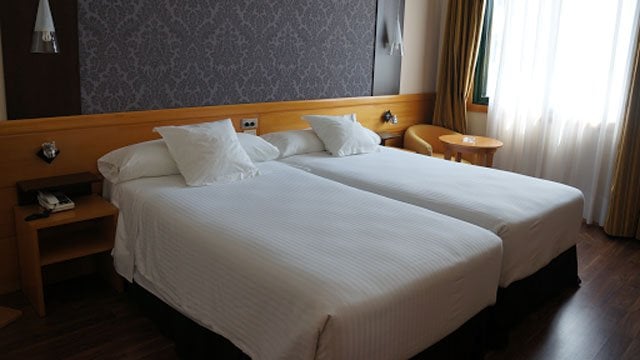
Standard Hotels
We have hand-picked hotels and guesthouses along the Camino for their character and warm hospitality. Up to 3-stars, you will be staying in the centre of town and close to your Camino trail. All rooms are en-suite with bathroom. For our family packages, we have hand-picked establishments with outdoor space and swimming pools where possible. Where accommodation with private outdoor space is not available, we have selected comfortable hotels with spacious common areas as well as a convenient location close to recreational areas and sights. As your comfort is our priority, we try to book hotels located within walking distance of the Camino. Despite our effort, on rare occasions your accommodation can be located a few kilometers away from the trail, so we organise transportation to/from your accommodation.
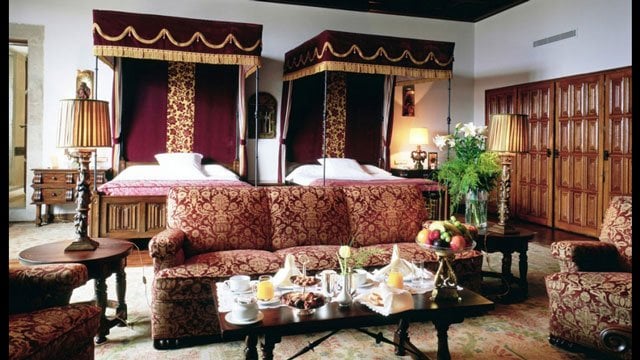
Superior Collection
Stay in very special hotels and unique properties along the Camino. We have selected luxurious 4 and 5-star hotels, boutique guesthouses, relaxing country homes and stunning heritage ‘Parador’ hotels so you can feel pampered. Rest assured when you select Superior Collection, you will enjoy the full experience of our best hotels and top guesthouses when and where this option is available, however, bear in mind, that sometimes due to location factors, only our choice of standard collection hotels and guesthouses may be available. All rooms are en-suite.
More about our Camino accommodation and where you sleep on the Camino.
What's included
- Included: Selected accommodation with private bathrooms, Holiday Pack on your mobile phone (Route ebook and Google Maps) and a 24/7 support number assisting with your trip, for instance, organising a support vehicle if needed.
- Not included (paid locally or arranged by you): Flights, drinks, city tax, Travel Insurance (Recommended)
- Optional: Luggage transfers (On by default. One bag up to 20kg per person), dinners (On by default, where available) and airport transfers, etc…
Note on Accommodation: We aim to book you into each town listed on the itinerary. However, in case of low availability, we may book you two nights in the same town with provided transfers. If you are booking a Superior collection or Country cottages, please note it is subject to availability and, therefore, cannot be guaranteed. More details.
See also: luggage transfers, bike rental, airport transfers, travel insurance and tourist tax.
Costs on the trail (approx.)
| Coffee | €1.50–€2 |
| Bocadillo or tortilla | €4–€7 |
| Pilgrim menu | €12–€16 |
| Bottle of cider (Asturias) | €3–€5 |
| City tax | €1–€2 / night |
Budget around €25–€40 per person a day on top of your package.
Access
Getting to San Sebastián and home from Santiago
Live information on Rome2Rio. We can also arrange private transfers if you prefer, just ask us. Ryanair flies from Dublin to Asturias, Spain; check current schedules.
Not sure where to fly into? See which Camino airport is best. We can also arrange private airport transfers.
The way between the city centre (stop name: “Gipuzkoa plaza 10”) and the airport (approx. 20km) can be taken with a bus (line E21), see tourism.euskadi.eus.
Shuttle bus (line A3247) from Bilbao airport from/to Bilbao bus station (stop name: Termibus, every 30min). See www.aena.es/en/bilbao-airport/public-transport.html A good bus connection between Bilbao and San Sebastian exists (10 times/ day, 1h10-2h journey time). See www.movelia.es.
For the transport from/ to the airport, the easiest way is to choose the direct bus line (1-3 times/ day, 2h45-3h45), stop name in San Sebastian is “Estacion de Autobuses. See www.movelia.es. Another option is to take 2 buses: One between San Sebastian and Santander (“Estacion de Autobuses”, 10 times/ day, approx. 3h travel time) and then between the city and the airport (every 30min, 15 min travel time). See www.spanish-airports.com for the airport shuttle and www.movelia.es for the bus route between San Sebastian and Santander.
Shuttle bus (line A3247) from Bilbao airport from/to Bilbao bus station (stop name: Termibus, every 30min). See www.aena.es/en/bilbao-airport/public-transport.html
For the transport from/ to the airport, the easiest way is to choose the direct bus line (starting point: Termibus) from/ to the airport (6 times/ day, approx. 1h30). See www.movelia.es.
In Santander, there is a bus line (every 30min), linking the bus station with the airport. See: www.movelia.es
Shuttle bus (line A3247) from Bilbao airport from/to Bilbao bus station (stop name: Termibus, every 30min). See www.aena.es/en/bilbao-airport/public-transport.html
: www.excursionesmaritimas.com/horarios.htm
: www.losreginas.com/reginas/servicio.htm
There are buses from Asturias airport to Gijón bus station every hour (taking 45min approx). See www.movelia.es.
There are three buses a day from Santander airport (www.alsa.es) to Gijón taking between 3h and 3h30. Alternatively, there are regular bus connections between Gijon and Santander (bus station) each day (taking from 2h to 4h). In Santander, there is a bus (every 30min), linking the bus station with the airport. See: www.movelia.es.
There is one bus connection (line 20) between Vilalba and A Coruña airport each day (taking 1h00-1h30). See: www.arriva.es.
The way from/ to the airport can be taken directly in 1h45 min by bus. Arriva Spain offers buses (line 13) between Vilalba and the airport departing twice a week. See www.arriva.es.
Follow instructions to get to Santiago and then you can take a bus (3 times a day, just under 2 hours) to Vilalba. See: www.arriva.es.
There is shuttle bus from Santiago city centre to the airport, departing every 30min. Bus stops are: city centre (Plaza de Galicia), train station (Estación de Ferrocarril) and bus station (Estación de Autobuses). See: rome2rio.com.
From Santiago, you can take a train to Vigo Guixar (see www.renfe.com) or a bus to Travesia de Vigo (every hour). You should take a city bus from Travesia de Vigo to Vigo Airport (every 30 min).
From Santiago, you can take a train to A Coruña (30 min approximately) and then take a bus from Alfonso Molina (line 4051) to the airport (every 30 min, takes 20 min approximately). Monbus has services from Santiago to A Coruña Airport (every 3 hours); see monbus.es/en for details.
There is a direct bus connection between Santiago (Estación de Autobuses) and Porto airport once or twice a day (taking 4h or 6h resp.). See www.alsa.es.
Plan your Camino
Plan your full Camino del Norte
Best time to go
Best months: May, June and September. July and August are warm but busy on the coast.
- March–April Green and quiet, with cool days. Expect showers, so pack a good rain jacket.
- May–June Our favourite time: long days, wild flowers and mild weather.
- July–August The warmest and busiest months, with crowded beaches. The coast stays cooler than inland Spain.
- September–October Settled weather, a warm sea and fewer people. Days get shorter in October.
More in our guides to the best time to walk the Camino, weather on the Camino and the busiest months.
What to pack
Tick items off as you pack. The full list is in our free Camino packing ebook and our online Camino packing list.
Read more: the best footwear for the Camino, how to treat blisters, what to wear and our Camino fitness plan.
A typical day
- 7:30Breakfast. Leave your bag at reception.
- 8:30Start walking through the morning mist.
- 10:30Coffee, tortilla and your first stamp.
- 13:30Pilgrim lunch in a village bar.
- 15:30Arrive. Your bag is waiting.
- 17:00Rest, explore, second stamp.
- 20:00Dinner with fellow pilgrims.
More in our guide to a typical day on the Camino and our essential Camino tips.
How to get the Compostela
- Get your pilgrim credential before you start. Where to get it
- Walk at least the last 100km (or cycle the last 200km).
- Collect two stamps a day from churches, cafés or hotels.
- Register online, then show your credential at the Pilgrim's Office. How the Compostela works
Town by town
Highlights of the full Camino del Norte, town by town
What to see and eat
San Sebastián
StartSee La Concha beach, the Old Town (Parte Vieja) and the views from Monte Urgull.
Eat Pintxos in the bars of the Old Town.
Gernika
Night 5See The Tree of Gernika, the Assembly House and the Peace Museum.
Eat Gernika peppers (piparrak), a local speciality.
Bilbao
Night 7See The Guggenheim Museum, the riverside walk and the Seven Streets of the Casco Viejo.
Eat Pintxos in the Plaza Nueva.
Portugalete
Night 8See The Vizcaya Bridge (UNESCO), the oldest transporter bridge in the world.
Eat Grilled sardines, a tradition in neighbouring Santurtzi.
Laredo
Night 10See La Salvé, a beach of about 5km, and the old town (Puebla Vieja).
Eat Anchovies from nearby Santoña.
Santander
Night 12See The bay, the Magdalena Palace and El Sardinero beach.
Eat Rabas (fried squid) in the bars of the centre.
Santillana del Mar
Night 14See A medieval village of stone houses and the Romanesque Collegiate Church of Santa Juliana. The Altamira museum is nearby.
Eat Sobaos and quesadas pasiegas, with a glass of cold milk.
Comillas
Night 15See El Capricho, one of the few Gaudí buildings outside Catalonia, and the Sobrellano Palace.
Eat Fresh fish in the old harbour.
Llanes
Night 17See The harbour with the painted Cubes of Memory and the old town walls.
Eat Asturian cider and fabada.
Gijón
Night 21See The old fishing quarter of Cimadevilla and San Lorenzo beach.
Eat Cider and seafood in Cimadevilla.
Luarca
Night 25See A white harbour town in a deep bay, with a clifftop cemetery and lighthouse.
Eat Fresh fish and seafood.
Ribadeo
Night 27See The Moreno Tower and the estuary. The As Catedrais beach is about 10km away.
Eat Galician octopus and seafood.
Mondoñedo
Night 29See The cathedral and the quiet stone streets of this old bishop's town.
Eat Tarta de Mondoñedo, an almond and pumpkin-jam cake.
Sobrado dos Monxes
Night 34See The Cistercian monastery of Santa María, where monks still live.
Eat Galician cheese and empanada.
Santiago de Compostela
FinishSee The cathedral, the old town and the Pilgrim's Office for your Compostela.
Eat Tarta de Santiago and fresh food from the Abastos market.
Hungry for more? Read our guide to food on the Camino.
ATMs, pharmacies and supermarkets
Most overnight stops are towns or cities with all services. The table shows the smallest stops, where shops and cash machines are limited.
| Town | ATM | Pharmacy | Supermarket | Health centre |
|---|---|---|---|---|
| Lezama | Yes | Yes | Small shops | Yes |
| Arce | Yes | Yes | Small shops | Yes |
| Unquera | Yes | Yes | Small shops | Yes |
| Cadavedo | No | Yes | Small shops | Yes |
| Abadín | Yes | Yes | Small shops | Yes |
| Baamonde | Yes | Yes | Small shops | Yes |
| Miraz | No | No | No | No |
- Carry some cash: small village cafés often don't take cards.
- Pharmacies in Spain are marked with a green cross; out-of-hours ones are listed on the door.
- Emergencies: call 112, then our 24/7 line.
- Many shops close from around 2pm to 5pm, and on Sundays.
Compare and extend
Compare routes and extend your trip
The full Camino del Norte vs other long Caminos
All of these take four weeks or more. The Camino del Norte is the longest and the most coastal, and much quieter than the Camino Francés.
| Route and start | Distance (approx.) | Walking days | Landscape | Crowds |
|---|---|---|---|---|
| Full Camino del NorteThis tour | 813km | 36 | Basque, Cantabrian, Asturian and Galician coast | Fairly busy |
| Camino Francés from Saint-Jean | 772km | 34 | Pyrenees, vineyards, Meseta, Galicia | Busiest |
| Camino Portugués Central from Lisbon via Tui | 630km | 28 | Tagus valley, historic cities, Galicia | Fairly busy |
Not sure which to choose? Compare every route on our Camino routes page or read which is the easiest Camino to walk.
Add a few days at the end
Extra nights in Santiago
Stay on to see the cathedral, the market and the old town without rushing.
Santiago guideFinisterre and Muxía
Continue to the Atlantic, the end of the world for medieval pilgrims.
Camino FinisterreSuperior hotels
Upgrade to our Superior Collection of 4-star hotels where available.
Superior CollectionReviews
Reviews and your Camino specialist
What walkers say
Trustpilot4.5 out of 5 · 947 reviews“Camino Ways made the trip so easy. The places we stayed were amazing and having our luggage transported allowed us to just get up and go. Would highly recommend using Camino Ways.”
“Transfers were flawless. Accommodations top notch. Trip of a lifetime.”
“Everything sorted for you. Great communication and efficient service all around.”
Read all our reviews on Trustpilot · More stories from our walkers
Your Camino specialist

Claire
Customer Experience Agent, Claire hails from the lovely Midlands and spent some years living in Galway in the West of Ireland, where she completed a degree in languages. She also lived several years in France and she h…
FAQs
FAQs: Full Camino del Norte (from San Sebastián to Santiago)
How long does it take to walk the full Camino del Norte?
It takes 36 walking days to cover the 813km from San Sebastián to Santiago. With your first night in San Sebastián, the trip lasts 38 days and 37 nights.
Is the Camino del Norte hard?
It is Moderate + (4 out of 5 on our scale): most days are 15–30km with many climbs, especially in the Basque Country and Asturias.
Can I walk the Camino del Norte in sections?
Yes. Many walkers do one week at a time, for example San Sebastián to Bilbao, then Bilbao to Santander. Finish with the last 100km from Vilalba.
Do I get the Compostela?
Yes. Walking the full route, including the last 100km, earns you the Compostela. Collect two stamps a day in your pilgrim passport on the last 100km.
Is luggage transfer included?
Luggage transfers are on by default when you book: one bag of up to 20kg per person goes from hotel to hotel.
Is it safe to walk the Camino alone?
Yes. The route is well waymarked with yellow arrows, and our 24/7 line is always there if you need help.
Can I add rest days?
Yes, and we recommend one or two. Bilbao, Santander, Gijón and Ribadeo are good places to rest. Add them in the planner.
What is the difference between the Camino del Norte and the Camino Francés?
The Camino del Norte follows the coast and is greener, hillier and much quieter. The Camino Francés crosses inland Spain and is the busiest route.
Have more questions? Read our FAQ pages.
Ready to walk the full Camino del Norte?
Personalise your own trip with our award-winning Camino Planner, or talk to our specialists.