
Which is the easiest Camino to walk?
The physically easiest Camino routes are the Camino Portugués Coastal (flat terrain, short daily stages, Atlantic coast) and the Camino Inglés from Ferrol (119km, 5–7 days, gentle mixed terrain). Both qualify for the Compostela certificate and demand significantly less physical effort than the Camino Francés or Camino del Norte.
This guide ranks Camino de Santiagoroutes by physical difficulty: terrain, elevation, daily distance and infrastructure. If you are looking for advice on which route suits your first Camino as an overall experience, see our guide to the best Camino for beginners. To prepare your body for whichever route you choose, visit our Camino fitness hub and 6-month training plan.
Table of contents
What Makes a Camino Route Physically Easy?
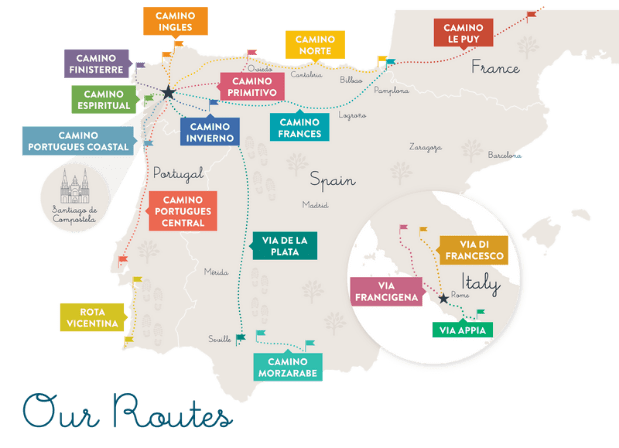
When ranking routes by physical difficulty, we look at four factors:
- Elevation: How much ascent and descent is involved. Mountain routes like the Camino Primitivo or the Pyrenean stage of the Camino Francés involve sustained climbs. Flat routes like the Camino Portugués Coastal do not.
- Daily distance: Average km per stage. Shorter stages mean less time on your feet and faster recovery between days.
- Terrain underfoot: Paved paths and well-maintained tracks are easier than mountain trails or rocky paths.
- Infrastructure: Frequent accommodation and services mean you can stop, rest and adjust your pace more easily.
The Easiest Camino Routes Ranked by Physical Difficulty
1. Camino Portugués Coastal — Easiest Overall
The Camino Portugués is the flattest of the main Camino routes. The coastal section from Vigo to Santiago (100km, 6 days) runs along the Atlantic coast of Galicia with minimal elevation and average daily stages of 16–18km. It qualifies for the Compostela certificate and has good infrastructure throughout.
The section from Porto to Santiago (240km) is also manageable, with short daily stages and a well-developed network of accommodation and services.
Best for: Walkers concerned about hills, knee problems, or limited fitness who still want a scenic and fulfilling Camino. See our Camino Portugués Coastal Easy tour for a slower-paced version with stages of 8–15km.
2. Camino Inglés from Ferrol — Easiest by Distance
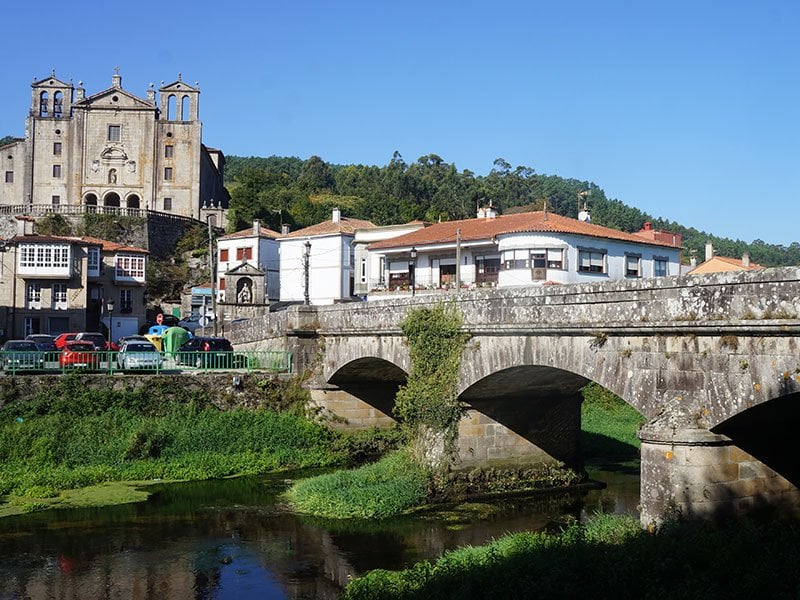
The Camino Inglés from Ferrol to Santiago (119km, 5–7 days) is the shortest route that qualifies for the Compostela certificate. Terrain is mixed — coastal and countryside — with some gentle hills but nothing sustained or steep. Daily stages average 17–20km.
Best for: Walkers with limited time, limited stamina, or those who want a shorter first experience before attempting a longer route.
3. Camino Francés from Sarria — Easiest of the Classic Routes
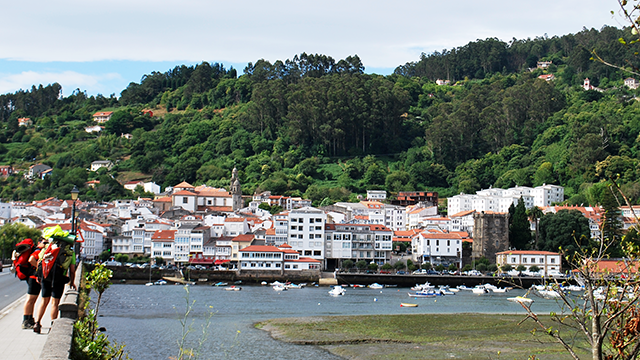
The last 111km of the Camino Francés from Sarria to Santiago is the most walked section of any Camino. Terrain is rolling Galician hills — more physical than the Portugués Coastal but very manageable. The infrastructure is the best of any route, with services every few kilometres.
It is not the flattest route, but the combination of excellent waymarking, constant company, and abundant services makes it the most forgiving for inexperienced walkers who struggle.
Best for: Walkers who want maximum support infrastructure and a social atmosphere to carry them through the harder moments. For a full breakdown of why this is the top beginner choice overall, see our best Camino for beginners guide.
4. Via de la Plata — Easy Terrain, Hard Distance
The Via de la Plata has gentle terrain — wide paths, gradual inclines, few steep climbs — but at over 1,000km it is the longest Camino route in Spain. Stages are long and services are sparse in some sections. Not recommended as a first Camino.
Best for: Experienced walkers who want a quiet, historically rich route with minimal crowds.
How to Make Any Camino Easier
Regardless of which route you choose, these practical steps will significantly reduce the physical difficulty:
- Transfer your luggage
Walking with just a light daypack instead of a full backpack makes an enormous difference over multiple days. Luggage transfers are included in all CaminoWays packages.
- Use the split option.
On longer stages, you can split the day into two shorter walks of approximately 10km. Our tips for inexperienced walkers explain how to use this option effectively.
- Train beforehand.
Our 6-month training plan and how to train for the Camino will prepare your legs, feet and stamina before you set off. Short on time? See our last-minute training tips.
- Prevent blisters.
Blisters are the number one reason walkers struggle on the Camino. Read our guides on avoiding blisters, treating blisters and foot care while walking before you go.
- Book the Easy Walking collection.
Our Easy Camino tours cover the Portugués Coastal and Francés routes over 10 nights with shorter daily stages of 8–15km — significantly easier than the standard itinerary.
- Stretch daily.
Morning and evening stretches prevent the muscle tightness that builds up over consecutive walking days. Our 5 useful stretches for walkers video covers the essentials.
For more on staying comfortable on the trail, see our guides on walking in hot weather, snacks for walking, 15 tips to stay fit and healthy and common mistakes to avoid.
Concluding Thoughts on Walking the Camino
Embarking on the Camino de Santiago is a journey like no other. Choosing the easiest route doesn’t diminish the experience but rather tailors it to your capabilities and needs. Whether you walk the Camino Portugués, the Camino Inglés, or the Via de la Plata, you are embarking on a journey of a lifetime, filled with unique challenges and rewards.
Use our Award-Winning Camino Planner to build your itinerary, or contact our team for personalised advice on the easiest route for your fitness level and timeline.
FAQs: The Easiest Camino to Walk
The Camino Portugués Coastal from Vigo to Santiago (100km, 6 days) is the flattest and physically least demanding of the main routes that qualify for the Compostela. It has minimal elevation, short daily stages and good infrastructure throughout. The Camino Inglés from Ferrol (119km) is the easiest by total distance.
The Camino Portugués is beginner-friendly because of its gentle, mostly flat terrain, well-marked paths, and dense network of accommodation, cafés and services along the way. Daily walking distances are typically shorter than on other routes, and the climate along the Atlantic coast is milder. The most popular beginner-friendly section is Tui to Santiago (115 km), which qualifies for the Compostela certificate.
The Camino Inglés is 119 km long from Ferrol to Santiago, taking around 5 to 7 days to complete. There is also a shorter version starting in A Coruña (75 km), but it does not qualify for the Compostela certificate on its own — pilgrims walking from A Coruña need to complete an additional 25 km in their home country (the Celtic Camino) to qualify.
The Via de la Plata is easy in terms of terrain — with wide paths, gentle inclines and few steep climbs — but at over 1,000 km, it is the longest Camino route in Spain. It is best suited for experienced pilgrims who prefer a quieter, less crowded walk with cultural depth, rather than beginners looking for a short pilgrimage.
Yes. To earn the Compostela certificate, you need to walk at least 100 km into Santiago de Compostela and collect stamps in your pilgrim passport. This is achievable on all the easy routes, including the Camino Inglés from Ferrol (119 km), the Camino Portugués from Tui (115 km) or Vigo (100 km), and the last 100 km of the Camino Francés from Sarria.
Yes — even the easiest Camino requires basic physical preparation. We recommend walking for 2 to 3 hours, 3 times a week, for at least 6 to 8 weeks before your trip, gradually increasing distance. Train in the same shoes you’ll wear on the Camino, and try to walk on varied terrain. Good preparation makes the difference between enjoying every step and struggling through blisters.
The Camino Portugués Coastal has significantly less elevation than the Camino Francés — particularly compared to the mountain sections around O Cebreiro. Daily stages are also shorter on average. The Francés compensates with better infrastructure and a stronger social atmosphere, which can make it easier mentally even if it is harder physically.
Yes, but choose the Camino Portugués Coastal for its flat terrain and avoid routes with significant descents, which are harder on knees than climbs. Transfer your luggage to reduce load, use walking poles for joint support, and consult our fitness and health guides before setting off. Always consult your doctor beforehand.
The Camino Primitivo is widely considered the most physically demanding — high elevation, remote terrain, basic infrastructure and long stages. The Camino del Norte is also significantly harder than the Portugués or Inglés due to its coastal cliffs and elevation changes. For a full comparison, see our level of difficulty guide.
👉 Want to discover which Camino suits you best? Try our Award Winning Camino Planner.
