
Discover the Camino de Santiago Routes
There are 12 main Camino de Santiago routes to choose from, ranging from 90 km to 1,800 km, suitable for first-timers, experienced hikers, families and cyclists. The most popular is the Camino Francés (46% of pilgrims in 2025), followed by the Camino Portugués (29%).
Choosing the right route depends on how many days you have, your fitness level, the scenery you want and how social or solitary you’d like your pilgrimage to be. This guide compares all official Camino routes side by side to help you decide.
This page gives you a complete overview of the main Camino de Santiago routes, their distances, highlights, and unique character. Each route also has its own dedicated guide where you can dive deeper into itineraries, maps, and planning tips.
👉 Planning your pilgrimage? Use our Camino Planner.
👉 Learn more about the history of the Camino.
👉 Browse our Camino Information Hub.
Camino Routes
How to Choose Your Camino Route
There’s no single “best” Camino — only the best one for you. Here are some factors to consider:
- Time available – from 5 days (Camino Inglés) to 35+ days (Camino Francés).
- Fitness level – coastal routes are flatter; Primitivo and Francés Pyrenees are more challenging.
- Experience – beginners often walk the last 100 km routes.
- Culture & scenery – cities and vineyards, or remote forests and coasts.
- Season & weather – see our guide: Best time to walk the Camino.
Which Camino De Santiago Route Should I Choose?
People choose their Camino de Santiago route based on several factors. The most common factors are ease of access, weather, environment, and traffic volume. The first portion of the Camino Frances can be very mountainous, while most Portuguese Coastal Way is by the sea. The final sections of the Camino Frances and the Camino Portugues are well-travelled. Some pilgrims want to walk the entire Camino from beginning to end, and others prefer to walk it in sections of a week or two.
Camino Frances
The Camino Frances, or French Way, is the most well-known and prosperous road in history. It begins in St-Jean-Pied-de-Port on the French side of the Pyrenees and crosses about 772km (approximately five weeks on foot) to Santiago de Compostela. It is the most recommended Camino de Santiago for pilgrims walking the Camino for the first time or those walking with children. Since the apostle’s tomb was discovered in the 9th century, this path has been active, and the current course was developed in the 11th century. If you have only one week and you want to see Santiago, we recommend walking the last 100km of the Camino Frances from Sarria to Santiago.
Camino Portugues
The Camino Portugués, or Portuguese Way, is the second most popular Camino route, walked by around 29% of all pilgrims in 2025. It promises a quieter and flatter experience than the Camino Francés, with three distinct variants to suit every type of pilgrim — the coastal, the central, and the spiritual. All three meet in Galicia before reaching Santiago de Compostela.
– Camino Portugués Coastal
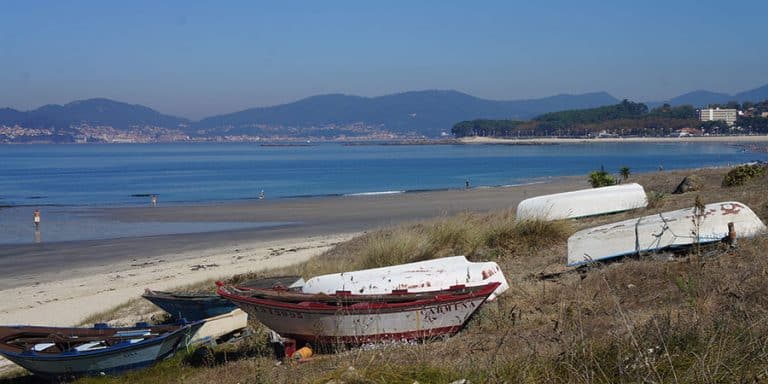
The Camino Portugués Coastal is the most popular Portuguese variant and the fastest-growing Camino route overall. Starting in Porto, it follows 280km of stunning Atlantic coastline through fishing villages such as Vila do Conde, Esposende and Viana do Castelo, before crossing into Spain at A Guarda and continuing through Vigo to Santiago. With gentle terrain, sea breezes and excellent seafood, it’s an ideal choice for first-timers and coastal lovers. Many pilgrims walk just the last 100km from Vigo in 6–7 days to qualify for the Compostela certificate.
– Camino Portugués Central
The Camino Portugués Central is the original and most traditional Portuguese route. Stretching 240km from Porto (or the full 620km from Lisbon), the Central Way passes through historic towns such as Barcelos, Ponte de Lima (Portugal’s oldest town) and Tui, before joining the Coastal Way in Galicia. It’s a classic pilgrim experience with Roman roads, medieval bridges, vineyards and rural Portuguese hospitality. The last 100km from Tui is the most popular starting point for those walking the shorter version.
– Camino Espiritual (Spiritual Variant)
The Camino Espiritual, or Spiritual Variant, is a unique offshoot of the Camino Portugués that combines walking with a traditional boat journey. Starting in Pontevedra, it takes pilgrims through the Rías Baixas region, visiting the historic monasteries of Armenteira and Poio before reaching Vilanova de Arousa. From there, pilgrims complete a 28km Traslatio, a boat ride along the Ría de Arousa retracing the legendary maritime route believed to have carried the remains of Saint James to Galicia. Once back on land in Pontecesures, walkers continue on foot to Santiago. At 105km, this is one of the most spiritual and scenic short Camino routes, ideal for those seeking a meaningful journey with a coastal twist.
Camino Finisterre
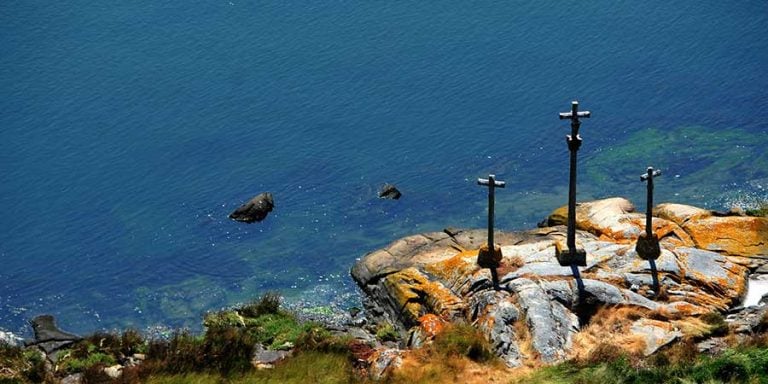
The Camino Finisterre or Finisterre Way is the only Camino route starting in Santiago and this path takes you to the small fishing ports of Fisterra and Muxía on the dramatic coast of Galicia. This is a perfect Camino if you want to continue your journey and experience the ‘real Galicia’ and spectacular scenery. You will need four to six additional days to Fisterra or Muxía. Finisterre, you will meet the cliffs, and lighthouse with a strong end-of-the-world. Muxia’s impressive church perched on a rocky seashore commemorates the arrival of the Virgin Mary on a stone boat.
Camino del Norte
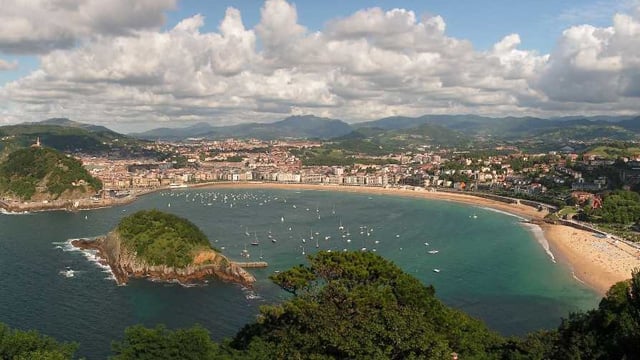
The Camino del Norte or Northern Way is the third most popular Camino de Santiago Route. It runs along Spain’s North Coast. This is the second-longest path to Santiago de Compostela (803km). This Camino provides terrific stretches of beaches and cliffs that draw more pilgrims each year. It offers a variety of landscapes, country lanes, mountainous trails and coastal paths. The section after Santander is one of the quietest Camino. Top sights: San Sebastian, Bilbao, Santander, Gijón and Ribadeo.
Via de la Plata
The Via de la Plata is the longest Camino route. It begins in Seville and finishes in Santiago de Compostela. This Camino during the middle ages was used by pilgrims from the South of Spain and North Africa. It is a quieter choice than the Camino Frances or the Camino Portugues. This path weaves through a beautiful area known for its forests and lakes with many Roman ruins and UNESCO World Heritages. From the picturesque Ourense, renowned for its hot springs, the road gets hillier with pine and oak forests. The final leg leads north through Galician farmland villages and hamlets.
Camino Ingles
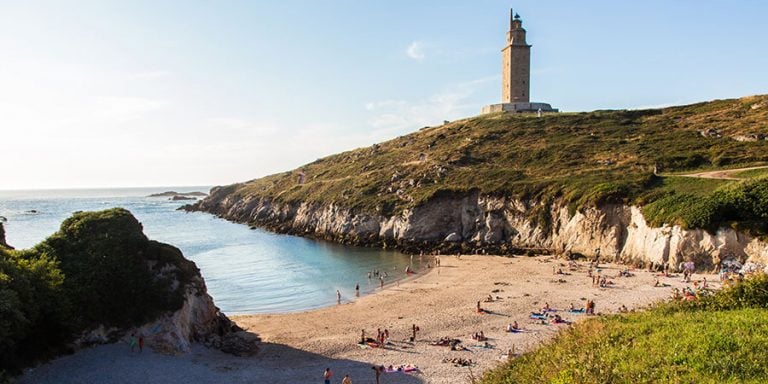
The Camino Ingles, or English Way, was one of the main Camino de Santiago Routes for pilgrims from the British Isles and Scandinavians. They sailed to the northern Spanish coast and walked to Santiago de Compostela overland. Nowadays, there are two ways: The Original Camino Ingles starts in Ferrol, which enables you to get your Compostela, and the so-called Celtic Camino, which starts in A Coruna. For the first few days, you walk along the coast with incredible sea views, then follow a path inland, past ancient chapels and churches and green, tree-lined pathways to the city of Santiago.
Camino Primitivo
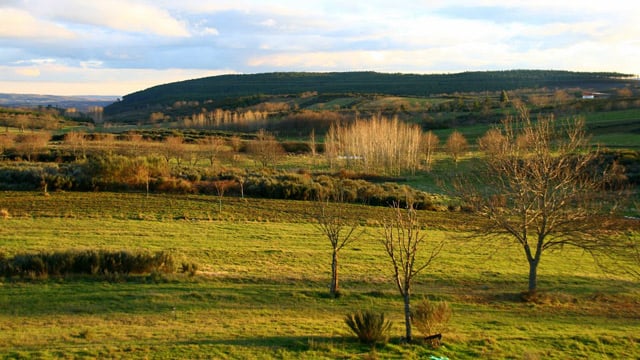
The first pilgrimage to the Apostle’s tomb in Santiago was made by King Alfonso II of Asturias in the 9th century. A very scenic yet challenging walk, the Camino Primitivo or Original Way, starts in Oviedo and travels about 315km south-westerly towards Santiago. It has fewer amenities along the way and the route has a lot of steep ascents, so we recommend it to those that have some experience and are looking for a quieter Camino Experience. The Route, however, is excellent as it takes you from mountainous Asturias to lush Galicia across beautiful valleys, mountains, and scenic viewpoints. The last 100km of the Camino Primitivo starts in the Roman city of Lugo, which is still surrounded by magnificent 2000- year-old Roman walls and towers. This final section is not particularly difficult, but it is still more remote than its counterparts in Galicia; it meets the Camino Frances, on the second walking day, in Melide and continues for the next 50 km to Santiago.
Camino de Invierno
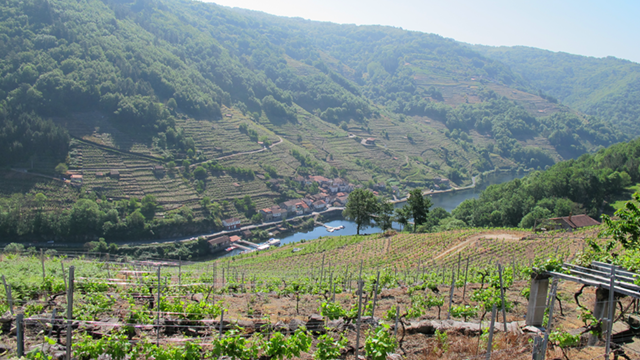
The Camino de Invierno, or Winter Way, is one of the oldest yet least-walked routes to Santiago de Compostela. Medieval pilgrims travelling from Castile used it during the colder months to avoid the snow and harsh weather of O Cebreiro on the Camino Francés. Starting in Ponferrada, it runs for about 263km through the spectacular landscapes of Las Médulas (a UNESCO World Heritage Site), the Ribeira Sacra wine region, and the dramatic canyons of the river Sil. This is a quieter, more contemplative Camino, perfect for pilgrims looking to escape the crowds and discover one of Galicia’s most beautiful and least-known corners. At CaminoWays, our last 138km route from Monforte de Lemos covers the official last 100km required for the Compostela certificate, plus additional scenic stages.
Chemin du Puy (Le Puy Camino)
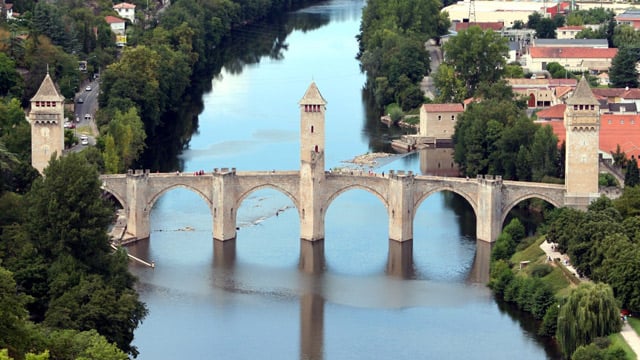
The Chemin du Puy, or Le Puy Way, is the most popular Camino de Santiago route in France and one of the most scenic in all of Europe. Starting in the medieval town of Le Puy-en-Velay, it stretches 727km across south-west France to Saint-Jean-Pied-de-Port, where it joins the Camino Francés to continue into Spain. The route passes through some of the most beautiful villages of France (“Les Plus Beaux Villages de France”), volcanic landscapes of the Auvergne, the rolling hills of the Aubrac plateau, and the vineyards of the Lot Valley. It is renowned for its high-quality rural accommodation (gîtes d’étape), traditional French cuisine and the well-marked GR65 path. Best for francophiles and pilgrims seeking a slower, more contemplative European pilgrimage experience.
Via Francigena
The Via Francigena, or Way of the Franks, is the European pilgrimage route to Rome and one of the great walking journeys in the world. Stretching almost 1,900km from Canterbury in England, through France and Switzerland, and across Italy to Saint Peter’s Basilica in Rome, it follows in the footsteps of Archbishop Sigeric, who travelled it in 990 AD. The most popular section is the last 420km from Lucca to Rome, which takes pilgrims past the medieval towers of San Gimignano, the thermal springs of Bagno Vignoni, the Val d’Orcia UNESCO landscape and the historic streets of Viterbo before arriving in Rome. Ideal for pilgrims wanting an alternative to Santiago or those keen to walk a second great European Way.
Rota Vicentina
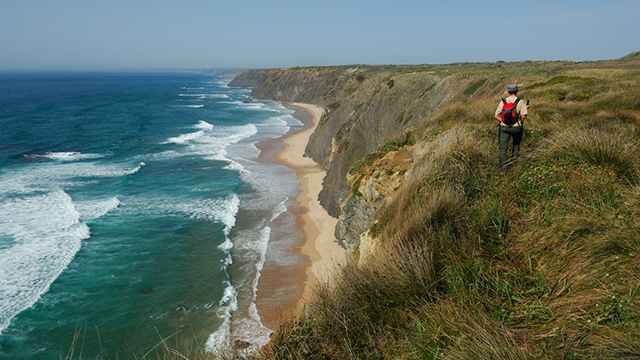
Discover one of Europe’s most beautiful coastal walks along Portugal’s wild southwest coast. Following historic Fishermen’s Trails, the Rota Vicentina winds past dramatic cliffs, hidden coves and golden beaches, through charming fishing villages and all the way to Cape St Vincent — once believed to be the very edge of the world. A wilder, more remote alternative to the Camino, perfect for lovers of the sea and unspoilt nature.
FAQs
How many Camino de Santiago routes are there?
There are over a dozen recognized Camino de Santiago routes leading to Santiago de Compostela. The main ones are the Camino Francés, Camino Portugués (Coastal, Central and Variante Espiritual), Camino del Norte, Camino Primitivo, Camino Inglés, Via de la Plata, Camino Finisterre, Camino de Invierno, Chemin du Puy (in France), Via Francigena (in Italy), and the Rota Vicentina (in southern Portugal). Each one has its own history, landscape, and pilgrim profile.
Which Camino de Santiago route is the easiest?
The easiest Camino routes are the flatter coastal options and the final 100 km sections. The Camino Portugués Coastal from Vigo to Santiago is widely considered the easiest 100 km option, followed by the Camino Inglés from Ferrol and the Camino Francés from Sarria. These routes have well-marked, gentle terrain, frequent villages, and good infrastructure, making them ideal for first-time pilgrims.
Which Camino route is the most challenging?
The Camino Primitivo is generally considered the most physically demanding, with steep mountain ascents through Asturias and remote sections with fewer services. The Camino del Norte is also challenging due to constant elevation changes along the coast, and the Camino Francés Pyrenees crossing from Saint-Jean to Roncesvalles is a tough first day. These routes are best for pilgrims with hiking experience and good fitness.
Which Camino is best for first-time pilgrims?
First-time pilgrims most commonly choose the last 100 km of the Camino Francés from Sarria, as it offers the most social atmosphere, the best support infrastructure, and the classic Camino experience in just 6–7 days. The Camino Portugués Coastal from Vigo is another excellent first-timer option for those who prefer flatter, quieter terrain along the Atlantic coast.
Which Camino route is the shortest?
The Camino Inglés is the shortest official Camino route at 120 km from Ferrol. The Camino Finisterre and Camino Espiritual are also short at around 105–118 km. For pilgrims wanting just to qualify for the Compostela certificate, the final 100 km of any major route (Sarria on the Francés, Vigo or Tui on the Portugués, Vilalba on the Norte, Lugo on the Primitivo) is the standard choice.
Which Camino route is the quietest?
For pilgrims seeking solitude, the Camino Primitivo, the Via de la Plata, and the Camino de Invierno are the least crowded routes. The middle sections of the Camino del Norte (especially after Santander) and the Chemin du Puy in France are also remarkably quiet. These routes offer a more contemplative experience away from the busier Francés and Portugués.
Are there Camino de Santiago routes outside of Spain?
Yes. The Camino Portugués starts in Portugal (in Lisbon, Porto, or Tui), the Chemin du Puy is one of the four traditional French routes starting in Le Puy-en-Velay, and the Via Francigena is the Italian "Camino" running from Canterbury to Rome (with sections culminating in Rome rather than Santiago, but considered part of the same European pilgrimage tradition). The Rota Vicentina is in southern Portugal.
Which Camino route is best for cycling?
The Camino Francés is the most popular cycling route, with well-paved paths and excellent infrastructure. The Camino Portugués Coastal is also great for cyclists due to its flatter terrain. Cyclists must complete at least 200 km to earn the Compostela certificate, so common cycling starts include Ponferrada (Francés), Porto (Portugués Coastal), and Navia (Norte).
Which Camino route do all pilgrims eventually share?
All routes converge in Santiago de Compostela, but several share their final stages. The Camino Francés and Camino del Norte merge in Arzúa, the Camino Portugués Coastal and Central reunite in Redondela, the Camino Primitivo joins the Francés in Melide, and the Variante Espiritual rejoins the main Camino Portugués near Padrón. This means the final approach to Santiago is often walked in shared company, regardless of which route pilgrims started.
Camino Ways Route Planner
The Camino de Santiago is the most walked pilgrimage in the world, with over 530,000 pilgrims completing it last year. For more than 1,000 years, travellers from across Europe and beyond have followed these ancient trails to Santiago de Compostela in northwest Spain, drawn by spirituality, history, culture and the unique sense of community that emerges along the Way. Today, pilgrims walk the Camino for reasons that range from religious devotion to personal challenge, fitness, cultural discovery and self-reflection but they all share the same destination and the same transformative experience.
Camino Information
Stay up-to-date and get the latest Camino Travel News and Information with CaminoWays.
Camino
Blog
Read the lastest Camino Articles
Camino Tips &
Advice
Everything you need to know before you go on the Camino
Camino
Information Hub
All our Camino materials and content