
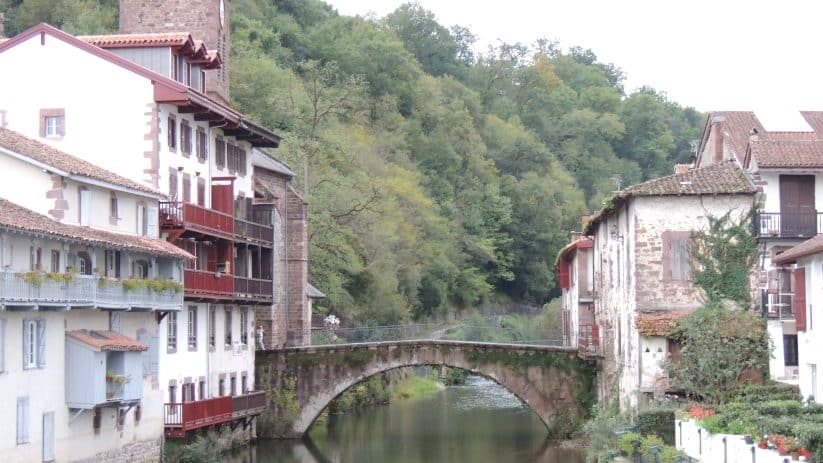
The full Camino Francés from Saint-Jean-Pied-de-Port to Santiago de Compostela is about 790km (490 miles), and takes most pilgrims 30 to 35 days of walking at 20–25km a day.
- Shortest qualifying option: the last 100km from Sarria — 111km in 7 days, and you still earn the Compostela.
- By bike: you need 200km, which means starting in Ponferrada.
- Don’t have five weeks? Walk it in sections across several trips — the distance table below shows where to break it.
Different sources quote anywhere from 764km to 800km depending on route variants and where you measure from; 790km is the figure we use for the full Camino Francés.
Table of contents
Distance to Santiago from every major starting point
Approximate distances; days assume 20–25km a day. Compare all the options in our guide to the best starting points for the Camino Francés, or open the Camino Francés map.
What those 790km are actually like
The route crosses four very different landscapes, which is why the distance feels different week to week:
- The Pyrenees (France into Navarra). The hardest day of the whole Camino comes first: about 25km and 1,200m of ascent from Saint-Jean to Roncesvalles on the Route Napoléon, with the lower Valcarlos route as the winter and bad-weather alternative.
- Navarra and La Rioja. Rolling farmland and vineyards, small towns close together, easy walking.
- The Meseta. Roughly 200km of flat, wide, treeless plateau between Burgos and León. Physically the easiest section and mentally the hardest.
- The Bierzo and Galicia. Mountains again — the Cruz de Ferro and the climb to O Cebreiro — then green hills, hamlets and eucalyptus woods all the way to Santiago.
Full detail in how difficult is the Camino Francés.
Walking it in sections
Nearly 800km in one go needs five weeks and most people don’t have that. The Camino Francés splits neatly into week- and fortnight-sized pieces you can walk across several years, picking up exactly where you stopped:
- Saint-Jean-Pied-de-Port to Pamplona — the Pyrenees
- Pamplona to Logroño — Navarra and the first vineyards
- Logroño to Burgos — La Rioja and Castile
- Ponferrada to Santiago — the last 200km, mountains and Galicia
- Sarria to Santiago — the last 100km
Or design your own with the Camino route planner. Note that the certificate of distance records where you started, so sections still count.
Walking the final 100km
The last 100km from Sarria is the classic week: 111km in seven days through Galicia, sociable, well-supported, and enough for the Compostela. It’s the most walked stretch of any Camino in the world — 162,076 pilgrims started in Sarria in 2025, 30.5% of all arrivals (statistics). Shorter daily stages are available on the easy Camino Francés, and there’s a group guided version too. Read what to see and eat on the way in things to do in Sarria and where to eat from Sarria to Santiago.
Cycling the last 200km
Cyclists must cover 200km rather than 100km, which puts the start at Ponferrada — see how cycling the Camino works and the Ponferrada to Santiago cycling route, over the Bierzo mountains and O Cebreiro into Galicia. It’s a good option for families: see family cycling on the Camino Francés. Keep stamping your pilgrim passport twice a day.
Planning your journey
When to go
April to October, with May, June and September the sweet spot. July and August are hot — often above 35°C on the Meseta — and the Pyrenees crossing can be closed by snow in winter, when the Valcarlos alternative is used instead. You can walk the Camino year-round with the right planning. See the month-by-month guide, the weather guide and our tips for walking in hot weather.
Accommodation
Accommodation on the Camino Francés runs from municipal albergues to guesthouses and hotels, including historic buildings such as San Isidoro in León. Book ahead in peak season — the last 100km fills in July and August.
Luggage transfer
Your bags go from hotel to hotel by van and you walk with a day pack. It is the single biggest difference to how the distance feels, particularly over 30-plus days. Included on CaminoWays trips — ask us.
Physical preparation
Training
Preparing for the Camino is as much mental as physical. Start with shorter walks and build distance over the weeks before you travel — one to two months for the last 100km, longer for the full route. Train in the exact boots and backpack you’ll use: breaking them in is the best defence against blisters.
Vary your terrain, add hill work, and increase the weight you carry gradually so your body adapts to consecutive long days. For a week-by-week routine, see our Camino fitness plan, and our 15 tips to stay fit and healthy on the Camino for nutrition, hydration and recovery.
Health and safety
Carry a basic first aid kit — blister plasters above all — drink more than you think you need, and keep emergency numbers to hand. The Camino Francés is well waymarked with yellow arrows and scallop shells, and it is one of the safest long-distance walks in Europe.
The reward
Culture along the way
The Camino Francés crosses four Spanish regions — Navarra, La Rioja, Castilla y León and Galicia — each with its own language traditions, architecture and kitchen, from Navarrese and Rioja wine to Castilian roasts and Galician seafood. Read more on Spanish food culture and the Celtic heritage of Galicia.
Your Compostela
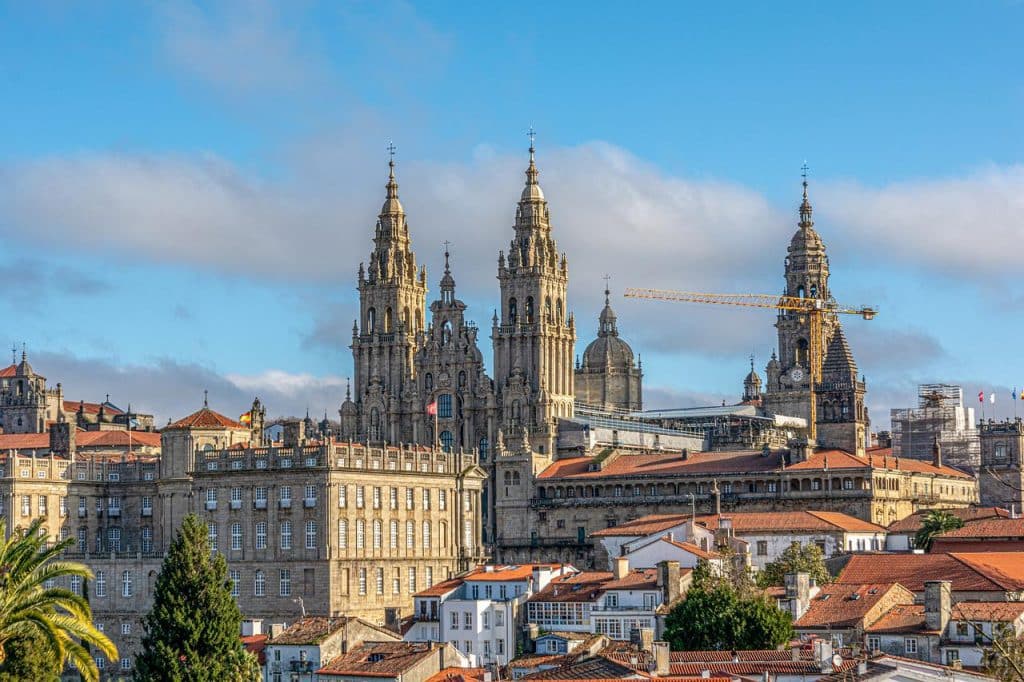
Reach Santiago having walked the final 100km, or cycled 200km, with two daily stamps in your pilgrim passport, and the Pilgrim’s Office issues your Compostela — the Latin certificate that has marked the end of this journey for centuries. Then walk into the cathedral.
FAQs
About 790km, or roughly 490 miles. Sources vary between about 764km and 800km depending on route variants and measurement points.
Typically 30 to 35 days at 20–25km a day, plus rest days — most people allow five weeks. At a relaxed 15–20km a day it takes 40 days or more.
100km on foot, or 200km by bike. On the Camino Francés that means walking from Sarria (111km) or cycling from Ponferrada (about 200km), with your pilgrim passport stamped twice a day.
111km, walked in five days over six nights on the standard itinerary — just past the 100km minimum for the Compostela.
Yes, and many people do — walking a week or two each year and picking up where they left off. Your certificate of distance records where you started, so the sections still count towards the full route.
The first day: Saint-Jean-Pied-de-Port to Roncesvalles, about 25km with 1,200m of ascent over the Pyrenees. After that, the climbs to the Cruz de Ferro and O Cebreiro, and the mental flatness of the Meseta.
