León is one of the great cities of the Camino Francés and one of the most popular places to start the Camino de Santiago. Sitting around 300 km from Santiago de Compostela — roughly 12 to 14 days of walking — it’s famous for its soaring Gothic cathedral and more than 1,800 m² of glowing stained glass. Starting your Camino in León is ideal if you want a genuinely rewarding two-week pilgrimage without walking the full route from France: you begin in a vibrant, history-rich city and walk the final stretch through the mountains of El Bierzo and the green hills of Galicia, some of the quietest and most beautiful countryside on the whole Camino de Santiago.
This insider’s guide covers what to see, eat and do in León, how to get there, when to go, and exactly how the stages from León to Santiago de Compostela unfold.
Table of contents
León is one of the most historic regions of Old Castile, in a vast province bordering Galicia, Asturias, Palencia and Zamora. While few Celtic remnants survive, there is ample evidence of Roman occupation, and over the centuries many peoples, including the Moors, settled here. The Knights Templar played a significant role in the Middle Ages, building castles and fortifications that still stand today.
León has been a cosmopolitan city since Roman times, when it was known as Legio Septima, after the seventh legion stationed there. The Moors briefly occupied León before being ousted by the kings of Asturias, who made it their capital in AD 913.
From León, you can walk or cycle the last 300km of the Camino to Santiago de Compostela — one of the best starting points for the Camino Francés. The Full Camino Francés route lets you customise your journey using our Camino Planner, starting from León.
Explore León by Moñi Jorgey
Enjoy Moñi’s insights as she shares her love for her hometown — an essential stop on the Camino. León is a quiet, modestly sized city in the northwest of Castilla y León, and one of its great charms is how walkable it is: a five-to-ten-minute stroll takes you from the cathedral to almost every other landmark. It’s a place made for slowing down, wandering the old town, and settling into the rhythm of the Camino before you set off west.
History of León
León was founded in the first century as the Roman settlement of Legio Septima, after the seventh legion stationed there — the very origin of the city’s name. It has been a cosmopolitan city ever since. Briefly held by the Moors, it was retaken by the kings of Asturias, who made León their capital in AD 913, ushering in the powerful medieval Kingdom of León.
One of the most historic regions of Old Castile, the province borders Galicia, Asturias, Palencia and Zamora. Throughout the old town you’ll find layered traces of its past — Roman walls, medieval streets, Moorish influence and the fortifications of the Knights Templar, who played a significant role here in the Middle Ages. For over a thousand years, León has been a key transit point for pilgrims heading to Santiago, and that hospitality — warm, simple and generous — is still what visitors remember most.
Where is León and how do I get there?
León sits in the northwest of Spain, in the autonomous community of Castilla y León, and is easily accessible by plane, bus or train. León has its own airport with domestic connections, linked to the city centre by bus, while high-speed and regional trains connect León with Madrid, and long-distance buses serve cities across Spain. Both the bus and train stations are within walking distance of the main attractions, so you can arrive and be exploring the old town within minutes — no transfers or taxis required.
What to See in León
León’s Cathedral
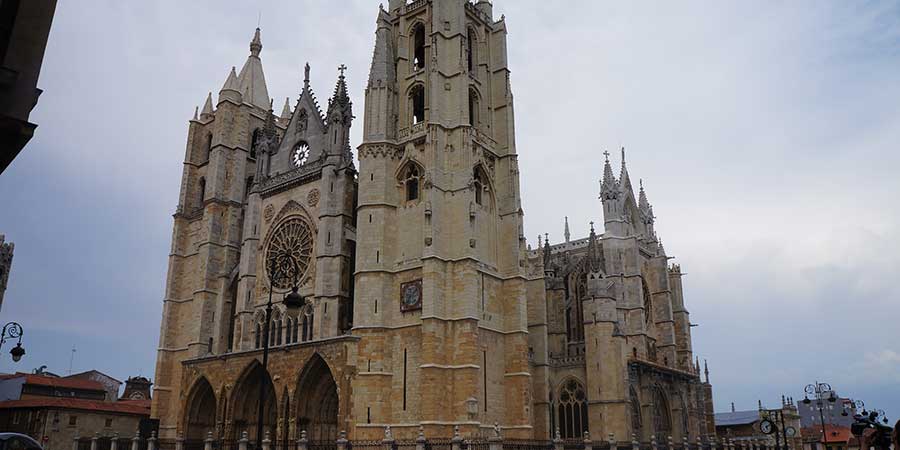
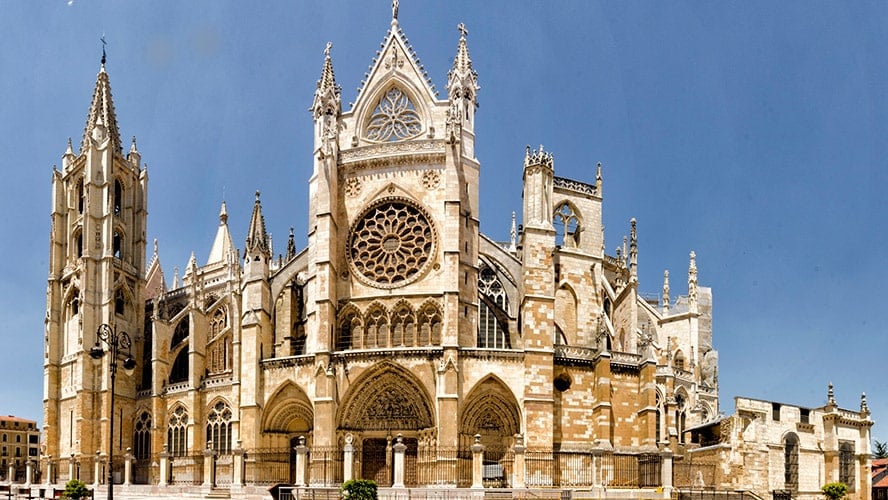
León Cathedral (Santa María de León) is one of the finest Gothic cathedrals in Europe and the city’s crown jewel. Begun in the 13th century and some 200 years in the making, it’s celebrated for its mismatched towers and, above all, its extraordinary stained glass: more than 250 windows totalling over 1,800 m² of glass, including a magnificent rose window. Locals call it the Pulchra Leonina (“the beautiful one of León”), and seeing the light pour through the glass at the right hour is unforgettable. The cathedral museum, with its rich and varied collection, is well worth a visit.
Hostal San Marcos – Parador de León, 12th Century
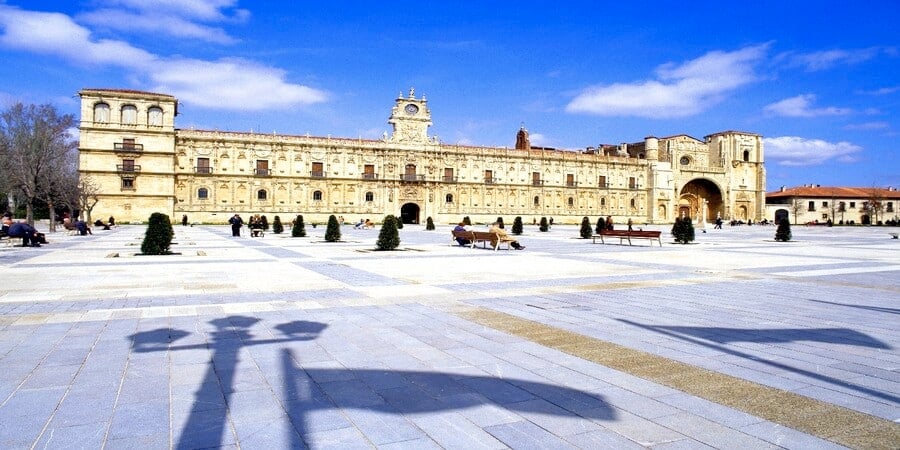
Hostal San Marcos (Parador de León) is a stunning 12th-century building that began life as a hostal for pilgrims on their way to Santiago. Over the centuries it became a monastery, a prison, and even an army barracks during the Spanish Civil War. Today it is one of Spain’s most impressive hotels — a Parador — with part of the building housing the Archaeological Museum of León and one of the most photographed plateresque façades in the country.
Casa de Botines
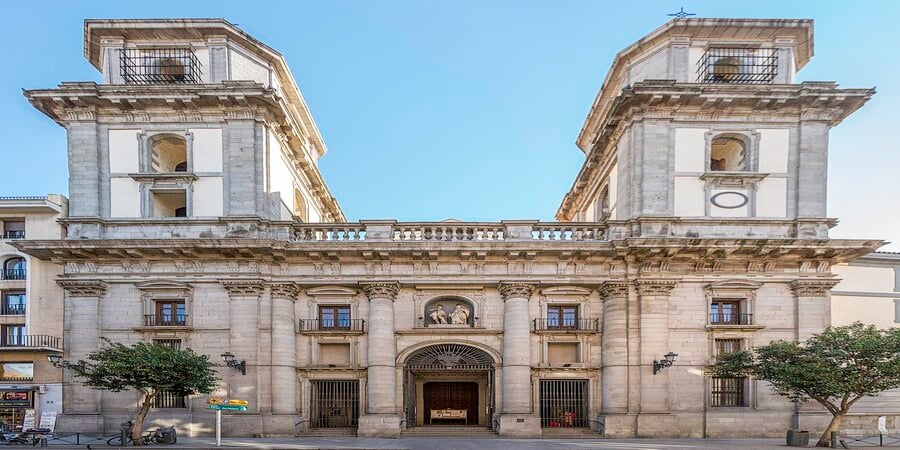
Casa de Botines, designed by the legendary architect Antoni Gaudí in the 19th century, is a rare Gaudí work outside Catalonia. Its corner towers give it a fairytale silhouette, and it now houses a museum dedicated to the building and its era. Nearby, the Palacio de los Guzmanes, a grand 16th-century Renaissance palace with a beautiful arcaded courtyard and four distinctive towers, was once the home of the wealthy Guzmán family.
The Collegiate Church of San Isidoro
The Collegiate Church of San Isidoro is a prime example of Romanesque architecture and one of León’s most precious sites. It houses an impressive collection of early manuscripts, a beautiful façade and an 11th-century baptismal font, along with a museum and the Royal Pantheon — often called the “Sistine Chapel of the Romanesque” for its exceptionally well-preserved 12th-century painted murals, where the kings of León are buried.
The Streets of León
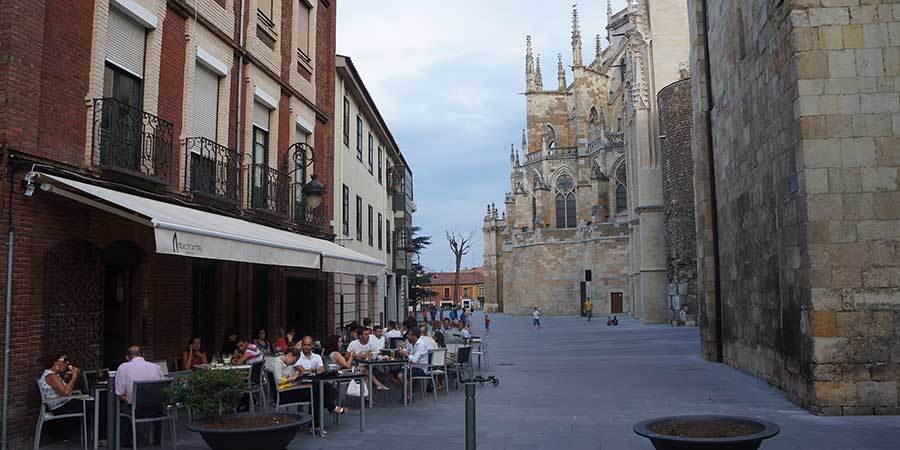
They have pedestrianised León’s streets, including Calle Ancha, Burgo Nuevo, Pícara Justina, and the area around the cathedral, for added comfort. Underground car parks, traffic diversions, and wider pavements help improve access while preserving León’s cultural heritage.
What to Eat in León
León is a food-lover’s city, and its old town is the place to taste it. The Barrio Húmedo (“the wet quarter,” named for all the wine poured there) is the beating heart of León’s tapas scene, and the local custom is a real treat: order a drink and you’ll be served a free tapa with it. Bar-hopping from one small plate to the next is the best way to eat like a local, mingle with Leonese regulars, and sample the region’s flavours without booking a single restaurant.
Pork is a staple of the local diet, appearing as morcilla (black pudding), spicy dry sausage, ham and cured loin, many of them handmade and smoked in the traditional way to preserve their flavour. But the true star of León is cecina — a salt-dried, lightly smoked cured beef, sliced thin like ham, with a deep, savoury taste that’s unique to the region. Pair it with a glass of local Bierzo wine, made from the Mencía grape, and you have the essence of León on a plate.
Nightlife and Entertainment
When the sun goes down, León’s old town comes alive. The Barrio Húmedo and its surrounding streets are full of inns, wine bars and pubs where you can relax, enjoy live music, and dance late into the night. It’s a friendly, unpretentious nightlife scene — as much about good company and good wine as anything else — and a lovely way to celebrate the start (or a rest day) of your Camino.
Accommodation in León
León is a welcoming city with excellent accommodation for every budget, from historic hotels like the Parador de San Marcos to comfortable boutique properties and traditional pilgrim hostels. With its good restaurants and vibrant cultural scene, it’s an ideal place to spend a night or two acclimatising before you begin walking.
Starting the Camino from León
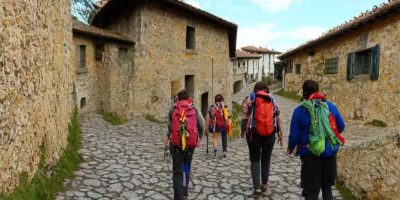
From León you can walk or cycle the last ~300 km of the Camino to Santiago, making it one of the best starting points for the Camino Francés. It’s a particularly popular choice because it comfortably exceeds the final 100 km required to earn your Compostela (the pilgrim’s certificate), while offering a longer, more varied and more scenic journey than starting in Sarria. You’ll cross three of the Camino’s most memorable landscapes — the plains of León, the mountains of El Bierzo, and the green valleys of Galicia — in around two weeks.
The stages from León to Santiago
Walking the Camino Francés from León to Santiago covers roughly 320 km – about 13 to 14 days. Here’s how the journey typically unfolds:
- León → San Martín del Camino (~25 km) — leaving the city behind for the open meseta (with a quieter variant via Villar de Mazarife).
- San Martín del Camino → Astorga (~24 km) — arriving in Astorga, home to Gaudí’s fairytale Episcopal Palace and famous for its chocolate.
- Astorga → Rabanal del Camino (~20 km) — climbing gently into the Maragatería hills.
- Rabanal del Camino → Ponferrada (~32 km) — over the highest point of the Camino Francés at the Cruz de Ferro, where pilgrims traditionally leave a stone, and down through El Bierzo.
- Ponferrada → Villafranca del Bierzo (~24 km) — through vineyards, starting at Ponferrada’s Templar castle.
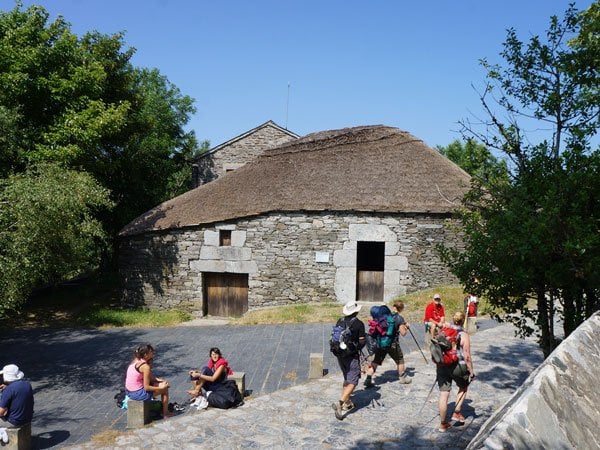
- Villafranca del Bierzo → O Cebreiro (~28 km) — a memorable climb into Galicia and its iconic stone pallozas.
- O Cebreiro → Triacastela (~21 km) — along green mountain ridges.
- Triacastela → Sarria (~18 km) — reaching Sarria, the busiest starting point of all.
- Sarria → Portomarín (~22 km) — the beginning of the final 100 km.
- Portomarín → Palas de Rei (~25 km).
- Palas de Rei → Arzúa (~29 km).
- Arzúa → O Pedrouzo (~19 km).
- O Pedrouzo → Santiago de Compostela (~20 km) — the emotional final walk into the cathedral city.
Distances and stage splits can be tailored to your pace and fitness — shorter days simply add a little more time overall.
When is the best time to walk from León?
The most popular seasons are late spring (May–June) and early autumn (September–October), when temperatures are pleasant and the trails are lively but not overcrowded. Summer (July–August) is warm and busy, especially on the final 100 km from Sarria, while winter is quiet and atmospheric but colder, with some mountain sections in El Bierzo and Galicia prone to rain or snow. Whenever you go, León’s mild continental climate makes it a comfortable place to begin.
Contact Our Camino Experts
For more information on starting your Camino in León or any other Camino de Santiago route, contact us. They’re here to help you plan every aspect of your journey, ensuring a memorable and fulfilling pilgrimage.
FAQs
León is about 320 km from Santiago de Compostela along the Camino Francés — roughly 123to 14 days of walking, or around two weeks allowing for a rest day.
Yes. León is one of the best starting points on the Camino Francés: it comfortably exceeds the last 100 km needed for the Compostela, is easy to reach by plane, bus and train, and is a beautiful, historic city to explore before you set off.
You need to walk at least the final 100 km into Santiago. Starting in León (~300 km) means you far exceed this, so you’ll qualify for your Compostela with plenty of margin.
Its 13th-century Gothic cathedral with over 1,800 m² of stained glass, the Romanesque Collegiate Church of San Isidoro and its Royal Pantheon, Gaudí’s Casa de Botines, and the Parador de San Marcos — plus its tapas culture in the Barrio Húmedo.
Order a drink in the Barrio Húmedo and you’ll get a free tapa. Local specialities include cecina (salt-cured beef), morcilla, cured pork meats, and Mencía wines from nearby El Bierzo.
The first stage runs about 22–25 km to San Martín del Camino, with a quieter, more scenic variant via Villar de Mazarife after La Virgen del Camino.
Late spring (May–June) and early autumn (September–October) offer the best balance of good weather and manageable crowds. Summer is warmer and busier; winter is quiet but colder and wetter in the mountains.
By plane, bus or train — León’s airport links to the centre by bus, and the bus and train stations are a short walk from the main sights.