
Cruz de Ferro | Camino Frances
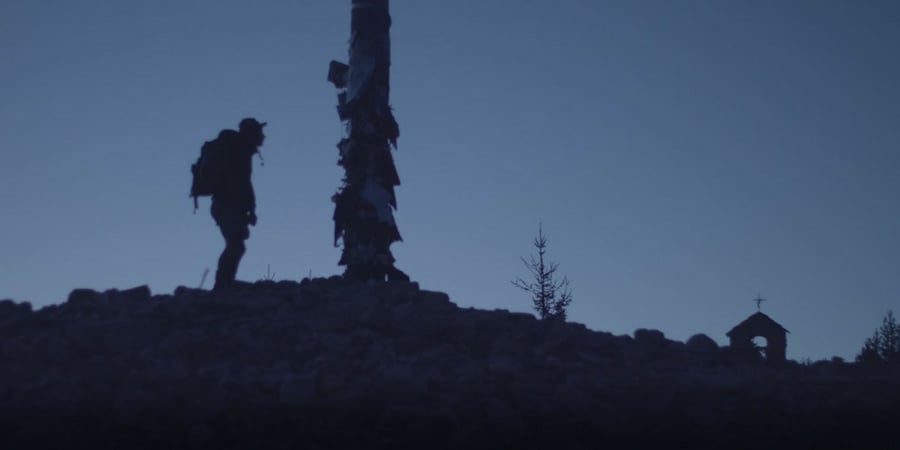
The Cruz de Ferro (Iron Cross) is the highest point of the Camino Francés — a simple iron cross on a tall wooden pole where, for centuries, pilgrims have left a stone carried from home. Located between the villages of Foncebadón and Manjarín in the mountains of León, it’s one of the most moving and symbolic moments on the whole Camino de Santiago. The cross itself is a replica; the original is preserved in the Museo de los Caminos in Astorga.
At its base, a great mound of stones has built up over the years. A legend says that when the Cathedral of Santiago de Compostela was being built, pilgrims were asked to contribute by bringing a stone. The tradition is to throw a stone, brought from your place of origin, standing with your back to the cross, to symbolise your journey and let go of a burden.

Origin of Cruz de Ferro
There are several theories as to the origin of the cross. It may have been erected to mark the road when it snows, as the path frequently becomes hidden from view.
Others believe it began as a pile of stones — the Montes de Mercurio — erected since Celtic times to mark strategic locations on the roads, and later Christianised with crosses.
In this case, the cross was placed there in the early eleventh century by Gaucelmo, abbot of the lodgings at Foncebadón and Manjarín. Later, Galician crop reapers passing this way to the farmlands of Castile and León, where they went to work, continued the tradition by placing a stone along the path, which came to be called Cruz de Ferro.
In 1982 a chapel dedicated to St James was built beside the Cross, and for some years the Centro Gallego de Ponferrada has celebrated the feast of Santiago/Saint James with a pilgrimage here that brings together hundreds of people. Today, the cross is believed to have been placed on this spot in the 11th century by Gaucelmo.
The tradition of Cruz de Ferro
When you visit the cross today, you’ll see that pilgrims traditionally leave a rock here. Some pick up a stone along the way; others carry one all the way from home. The rocks may bear a letter, a word, or a message to a loved one. Watch the video above of Johnnie Walker and Stephen Shields walking the Camino Francés and leaving a stone at the Cruz de Ferro.
Cruz de Ferro on the Camino Francés
At around 1,500 metres, the Cruz de Ferro is the highest point of the Camino Francés and one of its most moving and iconic moments — rightly counted among the top things to see on the Camino Francés and the hidden historical landmarks on the Camino. From here the trail begins its long descent through Molinaseca to Ponferrada and El Bierzo. To include the Cruz de Ferro in your own Camino, you’ll usually set off from around León or Astorga — see our guide to the best starting points for the Camino Francés.
For more information about the Camino Francés, the French Way, please contact one of our travel specialists using the form below.
FAQ
The tradition is to leave a stone at the base of the cross. Pilgrims bring a stone from home or pick one up along the way and, standing with their back to the cross, throw it onto the mound to symbolise their journey and let go of a burden.
The Cruz de Ferro is on the Camino Francés, between the villages of Foncebadón and Manjarín, in the mountains of León. At around 1,500 metres, it is the highest point of the Camino Francés.
Leaving a stone is a symbolic act of letting go — of a worry, a loss or a loved one carried in your thoughts. The custom also recalls an old tradition of pilgrims bringing a stone to contribute to the building of the Cathedral of Santiago de Compostela.

I was recently tipped off by a local taxi driver that the site of the original Cruz is different from where it sits today. Intrigued by what he told me, I set out to see if I could find a potential cross within a kilo of the one you have pictured in your article. after just short of a day I came across a concrete stand that appears to be the original (?) Cruz. I tried to post the picture of the cement stand and the old green marker on it but this form will not allow pictures. If the author of the above article would contact me, I can provide a picture or two and some coordinates where I located this cruz.
Hi Ed, thanks for your comment.
I heard that the spiritual meaning of the cruzz the ferro is, that by troughing a stone on the pile, you leave your worries and pains and troubles etc. behind you. So now you are ready to enter Galicia the province of Santiago de Compostella.