
Camino Francés (French Way)
The classic Camino de Santiago route, from Saint-Jean-Pied-de-Port in the French Pyrenees to Santiago de Compostela – or just the last 100 km from Sarria. We book hand-picked accommodation with private bathroom and breakfast, support you on the trail and transport your luggage between stages.
The Camino Francés in numbers
The Camino Francés runs 772 km from Saint-Jean-Pied-de-Port to Santiago de Compostela in 34 stages (30–35 days). Most pilgrims walk the last 111 km from Sarria in 6 nights to earn the Compostela.
In 2025, 242,179 pilgrims completed the French Way – 46% of all Camino walkers – and 162,076 of them started in Sarria, according to the Pilgrim’s Reception Office in Santiago.
Ways to walk the Camino Francés
Most pilgrims walk the last 100 km from Sarria in 6 nights; the full route from Saint-Jean-Pied-de-Port takes up to 35 nights. Choose where to start, then pick one of our 12 ways to walk or cycle the Camino Francés. Every route includes hand-picked accommodation with breakfast and support on the trail, and we transport your luggage between stages.
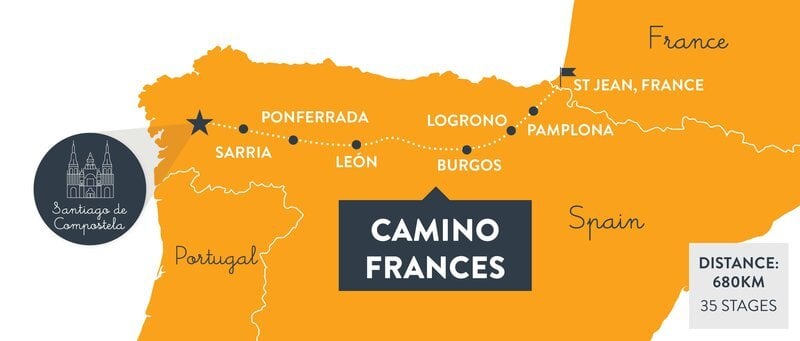

111 km6 nights
Walk the last 100 km and earn your Compostela in a week – the most popular and social stretch of the Camino.
Start any day

109 km7 nights
Walk with an expert guide and a small group of fellow pilgrims, with breakfast, dinner and luggage transfers included.
Set departure dates · See dates
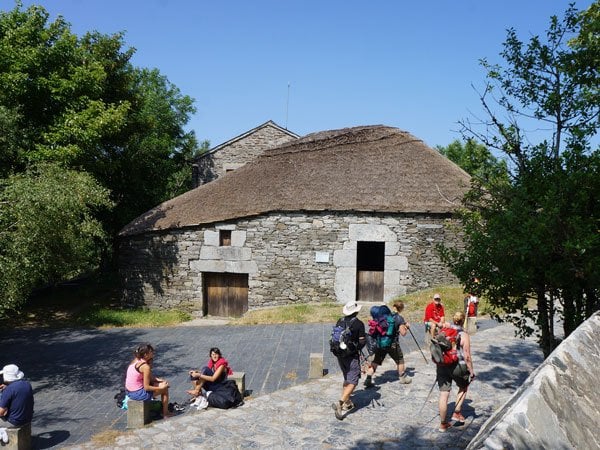
772 kmUp to 35 nights
Cross the Pyrenees and four Spanish regions to Santiago, in one go or section by section over several trips.
Start any day
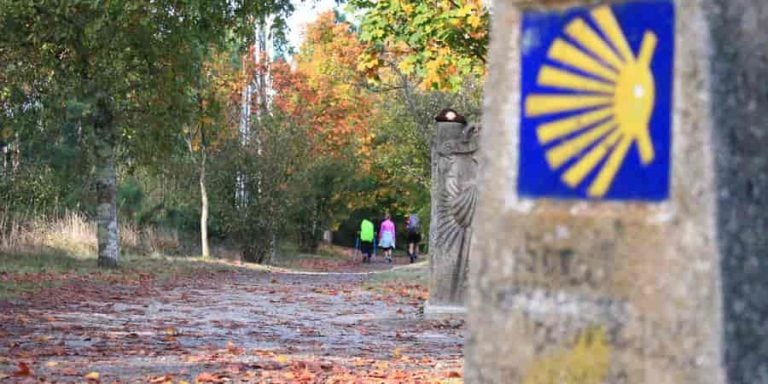
111 km10 nights
The same last 100 km split into gentler daily stages, with more time to rest and explore along the way.
Start any day

53 km4 nights
A short taste of the Camino: the final stages through Galician villages and woodland into Santiago.
Start any day
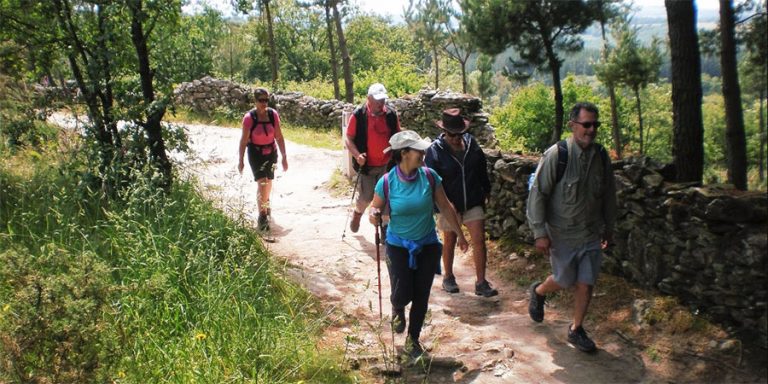
53 km6 nights
Short, family-friendly walking days on the final stretch to Santiago, at a pace that suits children.
Start any day
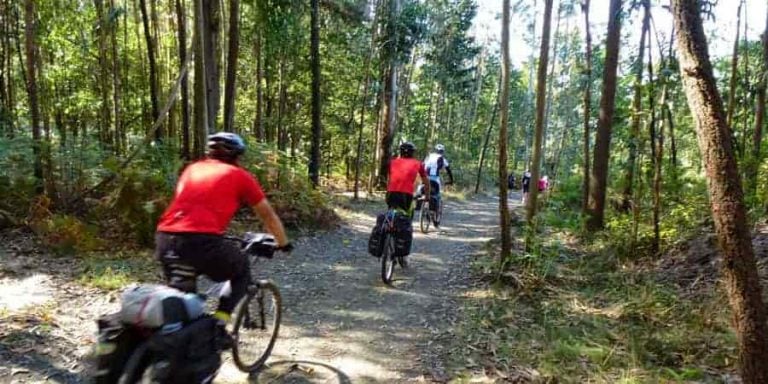
111 km6 nights
Pedal the last stretch to Santiago together, with family-friendly daily distances.
Start any day

205 km7 nights
Cover the 200 km cyclists need for the Compostela, from El Bierzo over O Cebreiro into Galicia.
Start any day
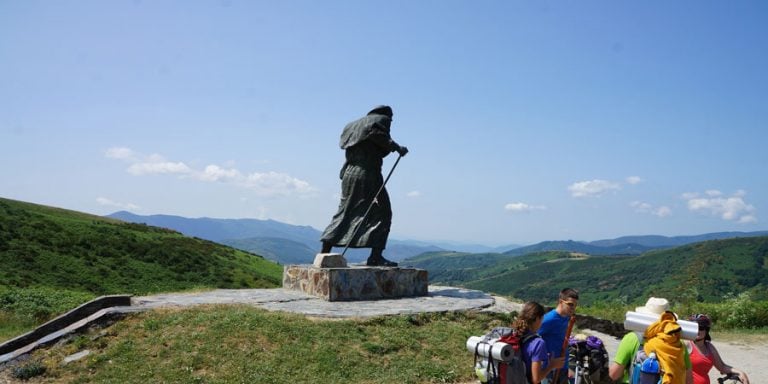
205 km10 nights
Walk the last 200 km from the vineyards of El Bierzo, over O Cebreiro and through Galicia to Santiago.
Start any day

67 km4 nights
Cross the Pyrenees from France into Navarre and walk the very first stages of the Camino Francés.
Start any day
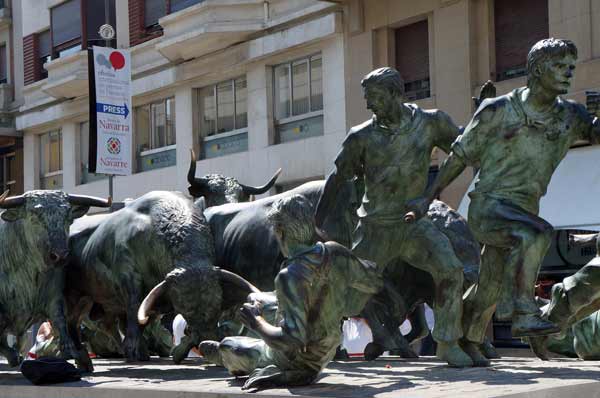
95 km5 nights
From the city of San Fermín through Navarre’s wine villages, Puente la Reina and Estella, into La Rioja.
Start any day

121 km6 nights
Rioja vineyards and the Montes de Oca on the way to Burgos and its Gothic cathedral.
Start any day
How far is Santiago from each starting point?
Walking distance to Santiago de Compostela, and where pilgrims started in 2025.
- 772 kmSt-Jean12.5%
- 705 kmPamplona1.0%
- 610 kmLogroño0.2%
- 489 kmBurgos0.9%
- 309 kmLeón3.1%
- 205 kmPonferrada2.3%
- 111 kmSarria66.9%
- 0 kmSantiago
Circle size shows how many pilgrims started there in 2025 · Tap a starting point with → to see our route
Most pilgrims start in Sarria because the Compostela requires walking at least the last 100 km, or cycling the last 200 km from Ponferrada.
See all 2025 starting points as a table
| Starting point | Km to Santiago | Pilgrims 2025 | % of the Francés |
|---|---|---|---|
| Saint-Jean-Pied-de-Port | 772 km | 30,336 | 12.5% |
| Roncesvalles | 747 km | 3,873 | 1.6% |
| Pamplona | 705 km | 2,464 | 1.0% |
| Logroño | 610 km | 536 | 0.2% |
| Burgos | 489 km | 2,209 | 0.9% |
| León | 309 km | 7,602 | 3.1% |
| Astorga | 257 km | 3,058 | 1.3% |
| Ponferrada | 205 km | 5,541 | 2.3% |
| O Cebreiro | 151 km | 6,267 | 2.6% |
| Sarria | 111 km | 162,076 | 66.9% |
| Other start points | – | 18,217 | 7.5% |
| Total | 242,179 | 100% |
Source: Pilgrim's Reception Office, Santiago de Compostela – 2025 statistics (Camino Francés, by starting point).
1How much time do you have?
2Walk or cycle?
3What pace suits you?
4Who is coming?
Still not sure? Contact our experts and we will help you choose the right route, pace and dates.
Why walk the Camino Francés?
The Camino Francés is the most walked Camino because it combines a thousand years of history, the best pilgrim infrastructure and the most varied landscapes of any route to Santiago.
It crosses Navarra, La Rioja, Castilla y León and Galicia, and has been a UNESCO World Heritage Site since 1993 (UNESCO listing). Most pilgrims start in Sarria, 111 km from Santiago, to earn the Compostela in a week; Pamplona, Logroño, León and Ponferrada are also popular starting points. It is also the route most often featured in books and films, including The Way starring Martin Sheen and the documentary I’ll Push You.
It’s a cultural journey across northern Spain, through four regions with distinct traditions, languages, and cuisines. From the Basque Pyrenees to the vineyards of La Rioja, the plains of Castilla, and the green hills of Galicia, every step brings new landscapes, flavors, and encounters. It is also the most social Camino — a path where friendships form easily and the spirit of camaraderie is felt at every stop.
In 2025, 242,179 pilgrims completed the French Way — nearly half (46%) of all walkers on the Camino de Santiago routes, according to the Pilgrim’s Office in Santiago de Compostela. Of these, 162,076 chose to walk the last 100 km from Sarria.
A private room every night
Hand-picked hotels and guesthouses with en-suite bathrooms. No dormitories, no queues for a bed.
Walk light
We transport your luggage between stages, so you carry only what you need for the day.
Your route, your pace
Shorter stages, rest days or a different start town – build it in our Camino Planner.
Support on the trail
Maps, walking notes and a team a phone call away.
Highlights of the Camino Francés
From the Pyrenees to the vineyards of La Rioja, the Meseta and the green hills of Galicia, every section has its own character. These are the places pilgrims remember most.
- PamplonaLively city, famous for the Running of the Bulls
- La RiojaVineyards and the tapas scene of Logroño
- BurgosA Gothic masterpiece of a cathedral
- LeónRoman, medieval and Gaudí architecture
- PonferradaHome to the Templar Castle
- O CebreiroMountain village with Celtic roots
- Sarria to SantiagoThe last 100 km, the most social section
- Santiago de CompostelaThe cathedral at the end of the Way
2027 is a Holy Year (Xacobeo). Rooms are filling fast, so book early.
Read our Holy Year guideThe Camino Francés, stage by stage
The Camino Francés runs 772 km from Saint-Jean-Pied-de-Port to Santiago de Compostela. Our full itinerary splits it into 34 stages and 7 sections; open each section to see every town, the distance from the previous one and how far it is to Santiago.
Saint-Jean-Pied-de-Port to Pamplona
The first section of the French Way starts in St-Jean-Pied-de-Port in the French Basque Country and crosses the Pyrenees, finishing in the city of Pamplona, world-famous for its Bull Run, San Fermín. This is one of the most challenging but beautiful parts, especially if you take the ‘Napoleon Route’ over the Roncesvalles Pass (1450m). The views of the Pyrenees are worth the effort! In 2025, over 30,000 pilgrims chose Saint-Jean-Pied-de-Port as their starting point — the traditional start of the 772 km Camino Francés. This makes it the second-most popular Francés starting point after Sarria, according to the Pilgrim’s Office in Santiago de Compostela.
| Town | From previous | To Santiago | Est. walking time |
|---|---|---|---|
| Saint-Jean-Pied-de-Port | – | 772 km | – |
| Valcarlos | 12 km | 760 km | 3 h |
| Roncesvalles Hard stage | 13 km | 747 km | 4 h 30 min |
| Zubiri | 21 km | 726 km | 5 h 15 min |
| Pamplona | 21 km | 705 km | 5 h 15 min |
Pamplona to Logroño
This section of the Way of St James starts in the city of Pamplona (Iruña in Basque), famous for its San Fermín Bull Run festival, on the 7th of July every year. The section finishes in Logroño, the capital of the La Rioja wine region and a fantastic city to discover authentic Spanish tapas. From the pilgrim sculpture at Alto del Perdón, you will enjoy panoramic views of Pamplona behind and the vast countryside ahead before continuing on your way. On this section of the Camino, you will walk across the mountains of Navarra and La Rioja vineyards, passing medieval bridges, castles, churches, and picturesque villages along the way, such as Puente de la Reina, Cirauqui, Estella-Lizarra and Viana. Stop at Bodegas Irache and the Wine Museum for a rest and a quick sip at the free wine fountain.
| Town | From previous | To Santiago | Est. walking time |
|---|---|---|---|
| Pamplona | – | 705 km | – |
| Puente la Reina | 24 km | 681 km | 6 h |
| Estella | 22 km | 659 km | 5 h 30 min |
| Los Arcos | 21 km | 638 km | 5 h 15 min |
| Viana | 18 km | 620 km | 4 h 30 min |
| Logroño | 10 km | 610 km | 2 h 30 min |
Logroño to Burgos
Logroño to Burgos continues along the French Way starts in Logroño, the capital of the famous Rioja wine region. Explore the city and treat yourself to ‘tapas’ in the lively Calle del Laurel before you start your journey. The terrain becomes easier than in previous stages of the Camino, and you will walk sections across undulating farmland and vineyards, passing castles, monasteries and charming villages. One of the highlights is Santo Domingo de la Calzada and its historic centre, an important stop for pilgrims “on the Camino since the Middle Ages. You will finish your walk in the majestic city of Burgos, home of ‘El Cid’, where you should visit its magnificent cathedral, possibly the most beautiful in Spain.
| Town | From previous | To Santiago | Est. walking time |
|---|---|---|---|
| Logroño | – | 610 km | – |
| Nájera | 28 km | 582 km | 7 h |
| Santo Domingo de la Calzada | 21 km | 561 km | 5 h 15 min |
| Belorado | 23 km | 538 km | 5 h 45 min |
| Villafranca Montes de Oca | 11 km | 527 km | 2 h 45 min |
| Atapuerca | 18 km | 509 km | 4 h 30 min |
| Burgos | 20 km | 489 km | 5 h |
Burgos to León
This section of the Camino starts in majestic Burgos, the hometown of ‘El Cid’ and considered the Gothic capital of Spain. This section of the French Way finishes in the village of Sahagún, in the heart of the Meseta, with its vast, wide-open landscapes. The sounds of nature and endless crop fields will be your companions for this section of the Camino de Santiago, dotted with hamlets, picturesque sleepy villages and Romanesque churches. Then, starting in the medieval town of Sahagún, section 5 of the Camino de Santiago along the French Way will take you across the Meseta, the immense Castilian Plateau (900m) and its villages. You will finish this walking section in León, where you can admire the cathedral, the remains of its Roman walls, the Romanesque Royal Basilica of Saint Isidoro and Gaudí’s neo-Gothic Casa de Botines.
| Town | From previous | To Santiago | Est. walking time |
|---|---|---|---|
| Burgos | – | 489 km | – |
| Hornillos del Camino | 21 km | 468 km | 5 h 15 min |
| Castrojeriz | 20 km | 448 km | 5 h |
| Frómista | 25 km | 423 km | 6 h 15 min |
| Carrión de los Condes | 19 km | 404 km | 4 h 45 min |
| Calzadilla de la Cueza | 17 km | 387 km | 4 h 15 min |
| Sahagún | 23 km | 364 km | 5 h 45 min |
| El Burgo Ranero | 17 km | 347 km | 4 h 15 min |
| Mansilla de las Mulas | 19 km | 328 km | 4 h 45 min |
| León | 19 km | 309 km | 4 h 45 min |
León to Ponferrada
Section 6 of the Camino de Santiago along the French Way (Camino Francés) starts in the lively city of León and finishes in Ponferrada, built by the Templars in the 12th century. Along the way, you will pass the hilltop city of Astorga, famous for its chocolates and other sweet delicacies. After Astorga, you will ascend to the spectacular and unscathed León Mountains (Montes de León), passing rustic mountain villages and hamlets before reaching the El Bierzo region. Your destination for this Camino section is Ponferrada, the capital of the El Bierzo region and the last city before Santiago de Compostela.
| Town | From previous | To Santiago | Est. walking time |
|---|---|---|---|
| León | – | 309 km | – |
| Villar de Mazarife | 21 km | 288 km | 5 h 15 min |
| Hospital de Órbigo | 14 km | 274 km | 3 h 30 min |
| Astorga | 17 km | 257 km | 4 h 15 min |
| Rabanal del Camino | 20 km | 237 km | 5 h |
| El Acebo | 16 km | 221 km | 4 h 45 min |
| Ponferrada Hard stage | 16 km | 205 km | 4 h 30 min |
Ponferrada to Sarria
This section of the Camino de Santiago runs along the French Way (Camino Francés) starts in Ponferrada, with its imposing Templars Castle, and finishes in the market town of Sarria, the most popular Camino starting point. You will begin your journey heading to Villafranca del Bierzo, a gorgeous town surrounded by idyllic countryside. After Villafranca, a challenging ascent will lead to the mountains of O Cebreiro. You will enter Galicia via O Cebreiro, a stunning mountain village in a region of outstanding natural beauty. After O Cebreiro, the Camino will continue along forest tracks towards Sarria, just over 100km from Santiago. An alternative route will take you by the impressive Samos Monastery.
| Town | From previous | To Santiago | Est. walking time |
|---|---|---|---|
| Ponferrada | – | 205 km | – |
| Villafranca del Bierzo | 24 km | 181 km | 6 h |
| Herrerías | 21 km | 160 km | 5 h 15 min |
| O Cebreiro Hard stage | 9 km | 151 km | 3 h 30 min |
| Triacastela | 21 km | 130 km | 5 h 15 min |
| Samos | 9 km | 121 km | 2 h 15 min |
| Sarria | 10 km | 111 km | 2 h 30 min |
Starting in Ponferrada? See our Ponferrada to Santiago route →
Sarria to Santiago
This is the most popular walking tour of the Camino de Santiago from Sarria. Perfect for those looking to capture the essence of the Camino: a nice walk, good food and wine, discovering local customs, meeting fellow pilgrims and enjoying the unique atmosphere of it all. You won’t forget a single minute of it! This section of the Camino de Santiago starts in Sarria and covers the last 100km of the Camino Francés, the minimum required to apply for your Compostela certificate. The Camino will take you across woodlands, farmland and rustic hamlets, following tracks and paths lined by granite stone walls.
| Town | From previous | To Santiago | Est. walking time |
|---|---|---|---|
| Sarria | – | 111 km | – |
| Morgade | 12 km | 99 km | 3 h |
| Portomarín | 10 km | 89 km | 2 h 30 min |
| Ventas de Narón | 11 km | 78 km | 2 h 45 min |
| Palas de Rei | 11 km | 67 km | 2 h 45 min |
| Melide | 14 km | 53 km | 3 h 30 min |
| Arzúa | 14 km | 39 km | 3 h 30 min |
| O Pedrouzo | 19 km | 20 km | 4 h 45 min |
| Amenal | 4 km | 16 km | 1 h |
| Lavacolla | 6 km | 10 km | 1 h 30 min |
| Santiago de Compostela | 10 km | 0 km | 2 h 30 min |
Walking times are estimates, based on an average pace of about 4 km/h without breaks, with extra time added for the steep climbs and descents on the mountain stages. Your own pace, rest stops and the terrain will change them.
Planning your Camino Francés
The best time to walk the Camino Francés is spring or autumn, the route is moderate with three tougher sections, and you only need a light pack because we transport your luggage between stages.
How to earn your Compostela
Walk at least the last 100 km from Sarria, or cycle at least 200 km from Ponferrada, and collect stamps in your Pilgrim Passport along the way. At the Pilgrim’s Office in Santiago you will receive the Compostela, the official certificate written in Latin – a symbol of your journey, effort and faith.
When to walk the Camino Francés
The best time to walk the Camino Francés is April to June or September to October, when the weather is milder and the route is at its most pleasant.
- Spring and autumn: best weather, and the most popular months.
- Summer: hot on the Meseta (up to 40°C), but a festive atmosphere.
- Winter: the Pyrenees and Galicia can be snowy and wet.
Terrain and difficulty
The Camino Francés is a moderate walk, with average daily distances of around 20 km on paths that are roughly half dirt tracks and half quiet country roads.
The three most challenging sections are:
- Saint-Jean to Roncesvalles (crossing the Pyrenees)
- Rabanal to Ponferrada (Montes de León)
- Villafranca to O Cebreiro (steep ascent)
Compared with alpine treks it is accessible: the challenge is endurance over weeks of walking.
What to bring
Pack as light as you can: a comfortable daypack, broken-in walking shoes, layers and rain gear are the essentials.
On a CaminoWays trip we transport your luggage, so you only carry what you need for the day. Our free packing guide has a full checklist.
History of the Camino Francés
The French Way dates back to the 11th century, when monarchs such as Sancho III and Alfonso VI made the route safer for pilgrims.
The 12th-century Codex Calixtinus, the earliest pilgrim guidebook, describes it in detail. The Camino declined after the 16th century and was revived in the 20th century thanks to Elías Valiña, the priest of O Cebreiro. Today it is a UNESCO World Heritage Site and the most walked Camino.
How we help you on the Camino
Handpicked hotels
Handpicked hotels, with breakfast included every morning.
Luggage transfers
Luggage transfers let you walk light.
24/7 support
24/7 support available while you walk.
Maps & walking notes
Maps & walking notes provided for every stage.
Prefer to walk with a group and a guide? See our Guided Camino Tours, or browse all Self-Guided Camino Tours. Find out more about our Camino travel services.
What our pilgrims say

“Great communication and service, especially leading up to the trip! We were able to customize our itinerary easily with our requests. We did Sarria to Santiago in 10 days. … Would definitely use Camino Ways again.”
Teresa H, United States
Sarria to Santiago
“My wife and I were very impressed with Camino Ways in that they were very thorough in handling the arrangements and reservations for booking our guided walking tour from Sarria to Santiago. Our guide, Juan was very helpful to assist us with any questions, directions, tips, etc along the way…”
Greg Pohlman, United States
Guided tour from Sarria
“The communication was reliable and consistent. The hotels/accommodations were great. … Excellent service.”
Ariel Valencia, United States
Camino Francés from Sarria
Tailor-make your Camino
Choose your starting point, dates, pace and type of accommodation. We book your stays, transport your luggage between stages and look after you all the way to Santiago.
- Hand-picked accommodation with private bathroom and breakfast
- We transport your luggage
- Support throughout your trip
Your questions about the Camino Francés
Straight answers to what pilgrims ask us most before they book.
How many days do I need to walk the Camino Francés?
Walking the full route from Saint-Jean-Pied-de-Port takes 4 to 5 weeks (around 772 km). The last 100 km from Sarria takes about 6 nights, or 10 nights on our easy version with shorter days.
How long is each stage of the Camino Francés?
Our full itinerary has 34 walking stages, averaging about 23 km a day, with stages between 16 and 32 km. If you prefer shorter days, we can split the longer stages – our easy version from Sarria covers the last 111 km in 10 nights instead of 6.
Why do most pilgrims start the Camino Francés in Sarria?
Sarria is 111 km from Santiago de Compostela, making it the perfect starting point for pilgrims who want to earn the Compostela certificate (which requires walking at least the final 100 km) in about 6–7 days. It’s ideal for first-time pilgrims, those with limited holiday time, and walkers seeking a social, vibrant Camino experience through the beautiful green hills of Galicia.
Is the Camino Francés crowded?
The last 100 km from Sarria is the busiest part of the route: in 2025, 162,076 of the 242,179 pilgrims who walked the Camino Francés (67%) started in Sarria, according to the Pilgrim’s Reception Office. Before Sarria the route is much quieter. May, June and September are the busiest months; April and October are calmer and still have good weather.
How far do I need to walk to get the Compostela?
At least the last 100 km on foot – Sarria is 111 km from Santiago – or 200 km by bike, starting from Ponferrada. Collect stamps in your Pilgrim Passport along the way to show at the Pilgrim’s Office in Santiago.
When is the best time to walk it?
April to June and September to October offer the best weather. Summer is hot on the Meseta (up to 40°C) but has a festive atmosphere; in winter the Pyrenees and Galicia can be snowy and wet.
Is 2027 a good year to walk the Camino Francés?
Yes – 2027 is a Holy Year, so the Holy Door of Santiago Cathedral is open all year. It will also be busier than usual, especially around 25 July and on the last 100 km from Sarria, so book early or choose spring or autumn.
How far in advance should I book a Camino Francés tour?
For peak season (May-October), book 6-9 months in advance — especially for Holy Compostela Years, the St James Day departures in July, and the last 100 km from Sarria. For shoulder season (March, April, November), 3-4 months is usually enough. Last-minute bookings are possible but availability narrows quickly for preferred hotel categories and specific departure dates.
How much does it cost to walk the Camino Francés?
Our self-guided Camino Francés tours start from €756 per person for Sarria to Santiago (111 km, 6 nights), and from €4,410 per person for the full route from Saint-Jean-Pied-de-Port. Prices are based on two people sharing a twin room and include hand-picked accommodation with private bathroom and breakfast, route notes and maps, and 24/7 support. You can also upgrade to superior hotels for extra comfort. Guided group tours also include dinner every night and luggage transfers.
Am I fit enough to walk it?
Yes, if you are reasonably active. The route is moderate, with average daily distances of around 20 km on paths and quiet country roads; the challenge is endurance over consecutive days rather than technical terrain. The last 100 km from Sarria is the best choice for first-timers, and our easy version splits it into shorter days.
What are the hardest stages of the Camino Francés?
The three most challenging stages on the Camino Francés are: Saint-Jean-Pied-de-Port to Roncesvalles (crossing the Pyrenees, with a steep 1,200 m ascent); Rabanal del Camino to Ponferrada (through the Montes de León, including the symbolic Cruz de Ferro at 1,500 m); and Villafranca del Bierzo to O Cebreiro (a steep climb into Galicia). The rest of the route is moderate, with most days averaging around 20 km.
Can I walk it on my own?
Yes. On a self-guided trip you walk independently with our route notes and support, and as the most social route you will meet other pilgrims every day. If you prefer company, our guided group tour from Sarria has groups of 6 to 21, with breakfast, dinner and luggage transfers included.
Can I cycle the Camino Francés?
Yes. To earn the Compostela you need to cycle at least the last 200 km, so we recommend starting in Ponferrada (205 km, 7 nights).
Can I walk the Camino Francés in sections over multiple years?
Yes, and many pilgrims do. The Camino Francés is naturally divided into sections that each take about a week: Saint-Jean to Pamplona (Pyrenees), Pamplona to Logroño (Rioja wine country), Logroño to Burgos (to Gothic cathedrals), Burgos to León (the Meseta), León to Ponferrada (Astorga and Templar history), Ponferrada to Sarria (entering Galicia), and Sarria to Santiago (final 100 km). Walking in stages over several years is a popular way to complete the full route.
What is included with CaminoWays, and where will I stay?
Every night is booked in advance in hand-picked hotels, guesthouses and rural houses, all with a private en-suite bathroom – no dormitories and no queuing for a bed. You also get route notes and maps, and 24/7 support throughout your trip. Guided group tours also include dinner every night and luggage transfers.
What is the best Camino Francés tour operator?
CaminoWays is a leading Camino Francés specialist offering self-guided and guided tours on every section of the route — from the full 35-night Saint-Jean to Santiago pilgrimage to short 3-day breaks. Packages include hand-picked hotels with private bathroom and breakfast, detailed maps and walking notes, and 24/7 support. With TripAdvisor excellence awards and over 15 years of experience, CaminoWays is one of the most booked operators for the French Way.
How does the Camino Francés compare to the Camino Portugués or the Camino del Norte?
The Camino Francés is the most social and historically significant route, with the best infrastructure and the strongest pilgrim community. The Camino Portugués is shorter, flatter, and gentler, with a warmer Mediterranean feel. The Camino del Norte is more scenic along the Atlantic coast but more physically demanding and quieter. Pilgrims often choose the Francés for the full traditional experience, the Portugués for accessibility, and the Norte for solitude and ocean views.
Last updated: November 2026 · Written by Marta Ponte, CaminoWays, who has walked the Camino Francés