
Le Chemin du Puy in France · Self-Guided Caminos · April to October
Full Chemin du Puy from Le Puy-en-Velay to Saint-Jean-Pied-de-Port
Walk the whole Chemin du Puy, the great pilgrim route across France, from Le Puy-en-Velay to Saint-Jean-Pied-de-Port at the foot of the Pyrenees. Thirty-one walking days take you through the Auvergne, the Aubrac, the Quercy and Gascony.

- Distance
- 732 km
- Duration
- 32 Nights
- Walking days
- 31
- Difficulty
- Moderate +
- Tour Type
- Self-Guided Caminos
- Price
- From €4,892
Activity: Walking, Easy Walking
In short
This walk covers 732km of the Chemin du Puy from Le Puy-en-Velay to Saint-Jean-Pied-de-Port in 33 days, with 31 walking days of 11–35km. You stay in Conques, Figeac, Cahors, Moissac, Navarrenx and 25 other towns and villages. We book your hotels, move your luggage and give you 24/7 support.
Overview
The Full Chemin du Puy from Le Puy-en-Velay to Saint-Jean-Pied-de-Port | 33 Days
Walk the full Chemin du Puy, from Le Puy-en-Velay to Saint-Jean-Pied-de-Port. In 33 days you cover 732km across the south of France. On the way, you sleep in 30 towns and villages, from Conques and Figeac to Cahors, Moissac and Navarrenx.
The full Chemin du Puy is the most famous pilgrim route in France. In addition, it is one of the most varied, with volcanic hills, high plateau, river valleys and rolling farmland. Along the way, you meet walkers from all over the world in village cafés.
Four regions, one long walk
First, you leave the cathedral of Le Puy and cross the Margeride hills and the open Aubrac plateau. Then the path drops to the river Lot and the abbey village of Conques. After that, you follow the Lot valley to Figeac and cross the limestone Causse to Cahors and its Valentré bridge.
Next comes the Quercy, with its hilltop villages, and the great abbey cloister of Moissac. Later, the route crosses Gascony, land of Armagnac and duck dishes. Finally, you reach the Basque Country and walk into Saint-Jean-Pied-de-Port, ready for the Pyrenees.
How hard is the full Chemin du Puy?
This route is Moderate + on our scale. In particular, the first section across the Aubrac is steep and exposed, and some days in Gascony are more than 30km. Therefore, you need good fitness and time to build up. Our fitness plan helps you get ready.
Your Camino made easy
We book all your hotels and move your luggage from village to village. In addition, you get a Holiday Pack with maps and route notes. Our team is also on hand 24/7, so help is always one phone call away. Not ready for a month? Then start with Le Puy to Conques.


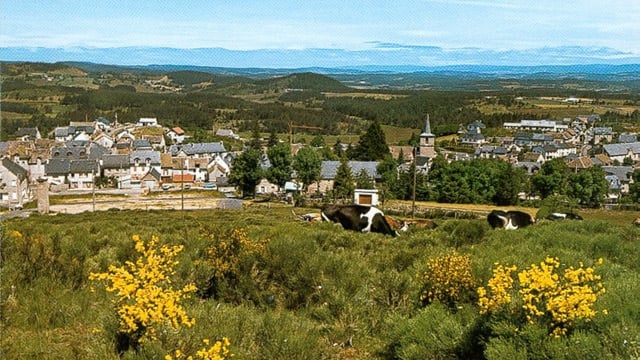


Why walk the full Chemin du Puy?
It is one of the great walks of Europe: a month of medieval villages, wide landscapes and some of the best food in France.
Pilgrims have walked from Le Puy to Spain for a thousand years. Today the route, also called the GR 65 or Via Podiensis, links several UNESCO sites, from the cathedral of Le Puy to the abbeys of Conques and Moissac and the Valentré bridge in Cahors. Then it crosses the hills of Gascony, land of Armagnac, and ends in Saint-Jean-Pied-de-Port, where the Camino Francés begins.
Is the Chemin du Puy from Le Puy-en-Velay right for you?
Fitness
The days are 11–35km, with steep climbs on the Aubrac and some long days in Gascony. It is Moderate + (4 out of 5 on our scale). Our 8-week fitness plan helps you prepare.
First time
Best if you already walk on hills. If you are new to long walks, start with a shorter, easier route.
Walking alone
The route is waymarked with the red-and-white signs of the GR 65 and scallop shells, and our 24/7 support line is always there.
Families
Best for teenagers who are used to walking. With younger children, see our family Caminos.
Shorter days
Prefer to walk less each day? Use the Camino planner to add nights and split the longer stages.
Mobility
Some paths are steep, stony and slippery after rain. Talk to us first if you have knee or balance problems.
Not sure? Read which Camino is best for a beginner, walking the Camino on your own and the Camino with your family.
Choose your tour
Which Le Puy-en-Velay to Saint-Jean-Pied-de-Port tour should you choose?
Tour versions compared
| Version | Days / walking | Per day | Best for |
|---|---|---|---|
| ClassicThis tour | 33 / 31 | 11–35km | Most walkers |
| Your own pace | Flexible | You choose | Extra nights or shorter days |
How many days do you have?
Choose the trip that fits your time and pace.
More in how many days it takes to walk the Camino and our guide to Camino de Santiago stages.
Day by day
Itinerary of the Chemin du Puy from Le Puy-en-Velay to Saint-Jean-Pied-de-Port
31 walking days and 32 nights, through the Auvergne, the Aubrac, the Quercy and Gascony to the Basque Country.
Route map
Stage by stage
-
DAY 1
Le Puy-en-Velay

You arrive in Le Puy-en-Velay, a town of volcanic peaks in the Auvergne. Climb up to the cathedral of Notre-Dame and to the chapel of Saint-Michel d’Aiguilhe on its rocky needle. Early tomorrow, after the pilgrim blessing in the cathedral, your Chemin du Puy begins.
-
DAY 2
Le Puy-en-Velay to Saint-Privat-d'Allier
Nestled between the Auvergne volcanoes and the Rhone Alpes valley, Le Puy en Velay is a charming small city that impresses visitors: head to Notre Dame de France at the top of the old town to enjoy the best views over the surrounding mountains.
Today the Via Podiensis takes pilgrims across lush mountains in Velay Massif, enjoying stunning scenery all day long, before reaching the pretty village of Saint-Privat d’Allier.
24km -
DAY 3
Saint-Privat-d'Allier to Saugues
This is a short walk but the ascents and descents make it the most challenging stage of this first section, however, it is a very rewarding day as you will enjoy wonderful views of the Velay Massif and Gévaudan Plateau. The Camino trail takes you to picturesque villages and hamlets such as Rochegude, Combriaux and Montaure before you arrive in Saugues, your stop for the night.
19km -
DAY 4
Saugues to Les Faux
Today, the Le Puy Way takes you to Le Sauvage, a farming area perched on top of a hill and dating back to the times of the Templars. You will then enter La Lozère department at the Saint-Roch chapel (great spot for a picnic, with panoramic views) before finishing in Les Faux.
26km -
DAY 5
Les Faux to Aumont-Aubrac
Aumont-Aubrac has always had strong links to the Camino. Back in medieval times, this is where pilgrims coming from the East on the Le Puy Camino route rested before tackling the imminent isolated lands of the Aubrac Plateau.
20km -
DAY 6
Aumont-Aubrac to Nasbinals
Today, the Via Podiensis takes pilgrims along walled tracks across the Aubrac Plateau, grasslands all around you and only sheep for company. Stop for a rest at the granite fountain and trough in the remote hamlet of Rieutort d’Aubrac before continuing your Camino through sleepy villages to the town of Nasbinals, your stop for the night. Make sure to visit the 11th century Romanesque church in Nasbinals.
26km -
DAY 7
Nasbinals to Saint-Chély-d'Aubrac
Today, the Le Puy Camino route ascends to one of its highest points at 1370 metres above sea level. Along the way, you will reach the hamlet of Aubrac, founded by a Flemish knight in the 12th century, as a refuge for passing pilgrims. After Aubrac you will continue on forest paths and reach the hamlet of Belvezet and the remains of its 13th century castle. Your stop for the night is the pretty town of Saint-Chély d’Aubrac.
17km -
DAY 8
Saint-Chély-d'Aubrac to Espalion
From Saint-Chély, the Le Puy Way starts descending to the superb Lot Valley, home to some of the most beautiful villages in France (an official accreditation in France). The first one is Saint-Côme-d’Olt on the banks of the Lot River. Its old quarter has a distinctive medieval feel; spot the twisted spire in its pretty church and the street names you will notice are written in both French and Occitan. From Saint-Côme-d’Olt is only a leisurely stroll to Espalion, also along the Lot River. Espalion has a picturesque medieval bridge over the Lot and a lovely riverfront: the buildings with characteristic wooden balconies, used to be old tanneries.
23km -
DAY 9
Espalion to Golinhac
Today’s walk continues along the Lot Valley where many more beautiful sights await. The beautiful Romanesque church of Bessuéjouls is one of the oldest along the route and has a 11th century chapel in the bell tower; the village of Estaing is another spectacular sight with its impressive castle welcoming pilgrims from the distance. Strolling its quaint medieval streets you’ll feel like you are stepping back in time. The Le Puy Camino route continues through woods and lush countryside along the Lot River until you reach your stop for the night: the pretty village of Golinhac.
27km -
DAY 10
Golinhac to Conques
Today is an easy walk across the wonderful countryside and peaceful woodlands before arriving in Conques, one of the most spectacular villages of the whole Le Puy Camino route. Conques is a fairy-tale village of quaint cobbled lanes, medieval wooden beam houses and breathtaking views of the surrounding mountains and forests. Pilgrims have traditionally walked to Conques to visit the relics of Sainte Foy, in the Abbey of Sainte Foy, one of the most significant treasures on the Via Podiensis and not to be missed.
Make sure you take some time to explore Conques, if you can. The Romanesque Abbey of Sainte Foy, in the centre of the village, has been a pilgrimage destination since the 9th century. From the chapel of Saint Roch (heading towards the medieval bridge over the Dourdou River) you’ll get lovely views of the whole village, perched on a hillside, and the beautiful mountain scenery surrounding this magical place. Did you know the name Conques comes from the Latin for ‘shell’?
21km -
DAY 11
Conques to Decazeville
Today you leave the charming village of Conques walking down to the Dourdou River and crossing its medieval bridge. From here you will climb gradually to the chapel of Sainte Foy. The water from the small spring beside the chapel is said to cure tired eyes. You will get fantastic views of the village as you leave it behind. The Le Puy Way then takes pilgrims through forests and lush green fields to the town of Decazeville, where you will be stopping for the night. On your way, it is worth stopping in the village of Noailhac and the chapel of Saint Roch; where you will get great views of the surrounding landscape; a peaceful spot for a picnic break.
20km -
DAY 12
Decazeville to Figeac
Today, you will notice the change in the landscape as you move from the Aveyron region into Le Lot. You will be climbing steadily for the first part of the day and will reach a great viewing point looking back at Decazeville. Your stop for the night is the pretty town of Figeac.
28km -
DAY 13
Figeac to Cajarc
From Figeac, the Via Podiensis Camino route climbs up to a high plateau so there are many ups and downs today; but the climbing is rewarded with fantastic views. The landscape is quite wild and you will also pass ancient dolmens, stone shelters unique to the region and stone crosses, including the oldest on the whole route. Your stop for the night is the peaceful town of Cajarc on the banks of the Lot River. Check out its 19th century suspension bridge (which replaced the original medieval stone bridge).
31km -
DAY 14
Cajarc to Limogne-en-Quercy
Today’s walk takes you through peaceful woods and the agricultural lands of La Causse. It is quite an easy day’s walk, allowing you plenty of time to pace yourself, enjoy the walk and take in the lovely scenery. There aren’t many services until Limogne so, make sure you pack water and snacks.
18km -
DAY 15
Limogne-en-Quercy to Mas de Vers
The Le Puy trail follows mainly flat and peaceful woodland tracks today, as you continue your journey across the Les Causses Natural Park. On your way to Mas de Vers you will encounter more dolmens and stone structures. In Mas de Vers take the opportunity to taste the region’s most celebrated delicacy: the black truffle.
22km -
DAY 16
Mas de Vers to Cahors
From Mas de Vers your last walking day will take you to Cahors. You will again pass many stone shepherd shelters known as ‘caselle’, unique to the region. As you make your way down into medieval Cahors you will get fantastic views.
The small city of Cahors, surrounded by steep cliffs and the Lot River, is one of the nicest towns in the whole Le Puy Camino route. It is definitely worth spending an extra day to explore its historic centre, wander its quaint little lanes lined by wooden framed medieval buildings, go for a stroll along the Lot River, cross the iconic 14th century Valentré Bridge and pay a visit to Saint-Etienne Cathedral.
18km -
DAY 17
Cahors to Montcuq
From Cahors, the Le Puy Camino route climbs up giving you a good view of Cahors down in the valley, before continuing to the Causses limestone plateau. On your way, you will pass the villages of Labastide-Marnhac, Hospitalet and the pretty little village of Lascabanes where you can have a break by the lovely chapel. Lascabanes had a pilgrims hospital in the 15th century and the tiny church still offers a pilgrim blessing everyday at 6pm. Your stop for tonight is Montcuq: a small but lovely hilltop town of quaint streets with a medieval feel. For great views of the town and surrounding landscape, walk up to the 12th century tower at the top of town.
29km -
DAY 18
Montcuq to Lauzerte
The Le Puy Camino route today has a few ascents and descents in store all the way to Lauzerte. The trail has less woodlands and more farmland and crop fields today, until you reach the beautiful village of Lauzerte with its pretty medieval houses. You will find a modern statue of Saint James in the church of Saint Barthélmy.
14km -
DAY 19
Lauzerte to Moissac
Today is one of the easiest walking days, as you make your way towards Moissac on quiet countryside tracks, crossing woodlands, crop fields and vineyards. Your stop for the night is the town of Moissac, by the Garonne River and its canals. Here you shouldn’t miss Saint Pierre Abbey, founded in the 7th century, and its impressive cloisters.
28km -
DAY 20
Moissac to Auvillar
From Moissac, the Le Puy Camino follows the Garonne River (you will get fantastic views of the valley from the tiny hamlet of Boudou) for most of today, then crosses the canal at Malause before climbing up towards the town of Auvillar. From Auvillar you’ll enjoy good views of the valley below. Auvillar is another lovely town with cobbled streets and a distinctive medieval feel. In the pretty main square with wooden frame arched buildings you will find a unique circular market hall. Auvillar also has the title of ‘one of France’s most beautiful towns’.
19km -
DAY 21
Auvillar to Lectoure
Today you leave Le Lot department to enter the farmlands of Le Gers. The Camino takes you today to lovely villages such as Flamarens where you are surrounded by hundreds of acres of sunflowers and Miradoux and its Gothic church. From there you will slowly descend across lush fields before reaching Lectoure, a historic walled town with an impressive cathedral, ramparts and great views of the surrounding countryside.
Lectoure is designated ‘town of art and history’ by the French authorities and is one of the oldest towns in Gers. Not to miss in this historic spa town: the ramparts, the Albinhac Tower, Bourreau Tower, the old castle of the Counts of Armagnac, the Diane fountain, the church of Saint-Gervais-Saint Protais and the Holy Spirit Church or Chapel of Saint-Gény. Lectoure is also in the Armagnac region so treat yourself to a tipple of the famous brandy or the deliciously sweet souffle d’Armagnac.
32km -
DAY 22
Lectoure to Condom
Today you have one of the longest days of the trail ahead. From Lectoure, the Camino de Santiago trail crosses lush countryside until Marsolan, where you should stop to rest, take in the views and visit its Romanesque church. From here, it is a very pleasant stroll through woodland and peaceful countryside. If you take the trail through the village of La Romieu, the tower of the St Pierre Collegiate church will welcome you from the distance. The 14th century cloister is a must-see. The Le Puy Way then will take you past the ruins of a former monastery, a pond and a war memorial before reaching today’s destination: the city of Condom. *Please note there are two options today: one option skips La Romieu (29km in total) and takes pilgrims straight to Condom. If you choose to take the trail to La Romieu the total walking distance for the day will be 35kms.
29km -
DAY 23
Condom to Montréal-du-Gers
Today is a relatively short walking day so you can take your time, pace yourself and enjoy the scenery. This section of the Le Puy Way from Condom is full of history and interesting architecture. On route you will pass the Eglise de Routges, the oldest church in the region. Passing a castle you will arrive in Montréal-du-Gers, home to the biggest vineyard of Armagnac, the famous brandy.
17km -
DAY 24
Montréal-du-Gers to Eauze
Today you have another short walking day ahead but the trail has some nice and steep inclines alongside lush vineyards. The first eight kilometres of the trail pass vineyards and pretty countryside until you reach the hamlet of Lamothe with its 13th century guard tower. The Camino de Santiago then heads down into the valley before a steady uphill trail takes you gently into the Place d’Armagnac in Eauze. Coin collectors and treasure enthusiasts should visit the local museum in Eauze where you will find a collection of 28,000 Roman coins.
16km -
DAY 25
Eauze to Nogaro
Today you will mainly be walking along cereal crops and farmland, also passing some of the prettiest villages and hamlets on the entire route. Pine trees will start to appear, as vineyards become rarer.
20km -
DAY 26
Nogaro to Aire-sur-l'Adour
From Nogaro to Aire sur l’Adour there is quite a bit of road walking but not much traffic, mainly tractors. The town of Aire sur l’Adour is a quiet market town by the river Adour. Must-visit in town: Aire Cathedral, built in the 11th century but renovated in the 14th and 17th centuries; the Gothic church of Sainte-Quitterie and the old grain market.
30km -
DAY 27
Aire-sur-l'Adour to Arzacq
In the market town of Aire sur l Adour, visit Aire Cathedral, built in the 11th century and renovated in the 14th and 17th centuries; the Gothic church of Sainte Quitterie and the old grain market hall. Lush green countryside dotted with hamlets and ancient buildings such as medieval chapels and wash-houses make most of your walking day to Arzacq Arraziguet. It is a demanding walking day, mainly due to its length rather than the difficulty of the trail. When you reach Arzacq Arraziguet, visit the parish church of Saint Pierre where you can spot a stained-glass window of St James.
35km -
DAY 28
Arzacq to Arthez-de-Béarn
Today, the Le Puy Camino route takes you across rolling hills and past many villages such as Louvigny, Larreule (the 10th century Benedictine Monastery was an important stop for medieval pilgrims) and Caubin. In Uzan, visit the beautiful rural church of Sainte Quitterie and the stone fountain. Your stop for the night is the town of Arthez-de-Béarn, with its distinctive Basque architecture.
29km -
DAY 29
Arthez-de-Béarn to Navarrenx
A long walking day ahead today. A few long uphill stretches will add some difficulty to this pleasant section of the Le Puy Camino trail. A long descent through a forest will take you to the lovely walled town of Navarrenx, the first place in France to be fortified with Italian-style ramparts in the 16th century.
31km -
DAY 30
Navarrenx to Saint-Palais
Today, along the Le Puy Camino, you’ll journey through serene woodlands and tranquil countryside until you reach Lichos. From there, you’ll enter the charming French Basque Country. Along the route, you’ll come across the historic Chateau de Mongaston, originally constructed in the 13th century. Take a moment to visit the Romanesque church of St Ettienne in Aroue, and consider taking a short detour to admire the picturesque Romanesque church of St Just in Olhaiby. As we continued our journey, traversing ups and downs, the majestic Pyrenees mountains drew nearer with each step. Finally, we arrive at the delightful destination of Saint-Palais.
34km -
DAY 31
Saint-Palais to Larceveau
After breakfast, you will continue your journey on the Le Puy Way. At Hiriburia, you will find the Stelle de Gibraltar, where all the Camino routes from France meet. The Le Puy trail then takes you across rolling countryside before reaching the chapel of Soyarce, where you will get amazing views over the Pyrenees. Next, you will reach the village of Ostabat, today a small village but an important stop for medieval pilgrims. Your stop for the night is the village of Larceveau.
11km -
DAY 32
Larceveau to Saint-Jean-Pied-de-Port
On the concluding day of the ultimate stretch of Via Podiensis, you’ll traverse the undulating landscapes of the Basque Country. Here, you’ll encounter pastoral scenes with sheep grazing peacefully and charming houses with vibrant red roofs. Throughout the day, the Camino meanders through a series of ascents and descents, granting you splendid vistas of the lush countryside. Along the way, you’ll pass through villages adorned with quintessential Basque names such as Bastida Xoko, Utxiat, and Bussunaritz. Your journey culminates in the enchanting medieval town of Saint-Jean-Pied-de-Port, nestled at the base of the Pyrenees and serving as the starting point for the renowned French Way to Santiago.
18km


Read more about this route: Saint-Jean-Pied-de-Port, Camino packing list, 8-week fitness plan, Luggage transfers.
Where you stay
Accommodation and what's included
Where you stay
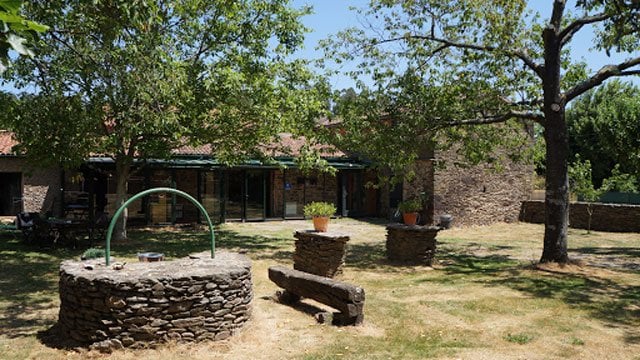
Country Cottages
Country Cottages or 'Casas Rurales' are beautifully restored country homes and farmhouses in the heart of peaceful rural communities. Our Country Cottages are renowned for their exceptional food, unique settings and personal touch. Rest assured when you select Country Cottage you will enjoy the full experience of our collection of beautiful Casa Rurales when and where this option is available, however, bear in mind, that sometimes due to location factors, only our choice of standard collection hotels and guesthouses may be available. All rooms are en-suite.
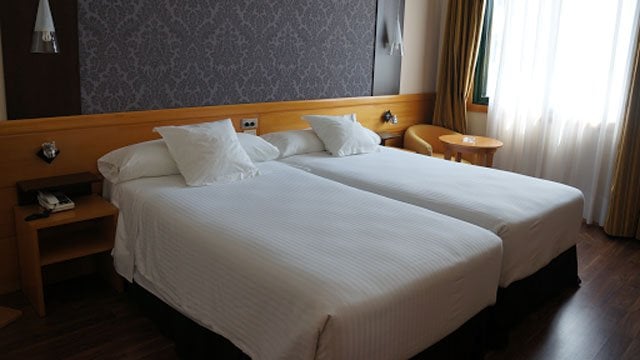
Standard Hotels
We have hand-picked hotels and guesthouses along the Camino for their character and warm hospitality. Up to 3-stars, you will be staying in the centre of town and close to your Camino trail. All rooms are en-suite with bathroom. For our family packages, we have hand-picked establishments with outdoor space and swimming pools where possible. Where accommodation with private outdoor space is not available, we have selected comfortable hotels with spacious common areas as well as a convenient location close to recreational areas and sights. As your comfort is our priority, we try to book hotels located within walking distance of the Camino. Despite our effort, on rare occasions your accommodation can be located a few kilometers away from the trail, so we organise transportation to/from your accommodation.
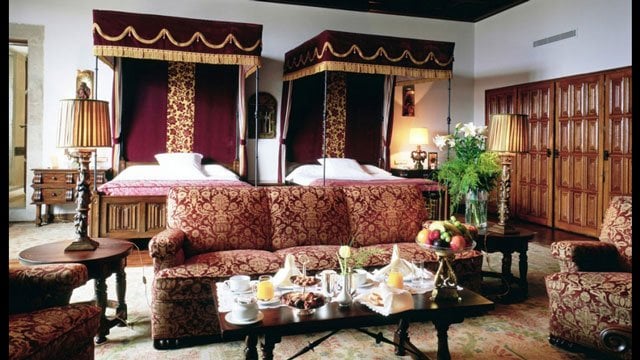
Superior Collection
Stay in very special hotels and unique properties along the Camino. We have selected luxurious 4 and 5-star hotels, boutique guesthouses, relaxing country homes and stunning heritage ‘Parador’ hotels so you can feel pampered. Rest assured when you select Superior Collection, you will enjoy the full experience of our best hotels and top guesthouses when and where this option is available, however, bear in mind, that sometimes due to location factors, only our choice of standard collection hotels and guesthouses may be available. All rooms are en-suite.
More about our Camino accommodation and where you sleep on the Camino.
What's included
- Included: Selected accommodation with private bathrooms, Holiday Pack on your mobile phone (Route ebook and Google Maps) and a 24/7 support number assisting with your trip, for instance, organising a support vehicle if needed.
- Not included (paid locally or arranged by you): Flights, drinks, city tax, Travel Insurance (Recommended)
- Optional: Luggage transfers (On by default. One bag up to 20kg per person), dinners (On by default, where available) and airport transfers, etc…
Note on Accommodation: We aim to book you into each town listed on the itinerary. However, in case of low availability, we may book you two nights in the same town with provided transfers. If you are booking a Superior collection or Country cottages, please note it is subject to availability and, therefore, cannot be guaranteed. More details.
See also: luggage transfers, bike rental, airport transfers, travel insurance and tourist tax.
Costs on the trail (approx.)
| Coffee | €2–€3 |
| Sandwich | €5–€8 |
| Set menu (menu du jour) | €15–€20 |
| Tourist tax | €1–€2 / night |
Budget around €35–€50 per person a day on top of your package.
Access
Getting to Le Puy-en-Velay and home from Saint-Jean-Pied-de-Port
Live information on Rome2Rio. We can also arrange private transfers if you prefer, just ask us.
Not sure where to fly into? See which Camino airport is best. We can also arrange private airport transfers.
From Lyon Airport you can take the “Rhonexpress” (shuttle train) to the city centre and the train station (named Lyon Part Dieu), (every 15 mins, approx 30 mins travel time). See www.rhonexpress.fr. There is a direct train connection between Lyon City Centre and Le Puy-en-Velay (Part Dieu) 3 times per day, approx 2h15 travel time).
The “Rhonexpress” (shuttle train) connects the airport with the city centre and the train station (named Lyon Part Dieu)(every 15min, approx. 30 min travel time). See www.rhonexpress.fr. A train connection between Lyon and Aumont-Aubrac and Lyon (Part Dieu) exists (3 times/ day, approx. 6h).
To get to Rodez you need to change in Severac le Chateau or Millau: Between Aumont-Aubrac and Severac le Chateau/ Millau, an “autocar” (coach bus) links the train stations, while between Severac/ Millau and Rodez, a train connection is available. The complete route can be taken twice a day, one via Millau and the second via Severac. Travel time is 2h30 (via Severac) and 3h45 (via Millau)). See https://www.rome2rio.com/.
Unfortunately, there is no public transport service from the airport, but it is possible to get a taxi. See https://www.aeroport-rodez.fr/.
The easiest option is to take the bus (mon-fri): There is one bus per day, taking 1h-1h30. See www.tourisme-conques.fr.
To take the train to Rodez you will need to change in either Severac or Millau: Between Aumont-Aubrac and Severac le Chateau/ Millau, an “autocar” (coach bus) links the train stations, while between Severac or Millau and Rodez, a train connection is available. The complete route can be taken twice a day, one via Millau and the second via Severac. Travel time is 2h30 (via Severac) and 3h45 (via Millau)). See https://www.rome2rio.com/.
Unfortunately, there is no public transport service between Rodez town centre and the airport, but it is possible to take a taxi. See https://www.aeroport-rodez.fr/.
The airport in Aurillac can only be reached by car. See www.aeroport.fr.
You can take the shuttle bus from Toulouse Airport to Toulouse-Matabiau train station. The bus is called “AERO” and departs every 20 min, taking approx. 40min). See www.toulouse.aeroport.fr. The stop is Toulouse-Matabiau (train station). There is a well-served train connection between Toulouse-Matabiau and Cahors (approx. 1h30 travel time).
A direct train route from/ to Paris (Gare d’Austerlitz) is available (5 times/ day, taking approx 5h15.).
From/ to CDG-airport from/ to Paris d’Austerlitz: From the airport, take the RER train to St. Michel (Notre dame, 45min travel time). From this station, there is a metro (line 10) to Paris d’Austerlitz (10min). See www.aeroportsdeparis.fr.
The way between Orly and d’Austerlitz is linked with metro: Take the metro (line 10) to Pont de Rungis and then the shuttle bus to the airport. See www.aeroportsdeparis.fr.
The way from the airport to the station can be taken with the offered shuttle bus (“AERO”, departing every 20 min, taking approx. 40min). See www.toulouse.aeroport.fr. The stop is Toulouse-Matabiau (central station). There is a connection between Toulouse-Matabiau and Lectoure via Agen (3 times) or Auch (once a day) . The way between Lectoure and Agen/ Auch can be taken by Autocar (The way between Auch and Toulouse as well), while an intercity train connects Agen with Toulouse. The total travel time is approx. 2h-4h. See www.voyages-sncf.com.
The way from/ to Bordeaux (Gare St-Jean) is served 3 times/ day (travel time approx. 3h-4h30): 2 times via Mont de Marsan and one time via Pau. The route from/ to Mont de Marsan and Pau can be taken by Autocar (coach bus), while the route from/ to Bordeaux can be taken by train (TER and TGV).
For the transport between the station (Gare St.-Jean) and the airport, a shuttle service is provided (every 45min, travel time approx. 20min). See www.bordeaux.aeroport.fr.
The way from the airport to the station can be taken with the offered shuttle bus (“AERO”, departing every 20 min, taking approx. 40min). See www.toulouse.aeroport.fr.
The stop is Toulouse-Matabiau (train station). There is a connection between Toulouse-Matabiau and Aire sur l’Adour via Pau (twice a day, approx. 4h15 travel time). The way between Aire sur l’Adour and Pau can be taken by Autocar (coach bus), while an intercity train connects Pau with Toulouse.
Airport shuttle bus is available from/ to the train station every hour (except Sundays and public holidays). See www.pau.aeroport.fr.
Autocar (coach bus) connection between Pau and Aire sur l’Adour (stop: “Place du Général de Gaulle”) is offered (2 times/ day (one on Sunday), approx. 1h30 travel time).
You can take a shuttle bus from Biarritz Airport (25 min approximate travel time) to Bayonne Gare (station). From there, you can take a train to St Jean Pied de Port five times a day (approx. total journey time. 1h40 – 2h25 in total). See http://en.biarritz.aeroport.fr/. Alternatively, contact the team for airport transfers.
Airport Shuttle bus is available from the airport to the town’s train station every hour (except Sundays and public holidays). See http://www.pau.aeroport.fr/. From the town you can take a train to St Jean (up to 5 times/ day; not on Sunday), with a change in Bayonne. Travel time is about 3h-5h, depending on the time you need to wait in Bayonne. See: www.bonjourlafrance.com/.
Shuttle bus to the train station (45min), then train to St Jean Pied de Port via Bayonne.
Plan your Camino
Plan your Chemin du Puy from Le Puy-en-Velay
Best time to go
Best months: May, June and September. July and August can be hot in the south of the route.
- April–May Spring flowers on the Aubrac plateau and fresh days. Snow can linger on the high ground in early April.
- June Long, green days and quiet paths: one of the best months to walk.
- July–August Warm to hot, especially in the Lot and the Gers. Start early and carry water.
- September–October Settled weather, harvest time and golden light. Days get shorter in October.
More in our guides to the best time to walk the Camino, weather on the Camino and the busiest months.
What to pack
Tick items off as you pack. The full list is in our free Camino packing ebook and our online Camino packing list.
Read more: the best footwear for the Camino, how to treat blisters, what to wear and our Camino fitness plan.
A typical day
- 7:30Breakfast. Leave your bag at reception.
- 8:30Start walking through the morning mist.
- 10:30Coffee, tortilla and your first stamp.
- 13:30Pilgrim lunch in a village bar.
- 15:30Arrive. Your bag is waiting.
- 17:00Rest, explore, second stamp.
- 20:00Dinner with fellow pilgrims.
More in our guide to a typical day on the Camino and our essential Camino tips.
Town by town
Town-by-town guide from Le Puy-en-Velay to Saint-Jean-Pied-de-Port
What to see and eat
Le Puy-en-Velay
StartSee The cathedral of Notre-Dame and the chapel of Saint-Michel d'Aiguilhe on its volcanic needle.
Eat Green lentils of Le Puy.
Saugues
Night 3See A small town in the land of the legendary Beast of Gévaudan.
Eat Local charcuterie and cheese.
Aumont-Aubrac
Night 5See The gateway to the wide, open Aubrac plateau.
Eat Aligot, the cheesy mashed potato of the Aubrac.
Nasbinals
Night 6See A stone village on the Aubrac plateau, with a Romanesque church.
Eat Aligot and Laguiole cheese.
Espalion
Night 8See The old bridge over the river Lot (UNESCO) and the Renaissance castle.
Eat Farçous and local wines.
Conques
Night 10See The abbey church of Sainte-Foy (UNESCO) and its famous treasury.
Eat Local cheese and walnut cake.
Figeac
Night 12See The medieval old town and the Champollion museum of writing.
Eat Quercy dishes and walnut wine.
Cahors
Night 16See The fortified Valentré bridge (UNESCO) over the river Lot.
Eat A glass of dark Cahors wine.
Moissac
Night 19See The Romanesque cloister and doorway of the abbey of Saint-Pierre (UNESCO).
Eat Chasselas grapes of Moissac.
Lectoure
Night 21See A hilltop town with a cathedral and wide views over the Gers.
Eat Foie gras and a glass of Armagnac.
Condom
Night 22See The Gothic cathedral of Saint-Pierre in the capital of Armagnac.
Eat Armagnac, the local brandy.
Eauze
Night 24See The Gallo-Roman treasure in the Elusa museum.
Eat Gascon duck dishes.
Navarrenx
Night 29See A fortified town with star-shaped walls on the river Gave.
Eat Salmon from the Gave and Béarn dishes.
Saint-Jean-Pied-de-Port
FinishSee The citadel and the old Rue de la Citadelle, where the Camino Francés begins.
Eat Gâteau basque.
Hungry for more? Read our guide to food on the Camino.
ATMs, pharmacies and supermarkets
Most overnight stops are towns or large villages with shops and cash machines. The table shows the smallest stops, where services are limited, so carry snacks and some cash.
| Town | ATM | Pharmacy | Supermarket | Health centre |
|---|---|---|---|---|
| Saint-Privat-d'Allier | No | Yes | Small shops | No |
| Les Faux | No | No | No | No |
| Saint-Chély-d'Aubrac | No | Yes | Small shops | No |
| Golinhac | No | No | Small shops | No |
| Conques | No | No | Small shops | No |
| Mas de Vers | No | No | No | No |
- Carry some cash: small village cafés often don't take cards.
- Pharmacies in Spain are marked with a green cross; out-of-hours ones are listed on the door.
- Emergencies: call 112, then our 24/7 line.
- Many shops close from around 2pm to 5pm, and on Sundays.
Compare and extend
Compare routes and extend your trip
Le Puy-en-Velay to Saint-Jean-Pied-de-Port vs other routes
All of these are long Caminos of four weeks or more. The Chemin du Puy is in France, and many walkers continue on the Camino Francés afterwards.
| Route and start | Distance (approx.) | Walking days | Landscape | Crowds |
|---|---|---|---|---|
| Full Chemin du PuyThis tour | 732km | 31 | Auvergne, Aubrac, Quercy, Gascony | Fairly busy |
| Camino Francés from Saint-Jean | 772km | 34 | Pyrenees, vineyards, Meseta, Galicia | Busiest |
| Full Camino del Norte | 813km | 36 | Basque, Cantabrian, Asturian and Galician coast | Fairly busy |
| Full Camino Primitivo from Oviedo | 312km | 14 | Asturian mountains, Lugo walls | Quiet |
Not sure which to choose? Compare every route on our Camino routes page or read which is the easiest Camino to walk.
Add a few days at the end
Walk on to Santiago
From Saint-Jean-Pied-de-Port, the Camino Francés crosses the Pyrenees and Spain to Santiago.
Camino FrancésAdd a rest day
Stay an extra night in a town you love. Add it in the planner when you book.
Camino plannerReviews
Reviews and your Camino specialist
What walkers say
Trustpilot4.5 out of 5 · 947 reviews“Camino Ways made the trip so easy. The places we stayed were amazing and having our luggage transported allowed us to just get up and go. Would highly recommend using Camino Ways.”
“Transfers were flawless. Accommodations top notch. Trip of a lifetime.”
“Everything sorted for you. Great communication and efficient service all around.”
Read all our reviews on Trustpilot · More stories from our walkers
Your Camino specialist

Jonathan
Jonathan is the Marketing and Content Manager at CaminoWays.com. Originating from Dublin, Ireland, he has an immense love of exploring new places. With a strong commitment to showcasing destinations accessible to indivi…
FAQs
FAQs: Full Chemin du Puy from Le Puy-en-Velay to Saint-Jean-Pied-de-Port
How long does it take to walk from Le Puy-en-Velay to Saint-Jean-Pied-de-Port?
It takes 31 walking days to cover the 732km, with stages of 11–35km. With your first night in Le Puy-en-Velay, the trip lasts 33 days and 32 nights.
Is the Chemin du Puy from Le Puy-en-Velay to Saint-Jean-Pied-de-Port hard?
It is Moderate + (4 out of 5 on our scale): most days are 15–30km; the Aubrac section is steep and some days in Gascony are over 30km.
Is luggage transfer included?
Luggage transfers are on by default when you book: one bag of up to 20kg per person goes from hotel to hotel.
Is it safe to walk alone?
Yes. The route is well waymarked, and our 24/7 line is always there if you need help.
What is included in the price?
Your hotels with private bathrooms, luggage transfers, a Holiday Pack with maps and route notes, and 24/7 support. Dinners and airport transfers are optional extras in the planner.
When is the best time to walk from Le Puy-en-Velay to Saint-Jean-Pied-de-Port?
Best months: May, June and September. July and August can be hot in the south of the route.
Can I walk the Chemin du Puy in sections?
Yes. Many walkers do one or two weeks at a time, for example Le Puy to Conques, then Conques to Cahors.
Do I need to speak French?
No, but a few words help. Our Holiday Pack has all your hotel details, and our 24/7 team can help with anything else.
Have more questions? Read our FAQ pages.
Ready to walk from Le Puy-en-Velay to Saint-Jean-Pied-de-Port?
Personalise your own trip with our award-winning Camino Planner, or talk to our specialists.