
Camino de Invierno
The Camino de Invierno, or Winter Way, is one of the most beautiful and lesser-known Camino de Santiago routes. Traditionally, pilgrims took this route during the colder months to avoid the snow-covered mountains of O Cebreiro on the Camino Francés. Today, it offers a peaceful, off-the-beaten-track alternative, perfect for walkers seeking stunning scenery, rich culture, and fewer crowds.
The last 100 km of the Camino de Invierno take pilgrims from Monforte de Lemos, the capital of the Ribeira Sacra wine region, to Santiago de Compostela. This is a journey through vineyard-covered valleys, river canyons, and Roman bridges, in a landscape that feels timeless and deeply spiritual. The Ribeira Sacra, whose name means “Sacred Riverside,” is renowned for its terraced vineyards, Romanesque monasteries, and ancient winemaking traditions dating back to the Romans.
Planning for 2027? It’s a Holy Year, and the Camino will be at its busiest. Read our Holy Year 2027 guide.

One of the route’s highlights is the village of Belesar, where pilgrims cross a Roman road overlooking the River Miño and its spectacular canyons. With each step, the trail reveals the natural beauty and heritage of Galicia — from quiet hamlets and medieval churches to sweeping mountain views.
Although known as the “Winter Way,” the Camino de Invierno is best enjoyed in spring or autumn, when the weather is mild, and the vineyards glow in vibrant colour. Completing the final 100 km of this route allows pilgrims to earn their Compostela certificate at Santiago’s Pilgrim Office, just as on other official Caminos.
For those who appreciate history, tranquillity, and challenge, the Camino de Invierno offers a rewarding pilgrimage through one of Spain’s most enchanting regions — a secret Camino waiting to be discovered.




Why Walk the Camino de Invierno?
- A secret Camino with fewer crowds.
- Cross the Ribeira Sacra, Galicia’s wine-making heart.
- Explore Europe’s largest collection of Romanesque churches.
- Walk along ancient Roman roads through villages like Belesar.
- Earn your Compostela while enjoying a route rich in legends and nature.
Suggested Routes

Highlights of the Camino de Invierno
- Monforte de Lemos, the heart of Ribeira Sacra wine country.
- The Roman village of Belesar, overlooking the River Miño.
- Peaceful terraced vineyards and chestnut forests.
- Romanesque chapels and monasteries along the way.
- The final arrival into Santiago de Compostela.
Suggested Routes
- Camino de Invierno – Monforte to Santiago (138 km, 7 nights).
- Custom sections available to match your timeframe and fitness level.
👉 Not sure if this route is for you? See our Camino Fitness Plan.
When to Go
Traditionally used in winter, the Camino de Invierno is now best enjoyed in spring or autumn, when the landscapes are at their most beautiful.
- Spring → vineyards in bloom, mild weather.
- Autumn → grape harvest, golden colours in Ribeira Sacra.
- Winter → quiet, but weather can be harsh.
- Summer → warm and dry, though less shaded than other routes.
👉 Compare with our Best Time to Walk the Camino.
Terrain & Difficulty
The Camino de Invierno is a moderately challenging route, with hills, river valleys, and sections on old Roman roads. It is well-marked but best suited for walkers with some experience.
👉 Prepare with our Camino Fitness Guide.
What to Bring
- Comfortable hiking shoes for mixed terrain.
- Clothing layers for changing mountain weather.
- A reusable water bottle and sun protection.
👉 Download our free Camino Packing List.
Camino Ways Route Planner
For over 1000 years, pilgrims from all over the world have walked the Camino Ways across Europe in their quest for spirituality. Making the pilgrimage to Santiago de Compostela in Spain, they encountered a variety of people, cultures and beliefs, leading to friendship and new experiences. This continues today with the Camino de Santiago being the most well known and well-loved walk in the world. More than just a walk, the Camino de Santiago is an unforgettable and unique journey for the body, mind and soul.
History of the Camino de Invierno
The Winter Way is steeped in history. Pilgrims once used it to bypass the snow-bound mountains of O Cebreiro. The Ribeira Sacra region itself is rich in heritage, with centuries-old monasteries and over 100 Romanesque buildings still standing.
The Romans introduced viticulture here, creating the terraced vineyards still used today. Belesar preserves stretches of the original Roman road, reminding pilgrims of the Camino’s deep past.
👉 Read about the History of the Camino.
Closing Thought
The Camino de Invierno is one of the Camino’s best-kept secrets: peaceful, steeped in history, and full of natural beauty. For pilgrims seeking a quieter but equally rewarding way to Santiago, this is a journey of discovery through Galicia’s hidden heart.
👉 Ready to try the Winter Way? Plan your trip with our Camino Planner.
FAQs
What is the Camino de Invierno?
The Camino de Invierno, or Winter Way, is a quiet Camino de Santiago route through the Ribeira Sacra in inland Galicia. Pilgrims once took it in the colder months to avoid the snowy pass at O Cebreiro on the Camino Francés. Today it is loved by walkers looking for beautiful scenery, rich history and fewer crowds.
Why is it called the Winter Way?
In winter, snow often blocked the high mountain pass of O Cebreiro, so pilgrims followed this lower route through the river valleys instead. The name stuck, even though spring and autumn are now the best times to walk it.
Where does the Camino de Invierno start and how long is it?
The full Winter Way begins in Ponferrada, on the Camino Francés. Our Camino de Invierno tour starts in Monforte de Lemos, capital of the Ribeira Sacra wine region, and covers about 138 km to Santiago de Compostela over 7 nights. We can also arrange shorter sections to suit your time and fitness.
Can I get a Compostela for walking the Camino de Invierno?
Yes. Walking at least the last 100 km into Santiago earns you the Compostela certificate at the Pilgrim Office, just as on the other official Caminos. Remember to collect stamps in your pilgrim passport along the way – at least two a day over the last 100 km.
When is the best time to walk the Camino de Invierno?
Spring and autumn are ideal. In spring the vineyards come to life and the weather is mild, while autumn brings the grape harvest and golden colours across the Ribeira Sacra. Winter is quiet but the weather can be harsh, and summer is warm and dry. See our guide to the best time to walk the Camino.
How difficult is the Camino de Invierno? Is it suitable for beginners?
It is a moderately challenging route, with hills, river valleys and stretches of old Roman road, including steep climbs in and out of the Miño canyon at Belesar. It suits walkers with some experience, but most reasonably fit people can enjoy it with a little preparation. Our Camino Fitness Plan will help you get ready.
Is the Camino de Invierno well marked?
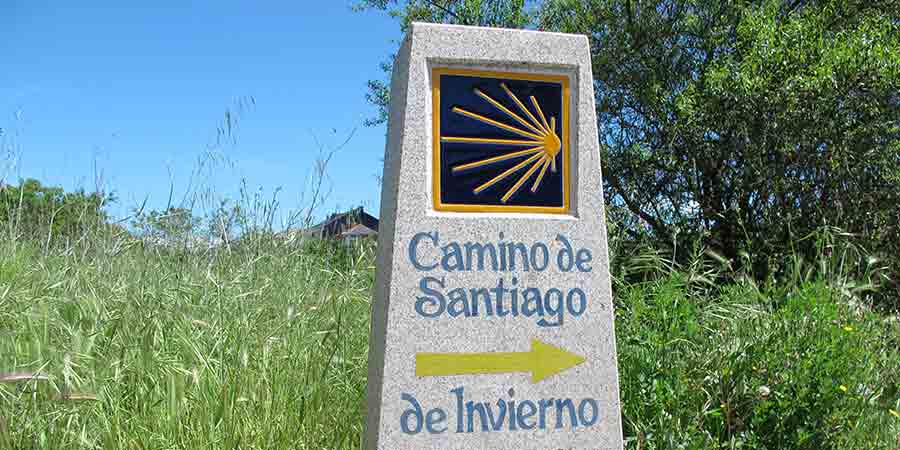
Yes. The route is waymarked with the familiar yellow arrows and scallop shell markers. As it is quieter than the main Caminos, you may walk long stretches on your own, so the route notes and maps in your travel documents are a great help.
Will I meet other pilgrims on the Winter Way?
You will meet some, but far fewer than on the Camino Francés or the Camino Portugués – and that peace is a big part of its charm. It is a lovely choice if you want a calmer Camino, especially in a busy year like the 2027 Holy Year.
What is the Ribeira Sacra?
The Ribeira Sacra, or “Sacred Riverside”, is a wine region along the Miño and Sil rivers, famous for steep terraced vineyards first planted by the Romans. It is also home to Europe’s largest collection of Romanesque churches and monasteries, many of which you will pass on the way. Do try a glass of the local Mencía red wine!
Do I need to carry my luggage on the Camino de Invierno?
No. On our self-guided tours, luggage transfers are included as standard for one bag of up to 20 kg, which is taken on to your next hotel each day. You only need a light daypack with water, snacks and a spare layer.
How can I plan my Camino de Invierno?
Use our award-winning Camino Planner to build your trip, choose your dates and see your route, or get in touch with our team for a personalised itinerary. We will look after your hotels, luggage and 24/7 support, so you can simply enjoy the walk.