
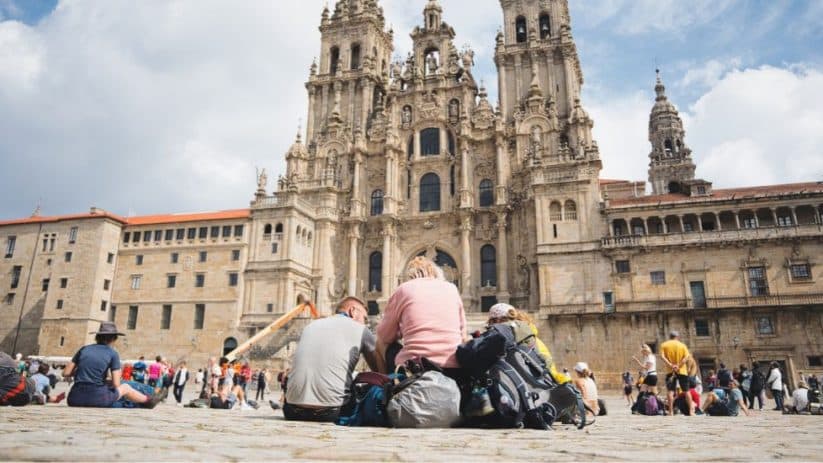
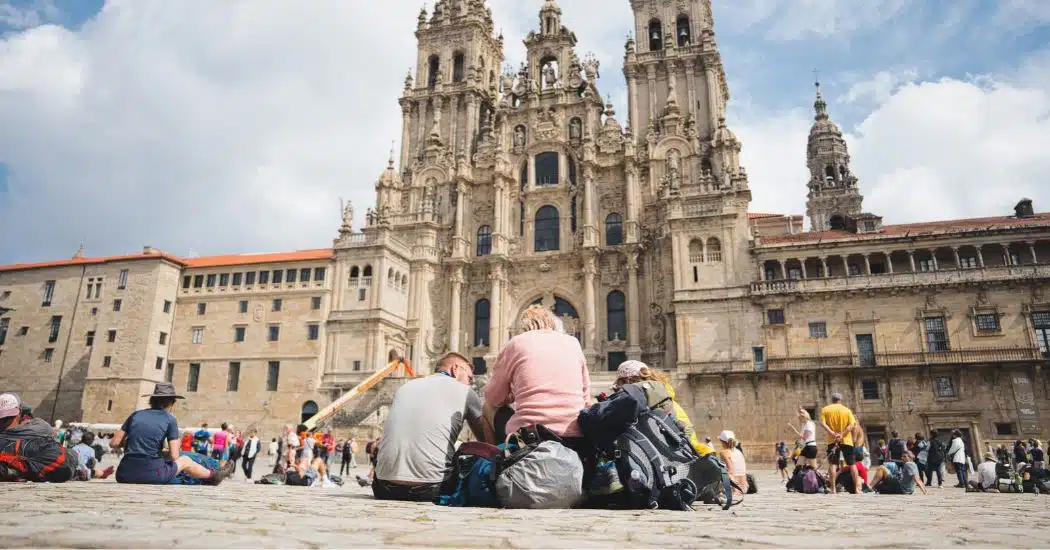
The highlights of the Camino de Santiago are the cathedral and the Praza do Obradoiro in Santiago de Compostela, the climb over the Pyrenees, the Gothic cathedrals of Burgos and León, the mountain village of O Cebreiro, the Atlantic coast of the Portuguese Coastal route and Cape Fisterra, the old “end of the world”. Every route has its own favourites, from the Guggenheim in Bilbao on the Camino del Norte to the Roman walls of Lugo on the Camino Primitivo.
Here are the places pilgrims remember most, route by route, so you can choose the Camino that shows you what you most want to see.
What are the highlights of each Camino route?
| Route | Highlights not to miss | More |
|---|---|---|
| Camino Francés | The Pyrenees, Pamplona, the vineyards of La Rioja, the cathedrals of Burgos and León, the Templar castle in Ponferrada, O Cebreiro | 10 things to see |
| Camino Portugués | Porto and its port cellars, Ponte de Lima, the walled town of Valença facing Tui across the Miño, Pontevedra | Central route |
| Portuguese Coastal | Atlantic beaches and boardwalks, Viana do Castelo, Baiona, the Rías Baixas | Coastal route |
| Camino del Norte | San Sebastián, Gernika, the Guggenheim in Bilbao, the beaches of Cantabria and Asturias | Norte highlights |
| Camino Primitivo | Oviedo Cathedral, the Puerto del Palo mountain pass, Grandas de Salime, the Roman walls of Lugo | The oldest Camino |
| Camino Inglés | Ferrol, the medieval bridge at Pontedeume, the old town of Betanzos, the Tower of Hercules in A Coruña | A short Camino |
| Camino Finisterre | Ponte Maceira, Cape Fisterra and its sunset, the Costa da Morte, the sanctuary of Muxía | Starts in Santiago |
| Vía de la Plata | Seville, Roman Mérida, Salamanca, the hot springs of Ourense | Plata highlights |
Several of these places are UNESCO World Heritage Sites, including the Camino Francés, the northern routes and the old town of Santiago. See our guide to UNESCO highlights on the Camino.
What should you see in Santiago de Compostela?
The end of every Camino is a highlight in itself. Walk into the Praza do Obradoiro, visit the cathedral and the tomb of St James, collect your Compostela at the Pilgrim’s Office, and take time to explore the old town and its market. Our guide to 10 things to do in Santiago has the latest Mass times and opening hours.
Which Camino has the best scenery?
- For the sea: the Portuguese Coastal route and the Camino del Norte.
- For mountains: the Camino Primitivo and the stretch over O Cebreiro on the Camino Francés.
- For variety: the full Camino Francés, from the Pyrenees across the Meseta to the green hills of Galicia.
- For wild coast: the Camino Finisterre, ending at Cape Fisterra.
Which highlights can you see in a week?
In about a week you can walk the last 100 km of most routes. From Sarria you walk through Portomarín and Melide, famous for its octopus. From Vigo you follow the Rías Baixas through Pontevedra. From Ferrol you pass Pontedeume and Betanzos. See all the options in the Camino de Santiago in one week.
Frequently asked questions
The cathedral and Praza do Obradoiro in Santiago, the Pyrenees, the cathedrals of Burgos and León, O Cebreiro, the Atlantic coast of the Portuguese Coastal route and Cape Fisterra.
It depends on what you love: the Portuguese Coastal route and the Camino del Norte for the sea, the Camino Primitivo for mountains, and the Camino Francés for variety.
The Cathedral of Santiago de Compostela, where every Camino ends and where the tomb of St James is kept.
You can see the highlights of the last 100 km of a route in a week, for example from Sarria, Vigo or Ferrol. To see more, walk a longer section or split the route over several trips.
Yes. The Camino Finisterre starts in Santiago and continues 90 km to Cape Fisterra, or 121 km including Muxía.
👉 If you’d like a personalised itinerary, try our Award Winning Camino Planner.
