
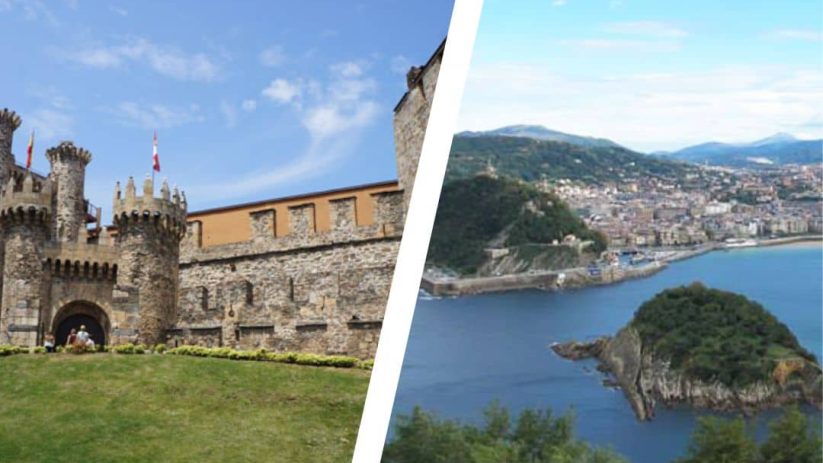
Walk the Camino Francés if this is your first Camino, if you want company on the trail, and if you want the widest choice of accommodation, transfers and start points. Walk the Camino del Norte if you have walked before, are comfortable with daily hills, and want the Atlantic coast, seafood and solitude instead of crowds.
- Both routes end in Santiago de Compostela and both qualify you for the Compostela certificate if you walk the final 100km.
- First Camino, want the classic experience: Camino Francés — start at Sarria for the last 100km, the single most-walked stage of the whole pilgrimage.
- Second or third Camino, want quiet and coast: Camino del Norte — start at San Sebastián and walk to Bilbao.
- Fitness: the Francés is moderate; the Norte is harder, with constant short climbs and descents along the coastline.
- Crowds: the Francés carried 46% of all pilgrims in 2025; the Norte carried roughly 4%. See the full Camino de Santiago statistics.
- Weather: the Francés is hotter and drier in summer; the Norte is cooler, greener and wetter all year.
Not sure yet? Talk to a Camino specialist — we will match the route to your fitness, dates and travel style.
Table of contents
Camino Francés vs Camino del Norte at a glance
| Camino Francés (French Way) | Camino del Norte (Northern Way) | |
|---|---|---|
| Traditional start | Saint-Jean-Pied-de-Port, France | Irún, Basque Country (CaminoWays trips start in San Sebastián) |
| Full distance | Approx. 780km | Approx. 825km from Irún; approx. 803km from San Sebastián |
| Time for the full route | 30–35 days walking | Around 5 weeks walking |
| Share of pilgrims (2025) | 242,179 pilgrims — 46% of all arrivals | Approx. 21,500 pilgrims — around 4% |
| Difficulty | Moderate. One big Pyrenees day, then long, gentler sections | Moderate to challenging. Repeated coastal climbs and descents nearly every day |
| Landscape | Pyrenees, Navarra vineyards, the Meseta plateau, the mountains of O Cebreiro, green Galicia | Atlantic beaches, cliffs, estuaries, eucalyptus and oak woodland, fishing harbours |
| Cities en route | Pamplona, Logroño, Burgos, León, Ponferrada | San Sebastián, Bilbao, Santander, Gijón, Ribadeo |
| Food highlight | Navarra and Rioja wine, Castilian roasts, Galician seafood — see food on the Camino Francés | Basque pintxos, Cantabrian anchovies, Asturian cider and cheese, chef Paul Flynn’s Norte food trail |
| Weather | Hot and dry in July–August, especially on the Meseta | Cooler and wetter; rarely above 30°C in summer |
| Best for | First-timers, families, social pilgrims, walkers who want short daily stages | Returning pilgrims, coastal walkers, food lovers, those seeking solitude |
| Shortest CaminoWays option | Camino Francés short break | San Sebastián to Bilbao, 7 nights |
The Camino Francés in brief
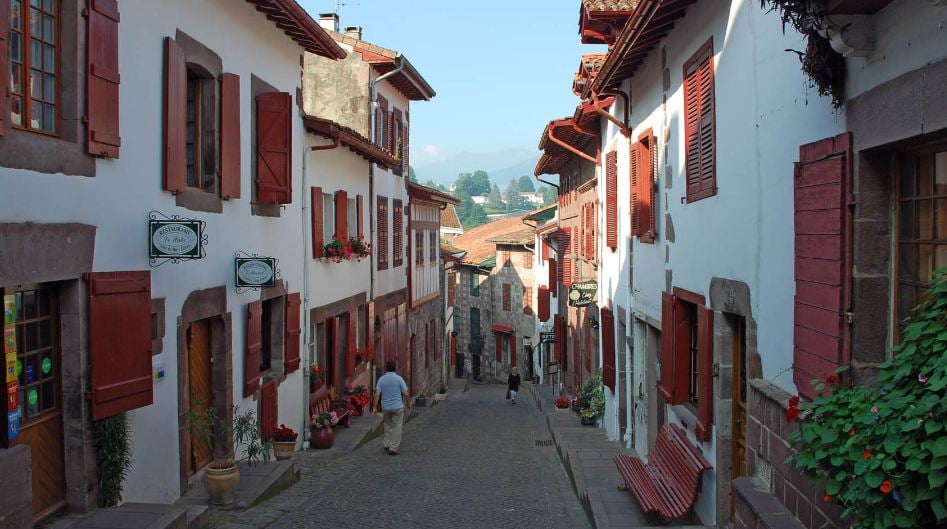
The Camino Francés, or French Way, is the route most people picture when they hear “Camino de Santiago”. It runs roughly 780km from Saint-Jean-Pied-de-Port in the French Pyrenees across northern Spain to Santiago de Compostela, and it has been walked continuously since the Middle Ages. It is a UNESCO World Heritage route and the best-served path in Spain for waymarking, hostels, hotels, luggage transfers and pilgrim menus.
What the Camino Francés is like to walk
- Terrain: the hardest single day is the first, crossing the Pyrenees on the Route Napoléon or the Valcarlos alternative, with around 1,200m of ascent. After that the route settles into rolling farmland, the flat Meseta and one long climb to O Cebreiro. Full detail in our guide to how difficult the Camino Francés is.
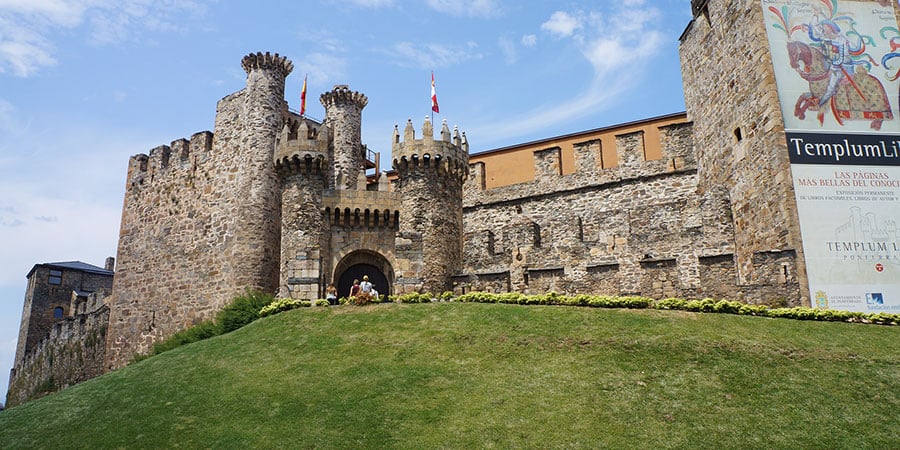
- History and landmarks: the Gothic cathedrals of Burgos and León, the Templar castle at Ponferrada, the Cruz de Ferro, the medieval bridge at Portomarín, the miracle of the hen at Santo Domingo de la Calzada and the last hill before Santiago at Lavacolla. See our pick of the 10 things to see on the Camino Francés.
- Atmosphere: sociable. You will meet the same faces each evening, which is exactly why many first-timers choose it.
- Logistics: the widest range of Camino accommodation of any route, from albergues to historic hotels such as San Isidoro in León.
Ways to walk the Camino Francés
- The full Camino Francés, Saint-Jean-Pied-de-Port to Santiago — the complete pilgrimage.
- Sarria to Santiago, the last 100km — 7 days, the most popular Camino trip we sell, and enough for the Compostela.
- From Pamplona, from Logroño or from Ponferrada — good ways to split the route across several holidays.
- The easy Camino Francés and the Camino Francés short break — shorter stages, fewer days.
- The last 100km as a guided tour, or with the family: family walking and family cycling.
- Cycling the last 200km from Ponferrada — through the Bierzo mountains and O Cebreiro into Galicia.
Still deciding where to begin? Compare the best starting points for the Camino Francés, check how far it is from St Jean to Santiago, and open the Camino Francés map.
What to Expect
- Scenery and Terrain: The Camino Francés offers diverse landscapes, from the Pyrenees mountains to the rolling hills of the Meseta and the lush greenery of Galicia.
- Cultural Highlights: This route passes through historic cities like Pamplona, León, and Burgos, offering a chance to experience Spain’s rich medieval history.
- Accommodation and Facilities: Being the most popular route, it boasts a wide range of accommodations, from hostels to luxurious hotels, catering to different preferences and budgets.
- Full Camino Route: The full Camino Francés leads travellers from Saint-Jean-Pied-de-Port right to Santiago de Compostela. Known as the French Way, this path stands out as the most renowned among the Camino routes. Since medieval times, it has been traversed by millions of pilgrims.
- The Most Popular Route: For a quintessential experience, embark on the final 100km of the Camino Francés from Sarria to Santiago. This 7-day journey through Galicia’s verdant landscapes is the most favoured stage of the Camino de Santiago. Ideal for first-timers and those seeking a social pilgrimage, it offers an opportunity to connect with fellow travellers, immerse in local customs, and indulge in delightful cuisine and wine after a day of walking.
- Cycling the Camino Francés: Experience the enchantment of the Camino de Santiago on a cycling tour from Ponferrada to Santiago, covering the last 200km of the Camino Francés. This journey takes you from the vibrant Ponferrada, through the breathtaking mountains of O Cebreiro, and into Santiago de Compostela.
The Camino del Norte in brief
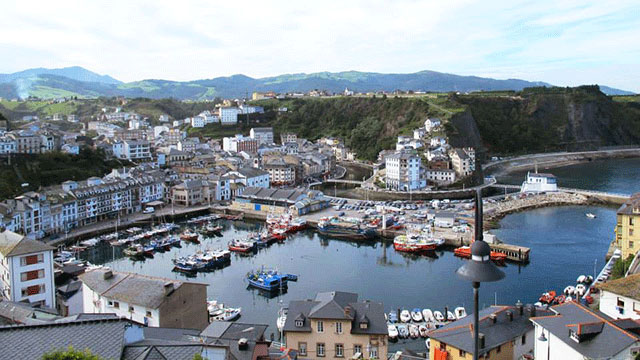
The Camino del Norte, or Northern Way, follows Spain’s Atlantic coastline for roughly 825km from Irún in the Basque Country, through Cantabria and Asturias, before turning inland through Galicia to Santiago. It is also a UNESCO World Heritage route, and it was the path taken by medieval pilgrims who arrived by sea, or who wanted to avoid the Moorish-held interior.
What the Camino del Norte is like to walk
- Terrain: beaches, headlands, estuary crossings and forest tracks. There is no single Pyrenean day, but there is climbing almost every day, which is what makes the Norte physically harder than the Francés over a full trip.
- Culture: four distinct regions in one walk — Basque Country, Cantabria, Asturias and Galicia — each with its own language traditions, architecture and kitchen. Highlights include San Sebastián and the Guggenheim in Bilbao.
- Atmosphere: quiet. On many stages you will walk alone for hours, and evenings are spent in fishing towns rather than pilgrim hubs.
- Food: arguably the best eating on any Camino — pintxos bars, Cantabrian anchovies, Asturian cider houses and Galician shellfish. Irish chef Paul Flynn walked it for the food: read his Camino del Norte food notes.
- Facilities: fewer albergues than the Francés and longer gaps between them, so booking accommodation ahead matters more here.
Ways to walk the Camino del Norte
- The full Camino del Norte, San Sebastián to Santiago — around five weeks along Green Spain.
- San Sebastián to Bilbao — roughly 125km in 7 nights, the most popular Norte section and the best single week for food, art and coastline.
- Cycling from Navia to Santiago — the final 200km-plus by bike, from the Asturian coast into Galicia.
Head-to-head: how the two routes really differ
Crowds and atmosphere
This is the single biggest practical difference. In 2025, 242,179 pilgrims arrived in Santiago via the Camino Francés — 46% of the record 530,987 total — while the Camino del Norte accounted for roughly 4%. The Francés between Sarria and Santiago in July and August is genuinely busy; the Norte in the same weeks feels like a coastal hiking holiday with occasional pilgrims. If community is part of what you are looking for, the Francés delivers it. If crowds would spoil it, the Norte is the answer. Current figures are tracked in our Camino de Santiago statistics page.
Difficulty
The Francés front-loads its difficulty: the crossing from Saint-Jean-Pied-de-Port to Roncesvalles is the hardest day on the route, and O Cebreiro is the other serious climb. Everything in between is manageable at 20–25km a day. The Norte spreads its difficulty evenly: shorter climbs, but many of them, often on uneven coastal paths, and some stages have limited shade or water. As a rule of thumb, if you can comfortably walk 20km on hilly ground two days in a row, the Norte is within reach; if you are unsure, start with the Francés. Our guide to how difficult the Camino Francés is sets a useful benchmark.
Weather and when to go
The Francés crosses continental Spain, so summer on the Meseta regularly passes 35°C — see our advice on walking the Camino in hot weather. The Norte is Atlantic: cooler, greener, wetter, and rarely above 30°C even in August, but you should expect rain in any month and pack for it. Spring and autumn suit both. Compare conditions in our guide to the weather on the Camino de Santiago and the month-by-month breakdown of which months you can walk the Camino.
Culture, history and food
The Francés is the historical spine of the pilgrimage: cathedrals, monasteries, Templar castles and medieval bridges, one after another, plus the wine country of La Rioja — time it right and you can walk into the Rioja wine harvest in Logroño. The Norte trades cathedrals for coastline and kitchens, with four regional cuisines in a single route. Both finish in Galicia, where you can explore the Celtic heritage of Galicia, the oldest cruceiro in Melide and the Galician facts most pilgrims never hear.
Cost and logistics
Day-to-day costs are similar, but the Norte’s towns are holiday destinations, so beds in August cost more and sell out earlier. The Francés has more accommodation at every price point and more transport links, which makes it easier to join or leave mid-route. Both are fully supported by CaminoWays with pre-booked hotels, daily luggage transfers and 24/7 support.
Getting your Compostela
The rule is the same on both: walk the last 100km (or cycle the last 200km) into Santiago and collect stamps twice a day. On the Francés that means starting in Sarria; on the Norte it means starting near Vilalba or Ribadeo.
Which Camino route should you choose?
Choose the Camino Francés if…
- It is your first Camino and you want the classic route with the most support.
- You want to meet other pilgrims and share evenings with them.
- You are walking with children — see our family Camino Francés trips.
- You have one week and want a route that gets you the Compostela: Sarria to Santiago.
- You prefer flatter, shorter days: the easy Camino Francés.
- History is the point — cathedrals, castles and a thousand years of pilgrim stories.
Choose the Camino del Norte if…
- You have walked a Camino before and want a new challenge.
- You want the sea beside you most days.
- You would rather eat pintxos in San Sebastián than queue for a pilgrim menu.
- You are walking in July or August and want to escape the Spanish heat.
- You are comfortable with hills, occasional rain and quieter evenings.
- You have one week: San Sebastián to Bilbao.
Cycling either route
Both work well on two wheels. On the Francés, cycle the last 200km from Ponferrada over O Cebreiro. On the Norte, cycle from Navia to Santiago along the Asturian and Galician coast. Read what it is actually like from pilgrims who cycled the Camino Francés.
Contact us for more information about planning your route.
FAQs
Yes. The Camino del Norte is generally harder because of constant short climbs and descents along the coast, uneven paths and longer gaps between services. The Camino Francés has one very hard day — the Pyrenees crossing from Saint-Jean-Pied-de-Port — and then settles into moderate walking. Over a full route, the Norte is the tougher of the two.
The Camino Francés. It has the clearest waymarking, the most accommodation, the most other pilgrims to walk with and the easiest transport connections. Most first-time pilgrims start with the last 100km from Sarria, which takes seven days.
The full Camino Francés is about 780km from Saint-Jean-Pied-de-Port to Santiago de Compostela and takes 30–35 days of walking at 20–25km a day. The last 100km from Sarria takes about seven days.
The Camino del Norte is about 825km from Irún, or about 803km from San Sebastián, where CaminoWays trips begin. Allow roughly five weeks for the full route, or seven nights for the popular San Sebastián to Bilbao section.
The Camino del Norte, by a wide margin. In 2025 the Camino Francés accounted for 46% of pilgrims arriving in Santiago (242,179 people) while the Camino del Norte accounted for around 4% (roughly 21,500 people).
Yes. The Compostela requirement is the same on every route: walk at least the final 100km into Santiago, or cycle the final 200km, and collect two stamps a day in your pilgrim passport. On the Norte, that means starting around Vilalba or Ribadeo.
The Camino del Norte, if seafood and regional cooking are your priority — it passes through Basque pintxos bars, Cantabrian fishing ports and Asturian cider houses. The Camino Francés counters with Rioja wine, Castilian roasts and Galician shellfish; see food on the Camino Francés.
May, June, September and early October are ideal for both. For the Camino Francés, avoid mid-July and August on the Meseta, where temperatures often exceed 35°C. The Camino del Norte is a better summer choice thanks to Atlantic breezes, but expect rain in any month. See which months you can walk the Camino.
You can walk them in sequence rather than combine them mid-route, and many pilgrims do exactly that: the Francés first for the classic experience, then the Norte for the coast. A common alternative is to walk the Norte as far as Asturias and switch inland to the Camino Primitivo at Villaviciosa.
The Camino Francés, because of shorter stage options, more accommodation and easier bail-out points. Our family walking and family cycling trips are built around the last section into Santiago.
Plan your Camino
Whichever way you go, both paths end in the same square in front of the cathedral in Santiago de Compostela. Browse the Camino Francés and Camino del Norte trips, or contact our Camino specialists and we will help you choose. Want more first? Listen to the audio guide from Sarria or read real pilgrim stories from Catherine, John and Sarah and Jonathan.
Buen Camino.
