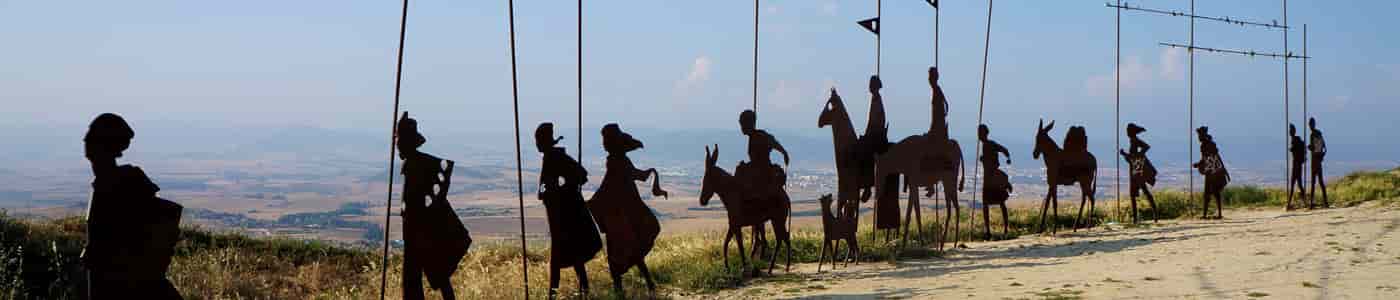
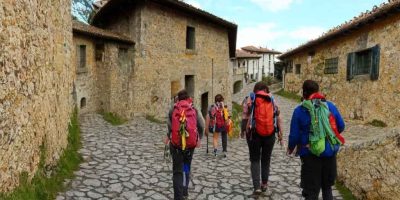
The Camino Francés is the most popular Camino de Santiago route. In 2025, 241,996 of the 530,987 pilgrims who received the Compostela walked it (46%). The Camino Portugués is second, with 190,306 pilgrims (36%) across its Central and Coastal routes, followed by the Camino Inglés, the Camino Primitivo and the Camino del Norte.
These figures come from the Pilgrim’s Reception Office in Santiago de Compostela, which counts the pilgrims who walk at least the last 100 km (or cycle at least 200 km) and collect the Compostela certificate. 2025 was a record year, 6% up on 2024. Thousands more walk sections of the Camino without collecting it, so the real number of walkers is even higher.
Most popular Camino routes in 2025
| Rank | Camino route | Pilgrims (2025) | Share |
|---|---|---|---|
| 1 | Camino Francés | 241,996 | 45.6% |
| 2 | Camino Portugués Central | 100,803 | 19.0% |
| 3 | Camino Portugués Coastal | 89,503 | 16.9% |
| 4 | Camino Inglés | 30,200 | 5.7% |
| 5 | Camino Primitivo | 27,866 | 5.3% |
| 6 | Camino del Norte | 21,481 | 4.0% |
| 7 | Vía de la Plata | 8,833 | 1.7% |
| 8 | Camino de Invierno | 2,758 | 0.5% |
| 9 | Muxía–Finisterre | 2,381 | 0.4% |
| – | Other routes | 4,896 | 0.9% |
| Total | 530,987 | 100% |
1. Camino Francés, the French Way
Almost half of all pilgrims choose the Camino Francés, the most famous Camino route, featured in films such as ‘The Way’ and in many books. Starting in Saint-Jean-Pied-de-Port, at the foot of the Pyrenees, you journey 772 km across northern Spain, through bustling cities, medieval towns and vineyards, before the green hills of Galicia lead you to Santiago de Compostela. The full route takes about a month on foot, or two weeks by bike.
If you don’t have a month, you can start further along. Sarria, the start of the last 100 km, is the single most popular starting point on any Camino; León and Ponferrada are other favourites.
2. Camino Portugués, the Portuguese Way
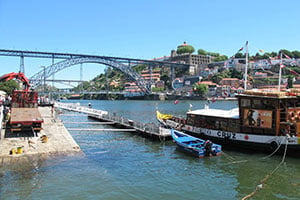
The Camino Portugués is the second most popular route, and its Coastal route is one of the fastest growing. In 2025, 190,306 pilgrims walked it: 100,803 on the inland Central route and 89,503 on the Coastal route along the Atlantic.
The route officially begins in Lisbon and passes Coimbra, known for its 13th-century university, and Porto, home of port wine. The most popular starting points are Porto, Tui on the Galician-Portuguese border and Vigo. From Porto, the route takes about two weeks and gives you the best of both Portuguese and Galician culture.
3. Camino Inglés, the English Way
With 30,200 pilgrims in 2025, the Camino Inglés is the third most popular route. It was traditionally walked by pilgrims from Britain and Ireland who arrived by boat in Galicia, and it starts in the port cities of Ferrol or A Coruña. From Ferrol it is just over 100 km, so you can earn the Compostela in about a week.
4. Camino Primitivo, the Original Way
The Camino Primitivo drew 27,866 pilgrims in 2025. It is the oldest Camino route, starting in Oviedo and crossing the mountains of Asturias into Galicia, through the Roman walls of Lugo. It is more challenging than the coastal routes, and walkers are rewarded with peaceful, spectacular mountain scenery.
5. Camino del Norte, the Northern Way
The Camino del Norte was chosen by 21,481 pilgrims in 2025. Begin in chic San Sebastián, famous for its Michelin-star restaurants, and follow Spain’s northern coast through fishing villages and beaches, with stops in Bilbao, Santander, Ribadesella, Luarca and Ribadeo. It is the quietest of the five most popular routes.
Beyond Santiago: the Camino Finisterre
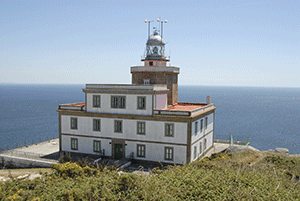
The Camino Finisterre is the only route that begins in Santiago, taking pilgrims to the “End of the World” at Cape Fisterra and on to the fishing village of Muxía. Traditionally, pilgrims burned their clothes and swam in the sea when they arrived. Many walk it after reaching Santiago, so its popularity is higher than the Compostela figures show.
How the pilgrim statistics are counted
The Pilgrim’s Reception Office only counts pilgrims who collect the Compostela, which requires walking at least the last 100 km (or cycling at least 200 km) to Santiago. People who walk other sections, or who don’t collect the certificate, are not included, so these figures show which routes are most popular for reaching Santiago rather than the total number of people on each route. For more figures, see our Camino de Santiago statistics.
Walk the most popular Camino routes with CaminoWays
CaminoWays organises guided and self-guided tours on all the main routes of the Camino de Santiago, all year round. Standard packages include accommodation in guesthouses and selected hotels, luggage transfers from hotel to hotel and a holiday pack with route notes and practical information. Compare every option in our guide to the Camino de Santiago routes, or see the best time to walk the Camino.
FAQs
The Camino Francés. In 2025, 241,996 of the 530,987 pilgrims who received the Compostela walked it, 46% of the total. Most of them walk the last 100 km from Sarria to Santiago.
In 2025, a record 530,987 pilgrims received the Compostela in Santiago, 6% more than in 2024. Many more walk sections of the Camino without collecting the certificate, so the total number of walkers is higher.
The Camino Portugués, walked by 190,306 pilgrims in 2025 (36%): 100,803 on the Central route and 89,503 on the Coastal route. See our Camino Portugués guide.
Sarria, on the Camino Francés. It is just over 100 km from Santiago, the minimum distance on foot to earn the Compostela, so it is the most common start for a one-week Camino.
Of the five most walked routes, the Camino del Norte is the quietest, with about 4% of pilgrims in 2025. For even fewer people, try the Vía de la Plata or the Camino de Invierno. See our tips for a crowd-free Camino.