
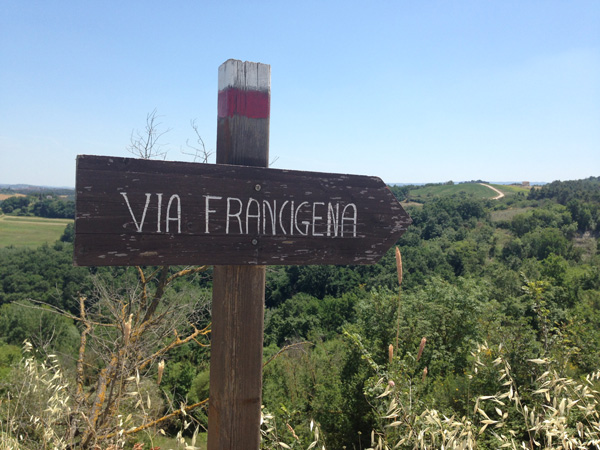
One of the great advantages of the Via Francigena is that you don’t have to start at the beginning. Unlike some pilgrimage routes, this one rewards walkers who join at any point — and the Italian section alone offers five very different starting points, each with its own character, its own logic, and its own kind of arrival in Rome.
The right starting point depends on how much time you have, how far you want to walk, whether the Testimonium certificate is a goal, and what kind of landscape and experience you’re after. Here’s what each option offers — and who it suits best.
Table of contents
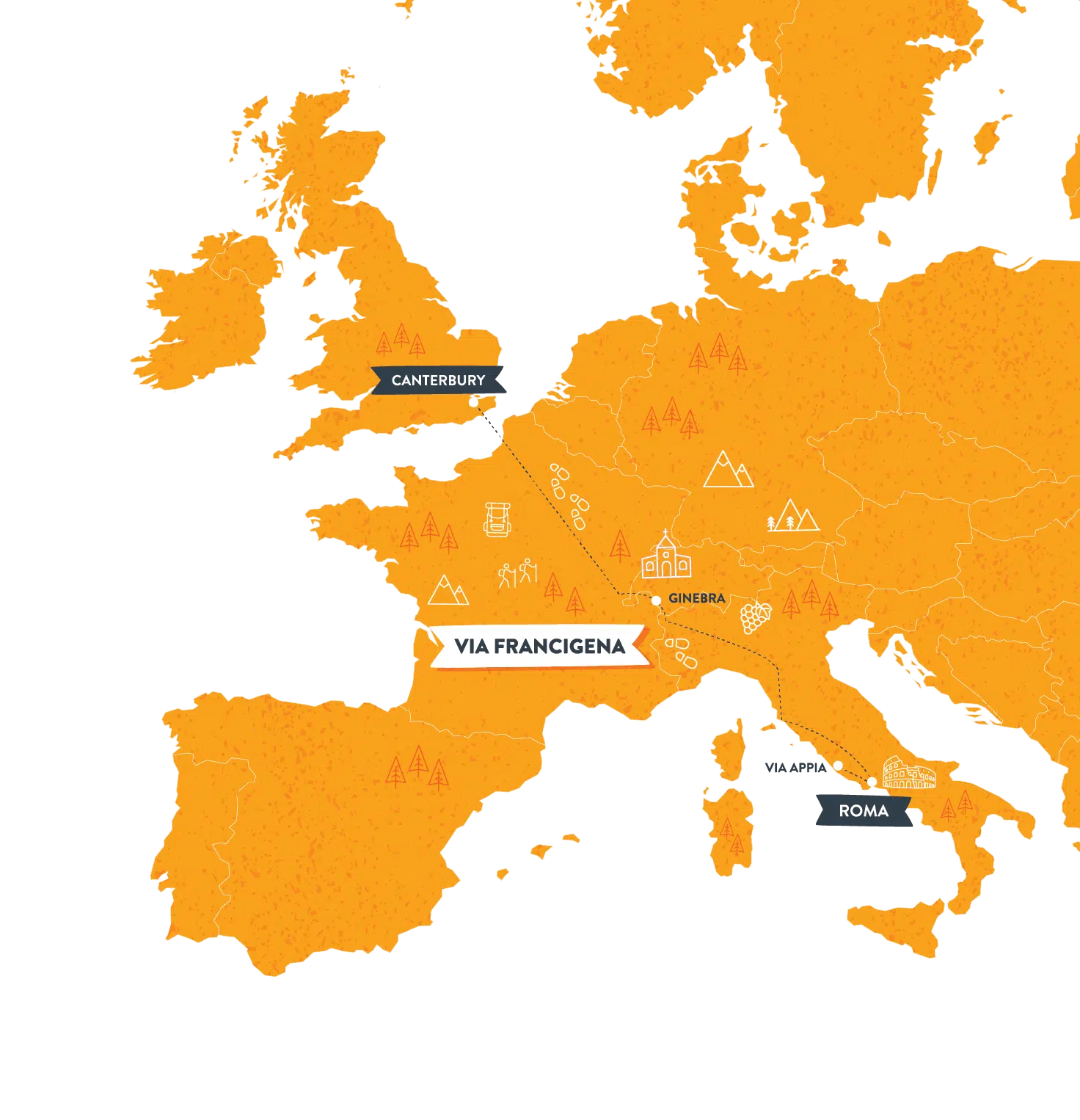
The Via Francigena
This ancient pilgrimage route invites modern-day adventurers on a voyage from the charming streets of Canterbury in England, across the channel to the rich landscapes of France and Switzerland, and through the heart of Italy, culminating in the eternal city of Rome. However, you can start your journey at any point along the way using our Camino de Santiago Planner.
What is Testimonium Certificate?
The famous certificate given after the completion of Via Francigena is called the Testimonium. You can receive it when you complete your pilgrimage into Rome from any distance over 100km. It is the equivalent of the famous Compostela for the Camino de Santiago. To request your Testimonium, remember to take your ‘credenziali’ or pilgrim passport and stamp it along the way in hotels, restaurants, churches, and monasteries.
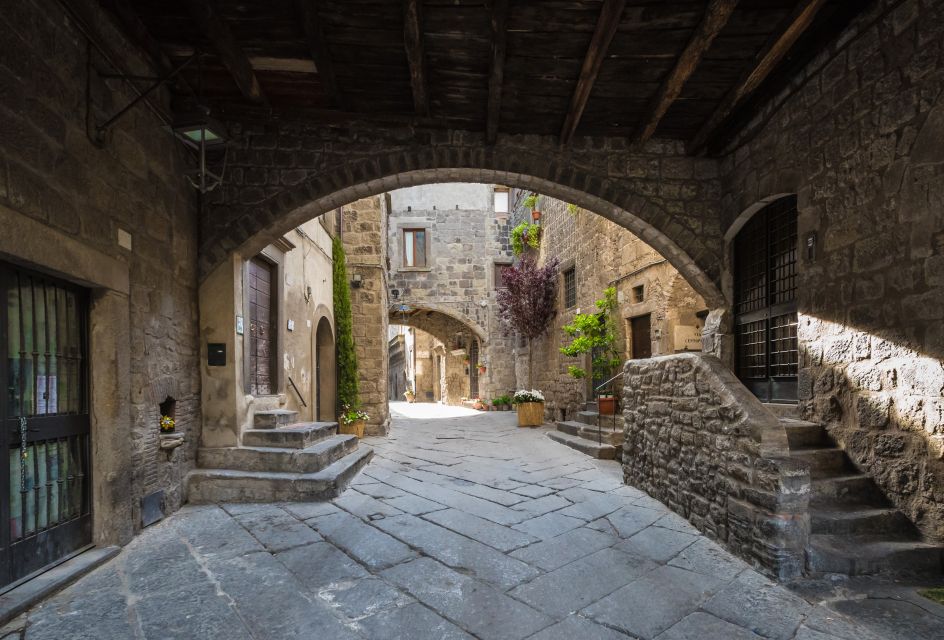
Viterbo: A Medieval Gem
Distance to Rome: 112 km / 70 miles Typical duration: 6 nights Best for: First-time pilgrims, those with limited time, anyone whose primary goal is arriving in Rome on foot
Viterbo is the most popular starting point for walkers whose main goal is the arrival in Rome — and for good reason. At 112 km, it’s long enough to feel like a genuine pilgrimage and short enough to fit into a week’s holiday. Crucially, it comfortably exceeds the 100 km minimum required to earn the Testimonium — the official pilgrim certificate awarded in Rome, equivalent to the Compostela on the Camino de Santiago.
The city itself is one of the most underrated stops on the entire route: a beautifully preserved medieval centre with fountains on every corner, the extraordinary Palazzo dei Papi, and thermal springs that have been drawing weary travellers since Roman times. Arriving footsore into Viterbo’s old town before setting off south is a pleasure in itself.
From Viterbo, the route passes through Sutri — an Etruscan town cut directly into the rock — across the volcanic Lazio countryside, through orchards of orange and lemon, and into the outskirts of Rome. The moment the dome of St Peter’s appears on the horizon is one that pilgrims consistently describe as overwhelming.
Starting in Viterbo is the right call if you have one week, want the Testimonium, and want the emotional impact of walking into Rome without committing to a longer journey.
- Discover the route: Via Francigena from Viterbo to Rome — Last 100km
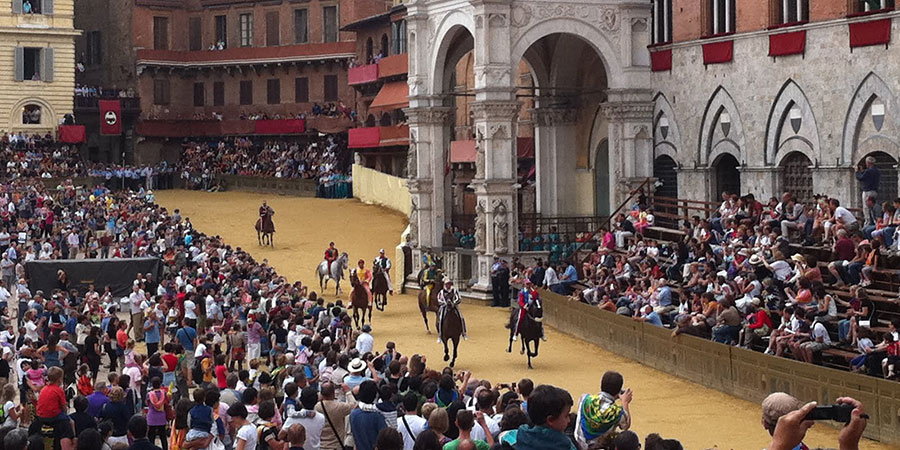
Siena: The Heart of Tuscany
Distance to Rome: 225 km / 140 miles Typical duration: 12–14 nights Best for: Walkers wanting two weeks, those who want both Tuscany and Lazio, anyone who has already done the Viterbo section and wants to continue north
Starting in Siena gives you the best of both worlds: the rolling Tuscan hills of the south and the wilder Lazio countryside further on, all leading to Rome. It’s a two-week commitment that covers genuinely varied terrain — from the Val d’Orcia’s UNESCO-listed landscapes to the Etruscan ruins of Sutri and the volcanic lakes of northern Lazio.
Siena itself is one of the great finishing points on the Via Francigena — which also makes it a spectacular place to begin. The Piazza del Campo, the Cathedral, the medieval alleyways of the city’s contrade — you’ll want at least a day to absorb it before your first stage south. If you happen to be starting in early July or mid-August, the Palio di Siena horse race transforms the city into something medieval and electric — worth planning around if your dates allow.
From Siena, the route descends into the Val d’Orcia, one of Italy’s most celebrated landscapes, before entering Lazio and eventually joining the Viterbo section for the final push to Rome.
Starting in Siena suits walkers with two weeks who want a substantial, varied journey without committing to the full Italian route. It’s also the natural next step for anyone who has already walked Tuscany and wants to continue south.
Discover the routes:
- Via Francigena from Siena to Rome — customise using our route planner
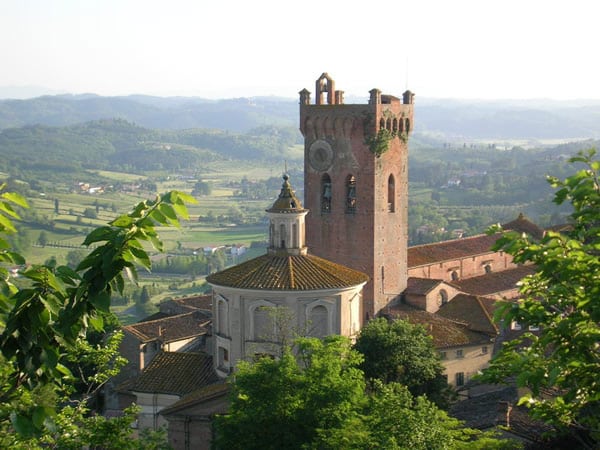
San Miniato: A Hidden TreasureSan Miniato — The Hidden Starting Point
Distance to Rome: 290 km / 180 miles — or 86 km / 53 miles to Siena Typical duration: 3 weeks to Rome / 6 nights to Siena Best for: First-timers wanting an easy introduction to Tuscany, walkers with one week and a preference for gentler terrain, those who want to avoid the longest days on the Lucca section
San Miniato is the quiet alternative to Lucca as a starting point in Tuscany — and for many walkers, the better one. Perched on three hills above the Arno valley between Pisa and Florence, it is a genuinely beautiful town with a hilltop old centre, sweeping views, and excellent restaurants. It is also — in October and November — the truffle capital of Tuscany, with white truffles found in the surrounding hills and the local Mostra Mercato taking place across three weekends in November.
Starting here rather than Lucca shaves two days off the Tuscany section and removes the longest and flattest stages from the itinerary, leaving the best walking — the rolling hills, the vineyards, San Gimignano, Monteriggioni — entirely intact. For walkers doing the Easy Via Francigena, the daily distances from San Miniato are deliberately shorter, making this the most accessible entry point on the entire Italian route.
San Miniato is easily reached by train from Pisa airport — the most convenient arrival point for this section.
- Discover the route: Easy Via Francigena from San Miniato to Siena in 1 week
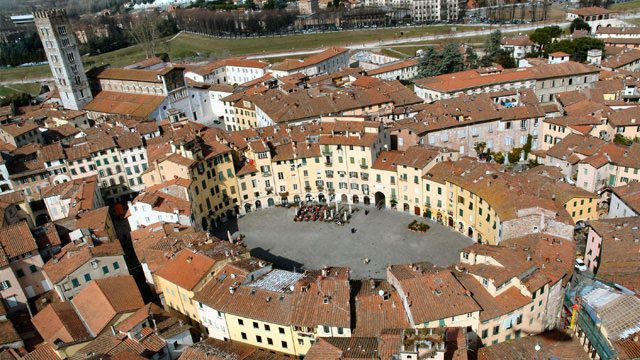
Lucca — The Classic Tuscany Starting Point
Distance to Rome: 419 km / 260 miles — or 133 km / 83 miles to Siena Typical duration: Up to 20 nights to Rome / 7 nights to Siena Best for: Walkers who want the complete Tuscany experience, those doing the full Italian route, cyclists tackling the full Lucca to Rome itinerary
Lucca is the most popular starting point for the Italian Via Francigena, and the one that gives you the most complete experience of Tuscany. Known as the city of a hundred churches, it is encircled by some of the best-preserved Renaissance walls in Italy — wide enough to walk, cycle, or even picnic on top of. Arriving into Lucca before your first stage and spending an evening in the city is one of the genuine pleasures of this route.
From Lucca, the walk to Siena takes seven nights and covers 133 km through the full arc of Tuscan landscape: the Arno valley, the hills around San Miniato, the vineyards of Chianti, the towers of San Gimignano, the circular walls of Monteriggioni, and finally Siena. For walkers continuing to Rome, Lucca is the start of a 419 km, 20-night journey that covers the entire Italian section — the most complete Via Francigena experience available.
Lucca is also the starting point for cycling the Via Francigena to Rome — an 11-night itinerary covering the full Italian route at a faster pace, with daily cycling distances of 45–75 km.
Discover the routes:
- Via Francigena in Tuscany from Lucca to Siena in 1 week
- Full Via Francigena from Lucca to Rome
- Cycling the Via Francigena from Lucca to Rome
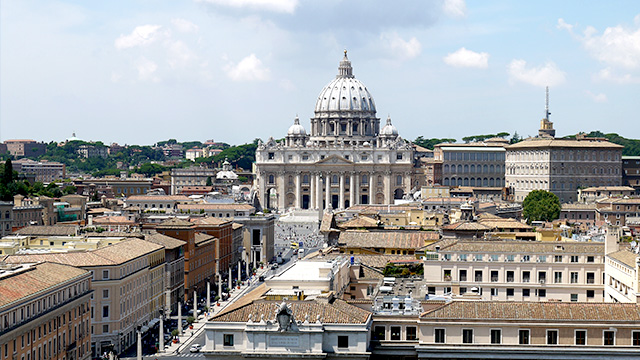
Rome — Starting at the End
Direction: North — walking the route in reverse Best for: Walkers who want to begin with Rome and discover the route outward, those returning to continue a previous walk northward, cyclists doing a point-to-point in reverse
Starting in Rome and walking the Via Francigena northward is unconventional — but it has its own logic. Rather than building towards Rome as a destination, you begin in the heart of Christendom and move outward, following the route as early medieval pilgrims travelling from Rome to Canterbury would have experienced it.
In practice, most walkers who start in Rome are doing so because they’ve already completed the southern section and are continuing north — walking the route in stages across multiple trips. Rome is also a natural starting point for custom itineraries that don’t follow the traditional direction, which our Camino Planner can help design.
Note that the Testimonium certificate is awarded in Rome for pilgrims arriving on foot from at least 100 km away — it is not available for those beginning their journey there.
Discover the routes:
- Full Via Francigena from Lucca to Rome
- Via Francigena from Viterbo to Rome — Last 100km
- Cycling the Via Francigena from Lucca
Comparing Starting Points
| Starting point | Distance to Rome | Duration | Testimonium | Best for |
|---|---|---|---|---|
| Viterbo | 112 km | 6 nights | ✓ Yes | First-timers, one week, focused on Rome arrival |
| Siena | 225 km | 12–14 nights | ✓ Yes | Two weeks, Tuscany + Lazio combined |
| San Miniato | 290 km | ~3 weeks | ✓ Yes | Easy walking intro, truffle season, gentle terrain |
| Lucca | 419 km | Up to 20 nights | ✓ Yes | Full Tuscany, complete Italian route, cycling |
| Rome (reverse) | — | Variable | ✗ No | Continuing north, custom itineraries |
Whichever city you choose as your starting point, the Via Francigena offers a profound journey through time, culture, and spirituality. Whether you’re drawn to the medieval streets of Viterbo, the Tuscan charm of Siena, the hidden treasures of San Miniato, the serene beauty of Lucca, or the historic reverse route from Rome, each starting point provides a unique window into the soul of this ancient pilgrimage.
For more information about the Via Francigena or any other Camino de Santiago routes or to book your Camino trip, contact us. Buen Camino!
FAQ: Starting Points on the Via Francigena
Where is the best place to start the Via Francigena?
It depends entirely on how much time you have. For one week with a focus on arriving in Rome, start in Viterbo. For the classic Tuscany experience in one week, start in Lucca or San Miniato. For the full Italian pilgrimage, Lucca is the traditional starting point.
Can I start the Via Francigena anywhere I want?
Yes. The route is fully flexible — you can join or leave at any point. There is no requirement to walk the entire route, and many pilgrims complete it in sections across multiple trips.
Where do I need to start to get the Testimonium?
You need to walk at least 100 km into Rome on foot, with a stamped pilgrim passport throughout. Viterbo (112 km from Rome) is the closest starting point that qualifies. All other starting points listed here also qualify. For more detail, see our Testimonium guide.
What is the easiest starting point on the Via Francigena?
San Miniato, particularly on the Easy Via Francigena itinerary. Shorter daily distances, excellent trail marking, and straightforward access from Pisa airport make it the most accessible entry point on the Italian route.
How do I get to the starting points on the Via Francigena?
Pisa airport is the most convenient for Lucca and San Miniato. Rome’s airports (Fiumicino or Ciampino) serve Viterbo and Rome itself. Siena is best reached by train via Florence. Use our Camino Planner to work out logistics for your chosen start point.
Can I do the Via Francigena by bike?
Yes. Cycling the Via Francigena from Lucca to Rome covers the full 419 km in around 11 nights, with daily distances of 45–75 km. It’s one of the best cycling routes in Italy.
