
Via Francigena · Self-Guided Caminos · March to November
Full Via Francigena from Lucca to Rome
Walk the Via Francigena all the way from Lucca to Rome. Twenty walking days take you through the heart of Tuscany, across the Val d'Orcia and the hills of Lazio, to St Peter's Square.

- Distance
- 419 km
- Duration
- 21 Nights
- Walking days
- 20
- Difficulty
- Moderate
- Tour Type
- Self-Guided Caminos
- Price
- From €2,814
Activity: Walking, Easy Walking
In short
This walk covers 419km of the Via Francigena from Lucca to Rome in 22 days, with 20 walking days of 13–32km. You stay in San Gimignano, Siena, Bolsena, Viterbo, Sutri and 15 other towns and villages. We book your hotels, move your luggage and give you 24/7 support.
Overview
The Full Via Francigena from Lucca to Rome | 22 Days
Walk the Via Francigena from Lucca to Rome. In 22 days you cover 419km through Tuscany and Lazio. On the way, you sleep in 20 towns and villages, from San Gimignano and Siena to Bolsena, Viterbo and Sutri.
The Via Francigena from Lucca to Rome is the Italian heart of the old pilgrim road from Canterbury. In addition, it is more than 100km long, so you can ask for the Testimonium, the pilgrim certificate of Rome.
Tuscany, the Val d’Orcia and Lazio
First, you walk from Lucca to San Miniato, San Gimignano and the walled village of Monteriggioni, and on to Siena. Then the path crosses the clay hills of the Crete Senesi and the Val d’Orcia, a UNESCO landscape of cypress trees and farmhouses. After that, you climb to the fortress of Radicofani.
Next, you enter Lazio and walk along Lake Bolsena to Montefiascone and the papal city of Viterbo. Later, the route passes Etruscan tombs and the rock-cut amphitheatre of Sutri, often on the old Via Cassia, the Roman road to the north. Finally, you climb Monte Mario and walk down into Rome to St Peter’s Square.
How hard is the Via Francigena?
This route is Moderate on our scale. The days are 13–32km on gravel roads and country lanes, with many hills. However, the long days and summer heat add up over three weeks, so you need good fitness. Our fitness plan helps you get ready.
Your Via Francigena made easy
We book all your hotels and move your luggage from town to town. In addition, you get a Holiday Pack with maps and route notes. Our team is also on hand 24/7, so help is always one phone call away. Short of time? Then walk the last 100km from Viterbo to Rome.


Why walk the Via Francigena to Rome?
It is one of the great pilgrim walks of Europe, with three weeks of hill towns, Tuscan food and Roman history.
For a thousand years, pilgrims walked from Canterbury to Rome on the Via Francigena. The Italian part from Lucca is the most beautiful. You cross Tuscany through San Gimignano and Siena, walk the cypress-lined hills of the Val d’Orcia, follow the shores of Lake Bolsena and enter Lazio, before the last days lead you to the Vatican and your Testimonium.
Is the Via Francigena from Lucca right for you?
Fitness
The days are 13–32km. It is Moderate (3 out of 5 on our scale). Our 8-week fitness plan helps you prepare.
First time
A good choice if you walk regularly. Train with a few long walks first.
Walking alone
The route is waymarked with red-and-white signs and the little pilgrim symbol, and our 24/7 support line is always there.
Families
Best for teenagers who are used to walking. With younger children, see our family Caminos.
Shorter days
Prefer to walk less each day? Use the Camino planner to add nights and split the longer stages.
Mobility
Most paths are easy, but some tracks are uneven or muddy after rain. Talk to us first if you have knee or balance problems.
Not sure? Read which Camino is best for a beginner, walking the Camino on your own and the Camino with your family.
Choose your tour
Which Lucca to Rome tour should you choose?
Tour versions compared
| Version | Days / walking | Per day | Best for |
|---|---|---|---|
| ClassicThis tour | 22 / 20 | 13–32km | Most walkers |
| Your own pace | Flexible | You choose | Extra nights or shorter days |
How many days do you have?
Choose the trip that fits your time and pace.
More in how many days it takes to walk the Camino and our guide to Camino de Santiago stages.
Day by day
Itinerary of the Via Francigena from Lucca to Rome
20 walking days and 21 nights, through Tuscany, the Val d'Orcia and Lazio to Rome.
Route map
Stage by stage
-
DAY 1
Lucca

You arrive in Lucca, a lovely Tuscan city inside Renaissance walls. Walk or cycle the 4km path along the top of the walls, then enjoy dinner near the Piazza dell’Anfiteatro. Your walk to Rome starts here tomorrow.
-
DAY 2
Lucca to Altopascio
This first part of the Via Francigena trail from Lucca to Altopascio is flat all the way. You will pass the towns of Capannori and Porcari and their lovely little churches. Your destination for the day is Altopascio which is know as the ‘town of bread’ for its tradition of bread making. There is an interesting church and bell tower in the centre of the town.
18km -
DAY 3
Altopascio to San Miniato
Today, the Via Francigena trail gets more interesting as you leave Lucca and its suburbs behind. This section follows a lovely trail through woodland and farmlands. There is a short climb and descent before you reach a fortified 16th century Medicean bridge over the canal. You will then pass the lovely town of Fucecchio and over the Arno river, before the final climb up to the breathtaking town of San Miniato (Alto). There are plenty of artistic, cultural and historical sights to see here. The town and region are also renowned for its white truffles.
29km -
DAY 4
San Miniato to Gambassi Terme
Today’s walking section on the Via Francigena follows a lovely trail through oak woods, chestnut woods, olive groves and vineyards. The trail is predominantly on off-road tracks over small rolling hills, the classic Tuscan landscape. On the way you will pass Chianni where you should visit the lovely little church. There is a 300m climb to Gambassi Terme, a hilltop town best known for its spa and hot springs, as well as glass manufacturing.
24km -
DAY 5
Gambassi Terme to San Gimignano
From Gambassi Terme you will descend for a couple of kilometres before you begin another climb. The day is quite up and down but the scenery as you pass through the world famous Chianti vineyards will make the effort worthwhile. San Gimignano is a wonderful, walled, hilltop, medieval town, where you can stop for the night. The towers of the town can be seen for miles around. The museum of San Gimignano 1300 has a wonderful reconstruction of how the town once looked and is well worth a visit.
14km -
DAY 6
San Gimignano to Monteriggioni
From the Piazza in Colle di Val d’Elsa, you will continue your walk along tree-lined roads, starting with a long descent to Castel Petraia and then up to the densely forested hill of Montagnole. Your walking day on the Via Francigena takes you to the unique hilltop village of Monteriggioni with its circular wall.
27km -
DAY 7
Monteriggioni to Siena
After Monteriggioni, the Via Francigena takes pilgrims towards the village of Funghaia and its church with frescoed interior. Make sure you experience real Tuscan food in one of the region’s best osterias, as you reach stunning Siena. Siena is a UNESCO World Heritage Site and one of the most visited places in Italy. It is world famous for its art, medieval architecture, museums, cuisine and the ‘Palio‘, the spectacular annual horse race held in the city’s piazza.
21km -
DAY 8
Siena to Lucignano d'Arbia
The Via Francigena takes you out of Siena by the city gate and quickly reaches a country road. After a short section along a busy road, the Via Francigena takes pilgrims on to farm tracks.
18km -
DAY 9
Lucignano d'Arbia to Buonconvento
From Lucignano, the Via Francigena trail mainly follows country tracks, all the way to medieval Buonconvento, meandering through pretty Tuscan hills.
13km -
DAY 10
Buonconvento to San Quirico d'Orcia
Today, you will continue on your Camino to Rome walking in the rolling Tuscan hills, on the famous ‘white roads’ or sometimes on tarmac road. Your destination is the lovely medieval town of San Quirico d’Orcia in the heart of the UNESCO-listed Val d’Orcia, the valley of the Orcia river and its famous vineyards.
21km -
DAY 11
San Quirico d'Orcia to Gallina
The Via Francigena trail takes you today across the rolling hills of the magnificent Val de Orcia Natural Park for most of the day. Your destination for the night is Gallina.
17km -
DAY 12
Gallina to Radicofani
From Gallina, you will make your way to Radicofani. Radiocofani is dominated by the castle with its impressive tower. The views from here are stunning.
15km -
DAY 13
Radicofani to Acquapendente
Today you leave Tuscany and enter Lazio. The path drops from Radicofani through quiet farmland to Acquapendente, a small town whose cathedral has a crypt modelled on the Holy Sepulchre in Jerusalem.
32km -
DAY 14
Acquapendente to Bolsena
The Via Francigen trails first takes you to the banks of the river Paglia. From here, you will have another short climb followed by a rolling track to Bolsena. You will pass the town of San Lorenzo Nuovo, with a wealth of artistic and historical sites. After San Lorenzo, the huge Lake of Bolsena will soon appear into view as you make your way down to the town of Bolsena. Bolsena is a beautiful little lakeside town with charming medieval lanes heading up to the castle, where you will enjoy fantastic panoramic view
22km -
DAY 15
Bolsena to Montefiascone
Today, the Via Francigena will take you over more rolling hills, across farmland and woodlands. As you gradually climb you will have breathtaking views back over Bolsena Lake. Montefiascone is your stop for the night, a bustling town with many interesting sights, including a cathedral. It is also a great place to sample the local cuisine and wine.
18km -
DAY 16
Montefiascone to Viterbo
Today, the Via Francigena, Camino to Rome, takes you to the province of Viterbo. On the way, you will pass the Bagnaccio hot springs, where you can treat yourself to a relaxing break; the hot springs are said to have curative powers. Viterbo itself is a beautiful old town, with plenty to see and do, including the Papal Palace, San Lorenzo Cathedral and the Medieval quarter.
18km -
DAY 17
Viterbo to Vetralla
Today, the Via Francigena trail takes you through some beautiful and unspoilt landscapes. Shortly after leaving Viterbo you will come to the lovely abbey in La Quercia and Bagnaia with the fantastic gardens of Villa Lante. Avoiding the main roads, you will walk across gently rolling hills, climbing a small hill to reach your stop for the night: Vetralla.
18km -
DAY 18
Vetralla to Sutri
From Vetralla, the Via Francigena will see you make your way to the town of Sutri. Along the way, you will walk on peaceful woodland tracks and farmland, climbing a small hill before descending to Sutri, which is a lovely little town with the Etruscan tombs and Roman amphitheatre being the most notable sights.
24km -
DAY 19
Sutri to Campagnano di Roma
From Sutri, you will continue your pilgrimage to Rome, walking across the beautiful and rugged Lazio countryside. The Francigena trail will pass an abundance of streams, waterfalls and ponds. The rivers have carved wonderful deep valleys, with lush vegetation, ideal for a rest. Your walk for today takes you to Campagnano di Roma, a lovely little town with medieval architecture to admire.
28km -
DAY 20
Campagnano di Roma to La Storta
Your walk for today will see you once again follow tracks across lovely wooded valleys and streams. Along the way you will reach the sanctuary of Sorbo and the archaeological site of Veii with the remains of an ancient Etruscan city. Soon after this you will reach your destination for the day: La Storta
24km -
DAY 21
La Storta to Rome
Today is the last walking day of your Camino to Rome! the Via Francigena will take you from La Storta through the suburbs of Rome and into Saint Peter’s Square in the Vatican. Before reaching the city, you will get to Monte Mario, where you will enjoy great panoramic views of the whole city below. You’ve made it!
Your epic Via Francigena adventure ends tomorrow breakfast. Make sure you request your Testimonium certificate of pilgrimage and you explore Rome and all its wonderful heritage, such as the Pantheon, the Colosseum, the Trevi Fountain, Castel Sant Angelo… If you’d like to book additional nights, let the CaminoWays.com travel specialists know.
18km


Read more about this route: Camino packing list, 8-week fitness plan, Luggage transfers, Your pilgrim passport.
Where you stay
Accommodation and what's included
Where you stay
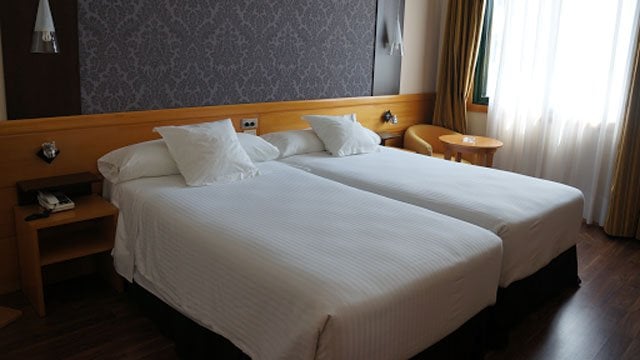
Standard Hotels
We have hand-picked hotels and guesthouses along the Camino for their character and warm hospitality. Up to 3-stars, you will be staying in the centre of town and close to your Camino trail. All rooms are en-suite with bathroom. For our family packages, we have hand-picked establishments with outdoor space and swimming pools where possible. Where accommodation with private outdoor space is not available, we have selected comfortable hotels with spacious common areas as well as a convenient location close to recreational areas and sights. As your comfort is our priority, we try to book hotels located within walking distance of the Camino. Despite our effort, on rare occasions your accommodation can be located a few kilometers away from the trail, so we organise transportation to/from your accommodation.
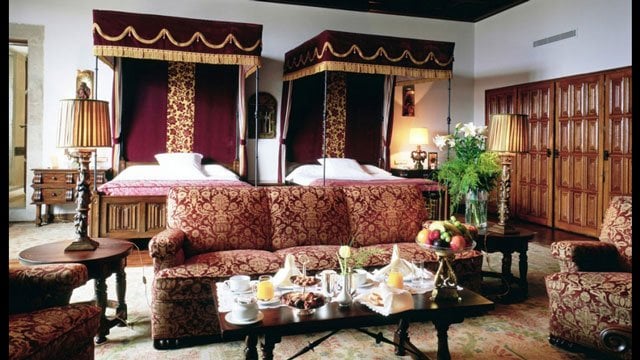
Superior Collection
Stay in very special hotels and unique properties along the Camino. We have selected luxurious 4 and 5-star hotels, boutique guesthouses, relaxing country homes and stunning heritage ‘Parador’ hotels so you can feel pampered. Rest assured when you select Superior Collection, you will enjoy the full experience of our best hotels and top guesthouses when and where this option is available, however, bear in mind, that sometimes due to location factors, only our choice of standard collection hotels and guesthouses may be available. All rooms are en-suite.
More about our Camino accommodation and where you sleep on the Camino.
What's included
- Included: Selected accommodation with private bathrooms, Holiday Pack on your mobile phone (Route ebook and Google Maps) and a 24/7 support number assisting with your trip, for instance, organising a support vehicle if needed.
- Not included (paid locally or arranged by you): Flights, drinks, city tax, Travel Insurance (Recommended)
- Optional: Luggage transfers (On by default. One bag up to 20kg per person), dinners (On by default, where available) and airport transfers, etc…
Note on Accommodation: We aim to book you into each town listed on the itinerary. However, in case of low availability, we may book you two nights in the same town with provided transfers. If you are booking a Superior collection or Country cottages, please note it is subject to availability and, therefore, cannot be guaranteed. More details.
See also: luggage transfers, bike rental, airport transfers, travel insurance and tourist tax.
Costs on the trail (approx.)
| Espresso | €1.20–€1.50 |
| Panino | €5–€8 |
| Pilgrim or set menu | €15–€20 |
| Tourist tax | €1–€5 / night |
Budget around €35–€50 per person a day on top of your package.
Access
Getting to Lucca and home from Rome
Live information on Rome2Rio. We can also arrange private transfers if you prefer, just ask us.
Not sure where to fly into? See which Camino airport is best. We can also arrange private airport transfers.
Firstly you need to reach Pisa central train station (Station Ferroviara Pisa Centrale). The airport is only located 1km from Pisa central train station and PisaMover Bus Service provides the transfer. To get to Lucca from Pisa central train station you can take a regional trains (approx. 30 minutes travel time). You can check the timetable at www.trenitalia.com.
: Depending on the connection schedules, sometimes it’s better to make the connection at Viareggio instead of at Pisa Centrale. The Trenitalia website will indicate when this is the case. The unreserved regionale train from Viareggio to Lucca also costs 3 Euros and takes just under 30 minutes travel time.
To reach Santa Maria Novella train station (S.M.N) from the airport the easiest way is to take the city line. There is a local bus “Volainbus” that is run by the SITA bus company next to the Santa Maria Novella train station. It goes to and from the station every half hour from 5:30am to 11pm (25 minutes approx travel time from airport arrivals to the station). Find the general information of departure points and timetable at www.fsbusitalia.it
When you are in S.M.N train station you can choose:
– Train Option: With the Italian regional line www.trenitalia.com, Florence to Lucca takes roughly 1.30 hours and costs around €7.
– Bus Option: From Florence to Lucca, you also have the option to take the intercity bus (Monday to Saturday only), which departs hourly from the intersection of Via Nazionale and Via Fiume, 250 meters from the S.M.N. train station. The bus takes 80 minutes and costs about the same as the regionale train, but has reclining seats. Be aware departure location may change in the future.
Shuttle bus from Bologna Airport to Bologna Central Station (every 11 mins, €6 one-way). For more information see: http://aerobus.bo.it/en. Train to Florence (34mins), change to regional train to Lucca (1h20). Fares from €24. For more information see: https://www.lefrecce.it/.
You have to get to Roma Termini Central Station to take an intercity trains either going to Pisa Central or Firenze Santa Maria Novella. There are many options to get from Leonardo da Vinci airport to Roma Termini. See www.rome-airport:
- The Leonardo Express train costs €11 and takes 30 minutes.
- Terravision Shuttle Bus. Ticket is €9 for 70 minutes of travel.
- City bus: The bus stop is located outdoors at ground level, 100 meters left from arrivals (teminals B&C). You can buy tickets at all tobacco shops – they have blue signs (Tabacheria). Fares is 4 Euros; 45-80 minutes travel time.
- Taxis outside the passenger stations. The trip cost usually €40 to get to the city centre plus €1 fee for each suitcase.
From Roma Termini you can decide to go to Pisa or Florence.
- Pisa: Take a Frecciabianca OR, an Intercity train from Roma Termini to Pisa Centrale. The Frecciabianca is a faster, more modern and nicer train, so give it priority over the Intercity unless the latter’s schedules are more convenient. The fastest Frecciabianca train takes 2 hours and 30 minutes travel time for €44.50
- Via Florence: Travelling via Firenze SMN will cost €43, and will take about the same amount of time (since the Freccia train from Rome to Florence is one hour faster than the Freccia train from Rome to Pisa). For timetables and itineraries see www.trenitalia.com
You can either take the bus or the train. However, they don’t stop at the same finishing point. The bus will drop you off in the heart of the historic city centre of Siena whereas Siena train station is located further away from the city centre and you might need to take a city bus (5 min travel time approx).
By bus:
– Autostradale bus express, coming from Pisa, stops in Florence and reaches Siena in less than 2 hours. See: www.airportbusexpress.it.
– SITA bus: www.sitabus.it/en/. The bus station is just around the corner from the train station in Florence. SITA buses to Siena take just under an hour, run frequently and takes you to Siena historic city center. Make sure you take the rapide (express) and not the ordinarie, which stops in Poggibonsi and Colle Val d’Elsa. Ticket costs €12. See the route itinerary and price for more information (note information is only in Italian). To reach the Santa Maria Novella train station in Florence from the airport, just take the city line Vola in bus from the airport. The service connects the city centre in just 20 minutes, and the fare is €6 one way.
By train:
Trains from Florence to Siena depart from Santa Maria Novella station approximately every hour on most days, and the direct train journey takes around 1.5 hours. The ticket is in the €6-10 range (if you’re on the direct train). See www.fsitaliane.it for more information.
(130km): You can take two different buses outside the airport that go directly to Siena (with an approximate travel time of under 2 hours). For more information, see: www.pisa-airport.com/en/.
– Train S.p.a, see: www.sitabus.it/en/. Leaving directly from the airport to Piazza Gramsci in Siena. It takes you around two hours travel time and costs €14 one way.
– Autostradale, see: www.airportbusexpress.it. It follows a similar itinerary to Train S.p.a., but with a change in Florence. One-way ticket costs €15—all information, timetable and route with Siena Mobilita.
There are bus and train connections available to Siena. Shuttle bus from Bologna Airport to Bologna Central Station (every 11 mins, €6 one-way). For more information, see: https://www.marconiexpress.it. From here, you will take the train to Siena with a change in Florence. Train to Siena (2hr 30, from €24 one-way). For more information, see: www.lefrecce.it.
Bus from Bologna Airport to Siena Train Station. (4 times daily, from €18, Duration 2h40 – 3h40). For more information see: www.rome2rio.com/
Leonardo da Vinci- Fiumicino Airport 120km: There are regular trains from the airport to Rome. You can take a Trenitalia’s FL1 regional train from Leonardo da Vinci Airport to the main train stations in Rome, including Roma Ostiense Station. There are regular trains from Roma Ostiense Station to Viterbo (journey just under 2hrs). For train info see: www.trenitalia.com. Alternatively you can take the Leonardo Express train to Roma Termini Station and take the metro from Termini to Ostiense to catch your train to Viterbo. Alternatively www.terravision.eu/ provide bus transfers between the Airport and Roma Termini from €4 each way.
: There are buses and trains connecting Ciampino Airport with Roma Ostiense Station. The journey takes 30 minutes approximatively. For bus and train info, see: www.adr.it. There is a bus (45 minutes approx.) from Ciampino airport to Roma Termini Station (and then you can take the metro to Ostiense Station) see www.terravision.eu/ for details. From Roma Ostiense Station, you can take the train to Viterbo (just under 2hrs travel time), see www.trenitalia.com. Ticket fare is in the €5-10 range.
Leonardo da Vinci- Fiumicino Airport 31km: You can take the Leonardo Express train (30min, €11) from Roma Termini Station to Fiumicino airport, see: www.trenitalia.com. The FL1 regional train also connects the airport with the main train stations in Rome. Alternatively there is a shuttle bus from Termini Station and Vatican (Via Crescenzio n2), departing every hour (55min approx, €6). For more info, see: www.sitbusshuttle.com or http://www.terravision.eu/.
: You can take the bus to Termini Station (20min, €1). There is a regular shuttle bus from Roma Termini Station to the airport every half hour (45min approx. €4). For more info, see: www.sitbusshuttle.com or http://www.terravision.eu/
Plan your Camino
Plan your Via Francigena from Lucca
Best time to go
Best months: April, May, September and October. July and August are very hot in Tuscany and Lazio.
- March–April Green hills, spring flowers and mild days. Some showers, so pack a light rain jacket.
- May–June Warm and bright, with poppies in the fields: a lovely time to walk in Tuscany.
- July–August Hot, often over 30°C in the afternoon. Start early and rest in the shade.
- September–October Grape harvest, warm days and soft light. Our favourite time of year.
More in our guides to the best time to walk the Camino, weather on the Camino and the busiest months.
What to pack
Tick items off as you pack. The full list is in our free Camino packing ebook and our online Camino packing list.
Read more: the best footwear for the Camino, how to treat blisters, what to wear and our Camino fitness plan.
A typical day
- 7:30Breakfast. Leave your bag at reception.
- 8:30Start walking through the morning mist.
- 10:30Coffee, tortilla and your first stamp.
- 13:30Pilgrim lunch in a village bar.
- 15:30Arrive. Your bag is waiting.
- 17:00Rest, explore, second stamp.
- 20:00Dinner with fellow pilgrims.
More in our guide to a typical day on the Camino and our essential Camino tips.
Town by town
Town-by-town guide from Lucca to Rome
What to see and eat
Lucca
StartSee The Renaissance walls, which you can walk all the way round, and the oval Piazza dell'Anfiteatro.
Eat Tordelli lucchesi and buccellato, the local sweet bread.
San Miniato
Night 3See A hilltop town with the tower of Frederick II and wide views over the Arno valley.
Eat White truffles in season.
San Gimignano
Night 5See The medieval towers (UNESCO) and the views from the Rocca.
Eat Gelato in Piazza della Cisterna and a glass of Vernaccia.
Monteriggioni
Night 6See A tiny walled village crowned by 14 towers.
Eat Pici pasta with a glass of Chianti.
Siena
Night 7See The shell-shaped Piazza del Campo and the striped cathedral (UNESCO).
Eat Panforte and ricciarelli, the city's famous sweets.
San Quirico d'Orcia
Night 10See The Horti Leonini garden and the rolling hills of the Val d'Orcia (UNESCO).
Eat Pecorino cheese from nearby Pienza.
Radicofani
Night 12See The hilltop fortress, once home of the bandit Ghino di Tacco.
Eat Hearty Tuscan stews.
Bolsena
Night 14See The lakeside basilica of Santa Cristina, site of the Miracle of Bolsena.
Eat Lake fish.
Viterbo
Night 16See The Palace of the Popes and the medieval San Pellegrino quarter.
Eat Roman-style pasta and local wine.
Sutri
Night 18See The Roman amphitheatre cut into the soft tuff rock.
Eat Simple Roman dishes in the old town.
Rome
FinishSee St Peter's Basilica, where you collect your Testimonium, and the historic centre.
Eat Carbonara or cacio e pepe in Trastevere.
Hungry for more? Read our guide to food on the Camino.
ATMs, pharmacies and supermarkets
Most overnight stops are towns with shops, a pharmacy and a cash machine. However, Lucignano d'Arbia, Gallina and Monteriggioni are very small, so carry snacks and some cash.
| Town | ATM | Pharmacy | Supermarket | Health centre |
|---|---|---|---|---|
| Lucca | Yes | Yes | Yes | Yes, including hospital |
| San Miniato | Yes | Yes | Yes | Yes |
| San Gimignano | Yes | Yes | Yes | Yes |
| Monteriggioni | No | No | Small shops | No |
| Siena | Yes | Yes | Yes | Yes, including hospital |
| San Quirico d'Orcia | Yes | Yes | Yes | Yes |
| Radicofani | Yes | Yes | Small shops | No |
| Bolsena | Yes | Yes | Yes | Yes |
| Viterbo | Yes | Yes | Yes | Yes, including hospital |
| Sutri | Yes | Yes | Small shops | Yes |
| Rome | Yes | Yes | Yes | Yes, including hospital |
- Carry some cash: small village cafés often don't take cards.
- Pharmacies in Spain are marked with a green cross; out-of-hours ones are listed on the door.
- Emergencies: call 112, then our 24/7 line.
- Many shops close from around 2pm to 5pm, and on Sundays.
Compare and extend
Compare routes and extend your trip
Lucca to Rome vs other routes
All of these are long pilgrim walks of three weeks or more. The Via Francigena ends in Rome, not Santiago.
| Route and start | Distance (approx.) | Walking days | Landscape | Crowds |
|---|---|---|---|---|
| Full Via Francigena, Lucca to RomeThis tour | 419km | 20 | Tuscany, Val d'Orcia, Lazio | Fairly busy |
| Via Francigena by bike, Lucca to Rome | 419km | 10 | Tuscany, Val d'Orcia, Lazio | Fairly busy |
| Full Chemin du Puy | 732km | 31 | Auvergne, Aubrac, Quercy, Gascony | Fairly busy |
| Full Camino Primitivo from Oviedo | 312km | 14 | Asturian mountains, Lugo walls | Quiet |
Not sure which to choose? Compare every route on our Camino routes page or read which is the easiest Camino to walk.
Add a few days at the end
Extra nights in Rome
Stay on to visit the Vatican, the Colosseum and the old streets of Trastevere.
Add a rest day
Stay an extra night in a town you love. Add it in the planner when you book.
Camino plannerReviews
Reviews and your Camino specialist
What walkers say
Trustpilot4.5 out of 5 · 947 reviews“Camino Ways made the trip so easy. The places we stayed were amazing and having our luggage transported allowed us to just get up and go. Would highly recommend using Camino Ways.”
“Transfers were flawless. Accommodations top notch. Trip of a lifetime.”
“Everything sorted for you. Great communication and efficient service all around.”
Read all our reviews on Trustpilot · More stories from our walkers
Your Camino specialist

Roland
Roland Monségu is the founder and CTO of CaminoWays.com. Originally from France, Roland has over 20 years of experience in the travel industry, organising bespoke treks across multiple continents. In 2011, he founded…
FAQs
FAQs: Full Via Francigena from Lucca to Rome
How long does it take to walk from Lucca to Rome?
It takes 20 walking days to cover the 419km, with stages of 13–32km. With your first night in Lucca, the trip lasts 22 days and 21 nights.
Is the Via Francigena from Lucca to Rome hard?
It is Moderate (3 out of 5 on our scale): the days are 13–32km on gravel roads and country lanes, with many hills and little shade in summer.
Do I get a certificate in Rome?
Yes. If you walk at least the last 100km (or cycle the last 200km) with a stamped pilgrim passport, you can ask for the Testimonium in Rome.
Is luggage transfer included?
Luggage transfers are on by default when you book: one bag of up to 20kg per person goes from hotel to hotel.
Is it safe to walk alone?
Yes. The route is well waymarked, and our 24/7 line is always there if you need help.
What is included in the price?
Your hotels with private bathrooms, luggage transfers, a Holiday Pack with maps and route notes, and 24/7 support. Dinners and airport transfers are optional extras in the planner.
When is the best time to walk from Lucca to Rome?
Best months: April, May, September and October. July and August are very hot in Tuscany and Lazio.
Can I walk it in sections?
Yes. Many walkers do Lucca to Siena one year and Viterbo to Rome the next. See our shorter tours below.
Is it hot in Tuscany and Lazio?
In July and August, often over 30°C. Spring and autumn are best for walking.
Have more questions? Read our FAQ pages.
Ready to walk from Lucca to Rome?
Personalise your own trip with our award-winning Camino Planner, or talk to our specialists.