
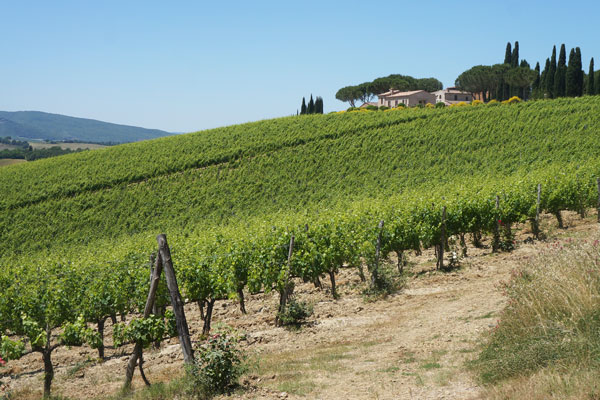
The Via Francigena stretches over 2,000 kilometres from Canterbury to Rome, crossing four countries and centuries of history. Every section has something to offer — but not all sections are equal. Some stretches of this ancient pilgrimage route stop you in your tracks. The kind of landscapes, towns, and moments that stay with you long after you’ve unlaced your boots.
These are the routes that keep drawing people back. Not because they’re the easiest or the shortest — but because they’re the most alive.
Table of contents
1. Lausanne to Aosta – Where the Alps take your breath away
There is nothing subtle about this section. Starting alongside the glittering shore of Lake Geneva, the route climbs steadily through Swiss villages before crossing the Great St Bernard Pass at 2,469 metres above sea level — the highest point on the entire Via Francigena, and one of the most dramatic mountain crossings in Europe. This section is most famous for the St.Bernard Pass “Col du Grand St. Bernard” which sits at 2,469m above sea-level and has been used over centuries by the armies of Rome and Napoleon as well as pilgrims. The summit is the highest point of the whole route from Canterbury to Rome.
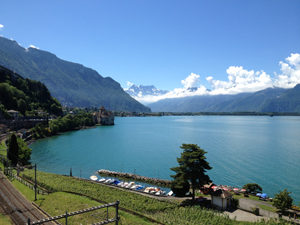
This is the same pass that Roman legions used, that Napoleon marched his army through, and that pilgrims have navigated for over a thousand years. The sense of following in all those footsteps is hard to shake.
On the way up, the Château de Chillon emerges from the lake like something from a fairy tale. The Roman ruins at Martigny hint at how long this road has been travelled. And arriving into Aosta — a town still shaped by the glaciers above it — feels like stepping into another world entirely.
Other highlights of this section include the archaeological remains in the village of Martigny, the Chateau de Chillon and lakeside tracks. Finishing in the ancient town of Aosta is a treat as you meander the narrow streets in a town fed by the glaciers of the Swiss Alps.
If you want the Via Francigena at its most epic, this is it.
2. Lucca to Siena – The Heart of Tuscany
This is the section that most people picture when they think of the Via Francigena in Italy. And it earns every bit of that reputation.
Lucca — known as the city of a hundred churches — is a perfect starting point: a walled Renaissance city where you can walk the entire perimeter on top of the ancient ramparts before setting off south. From there, the route opens out into Tuscany proper: olive groves, cypress-lined roads, rolling vineyards, and the particular golden light that makes this corner of Italy feel like a painting.
The medieval towers of San Gimignano appear on the horizon like something from a dream. The Chianti wine country surrounds you for miles. And Siena — the UNESCO World Heritage city at the end of the week — rewards your arrival with some of the finest medieval architecture in Europe, and possibly the best ribollita you’ll ever eat.
This is the Via Francigena in Tuscany from Lucca to Siena — one week, 133 km, and a lifetime of memories.
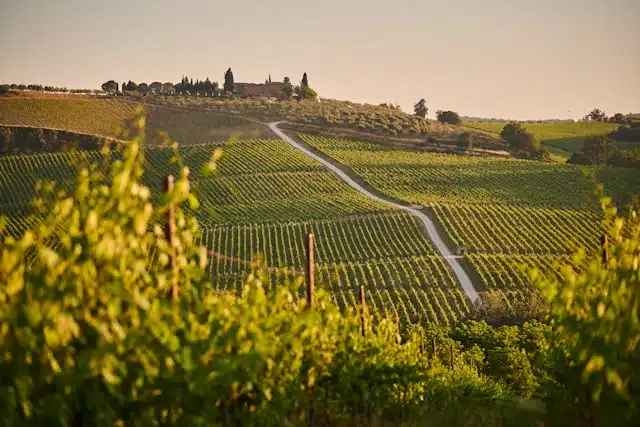
3. San Miniato to Siena — Tuscany at a gentler pace
For those who want all the beauty of Tuscany without the longer distances, this section is the answer. Starting from the hilltop town of San Miniato — with its tower looming over the valley of the Arno — the easy Via Francigena from San Miniato to Siena covers 86 km over six days.
The pace here is genuinely leisurely. Shorter daily distances mean more time to linger over lunch in a village square, to sit with a glass of Vernaccia in San Gimignano as the evening light fades, or simply to walk slowly and look around. The landscape is the same rolling Tuscan countryside — just more time to appreciate it.
This section is particularly popular with walkers doing the Via Francigena for the first time, those with limited time, or anyone who prefers to travel slowly and deliberately. It also works beautifully as a family route — take a look at our family walking on the Via Francigena itinerary.
4. Val d’Orcia — Siena to Acquapendente
South of Siena, the Via Francigena enters one of Italy’s most celebrated landscapes: the Val d’Orcia, a UNESCO World Heritage Site and the backdrop to countless Renaissance paintings.
The road here is quieter, the villages smaller, and the horizon wider. Thermal springs at Bagno Vignoni have been drawing weary travellers since Roman times. The hilltop fortress of Radicofani — visible for miles across the plain — has guarded this route since the Middle Ages. Hot springs, ancient abbeys, and an enormous open sky mark every day of walking.
This section is less visited than Tuscany to the north, which makes it all the more rewarding for those who choose it. The Via Francigena here feels genuinely medieval — a route through a landscape that has barely changed.
5. Viterbo to Rome – Last 100km to Rome
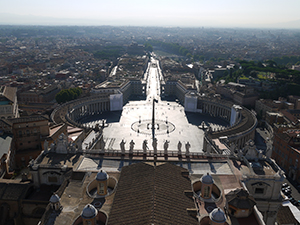
Every pilgrim route has a final approach, and the Via Francigena saves one of its best for last.
Viterbo is a medieval city of fountains and popes, where the streets are still hemmed in by ancient walls. From there, the route descends through the Lazio countryside — past the Etruscan ruins of Sutri, through orange and lemon orchards, across volcanic lakes and olive groves — before the unmistakable skyline of Rome appears on the horizon.
Walking into Rome on foot — arriving at St Peter’s Square after days on the road — is one of those moments that is genuinely difficult to describe. The scale of the city hits you differently when you’ve earned your way there step by step.
This is also the section that qualifies you for the Testimonium — the official pilgrim certificate of the Via Francigena, equivalent to the Compostela on the Camino de Santiago. Walk at least 100 km into Rome, stamp your pilgrim passport along the way, and collect it on arrival.
The Viterbo to Rome section covers 112 km over 6 nights — short enough to fit into a week, significant enough to change how you see the city forever.
Which Section Is Right for You?
Every one of these routes offers something different. The Alps for drama. Tuscany for beauty. Val d’Orcia for solitude. Rome for meaning. If you’re not sure where to start, our travel specialists can help you choose based on your time, fitness level, and what you’re looking for from the journey.
You can also explore the full Via Francigena from Lucca to Rome — 419 km, up to 20 nights — for the complete Italian experience. Or if cycling is more your style, discover cycling the Via Francigena from Lucca to Rome in around 11 nights.
For all the practical detail on distances, stage lengths, and how the route is structured, see our guide to Via Francigena stages.
👉 Ready to start planning? Use our Camino Planner or contact our travel specialists for a personalised itinerary.
FAQ: Popular Via Francigena Routes
What is the most popular section of the Via Francigena?
The Tuscany section — either Lucca to Siena (133 km, 1 week) or the shorter San Miniato to Siena (86 km, 6 nights) — is consistently the most-booked stretch. The scenery, the towns, and the food make it the definitive Via Francigena experience for most travellers.
What is the most scenic route on the Via Francigena?
That depends on what you mean by scenic. The Lausanne to Aosta section is unrivalled for mountain drama. The Val d’Orcia between Siena and Acquapendente is one of Italy’s most celebrated landscapes. And the Tuscany section offers that perfect postcard combination of rolling hills, vineyards, and medieval towns.
Can I walk just part of the Via Francigena?
Absolutely. The route is designed to be walked in sections. Most travellers choose one week-long stage and return for more. There is no requirement to walk the full route.
Which Via Francigena route earns you the Testimonium certificate?
Walking at least the last 100 km into Rome qualifies you for the Testimonium. The Viterbo to Rome section (112 km) is the most popular way to earn it.
Is there a cycling version of the popular Via Francigena routes?
Yes — cycling the Via Francigena from Lucca to Rome covers the same highlights in around 11 nights, with daily distances of 45–75 km.
