
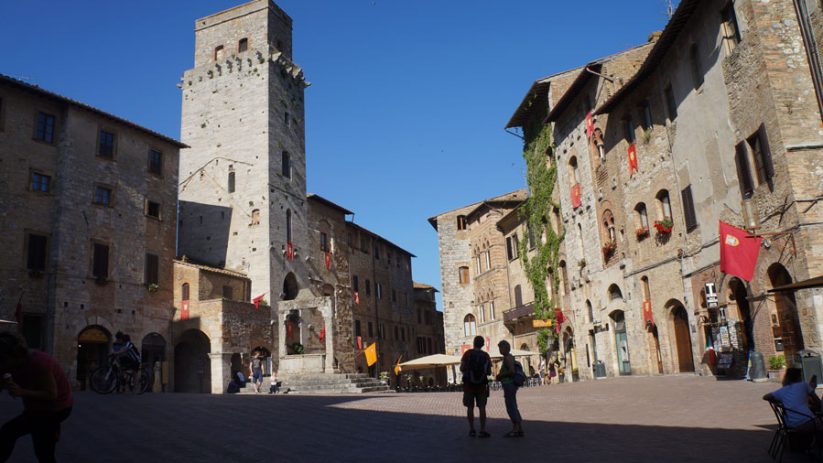
San Gimignano, a medieval hilltop town in Tuscany, is a jewel along the Via Francigena. It is a key stop while walking from Lucca to Siena on this historic pilgrimage route, making it an essential part of the experience. With its unique skyline, rich history, and breathtaking views, this town offers visitors an unforgettable experience. Whether walking or cycling, San Gimignano is a must-see destination on your journey through Tuscany, let’s explore what makes this medieval town such a special place to visit.
Table of contents
A Historic Stop on the Via Francigena
San Gimignano sits directly on the Via Francigena, the ancient pilgrimage route from Canterbury to Rome. For centuries, pilgrims passed through this town on their way to the Eternal City, resting within its walls before continuing south. Today, modern walkers and cyclists can follow in their footsteps. As you approach the town at the end of a long walking day, the 14 surviving medieval towers of San Gimignano come into view on the horizon — an imposing and deeply moving sight that has greeted pilgrims for over a thousand years.
It is also said that the bitter rivalry between San Gimignano’s warring noble families inspired Shakespeare’s plot for Romeo and Juliet. History here runs deep in every stone.
The Medieval Towers of San Gimignano
One of it’s most striking features is its medieval towers. Known as the “Manhattan of the Middle Ages,” the town once had over 70 towers. Today, 14 still stand, giving the city its iconic skyline. Noble families built these towers as symbols of their wealth and power. A walk through it’s streets is like stepping back in time.
Must-See Sights in San Gimignano
San Gimignano offers many historical and cultural experiences. Here are some must-see sights during your visit.
Piazza della Cisterna
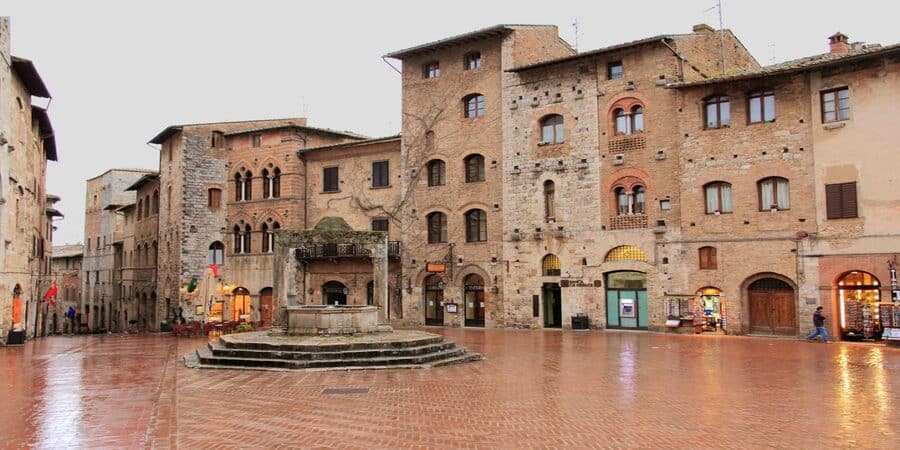
The heart of the town, Piazza della Cisterna, is a lively, triangular square surrounded by medieval buildings and featuring a central well. It’s the perfect place to relax, enjoy a coffee, and soak in the atmosphere. The square is named after the cistern, or well, that provided water to the town during the Middle Ages.
Collegiata di San Gimignano
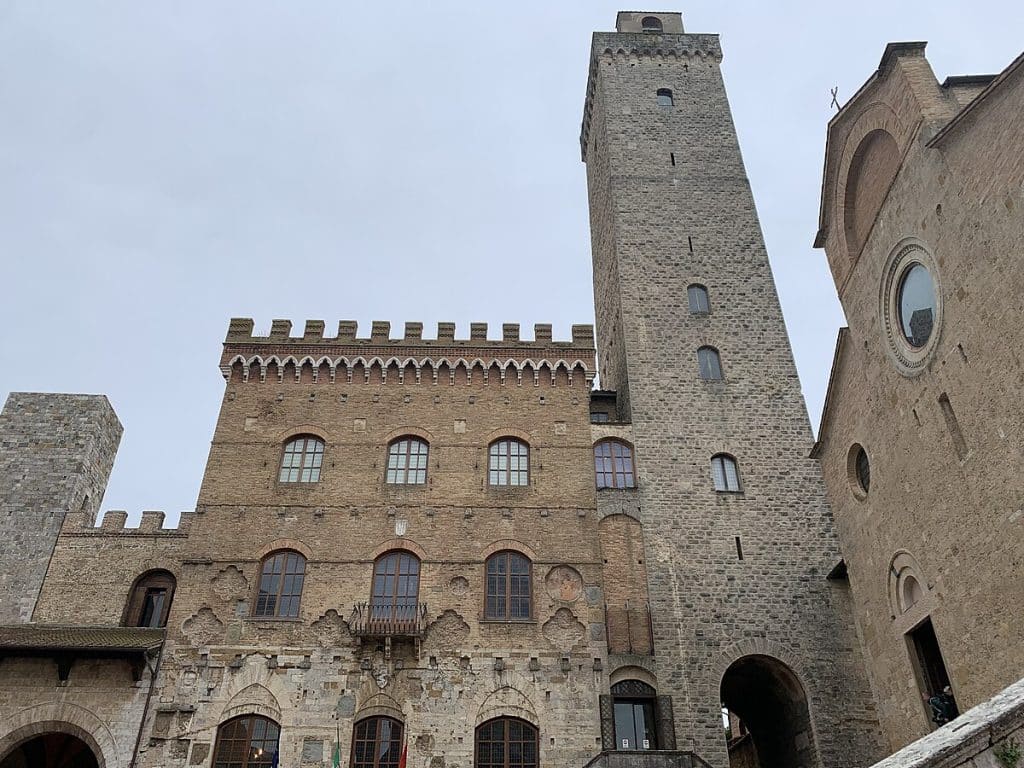
The Collegiata, or San Gimignano Cathedral, is a beautiful Romanesque church in Piazza del Duomo. Inside, you’ll find stunning frescoes depicting scenes from the Bible. These frescoes, dating from the 14th century, are some of the finest in Tuscany. Don’t miss the Chapel of Santa Fina, which contains artwork by Ghirlandaio, a master of the Italian Renaissance.
Torre Grossa
Climb the Torre Grossa for the best views of San Gimignano and the surrounding countryside. At 54 metres tall, it’s the highest tower in town. From the top, you can see the rolling hills of Tuscany stretching out in all directions. The climb is steep, but the view is well worth the effort.
Walking the Via Francigena to San Gimignano
The Via Francigena route to San Gimignano is filled with stunning landscapes. Here’s what to expect if you’re walking or cycling the route.
Scenic Vineyards and Olive Groves
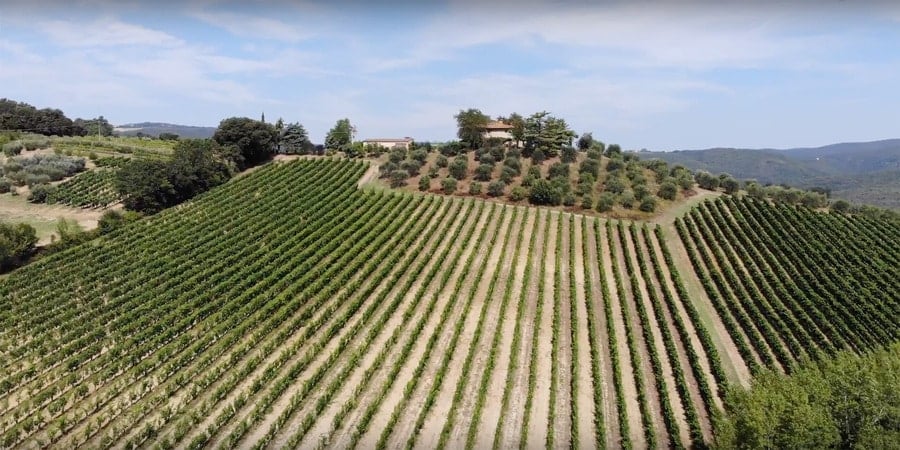
As you approach the town, you’ll pass through the Tuscan countryside, famous for its vineyards and olive groves. The region produces some of Italy’s finest wines, including Vernaccia di San Gimignano. Take in the views as you walk through this peaceful, rolling landscape.
Wildlife and Nature Along the Way
The route to San Gimignano is full of natural beauty. As you walk, you might spot local wildlife like deer, rabbits, or birds. The landscape is dotted with cypress trees, giving the area its distinctive Tuscan character.
Rest Stops for Pilgrims
San Gimignano offers several rest stops for pilgrims. These are perfect for a break after a long day of walking. You’ll find places to refill your water bottle, grab a bite to eat, and rest your feet before continuing your journey.
San Gimignano’s Famous Wine: Vernaccia
San Gimignano sits directly on the Via Francigena, the ancient pilgrimage route from Canterbury to Rome. For centuries, pilgrims passed through this town on their way to the Eternal City, resting within its walls before continuing south. Today, modern walkers and cyclists can follow in their footsteps. As you approach the town at the end of a long walking day, the 14 surviving medieval towers of San Gimignano come into view on the horizon — an imposing and deeply moving sight that has greeted pilgrims for over a thousand years.
It is also said that the bitter rivalry between San Gimignano’s warring noble families inspired Shakespeare’s plot for Romeo and Juliet. History here runs deep in every stone.
Wine Tasting in San Gimignano
If you have time, visit one of the many wineries in and around the town. Many offer tours and tastings where you can sample the famous Vernaccia alongside other local wines. A visit to a winery is a wonderful way to understand the landscape you have walked through — seen through the lens of the vines that cover it.
Local Cuisine in San Gimignano
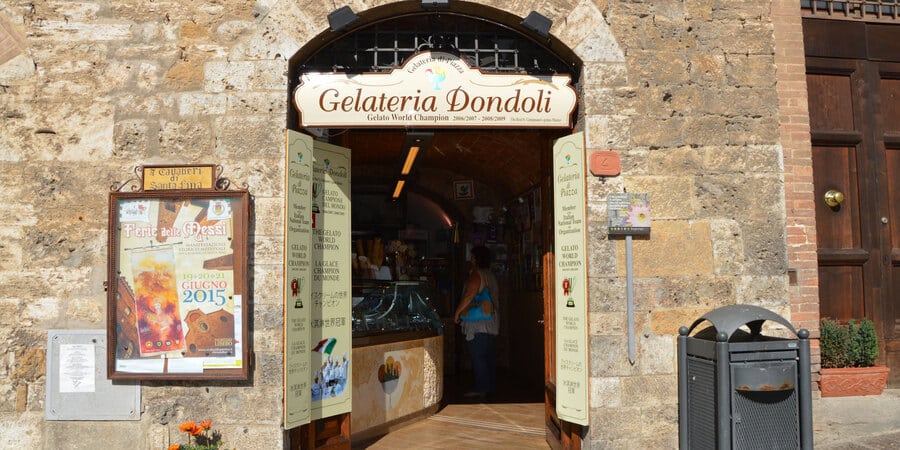
No visit would be complete without tasting the local cuisine. The town offers many traditional Tuscan dishes that reflect the flavours of the region and reward a hard day of walking. Pappardelle with wild boar is a perennial favourite — a hearty, flavourful pasta dish beloved by locals and pilgrims alike. Ribollita, the Tuscan bread soup made with vegetables and cannellini beans, is simple, deeply satisfying, and perfect for tired legs. And for dessert, there is only one choice: Gelateria Dondoli, one of the most celebrated gelaterias in Italy, known for its award-winning flavours including saffron, raspberry, and Vernaccia wine gelato.
Pappardelle with Wild Boar
A popular dish is pappardelle with wild boar sauce. This hearty, flavourful pasta dish is a favourite among locals and visitors.

Tuscan Bread Soup
Tuscan bread soup, or ribollita, is another must-try. This dish is simple but delicious and made with bread, vegetables, and beans. It’s a perfect example of traditional Tuscan cooking.
Gelato at Gelateria Dondoli
For dessert, head to Gelateria Dondoli, one of the most famous gelaterias in Italy. Their award-winning gelato is made with fresh, local ingredients. Try flavours like saffron, raspberry, or Vernaccia wine.
Staying in San Gimignano
San Gimignano offers a wide range of accommodation, from boutique hotels in the historic centre to agriturismos in the surrounding countryside. Staying inside the medieval walls puts you within walking distance of all the main sights, and lets you experience the town in the early morning and evening, once the day visitors have left. For a more tranquil experience, farmhouses and agriturismos in the surrounding hills offer accommodation with pool, Tuscan home cooking, and panoramic views over the vineyards.
Plan Your Via Francigena Trip
San Gimignano features on several of our most popular Via Francigena itineraries. Whether you want to walk the classic Lucca to Siena route, take the easy-paced San Miniato to Siena version, join a guided group tour, or bring the whole family on the family walking route from San Gimignano to Siena, there is an option to suit every pace and travel style.
San Gimignano is a highlight of the Via Francigena, offering a unique mix of history, culture, and natural beauty. Its medieval towers, breathtaking views, exceptional wine, and delicious food make it a must-visit on any journey through Tuscany. For more information, contact our team or start planning with our Camino Planner.
→ Related: Via Francigena Guide & Stages | 5 Spectacular Places on the Via Francigena in Tuscany | Via Francigena in Tuscany: Lucca to Siena
FAQ San Gimignano on the Via Francigena
San Gimignano is a medieval hilltop town in Tuscany, Italy, best known for its 14 surviving medieval towers — earning it the nickname “Manhattan of the Middle Ages.” It is also famous for Vernaccia di San Gimignano, Italy’s first DOC white wine, and for its exceptional Romanesque art and frescoes. The town is a UNESCO World Heritage Site.
Yes. San Gimignano sits directly on the Via Francigena, the historic pilgrimage route from Canterbury to Rome. It is one of the key stops on the Lucca to Siena section and has welcomed pilgrims for over a thousand years.
San Gimignano originally had more than 70 towers, built by rival noble families as symbols of power and wealth. Today, 14 towers survive, giving the town its iconic skyline. The tallest is the Torre Grossa, at 54 metres, which is open to visitors.
Most walkers reach San Gimignano as part of the Lucca to Siena route or the easier San Miniato to Siena option. The approach follows the famous strade bianche through Chianti vineyards and olive groves, with the towers of San Gimignano appearing on the horizon as you near the end of the day’s stage.
Yes. The Via Francigena cycling route passes directly through San Gimignano along scenic gravel roads through vineyards and woodlands. It is one of the most memorable cycling stages in Tuscany.
Try pappardelle with wild boar sauce, ribollita (Tuscan bread and bean soup), and the award-winning gelato at Gelateria Dondoli. To drink, the local Vernaccia di San Gimignano white wine is essential — crisp, fresh, and produced here since the 13th century.
Very much so. The family walking route from San Gimignano to Siena is one of our most popular itineraries, combining medieval castles, museums like San Gimignano 1300, and manageable daily distances through the Tuscan countryside.
Spring (April to June) and autumn (September to October) are ideal, pleasant temperatures, fewer crowds and the countryside at its most beautiful. Summer is busy and hot but the town’s festivals add to the atmosphere. Winter is quiet and atmospheric, with shorter queues at the main sights.
