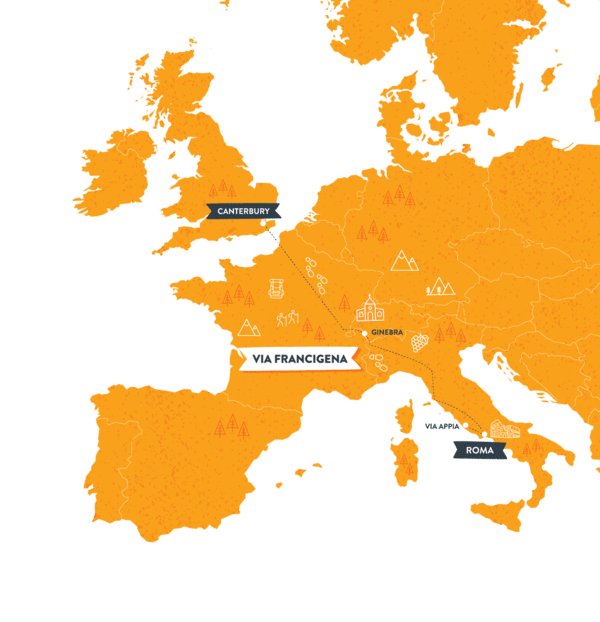
The Via Francigena is a historic pilgrimage route that starts in Canterbury, England, weaves through France and Switzerland, and ends in Rome, Italy. Its origins date back to the Middle Ages. This scenic trail is a journey through history, culture, and stunning landscapes, making it a treasured route for modern-day pilgrims and travellers alike.
One of the first questions most travellers ask is: how are the stages organised, and which one is right for me? We’ll explore the various Via Francigena stages and answer common questions about their length, types of stages, and ways to customise your journey to suit your pace and preferences.
Table of contents
- How Many Stages Does the Via Francigena Have?
- What are the Via Francigena Stages in Italy?
- Walking the Via Francigena: Via Francigena Stages for Walkers
- Cycling the Via Francigena: Stages for Cyclists
- Can I mix and match stages in the Via Francigena?
- Start Your Journey on the Via Francigena
- FAQ: Via Francigena Stages
How Many Stages Does the Via Francigena Have?
The full Via Francigena is traditionally divided into around 79 daily stages across all four countries. However, for practical travel purposes — and the way CaminoWays organises its itineraries — the route is grouped into larger walking or cycling sections that typically take one week to complete.
In Italy alone, the route from Lucca to Rome covers 419 km across roughly 16 sections. This is the most popular stretch and the one most travellers focus on.
What are the Via Francigena Stages in Italy?
The full Via Francigena route spans over 2,000 kilometres or 1,250 miles and can be covered in one go or divided into manageable segments or stages. However, you can walk the full length of the Via Francigena in Italy from Lucca to Rome; it covers 419km. The most popular walker stages are San Miniato to Siena, Viterbo to Rome and Lucca to Siena. The most popular cycling stage is from Lucca to Rome. These stages offer flexibility, catering to both walkers and cyclists. Each stage can be adapted to meet your timeline, fitness level, and travel goals, allowing you to explore this incredible path at your own pace.
| Section | From → To | Approx. Distance |
|---|---|---|
| 1 | Lucca → San Miniato | ~55 km |
| 2 | San Miniato → Siena | ~86 km |
| 3 | Siena → Acquapendente | ~110 km |
| 4 | Acquapendente → Viterbo | ~65 km |
| 5 | Viterbo → Rome | ~112 km |
Walking the Via Francigena: Via Francigena Stages for Walkers
For those who choose to walk, the Via Francigena is split into stages that typically take a week to complete. Each walking stage covers approximately 150 kilometres or 93 miles weekly, allowing for a comfortable pace that suits both the experienced hiker and those new to long-distance walking. See all of our Via Francigena walking stages here: Via Francigena walking.
For walkers, each weekly stage covers roughly 130–150 km, with daily distances of around 18–25 km. This pace suits both experienced hikers and those new to long-distance walking.
The three most-booked walking stages are:
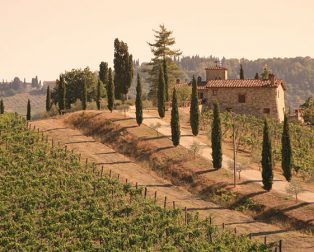
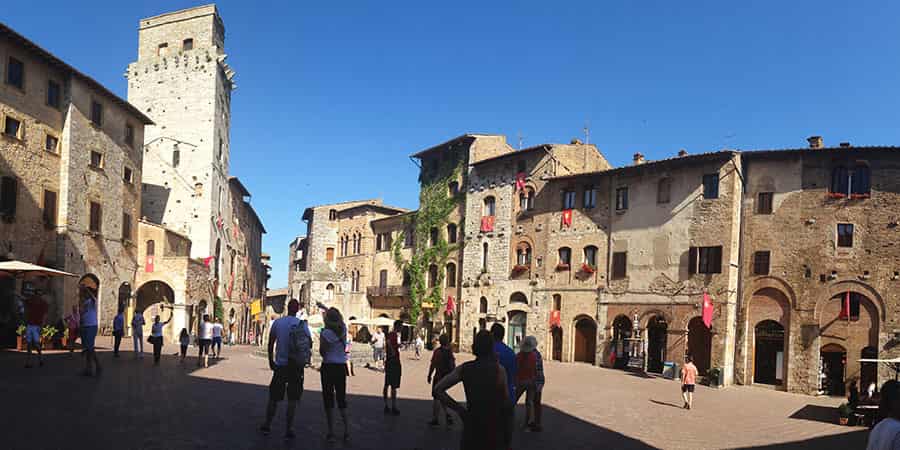
- Lucca to Siena (1 week) — 133 km, 7 nights. The classic Tuscany section, passing through San Gimignano, olive groves, and Chianti vineyards before arriving in the medieval city of Siena.
- San Miniato to Siena (Easy, 1 week) — 86 km, 6 nights. A shorter, gentler option for those who want to experience Tuscany at a more relaxed pace, with less elevation and shorter daily distances.
- Viterbo to Rome – Last 100 km — 112 km, 6 nights. The final section into the Eternal City. Walking at least 100 km qualifies you for the Testimonium, the official pilgrim certificate awarded in Rome — equivalent to the Compostela on the Camino de Santiago.
Key Features of Walking Stages
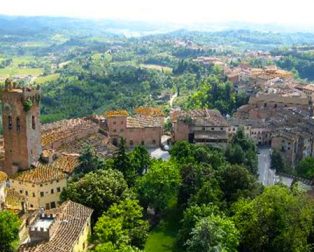
Each walking stage along the Via Francigena is carefully designed to ensure an enriching experience, regardless of difficulty level. The route takes you through scenic villages such as Lucca, San Gimignano, Siena, Val D’orcia and Viterbo, historic landmarks, and peaceful countryside, fully absorbing the cultural richness and natural beauty. Options range from leisurely sections to more demanding paths, allowing you to select stages that suit your fitness level.
Cycling the Via Francigena: Stages for Cyclists
Cycling the Via Francigena allows you to cover more ground in less time, making it an excellent option for those who wish to experience more of the route within a shorter period. Each cycling stage is divided into eight sections, each designed to cover 45 and 75 kilometres daily.
Cycling the Via Francigena allows you to cover the full route from Lucca to Rome in around 11 nights, compared to up to 20 on foot. Daily cycling distances range from 45 to 75 km, divided into 8 sections.
The most popular cycling itinerary is the Lucca to Rome route, which takes in all the major highlights of the Italian section — Tuscany, Val d’Orcia, Viterbo and the final arrival in Rome — in a more compact timeframe.
Highlights of Cycling Stages
Cyclists can explore more of the Via Francigena in a shorter timeframe. Each stage is curated to provide a mix of scenic landscapes, historic sites, and cultural landmarks that define this ancient trail. With flexible options tailored to each cyclist’s speed and stamina, these stages balance adventure and comfort.
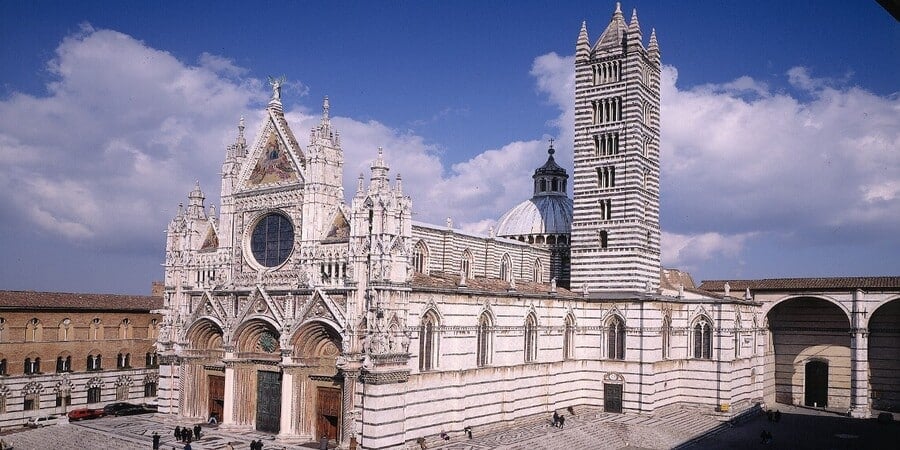
Can I mix and match stages in the Via Francigena?
The Via Francigena stages are flexible, allowing travellers to start anywhere on the route and tailor their itinerary freely. This flexibility lets you combine sections, start from any point within a stage, or mix walking and cycling as desired. Create a personalised journey that aligns with your schedule and interests, making your Via Francigena experience uniquely yours.
This is one of the great advantages of the Via Francigena. Unlike some long-distance routes, the stages are flexible. You can:
- Start at any point along the route
- Walk one section one year and continue the next
- Combine walking and cycling
- Begin mid-stage if your schedule requires it
Use our Camino Planner to build a personalised itinerary based on your dates, fitness level, and starting point.
Customising Your Via Francigena Experience
For those who want to walk the entire Italian section in one go, the Full Via Francigena from Lucca to Rome covers 419 km over up to 20 nights. This is the most complete way to experience the route — from Tuscany all the way through Lazio and into the heart of Rome.
CaminoWays handles accommodation, luggage transfers, walking notes and 24/7 support throughout, so you can focus entirely on the journey.
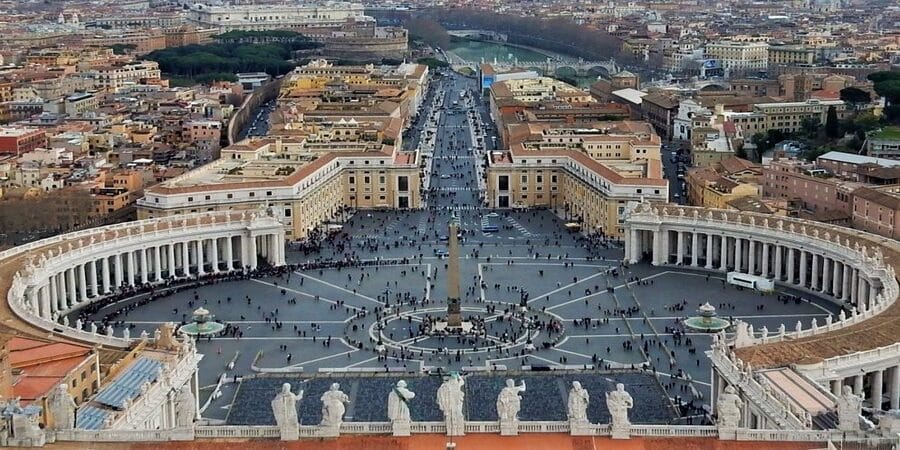
Start Your Journey on the Via Francigena
The Via Francigena stages promise an unforgettable European adventure if you’re passionate about history, nature, or unique travel. Every stage, whether on foot or by bike, offers chances to experience rich history, stunning scenery, and vibrant local cultures.
With flexible options to customise your journey, the Via Francigena welcomes travellers of all types. It offers an escape from daily life and a deep dive into Europe’s heritage.
To plan your ideal Via Francigena journey, contact our travel specialists. They’re ready to provide guidance and personalised support.
FAQ: Via Francigena Stages
How many stages does the Via Francigena have?
The full route has around 79 traditional daily stages across all four countries. In Italy, the CaminoWays itinerary organises these into 5 main sections between Lucca and Rome.
How long is each Via Francigena stage on foot?
Walking stages typically cover 18–25 km per day. Weekly stages cover around 130–150 km in total, taking 6–7 nights to complete.
How many stages does the Via Francigena have in Italy?
The Italian section from Lucca to Rome spans approximately 419 km and is divided into 5 main sections, covering everything from Tuscany through to the Lazio countryside and Rome.
What is the shortest Via Francigena stage?
The shortest bookable section with CaminoWays is San Miniato to Siena — 86 km over 6 nights — ideal for a first-time pilgrimage or those with limited time.
Do I need to walk all the stages to get the Testimonium?
No. You only need to walk the last 100 km into Rome to qualify for the Testimonium certificate. The Viterbo to Rome section covers 112 km and qualifies you for it.
Can I do the Via Francigena stages by bike?
Yes. Cycling the Via Francigena from Lucca to Rome takes around 11 nights, with daily distances of 45–75 km across 8 sections.
How do I plan my Via Francigena stages?
Use the CaminoWays Camino Planner to choose your start point, travel dates, and preferred pace. Our travel specialists can also help you build a custom itinerary.