
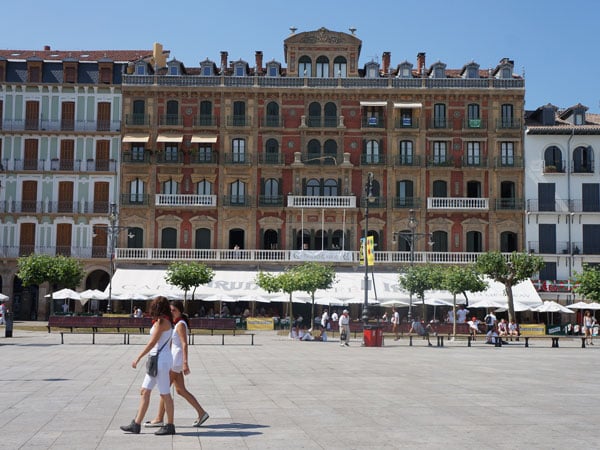
Start in Sarria if you have a week and want the Compostela; in Ponferrada if you’re cycling; in León if you have two weeks; in Saint-Jean-Pied-de-Port if you want the whole thing. Those four cover almost everyone.
The Camino Francés runs roughly 780km from Saint-Jean-Pied-de-Port to Santiago de Compostela, and you can join it at any of seven well-served towns. What decides it is simple: how many days you have, and whether you want the Compostela certificate — which requires the final 100km on foot, or the final 200km by bike.
Table of contents
- Camino Francés starting points compared
- What most pilgrims actually do
- Sarria: The Final 100 Kilometres
- Ponferrada: The Castle Gateway
- León: A Cultural Hub
- Burgos: A Gothic Masterpiece
- Logroño: The Wine Capital
- Pamplona: Between Festivity and Tranquility
- Saint-Jean Pied-de-Port: The Traditional Starting Line
- FAQs
- Start planning
Camino Francés starting points compared
| Starting point | Distance to Santiago | Days walking | Best for | |
|---|---|---|---|---|
| Sarria | 111 km | 5–7 | First-timers, one week, the Compostela | |
| Ponferrada | ~200 km | 9–11 | Cyclists (the 200km minimum), two weeks walking | |
| León | ~310 km | 13–15 | City culture plus the Meseta and Galicia | |
| Burgos | ~490 km | 21–23 | Three weeks, the full Meseta crossing | |
| Logroño | ~640 km | 27–29 | Wine and food, a month on the trail | |
| Pamplona | ~750 km | 32–34 | Nearly the full route, skipping the Pyrenees | |
| Saint-Jean-Pied-de-Port | ~780 km | 33–35 | The complete traditional pilgrimage |
Distances are approximate and days assume 20–25km a day — see how difficult the Camino Francés is and the Camino Francés map. Any of these can be split across several holidays.
What most pilgrims actually do
In 2025, 162,076 pilgrims started in Sarria — 30.5% of everyone who reached Santiago, making it the most-used starting point in the world. Only 30,345 (5.7%) walked the full route from Saint-Jean-Pied-de-Port. In other words, the “classic” Camino most people picture is walked by about one pilgrim in twenty; the great majority walk the last 100km. Neither is more legitimate than the other — but it’s worth knowing the trail you’ll actually find. Full figures in our Camino de Santiago statistics.
Below, the starting points listed from nearest to Santiago.
Sarria: The Final 100 Kilometres
111km · 5–7 days
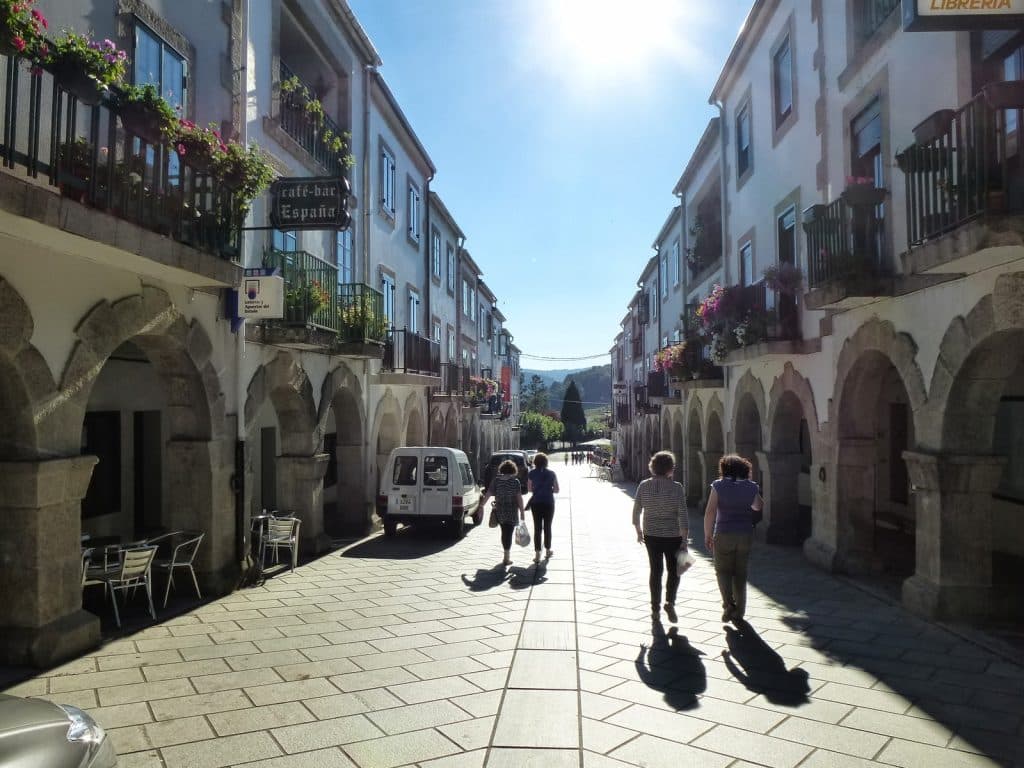
The most popular starting point on any Camino, because it sits just past the 100km mark — the minimum walking distance for the Compostela. Sarria is a real Galician town rather than a trailhead: cafés and bars on the cobbled Rúa Maior, street art, stone buildings, the Magdalena convent and the best-stocked pilgrim outfitters on the route. Arrive the evening before and you’ll start rested and ahead of the crowd. See things to do in Sarria and the audio guide from Sarria.
Discover the route:
- Sarria to Santiago, the last 100km
- Easy Camino Francés from Sarria — the last 100km in 10 days
- The last 100km as a guided tour
- Family walking and family cycling
Ponferrada: The Castle Gateway
~200km · 9–11 days walking
Ponferrada sits at almost exactly the 200km mark, which makes it the standard starting point for cyclists, who must cover 200km to earn their Compostela — see how cycling the Camino works. Walkers with two weeks get one of the best stretches of the whole route: the Bierzo wine country, Villafranca del Bierzo, the climb to O Cebreiro and all of Galicia.
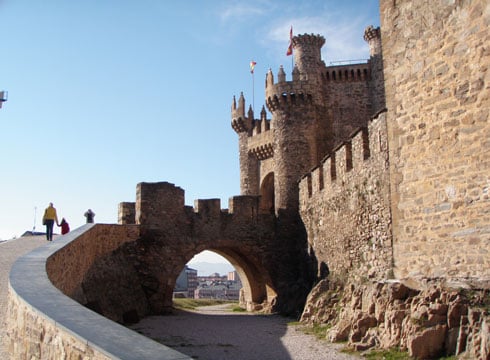
Before you set off, give the Templar castle an hour. The 12th-century fortress was raised by the Knights Templar, on land granted by Ferdinand II of León, to protect pilgrims on this stretch. Walk in over the iron bridge that gave the town its name.
Discover the routes:
Discover The Routes:
- Cycling the Camino Frances From Ponferrada to Santiago.
- Walking the Camino Frances From Ponferrada to Santiago last 200km.
León: A Cultural Hub
~310km · 13–15 days
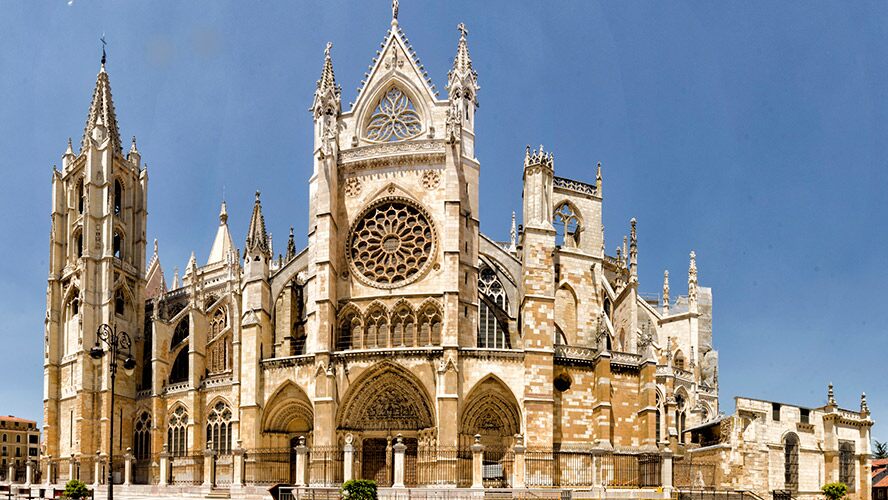
León is where culture, art and history converge: a Gothic cathedral whose stained glass is among the finest in Europe, Gaudí’s Casa de Botines, the Roman and medieval old town, and a tapas quarter that stays up late. Starting here gives you the tail end of the Meseta, the mountains of the Bierzo, the Cruz de Ferro and the whole of Galicia — arguably the best two weeks on the route. Consider a night in the historic San Isidoro hotel before you leave.
Discover the route:
- Camino Francés from León to Santiago — customise it with our route planner
Burgos: A Gothic Masterpiece
~490km · 21–23 days
Burgos is built around its UNESCO-listed Cathedral of Saint Mary, and the Camino runs right through the city alongside the Arlanzón river. Starting here means three weeks and the full Meseta crossing — the flat, wide, sky-heavy plateau that pilgrims either love or endure, and that most people remember longest. For a local’s view, read our guide to Burgos.
Discover the route:
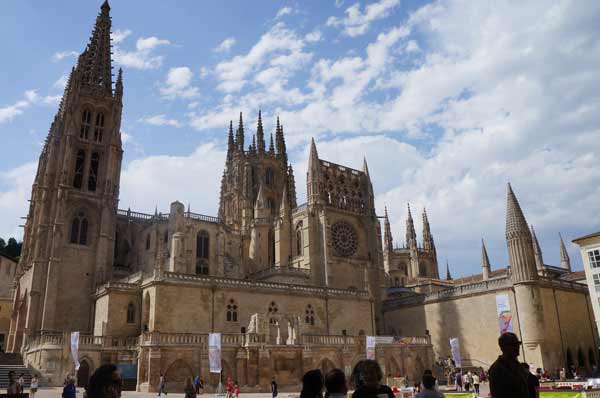
- Full Camino Francés from Burgos to Santiago — customise it with our route planner
Logroño: The Wine Capital
~640km · 27–29 days
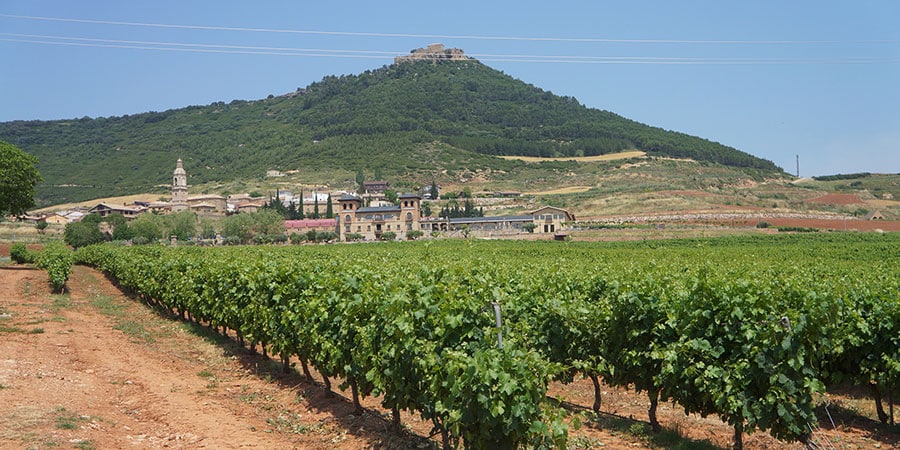
The capital of La Rioja, and the best starting point for anyone who walks to eat. Calle Laurel’s tapas bars are among the best value in Spain, the route out of town runs through vineyards, and late September brings the Rioja wine harvest festival. Within a few days you pass Santo Domingo de la Calzada and its cathedral hens.
Discover the routes:
- Camino Francés from Logroño to Burgos
- Full Camino Francés from Logroño to Santiago — customise it with our route planner
Pamplona: Between Festivity and Tranquility
~750km · 32–34 days
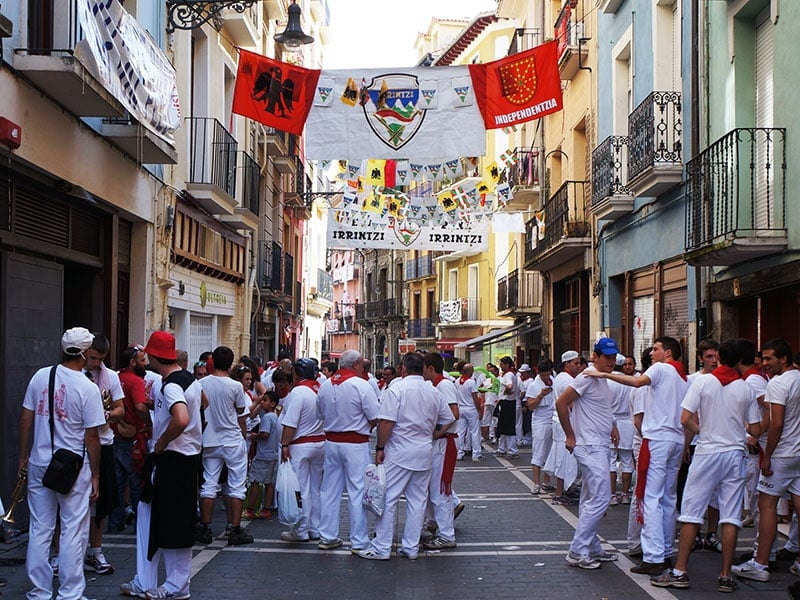
Known worldwide for the San Fermín festival and its running of the bulls, from 6 to 14 July. Starting in Pamplona gives you all but the first two days of the Camino Francés — you skip the Pyrenees crossing, which is the single hardest day of the route, and pick up the trail at the Alto del Perdón instead. A good compromise for anyone who wants the near-complete route without the Roncesvalles climb.
Discover the routes:
- Camino Francés from Pamplona to Logroño
- Full Camino Francés from Pamplona to Santiago — customise it with our route planner
Saint-Jean Pied-de-Port: The Traditional Starting Line
~780km · 33–35 days
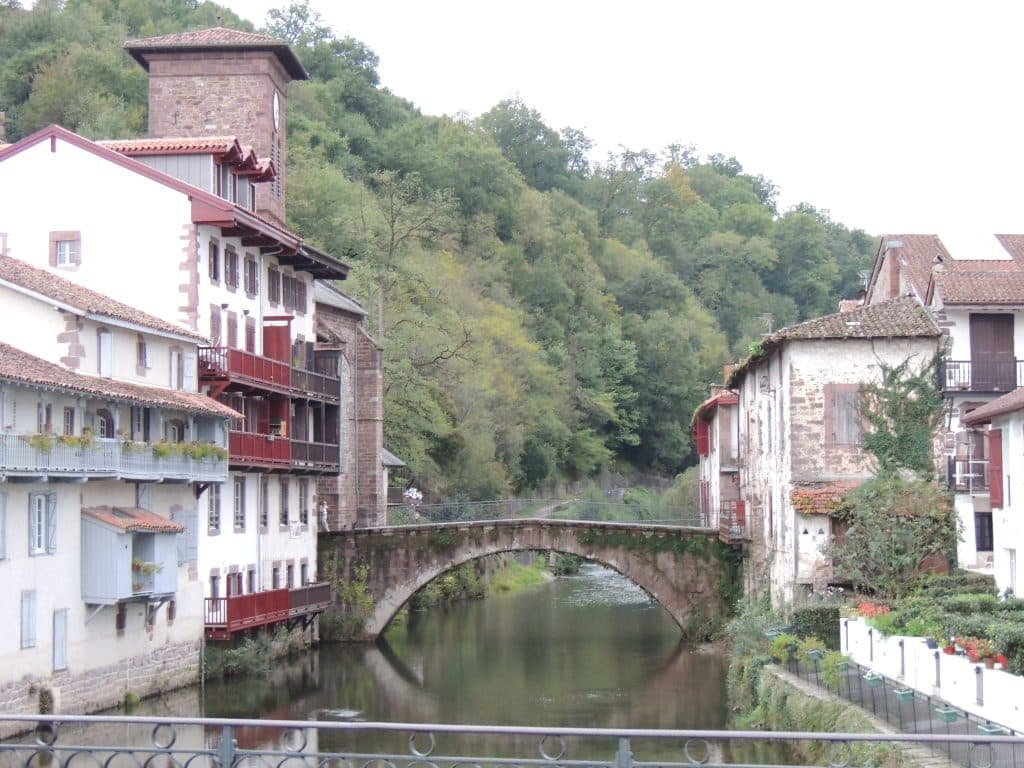
The classic beginning: a red-and-white medieval town on the French side of the Pyrenees, founded in the 12th century after nearby Saint-Jean-le-Vieux was destroyed by Richard I of England. From here the Route Napoléon climbs about 1,200m over the mountains to Roncesvalles on the first day — the hardest and most spectacular stage of the entire Camino, with the lower Valcarlos route as the bad-weather alternative. Starting here is a commitment to the full pilgrimage; see how far it is from St Jean to Santiago before you decide.
Discover the route:
How to choose your starting point
- You have one week → Sarria. It’s the only option that earns the Compostela in seven days.
- You’re cycling → Ponferrada. You need 200km by bike, and Ponferrada is where that line falls.
- You have two weeks → Ponferrada or León, for mountains and all of Galicia.
- You have three to four weeks → Burgos or Logroño, and you’ll cross the Meseta.
- You have five weeks → Saint-Jean-Pied-de-Port, the whole thing.
- You’re walking with children or want short days → Sarria, on the easy or family itineraries.
- You want to avoid the crowds → start further back than Sarria, or consider the Camino del Norte.
- You want to walk it across several holidays → start anywhere and pick up where you stopped; the certificate of distance records exactly where you began.
FAQs
Sarria, by a wide margin. In 2025, 162,076 pilgrims started there — 30.5% of everyone who reached Santiago — because it sits just past the 100km mark needed for the Compostela.
Anywhere at least 100km from Santiago if you’re walking, or 200km if you’re cycling. On the Camino Francés that means Sarria for walkers and Ponferrada for cyclists, with your pilgrim passport stamped twice a day over the final 100km.
About 111km, walked over five days with six nights’ accommodation on the standard itinerary — comfortably past the 100km minimum.
Around 33 to 35 days of walking from Saint-Jean-Pied-de-Port, at 20–25km a day, plus rest days. Most people allow five weeks.
Ponferrada (about 200km) or León (about 310km). Both give you mountains, the Bierzo and the whole of Galicia, and León adds a great city at the start.
It depends entirely on your time. The last 100km is the busiest and most sociable stretch and earns the same Compostela; the full route gives you the Pyrenees, the Meseta and the sense of a complete journey. Around 95% of pilgrims choose something shorter than the full route.
May, June, September and early October offer the best balance of weather and trail conditions. See which months you can walk the Camino, the weather guide and our advice on walking in hot weather.
Start planning
Every starting point on the Camino Francés has its own character — Sarria’s energy, Ponferrada’s castle, León’s cathedral, the Pyrenees at Saint-Jean. The Camino isn’t only about the destination but about the landscapes, the people and the week or the month you give it.
Browse the Camino Francés and all our Camino de Santiago routes, build your own with the route planner, see our Camino accommodation, or contact us and we’ll match the starting point to your dates.
