
The Camino Ingles
The English Way to Santiago Guide
The Camino Ingles, or English Way, is one of the most historic and rewarding Camino de Santiago routes. Once the preferred path for pilgrims from England, Ireland, and Northern Europe, this Camino de Santiago offers a shorter yet deeply meaningful experience filled with history, warmth, and Galician charm.
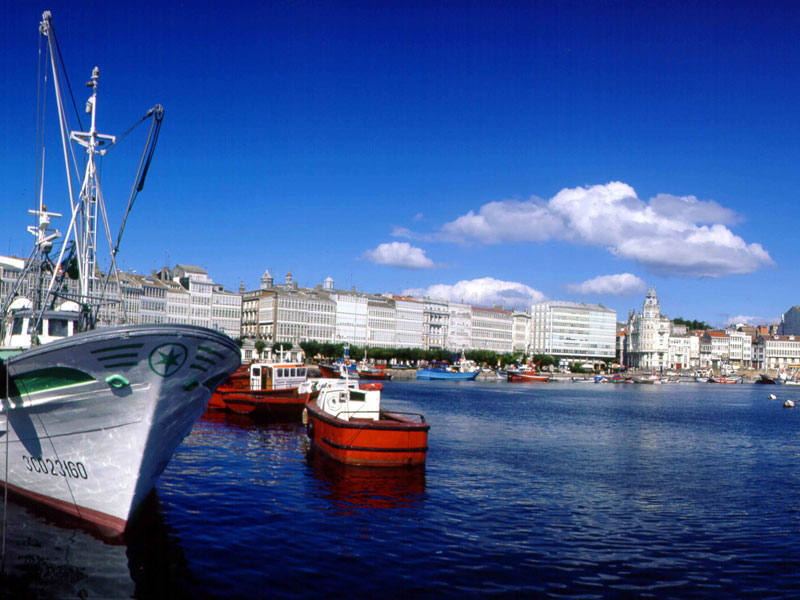
In medieval times, pilgrims arrived by sea to the Galician ports of Ferrol and A Coruña, beginning their inland journey to Santiago de Compostela. Today, these two starting points remain traditional gateways to the Camino Ingles:
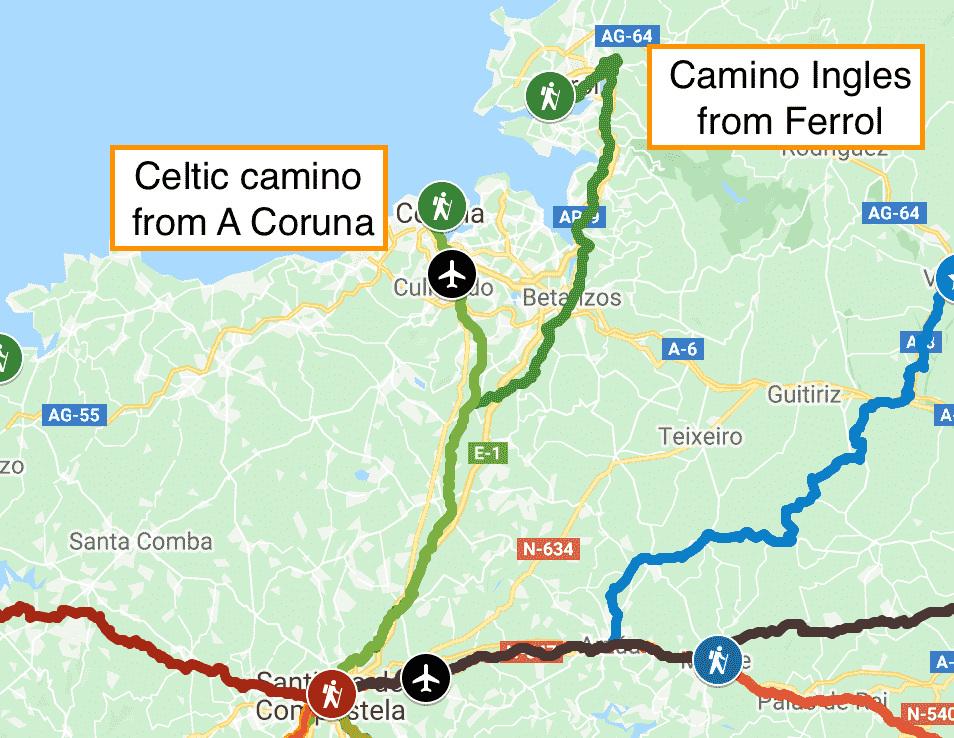
- Camino Ingles from Ferrol (119 km) – the most popular route, long enough to earn the official Compostela certificate.
- Camino Ingles Celtic Camino from A Coruña (75 km) – a scenic alternative for those with less time or who have already completed the first part of the Celtic Camino in Ireland, Scotland or Wales.
The Camino Ingles may be one of the shorter routes, but it captures the true spirit of the Camino. Pilgrims walk through peaceful woodlands, rolling countryside, and quaint Galician villages, ending at the magnificent Cathedral of Santiago de Compostela. With fewer crowds than other routes, it offers a more personal, reflective journey — ideal for those seeking connection and tranquillity.
Along the way, you’ll enjoy Galicia’s legendary hospitality and delicious local cuisine, from fresh seafood to traditional empanadas. Whether you walk it in a week or take your time, the Camino Ingles is perfect for travellers looking for an authentic, manageable, and soulful pilgrimage experience.

Why Walk the Camino Ingles?
The Camino Ingles is perfect if you want a shorter and quieter Camino. It captures all the essentials: woodlands, rolling hills, stone villages, historic towns, and the triumphant arrival in Santiago.
With fewer crowds than the Francés or Portugués, it offers a more personal and reflective journey. Along the way, you’ll experience authentic Galician hospitality — from welcoming locals to hearty cuisine like fresh seafood, empanadas, and wines.
For Irish and British pilgrims, the English Way also carries a deep historic connection, following the same route their ancestors once sailed to reach Santiago.
Suggested Routes
Highlights of the Camino Ingles
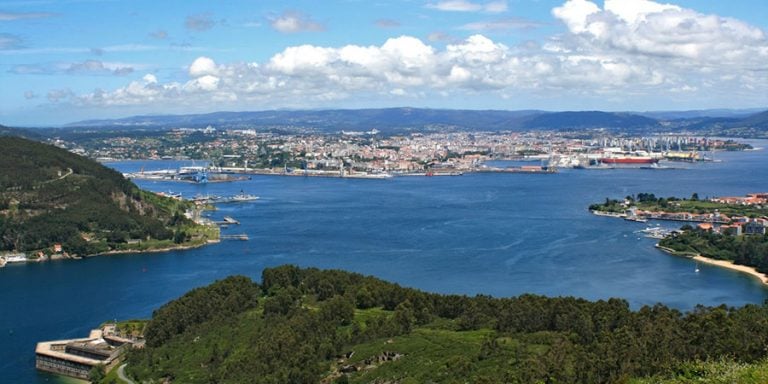
- Ferrol – historic naval city and impressive Easter “Semana Santa” festival.
- Pontedeume – coastal town with a medieval bridge and beach.
- Betanzos – charming old town with Gothic churches and heritage.
- Bruma & Meson do Vento – rural hamlets offering peaceful countryside.
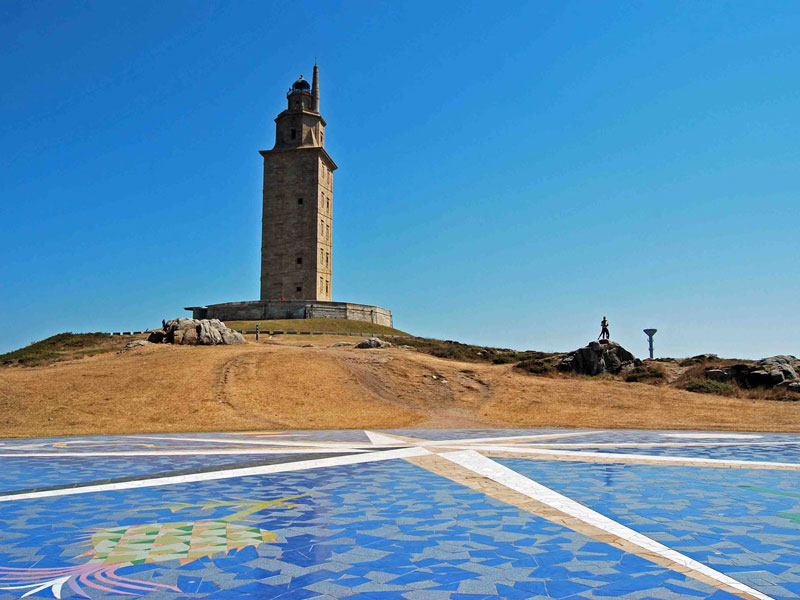
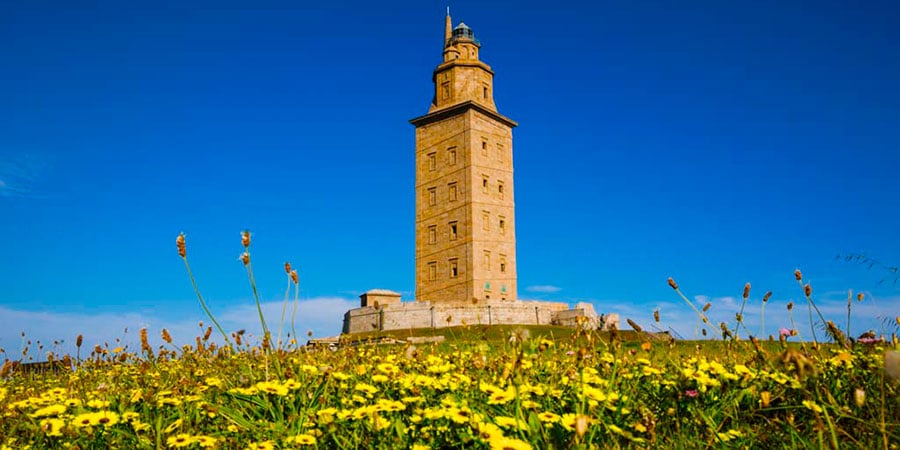
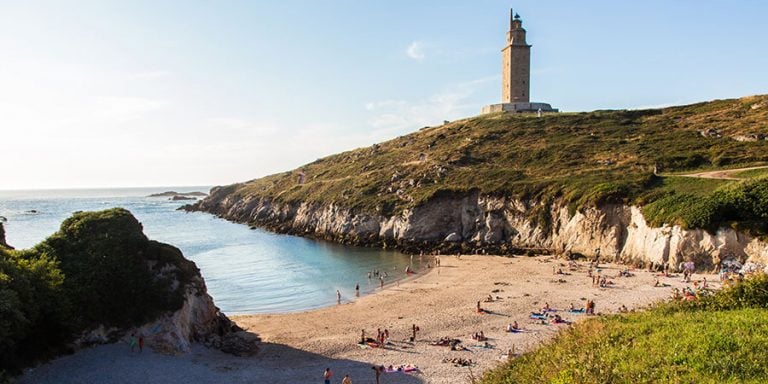
- A Coruña – Celtic Camino start, with Roman lighthouse (Tower of Hercules).
- Santiago de Compostela – finishing at the cathedral, as pilgrims have for centuries.
What makes it special?
This route feels like a “Camino in miniature”: shorter in length but big on history, atmosphere, and reward. Every day brings a mix of coast, countryside, and medieval towns, ending with the same emotional arrival at Santiago’s cathedral square.
Camino Ingles Route Options
Camino Ingles from Ferrol (119 km)
- Qualifies for the Compostela certificate.
- 6 walking days: coastal views (Pontedeume, Betanzos) followed by inland countryside to Santiago.
- Ideal for pilgrims with one week.
Camino Ingles from A Coruña (75 km) – The Celtic Camino
- Shorter option (4 days).
- Doesn’t meet the Compostela requirement unless combined with an Irish route (e.g. The Kerry Camino).
- Popular for those retracing Celtic seafaring pilgrim paths.
Certificates
- From Ferrol (119 km): Compostela awarded.
- From A Coruña (75 km): requires completion of a Celtic Camino in Ireland to qualify.
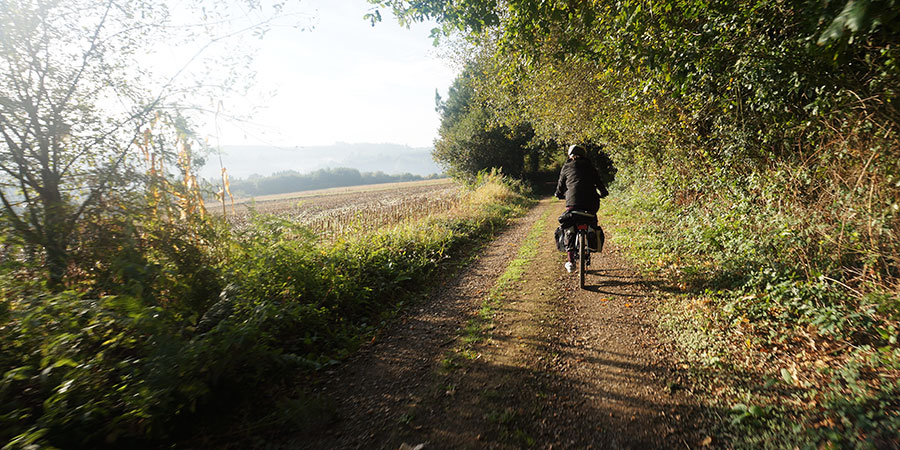
- Cycling: possible, but does not meet the 200 km requirement for Compostela.
👉 Learn more: Compostela Certificates.
Camino Ways Route Planner
For over 1000 years, pilgrims from all over the world have walked the Camino Ways across Europe in their quest for spirituality. Making the pilgrimage to Santiago de Compostela in Spain, they encountered a variety of people, cultures and beliefs, leading to friendship and new experiences. This continues today with the Camino de Santiago being the most well known and well-loved walk in the world. More than just a walk, the Camino de Santiago is an unforgettable and unique journey for the body, mind and soul.
When to Walk
- Best months: March–November (spring and autumn especially).
- Summer: mild (avg 25°C), not as hot as inland Spain.
- Winter: walkable, but cooler and wetter.
👉 See: Best time to walk the Camino.
Terrain Camino Ingles
- Mixture of coastal and inland countryside.
- Daily ascents/descents: ~300 m (moderate).
- Initial coastal days more challenging; last stages easier.
👉 Prepare with our Camino Fitness Plan.
What To Bring On The Camino Ingles?
Our Camino packing guide ebook is free to download. This will help you decide what to bring on your Camino.
History of the Camino Ingles
The Camino Ingles dates back to the 12th century, when pilgrims from England, Ireland, and Scandinavia arrived by ship in Galicia.
- 1147: English Crusaders landed in Ferrol and A Coruña en route to the Holy Land, helping Portugal’s first king capture Lisbon.
- Medieval seafaring pilgrims: Icelandic monk Nicholas Bergson recorded maritime pilgrim routes from Iceland through Europe.
- British devotion: Pilgrims offered gifts such as the alabaster altarpiece (1456) and the famous “Pearl Cross,” donated by James IV of Scotland.
- Royal support & hospitals: Orders like Sancti Spiritus and Franciscans built pilgrim hospitals in Ferrol, Betanzos, and Bruma.
These records prove the Camino Ingles as one of the most international pilgrim routes, linking Northern Europe with Santiago.
👉 Discover more: History of the Camino de Santiago.
Camino Made Easy
With CaminoWays, your Camino Inglés includes:
- Handpicked hotels in towns & villages.
- Luggage transfers so you can walk light.
- 24/7 support, maps & walking notes.
👉 See Guided Tours or Self-Guided Tours.
The Sections Of The Camino Ingles
We offer 2 Camino Ingles Self-Guided Route options, but you can customise all our routes to start wherever you live.
- Camino Ingles from Ferrol (119 km)
- Camino Ingles from A Coruna (75 km)
The Camino Ingles From Ferrol Route Description
The first two walking days of the Camino Ingles from Ferrol are beautiful. You weave along the coast, soaking in the seaside views. The towns you visit along the way are quaint and pretty, with Pontedeume and Betanzos being particular highlights.
You can pause between towns to rest or enjoy a refreshing swim at A Magdalena beach. Betanzos is rich in history, and exploring its beautiful old buildings is one of the town’s great joys.
Bruma Meson do Vento and Sigüeiro are your last two stops before arriving in Santiago de Compostela. The green countryside around Ordes near the Church of San Xiao offers a final, peaceful rural moment on your Camino.
Ferrol is home to one of Galicia’s most renowned and essential Easter festivals. If you are travelling during Spring, Semana Santa de Ferrol is an absolute must-see.
The Camino Ingles From A Coruña (The Celtic Camino) Route Description
The English Celtic Camino is gaining popularity among walkers from all over the world. In ancient times, pilgrims from the UK and Ireland would have arrived by boat to the port of A Coruña to continue their Camino journey.
Starting 75km outside Santiago Compostella, the English Celtic Camino traverses the rugged Galician coastline before cutting inland and joining the English Camino from Ferrol in Bruma Meson de Vento. This walk can be completed in a four-night trip.
Recently, this route was less popular with pilgrims as they could not receive their Compostela. The cathedral in Santiago has allowed special provisions for pilgrims who walk routes such as the Kerry Camino in Ireland before they arrive in Spain to claim their certificate.
The Camino Ingles is the short Camino with a big soul
Perfect for those with limited time, it offers history, scenery, and the authentic pilgrim spirit in just a few days. Whether you walk from Ferrol for your Compostela or from A Coruña on the Celtic route, you’ll arrive in Santiago with a true Camino experience.
👉 If you’d like a personalised Camino Ingles itinerary, try our Award Winning Camino Planner.
FAQs
What is the Camino Inglés and why is it called the "English Way"?
The Camino Inglés, or English Way, is the Camino de Santiago route historically taken by pilgrims from England, Ireland, Scotland, Wales, and Scandinavia. From the 12th century onwards, these northern European pilgrims arrived by ship to the Galician ports of Ferrol and A Coruña, then walked inland to Santiago de Compostela. Today, it remains one of the most historically significant Camino routes and is increasingly popular with British and Irish pilgrims retracing their ancestors' journey.
What is the difference between the Camino Inglés from Ferrol and from A Coruña?
Both routes start on the Galician coast and merge in Bruma Mesón do Vento before reaching Santiago. The key difference is distance and certificate eligibility. The Camino Inglés from Ferrol is 119 km over 6 walking days and qualifies for the Compostela certificate. The Camino Inglés from A Coruña (also called the Celtic Camino) is only 75 km over 4 days and does not qualify for the Compostela on its own — unless combined with a recognized Celtic Camino route in Ireland, Scotland, or Wales.
What is the Celtic Camino and how does it work?
The Celtic Camino is a special arrangement that allows pilgrims to combine a short pilgrimage in Ireland, Scotland, or Wales with the 75 km Camino Inglés from A Coruña, qualifying for the Compostela certificate. The most popular option is the Kerry Camino in Ireland, but routes in Scotland and Wales also count. The Cathedral of Santiago officially recognizes this combination, honoring the historic seafaring tradition of northern European pilgrims who originally landed in A Coruña.
Why is the Camino Inglés good for pilgrims with limited time?
The Camino Inglés is the shortest of the official Compostela-qualifying Camino routes that can be completed start-to-finish in a single trip. From Ferrol, you walk 119 km in 6 days and earn the Compostela. From A Coruña, the Celtic Camino takes just 4 days. This makes it ideal for pilgrims with one week of holiday or those who can't commit to the longer Francés or Portugués routes — without sacrificing the authentic Camino experience.
How does the Camino Inglés compare to the last 100 km of the Camino Francés from Sarria?
Both routes are around 100–120 km and can be walked in about a week, but the experience is very different. Sarria is much busier, especially in summer, with a strong social atmosphere and crowds of pilgrims. The Camino Inglés is significantly quieter, more reflective, and combines coastal scenery (Ferrol, Pontedeume, Betanzos) with rural Galician countryside. Choose Sarria for camaraderie and tradition; choose the Inglés for solitude and a quieter Galician experience.
What are the must-see highlights on the Camino Inglés from Ferrol?
Key highlights include the historic naval city of Ferrol (especially during its famous Easter Semana Santa festival), the medieval town of Pontedeume with its impressive 14th-century bridge, and Betanzos with its Gothic churches and well-preserved old town. The rural hamlets of Bruma and Mesón do Vento offer peaceful countryside, and you finish at the magnificent Cathedral of Santiago de Compostela. A swim at A Magdalena beach is a popular pause along the coastal section.
How do I get to Ferrol or A Coruña to start the Camino Inglés?
Both starting points are easy to reach. A Coruña has its own airport (LCG) with direct flights from London, Dublin, and other European cities, plus a major train station with connections from Madrid and Barcelona. Ferrol is a 1-hour train or bus ride from A Coruña. Many pilgrims fly into A Coruña and then continue to Ferrol for the longer route. Santiago de Compostela airport (SCQ) is also a convenient option, located about 1.5 hours by bus or train from both starting points.
Is the Camino Inglés a good first Camino?
Yes — especially for pilgrims who want a true Camino experience without the crowds. It's manageable in length, well-marked, has good accommodation, qualifies for the Compostela (from Ferrol), and offers diverse landscapes from coast to countryside. It's particularly popular with first-time pilgrims from the UK and Ireland for its historic connection, but suits anyone wanting a shorter, quieter introduction to the Camino de Santiago.
Can I cycle the Camino Inglés?
Cycling is possible on the Camino Inglés, but neither the Ferrol (119 km) nor the A Coruña (75 km) route meets the 200 km minimum required for cyclists to earn the Compostela certificate. Cyclists wanting the certificate via this route would need to combine it with another section, such as starting further inland or adding additional cycling kilometers in Galicia.