
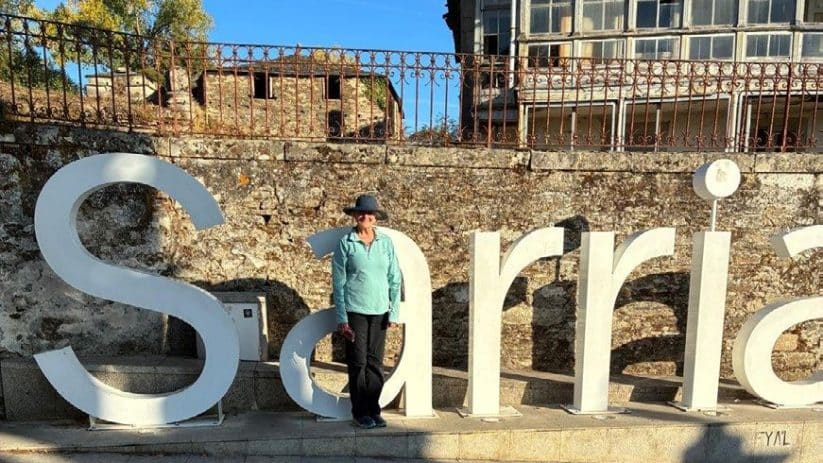
Lee Fitzgerald was 79 and her partner, Guy, was 80 when, in October 2025, the two Australians flew from Sydney to Spain and walked the last 116km of the Camino Francés, from Sarria to Santiago de Compostela, in gentle stages of around 10–14km a day. Lee wrote about the journey in a beautiful travel diary she called Ultreia, and she has kindly allowed us to share her story of walking the Camino at 80.
Ultreia is the old greeting pilgrims call out to each other along the Way. It means, roughly, “keep going”. For Lee and Guy, it became a motto.
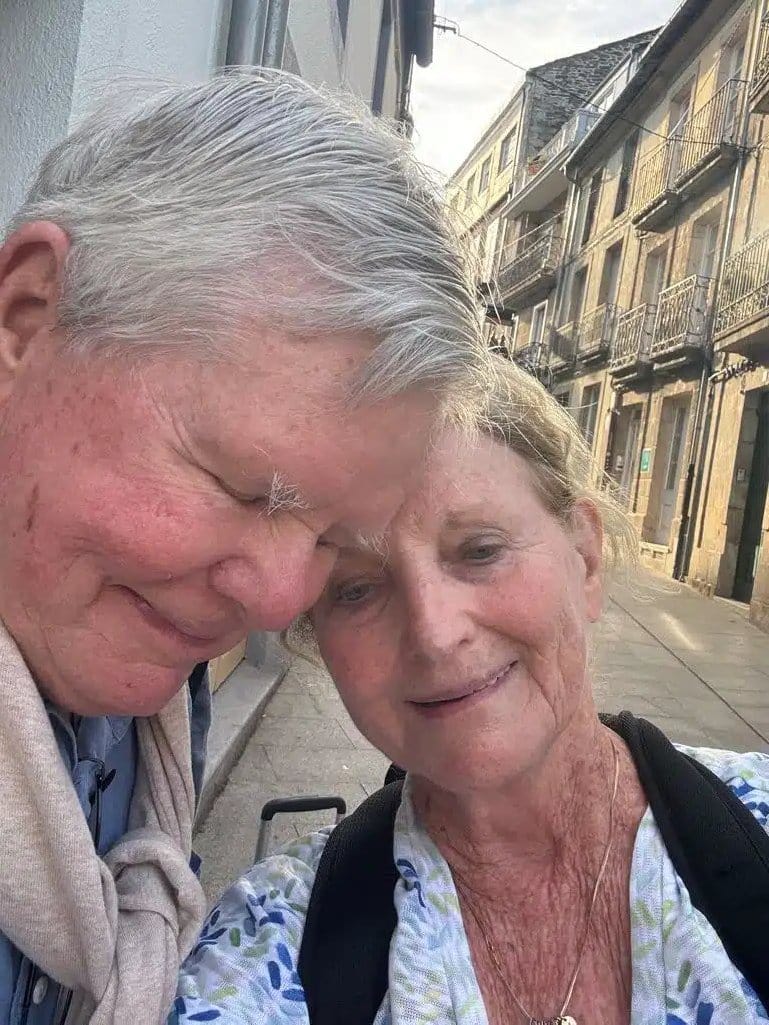
“It was literally now or never”
Lee had wanted to walk the Camino for years. A walking holiday in Italy with her sisters in 2007 started it: she fell in love with the pace of daily walking, the conversations on the path and the state of mind it brought. Books by Ailsa Piper and Father Tony Doherty, a priest at her parish in Sydney who has walked the Camino many times, kept the idea alive.
Guy, her partner of 14 years, took more convincing. He loves walking, but he had no interest in a spiritual journey. In the end, he came anyway. As Lee puts it:
“I think I probably should have walked the Camino sooner—he too, as we are quite old, well, old! I’m carrying injuries, but still I want to do it. It was literally now or never!”
Getting ready wasn’t easy. While training to walk 10km three days in a row, Lee tore a calf muscle and then her meniscus, and had to start again. Her surgeon’s advice after the repair was simple: “Get up, go, go do the Camino.” A week before they flew, he gave her cortisone injections in both knees, and they were ready.
Walking from Sarria, slowly
Being realistic about their age, Lee and Guy chose the last 100km, from Sarria to Santiago, and split it into ten short walking days instead of the usual five or six. Their accommodation was booked in advance and their bags were moved between hotels each day, which Lee describes as “a daily miracle”.
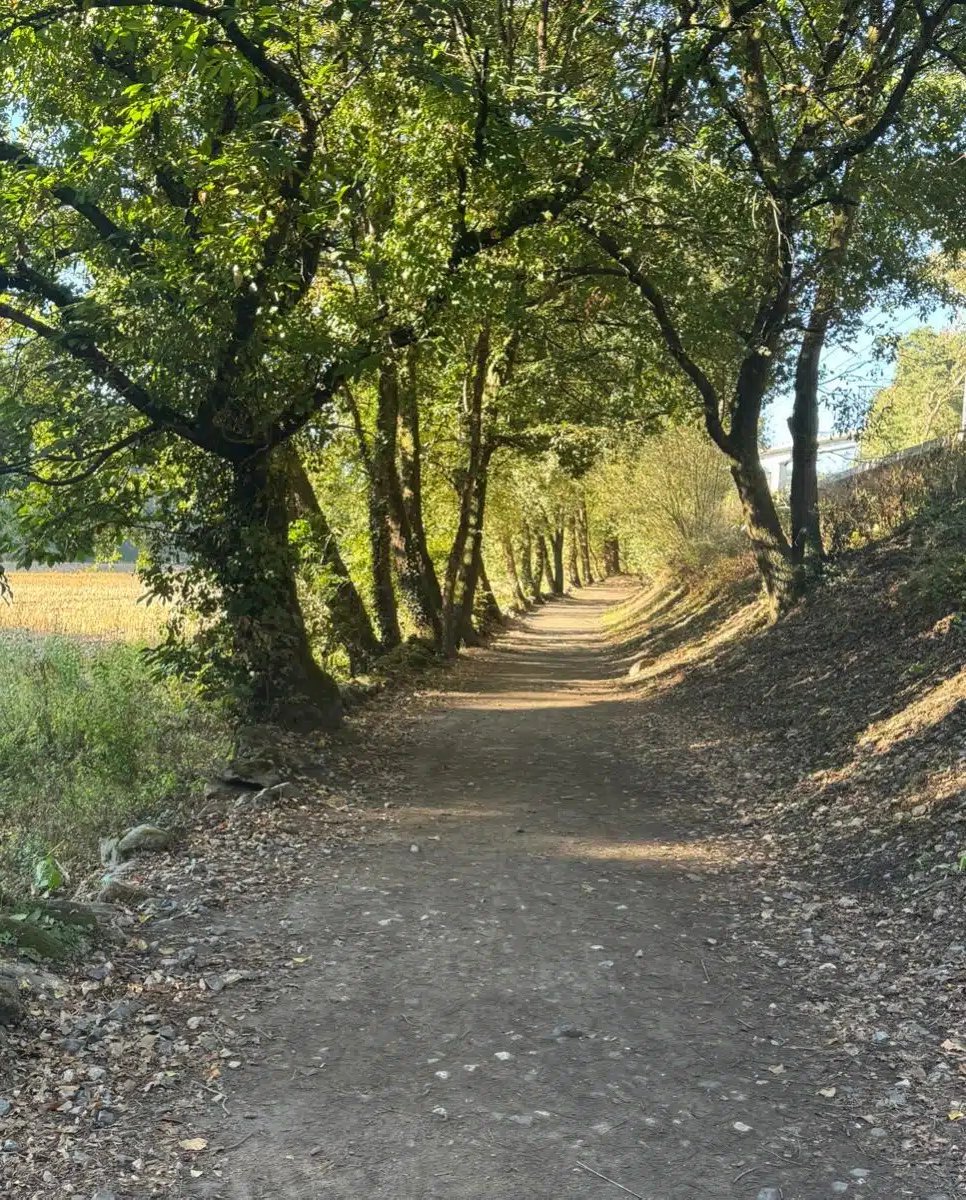
Day one took them out of Upper Sarria and into the Galician countryside: shady paths under autumn trees, rolling fields, cows and the first of many conversations with strangers. They collected their two stamps a day for the pilgrim passport, sometimes from simple stamps in cafés and sometimes from roadside stands with wax seals, shells and pressed flowers.
One of the things Lee loved most was how little her age mattered. In her own words:
“Our age was never of interest to anyone! I was inclined to let people know we are 80 but stopped doing that early in the walk because no one was interested! It is true in Australia that being 80 renders you a little invisible and overlooked, and the Camino was a complete rest from that.”
The people you meet on the Way
Lee’s diary is full of the people they met along the way: a Belgian pilgrim celebrating his happy life, a Canadian grandmother walking with her daughter and six-year-old granddaughter, an Irish woman walking all the way from Saint-Jean-Pied-de-Port on her own, and a couple from Oregon who became firm friends over dinners and breakfasts.
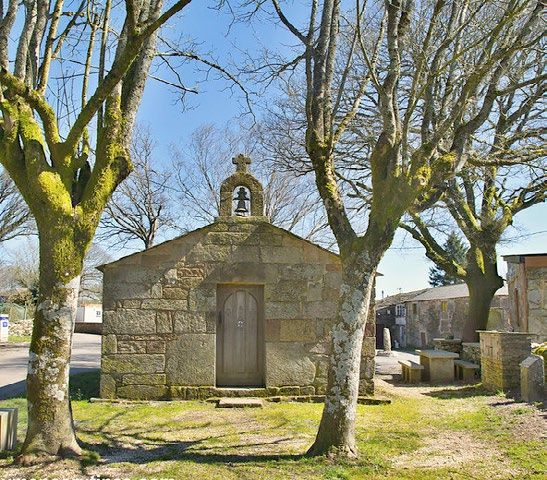
On the steep, rocky descent into Portomarín, a couple from Goulburn (the only other Australians they met) took them by the arm and guided them down. And when they missed their stop at Ventas de Narón and walked several extra kilometres, they eventually found the tiny Magdalena Chapel, where a blind caretaker still stamps pilgrims’ passports.
“Throughout our Camino, we met people who were just exactly the people we wanted to, or, in some cases, needed to, meet at that exact stage of our pilgrimage.”
A day for each child
In Portomarín, Lee decided to give one walking day to each of her five children. As she walked, she let the rhythm of her steps and her walking poles carry her back to their childhoods, and each evening she wrote to them about what she remembered.
“As I walked, the rhythm of my steps and the walking sticks encouraged a reverie in which memories of him were prolific and touching and in more detail than I have normal memory of. The Camino effect!”
The days fell into a rhythm: a slow start, a long stretch of walking, a rest on the grass, and a stop for an Estrella beer or a slice of Camino cake, the almond tart they found all along this part of the route.
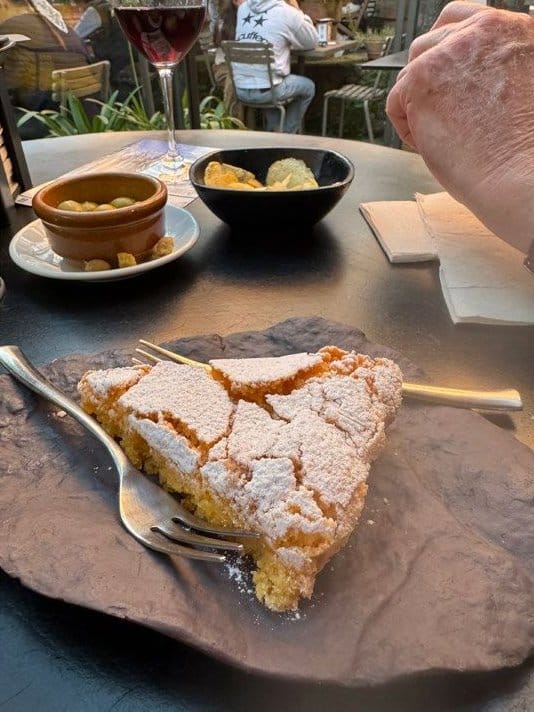
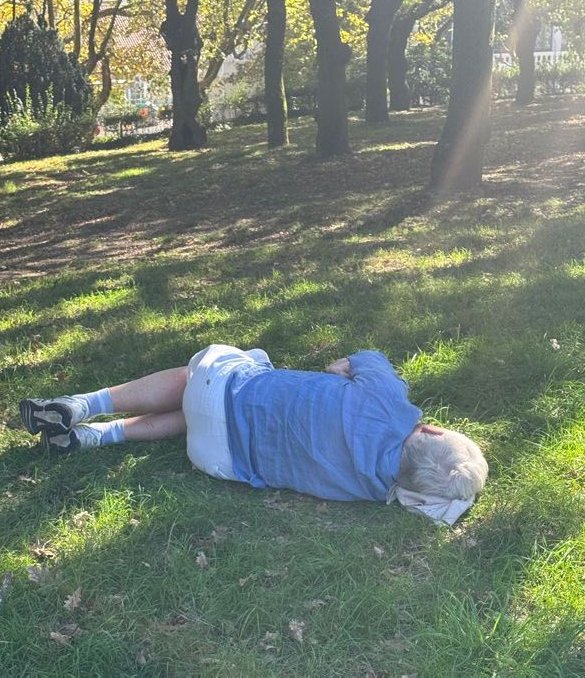
By the second week, something had changed. The short stages they had planned to make the walk easier now felt almost too easy:
“A strong feeling of fitness was arising in both of us. Surely, the benefit of walking a long way slowly every day!”
Arriving in Santiago
On the tenth day, after a misty walk through eucalyptus forest with Galician bagpipes in the distance, Lee and Guy saw the cathedral spires appear. Lee’s family followed the last kilometres on WhatsApp, and her granddaughter, whose letter Lee had carried all the way, phoned just as they walked into the Plaza del Obradoiro.
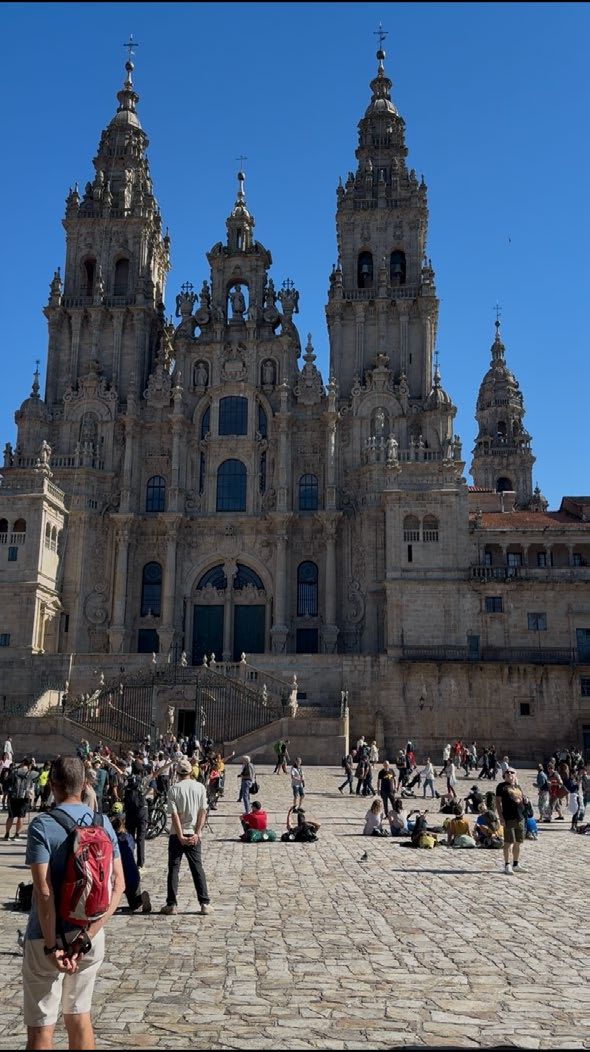
“We walked 116 ks in all—not bad for two 80-year-olds!”
They collected their Compostela certificates at the Pilgrim’s Office and spent a few slow days in the city. At the Pilgrim’s Mass in the cathedral, they were lucky enough to see the Botafumeiro swing across the transept, filling the cathedral with incense.
Letting go at the end of the world
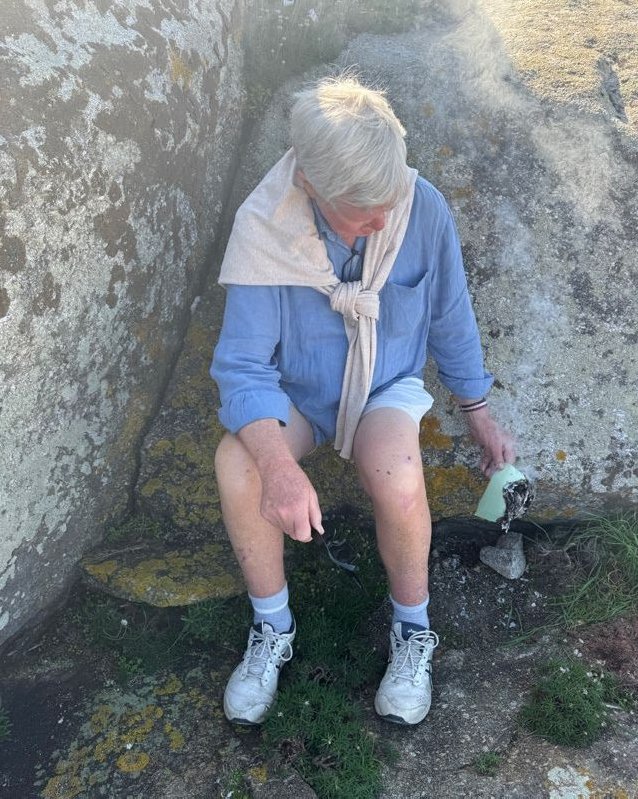
Lee had one more task. Inspired by Ailsa Piper’s book Sinning Across Spain, she had asked her family if they wanted her to carry letters about the burdens they were carrying, and two of them said yes. She had also written one of her own. She read the letters often as she walked and planned to burn them at Finisterre, the “end of the world”.
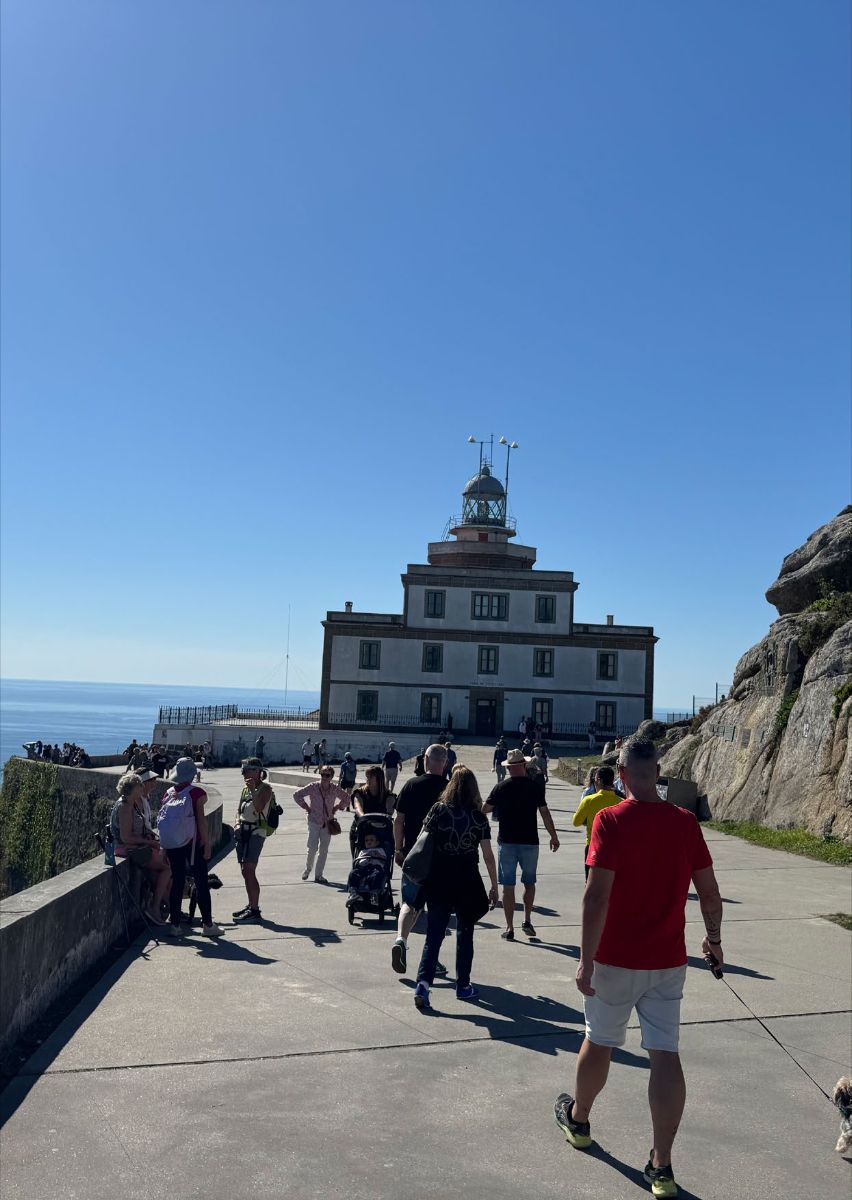
Finisterre was too crowded, so they did it a little further along the coast, in Muxía, behind a rock looking out over the Atlantic. It didn’t go quite as solemnly as planned:
“Well, the fire was very slow! It went on and on, the letters smouldering away… and we got overcome by fumes and hysterics. This supposed solemn ceremony had us in helpless laughter. Mission accomplished!”
What stays with you
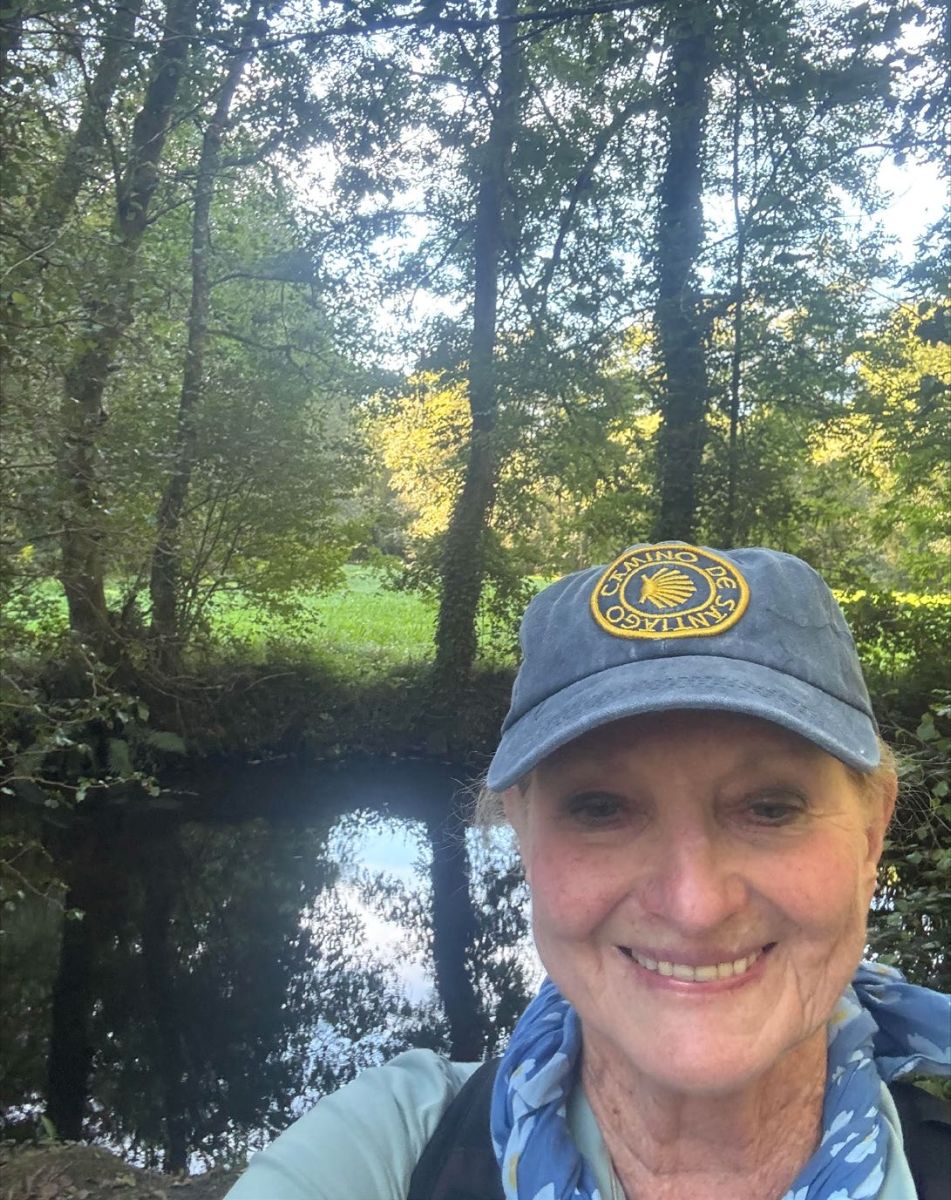
Six months later, Lee says two things remain. One is a small tattoo on her right shoulder, with the Camino shell and the word Ultreia. The other is “an ongoing sense of wonder about that walk”. Guy, the reluctant pilgrim, still talks about the peace he felt and the people they met along the way.
Lee’s tips for walking the Camino at 80 (or any age)
- Walk short stages. Lee and Guy split Sarria to Santiago into ten days of around 10–14km. Walking slowly every day made them fitter as they went.
- Let someone else carry your bags. With luggage transfers you only need a day pack.
- Collect two stamps a day from Sarria onwards, so you can get your Compostela in Santiago.
- Don’t follow other pilgrims to find your hotel. They are all going somewhere different! Save your route offline, as mobile coverage can be patchy.
- Ask for contact details. You will meet people you won’t want to lose touch with.
- Leave time for Santiago and Finisterre at the end, to rest and take it all in.
Walk your own Camino from Sarria
Inspired by Lee and Guy? Our Easy Camino Francés covers the same route from Sarria to Santiago in shorter daily stages, with hand-picked accommodation booked for you. If you prefer the classic itinerary, take a look at Sarria to Santiago, or build your own trip with our Camino Planner.
Wondering whether the Camino is right for you? Read our guide for older pilgrims, Am I too old to walk the Camino?, and discover the melting pot of ages on the Camino.
Ultreia!
This article is based on Lee Fitzgerald’s original travel diary, Ultreia: Walking the Camino de Santiago. The story, quotes and photos are Lee’s and are shared with her kind permission. Thank you, Lee!
