The Camino Portugues
What draws people to walk from Portugal into Spain, following paths shaped by monarchs, monks, traders, and pilgrims for centuries? Is it the history, the landscapes, the food, or the quiet hope that a long walk might bring clarity? The Camino Portugués has a way of stirring these questions, inviting you to slow down and notice more than you expected as you journey north towards Santiago de Compostela.
Calmer than the Camino Francés yet rich in culture and human connection, the Portuguese Way offers a gentle but deeply rewarding Camino de Santiago experience. It is historic without feeling heavy, social without being crowded, and flexible enough to suit many different ways of walking.
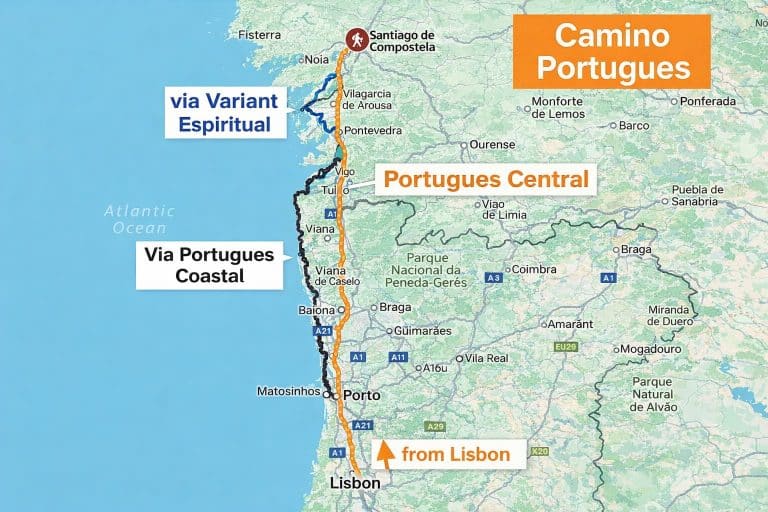
One of the reasons the Camino Portugués feels so personal is that it is not a single fixed path. From Porto onwards, it unfolds into three main variants: the Camino Portugués Central, the Camino Portugués Coastal & Litoral, and the Camino Portugués Variante Espiritual. Each leads to Santiago, but each shapes the journey in a very different way.
What makes the Camino Portugués special?
The Camino Portugués is often described as welcoming and humane. Stages are well spaced, services are frequent, and the terrain is manageable for most walkers. More importantly, it offers choice. Rather than a single fixed path, this Camino opens into several variants, allowing pilgrims to shape their journey according to scenery, pace, and intention.
No matter which route you follow, Portuguese culture shines through: shared meals, warm welcomes, and an easy-going rhythm that encourages you to slow down. As you cross into Galicia, many pilgrims notice a subtle shift — greener landscapes, new flavours, and a growing sense of tradition with every kilometre.
Where does the Camino Portugués start?
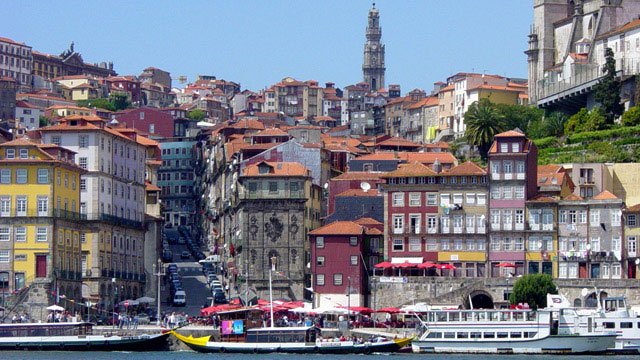
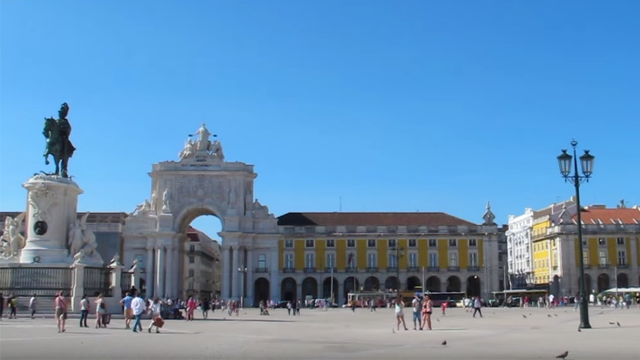
Traditionally, the Camino Portugués begins in Lisbon and runs north through the length of Portugal before reaching Porto. From Porto, the Camino divides into its main routes: Camino Portugues Central, Camino Portugues Coastal & Litoral and Camino Portugues Variante Espiritual.
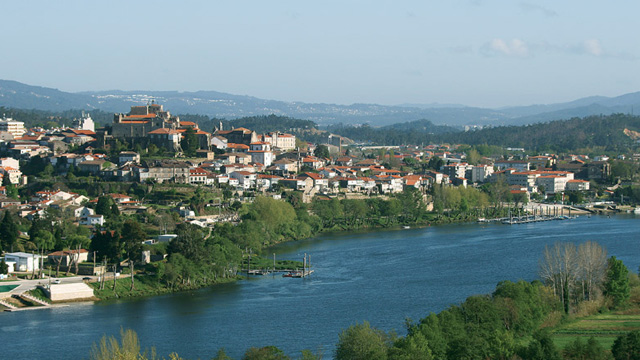
Today, many pilgrims choose to start in Porto, Tui, Vigo, or Pontevedra, depending on available time and whether they wish to walk the minimum distance required to receive the Compostela certificate.
Wherever you begin, all paths ultimately lead to Santiago.
Suggested Routes
The three main routes of the Camino Portugués
The Camino Portugués is best understood as a hub with three connected journeys. Each route offers a different way of arriving in Santiago, shaped more by landscape and atmosphere than by distance.
Camino Portugués Central
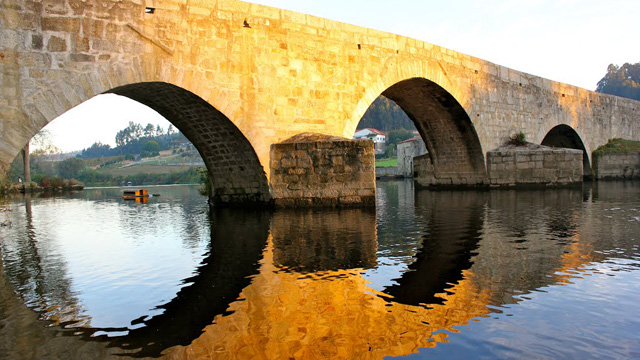
The Central Route is the historic backbone of the Portuguese Way. It follows inland paths shaped by Roman roads, medieval bridges, vineyards, and market towns. Social and traditional in character, it is often chosen by pilgrims seeking the classic Camino atmosphere and a strong sense of continuity with the past.
👉 Explore the Camino Portugués Central
Camino Portugués Coastal & Litoral
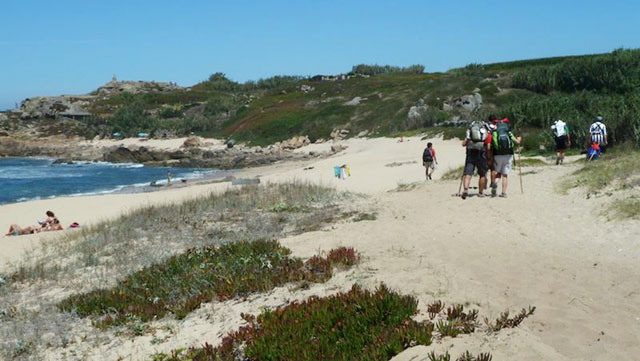
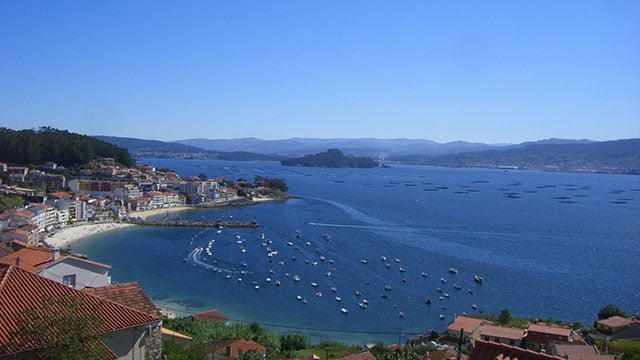
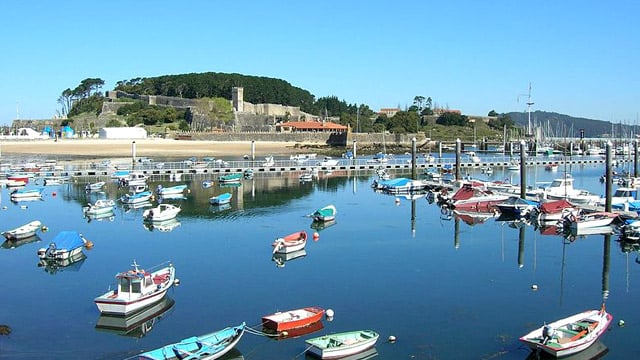
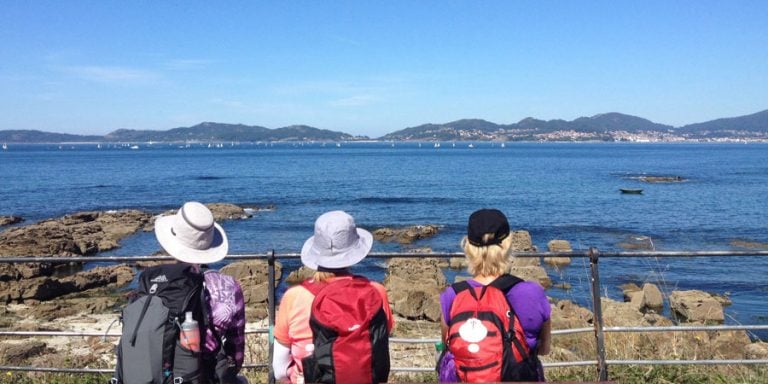
The Coastal and Litoral routes form the seaside branch of the Camino. From Porto, pilgrims can follow the officially marked Coastal Route or the ocean-hugging Litoral Way, switching freely between them. This route offers Atlantic views, fishing villages, promenades, and daily flexibility, ideal for those drawn to open landscapes and a slower pace.
👉 Explore the Camino Portugués Coastal & Litoral
Camino Portugués Variante Espiritual
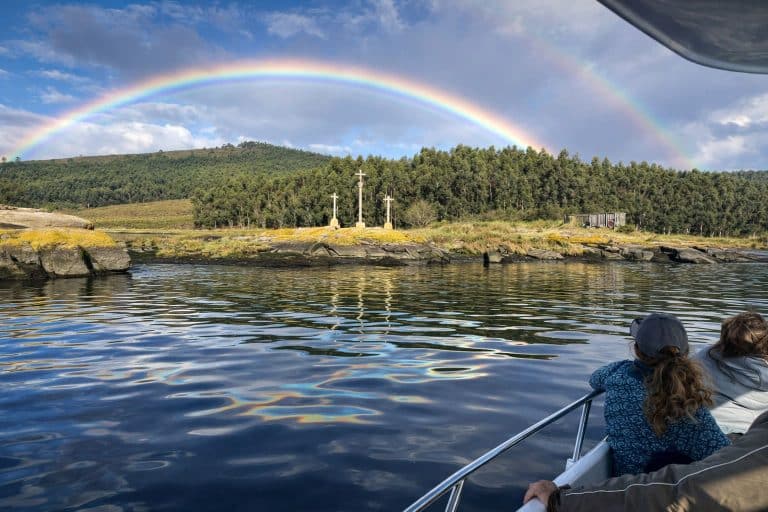
The Variante Espiritual is a reflective detour in Galicia. Leaving the main Camino after Pontevedra, it leads through monasteries, river valleys, and coastal villages before culminating in the symbolic Traslatio boat journey across the Ría de Arousa. It is the most contemplative and distinctive of the Portuguese routes.
👉 Explore the Camino Portugués Variante Espiritual
How the routes connect
The Central and Coastal routes reunite in Redondela, continuing together towards Santiago. The Variante Espiritual branches off just after Pontevedra and rejoins the Camino near Padrón.
This structure allows pilgrims to combine routes, adapt plans along the way, and still feel part of a single, continuous Camino.
Which Camino Portugués is right for you?
Choosing a route is less about fitness and more about what you hope to feel.
- If you value tradition, villages, and a social Camino, the Central Route may suit you best.
- If you are drawn to sea air, flexibility, and open horizons, the Coastal & Litoral routes offer freedom and space.
- If you seek symbolism, reflection, and something different, the Variante Espiritual provides a unique approach to Santiago.
There is no better route — only the one that matches your intention.
A Camino that connects Portugal and Galicia
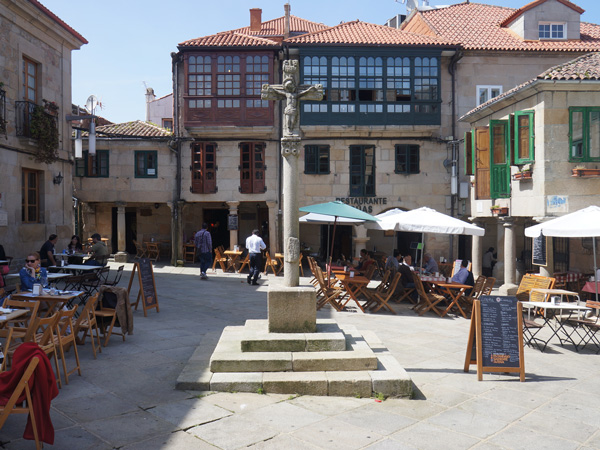
No matter which variant you choose, the Camino Portugués unfolds gently. You pass medieval towns, small chapels, old shrines, and local cafés where a quick stop often turns into a long conversation. Step by step, the landscape changes, and so does the journey.
By the time the towers of Santiago come into view, many pilgrims find their answer not in grand moments but in the quiet ones.
A Camino shaped by everyday life
The history of the Camino Portugués is woven into daily movement rather than grand design. These routes grew from Roman roads and local paths used for trade, travel, and devotion between Portugal and Galicia. Walking today, you follow a living network shaped as much by modern pilgrims as by those who came before.
Camino Ways Route Planner
For over 1000 years, pilgrims from all over the world have walked the Camino Ways across Europe in their quest for spirituality. Making the pilgrimage to Santiago de Compostela in Spain, they encountered a variety of people, cultures and beliefs, leading to friendship and new experiences. This continues today with the Camino de Santiago being the most well known and well-loved walk in the world. More than just a walk, the Camino de Santiago is an unforgettable and unique journey for the body, mind and soul.
Terrain, difficulty, and seasons
Overall, the Camino Portugués is considered moderate and accessible. The Coastal routes are flatter, while the Central and Variante Espiritual include more hills, particularly in Galicia. Paths are well marked, distances are reasonable, and previous hiking experience is not required.
Spring and autumn offer the best balance of mild weather and lively towns. Summer is warmer, especially inland, while winter is quieter and greener, though wetter in Galicia.
Services That Make It Easy
When booking with CaminoWays, your journey is smooth and supported:
- Handpicked hotels for rest and comfort.
- Luggage transfers so you can walk light.
- 24/7 assistance and maps provided.
👉 See Guided Tours.
👉 Or browse Self-Guided Tours.
What To Bring On The Camino Portugués?
Our Camino packing guide ebook is free to download. This will help you decide what to bring on your Camino.
Final thoughts
The Camino Portugués is not a single path but a family of journeys. Together, its routes tell a story of movement, connection, and arrival, shaped by land, water, and the people who walk them.
However you choose to walk it, the Portuguese Way has a quiet way of meeting pilgrims where they are and carrying them gently towards Santiago.
👉 If you’d like a personalised itinerary, try our Award Winning Camino Planner.
FAQs – Camino Portugués
Q: What is the Camino Portugués?
A: It is one of the main Camino de Santiago routes, starting in Portugal and leading north to Santiago de Compostela.
Q: How many routes does the Camino Portugués have?
A: It has three main routes: the Central Route, the Coastal & Litoral routes, and the Variante Espiritual.
Q: Where should I start the Camino Portugués?
A: Popular starting points include Lisbon, Porto, Tui, Vigo, and Pontevedra, depending on time and distance goals.
Q: Is the Camino Portugués suitable for beginners?
A: Yes. It is well marked, welcoming, and considered one of the most accessible Caminos.
Q: Do all Camino Portugués routes finish in Santiago?
A: Yes. All routes reconnect and lead to Santiago de Compostela.
History of the Camino Portugués
The history of the Camino Portugués is often presented as straightforward: a medieval route shaped by kings, monasteries, and early pilgrims heading north to honour Saint James. Yet, like most Camino stories, the truth is more layered. The path we follow today grew from many different roads, used not only for devotion but also for trade, travel, diplomacy, and daily life between Portugal and Galicia. In a way, the “Camino” may have emerged less from a single design and more from the natural movement of people across the Iberian Peninsula.
Pilgrimage from Portugal began to flourish after the 12th century, following the country’s independence. Portuguese monarchs encouraged the spiritual connection with Santiago de Compostela, which helped strengthen bonds with neighbouring Galicia and the wider Christian world. Nobles, clergy, merchants, and ordinary villagers all walked these roads for reasons that were not always purely religious. Some travelled for protection from illness, others for trade opportunities, and many combined pilgrimage with visits to family or regional fairs. The Camino was a network long before it was a single route.
These early travellers followed ancient Roman roads, such as the Via XIX, which linked Braga, Tui, and points further north. Bridges from that era still stand today, quietly reminding walkers that this route predates medieval Christianity by many centuries. Over time, monasteries, hospitals, and churches were built along the way to care for travellers. Records from the 13th to 15th centuries mention Portuguese pilgrims staying in Tui, Pontevedra, and Padrón, and even Portuguese ships arriving by sea with pilgrims who preferred coastal landings to inland roads.
By the 16th century, however, pilgrimage began to decline across Europe. Wars, political changes, and the Reformation all contributed to fading interest. The Portuguese routes were no exception. Many sections became simple rural paths once again, used by farmers, traders, and local villagers rather than long-distance pilgrims.
The revival of the Camino Portugués is surprisingly recent. In the late 20th century, associations in Portugal and Galicia began restoring the old paths, waymarking routes, researching historical documents, and reconnecting forgotten segments of the trail. This work continues today, with volunteers often uncovering routes that had disappeared under vegetation or modern roads.
Some might question whether the “modern” Camino truly reflects its medieval origins. Yet many pilgrims say that the continuity lies not in exact geography, but in the experience: walking slowly, meeting strangers, watching the land change, and following a path whose history is still unfolding.
The Camino Portugués may be ancient, but it is also alive, shaped as much by today’s pilgrims as by those who walked before.
👉 Discover more: History of the Camino.