
Camino del Norte (Northern Way)
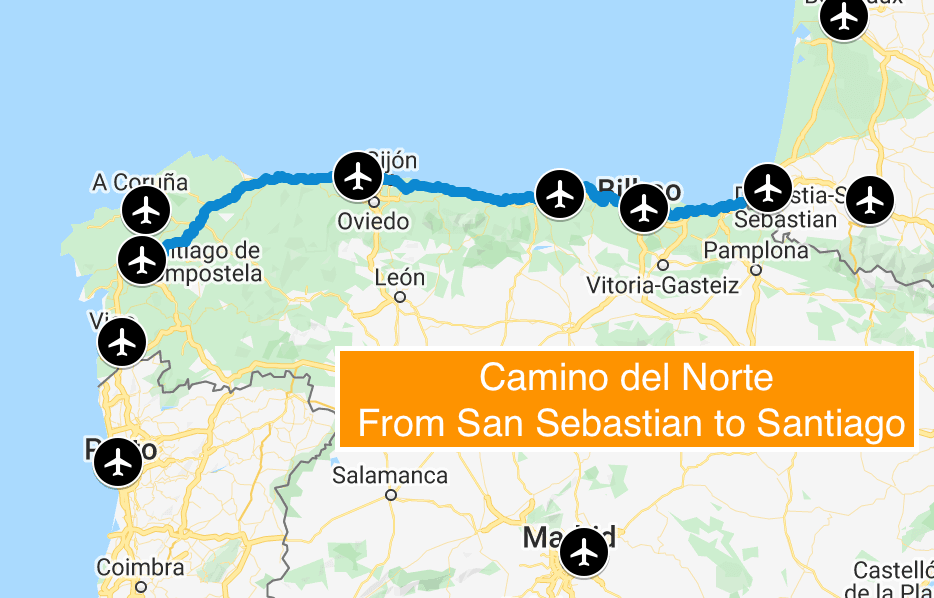
The Camino del Norte (Northern Way) is the coastal Camino de Santiago: 813 km from San Sebastián to Santiago de Compostela along Spain’s “Green Coast”, or just the last 100 km from Vilalba. We book hand-picked accommodation with private bathroom and breakfast, support you on the trail and transport your luggage between stages.
The Camino del Norte in numbers
The Camino del Norte runs 813 km from San Sebastián to Santiago de Compostela in 36 stages (5–6 weeks). Many pilgrims walk it one section at a time, or walk the last 121 km from Vilalba in 7 nights to earn the Compostela.
In 2025, about 21,500 pilgrims completed the Northern Way – around 4% of all Camino walkers – according to the Pilgrim’s Reception Office in Santiago (see our Camino statistics).
Ways to walk the Camino del Norte
Walking the full Camino del Norte takes about 5 weeks, so many pilgrims walk it one section at a time, or walk the last 100 km from Vilalba to earn the Compostela. Choose where to start, then pick one of our 6 ways to walk or cycle the Camino del Norte. Every route includes hand-picked accommodation with breakfast and support on the trail, and we transport your luggage between stages.
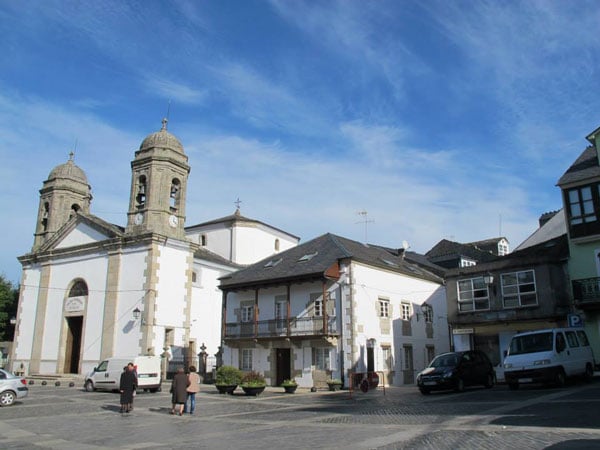
121 km7 nights
Walk the last 100 km of the Northern Way through quiet Galician farmland and forest, and earn your Compostela.
Start any day · April to October

125 km7 nights
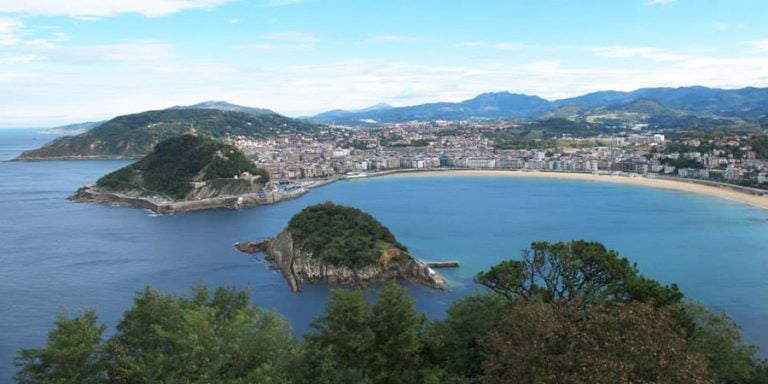
The first section: Basque fishing towns, Gernika and pintxos, from La Concha bay to the Guggenheim Museum.
Start any day · April to October
813 km37 nights
Follow Spain’s north coast through four regions to Santiago, in one go or section by section over several trips.
Start any day · April to October
120 km6 nights
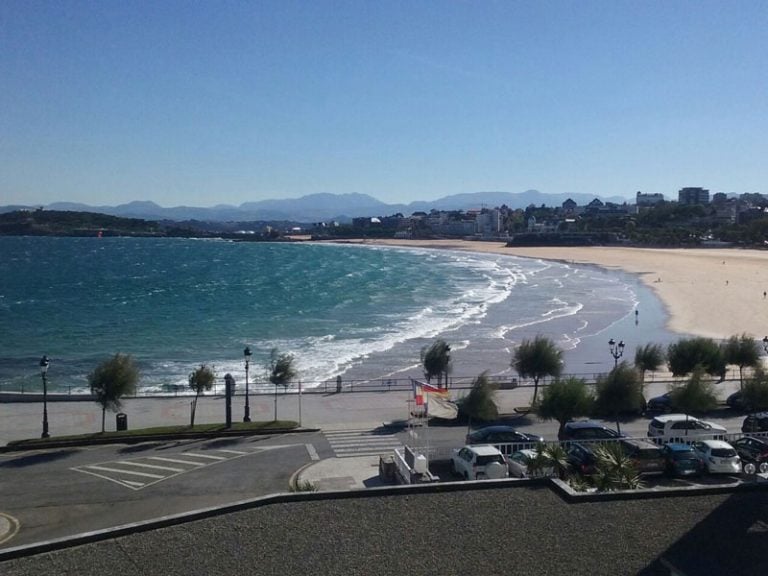
Coastal towns, rocky bays and long sandy beaches, with two short ferry rides on the way to Santander.
Start any day · April to October
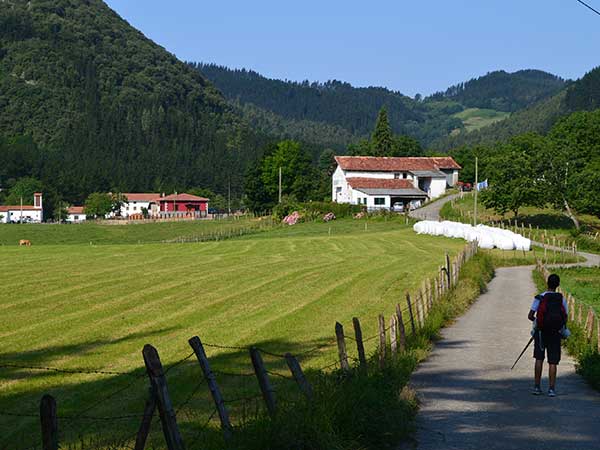
59 km4 nights
Three walking days through green Basque hills and Gernika, finishing at the Guggenheim in Bilbao.
Start any day · April to October
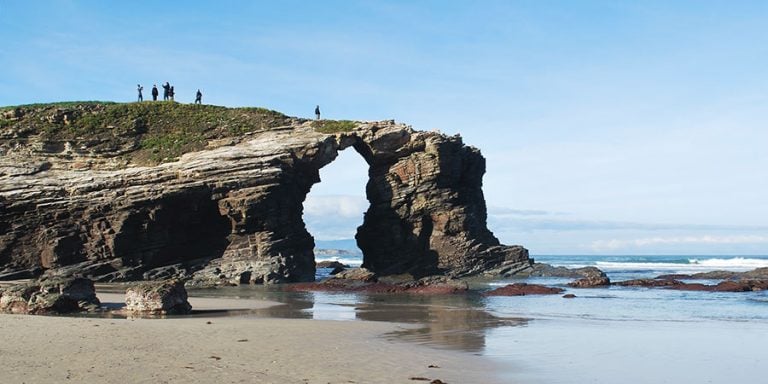
225 km7 nights
Cycle the last 200 km you need for the Compostela, from the Asturian coast past Ribadeo into Galicia.
Start any day · April to October
1How much time do you have?
2Walk or cycle?
Still not sure? Contact our experts and we will help you choose the right route, pace and dates.
Why walk the Camino del Norte?
The Camino del Norte is the coastal Camino: a quieter route to Santiago with sea views on most days, four distinct regions and some of the best food in Spain.
Following Spain’s wild and beautiful “Green Coast” along the Bay of Biscay, the Northern Way crosses the Basque Country, Cantabria, Asturias and Galicia, each with its own language, traditions and cuisine. From Basque pintxos and the Guggenheim Museum in Bilbao to Asturian cider and Galician seafood, every stage brings new flavors. Since 2015 it has been part of the UNESCO World Heritage Site of the Routes of Santiago de Compostela, and it is one of the oldest routes of the St James Way.
It is also a less crowded alternative to the Camino Francés. In 2025, about 21,500 pilgrims completed the Camino del Norte, around 4% of all walkers on the Camino de Santiago routes. For pilgrims seeking a more contemplative Camino, it is a path where sea and mountains meet, and every step reveals the wild beauty of Spain’s northern shores.

A private room every night
Hand-picked hotels and guesthouses with en-suite bathrooms. No dormitories, no queues for a bed.
Walk light
We transport your luggage between stages, so you carry only what you need for the day.
Your route, your pace
Shorter stages, rest days or a different start town – build it in our Camino Planner.
Support on the trail
Maps, walking notes and a team a phone call away.
Highlights of the Camino del Norte
From the beaches of San Sebastián to Bilbao’s Guggenheim, the cliffs of Cantabria and Asturias and the quiet farmland of Galicia, the Northern Way feels like a journey between sea and mountains. Fishing villages, royal palaces and medieval towns add character to every stage, and it is one of the best Caminos for food lovers.


- San SebastiánElegant seaside city, famous for Michelin-star dining and pintxos
- GernikaBasque town made famous by Picasso’s masterpiece
- BilbaoHome to the iconic Guggenheim Museum
- SantanderGolden beaches and a royal palace
- AsturiasCider houses, fishing harbors and views of the Picos de Europa
- RibadeoCathedrals Beach, one of Galicia’s natural wonders
- Vilalba to SantiagoThe final 100 km through quiet Galician countryside
- Santiago de CompostelaThe cathedral at the end of the Way
2027 is a Holy Year (Xacobeo). Rooms are filling fast, so book early.
Read our Holy Year guideThe Camino del Norte, stage by stage
The Camino del Norte runs 813 km from San Sebastián to Santiago de Compostela. Our full itinerary splits it into 36 stages and 6 sections; open each section to see every town, the distance from the previous one and how far it is to Santiago.
San Sebastián to Bilbao
The first section of the Camino del Norte begins in the beautiful and sophisticated coastal city of San Sebastián (Donostia in Basque), a gastronomic mecca home to several Michelin-star restaurants. From San Sebastián, the Northern Way travels west along the green hills of the Basque coastline. The trail passes the historic town of Gernika, made famous by Picasso’s masterpiece, and finishes in Bilbao, where you should visit the impressive Guggenheim Museum. The Basque Country is renowned for its cuisine, its pintxos and some of the country’s best chefs, so this walk will be an unforgettable gastronomic experience.
| Town | From previous | To Santiago | Est. walking time |
|---|---|---|---|
| San Sebastián | – | 813 km | – |
| Zarautz | 20 km | 793 km | 5 h 45 min |
| Deba | 23 km | 770 km | 6 h 45 min |
| Markina Hard stage | 23 km | 747 km | 7 h |
| Gernika | 23 km | 724 km | 6 h 30 min |
| Lezama | 21 km | 703 km | 6 h |
| Bilbao | 15 km | 688 km | 4 h |
See our San Sebastián to Bilbao route → · Short break from Markina →
Bilbao to Santander
This section starts in the Basque city of Bilbao and finishes in the pretty coastal city of Santander, in Cantabria. Explore Bilbao’s old town and the Guggenheim Museum before you head west along the coast. Along the way you walk by seaside towns, lovely beaches and rocky bays, in an area of outstanding natural beauty where you can admire the contrast between modernity and tradition. Short ferry rides from Laredo to Santoña and from Somo to Santander are part of the route.
| Town | From previous | To Santiago | Est. walking time |
|---|---|---|---|
| Bilbao | – | 688 km | – |
| Portugalete | 21 km | 667 km | 5 h 15 min |
| Castro Urdiales | 29 km | 638 km | 7 h 30 min |
| Laredo | 29 km | 609 km | 7 h 45 min |
| Noja | 14 km | 595 km | 3 h 30 min |
| Santander | 27 km | 568 km | 6 h 45 min |
Santander to Ribadesella
This section begins in Santander, the elegant capital of Cantabria, and finishes in the pleasant seaside resort of Ribadesella, in Asturias. On the way you pass the medieval village of Santillana del Mar and the coastal town of Comillas. The mountains of the north provide a spectacular contrast to the charming and picturesque coastline, and the region is renowned for its cuisine.
| Town | From previous | To Santiago | Est. walking time |
|---|---|---|---|
| Santander | – | 568 km | – |
| Arce | 20 km | 548 km | 5 h |
| Santillana del Mar | 27 km | 521 km | 6 h 45 min |
| Comillas | 23 km | 498 km | 6 h |
| Unquera | 27 km | 471 km | 6 h 45 min |
| Llanes | 26 km | 445 km | 6 h 45 min |
| Ribadesella | 30 km | 415 km | 7 h 45 min |
Ribadesella to Navia
From the seaside town of Ribadesella, at the foot of the Picos de Europa, the trail crosses rural Asturias, where you can taste the delicious local food and famous cider. After Villaviciosa, a branch of the Way heads inland to Oviedo, where the Camino Primitivo begins; our route stays near the coast through Gijón and Avilés, the fishing village of Cudillero and Luarca to the market town of Navia. This stretch of coast is a true gem, quiet and with fewer pilgrims, but it includes some of the longest and hilliest days of the route.
| Town | From previous | To Santiago | Est. walking time |
|---|---|---|---|
| Ribadesella | – | 415 km | – |
| Colunga | 21 km | 394 km | 5 h 30 min |
| Villaviciosa | 17 km | 377 km | 4 h 15 min |
| Gijón Hard stage | 30 km | 347 km | 8 h 15 min |
| Avilés | 25 km | 322 km | 6 h 45 min |
| Cudillero | 28 km | 294 km | 7 h 15 min |
| Cadavedo Hard stage | 32 km | 262 km | 8 h 30 min |
| Luarca | 15 km | 247 km | 4 h |
| Navia | 22 km | 225 km | 5 h 30 min |
Navia to Vilalba
Your last day on the coast takes you to Ribadeo, on the border with Galicia, close to the famous Cathedrals Beach. From there the Camino turns inland to Lourenzá and the historic town of Mondoñedo, once one of the seven capitals of the Kingdom of Galicia, before a steep climb towards Abadín and the farmland of the Terra Chá. Navia is also the starting point of our cycling route to Santiago.
| Town | From previous | To Santiago | Est. walking time |
|---|---|---|---|
| Navia | – | 225 km | – |
| Ribadeo | 31 km | 194 km | 7 h 45 min |
| Lourenzá | 28 km | 166 km | 7 h 30 min |
| Mondoñedo | 8 km | 158 km | 2 h 15 min |
| Abadín Hard stage | 17 km | 141 km | 5 h 15 min |
| Vilalba | 20 km | 121 km | 5 h |
Vilalba to Santiago
The last 100 km of the Camino del Norte, from Vilalba to Santiago de Compostela, is the minimum distance you need to walk to apply for your Compostela certificate. This last stretch follows quiet lanes and dirt tracks into the heartland of Galicia, through forest paths, small farming villages and the monastery of Sobrado dos Monxes, and joins the Camino Francés in Arzúa for the final two stages.
| Town | From previous | To Santiago | Est. walking time |
|---|---|---|---|
| Vilalba | – | 121 km | – |
| Baamonde | 20 km | 101 km | 5 h |
| Miraz | 15 km | 86 km | 4 h |
| Sobrado dos Monxes | 26 km | 60 km | 6 h 45 min |
| Arzúa | 22 km | 38 km | 5 h 30 min |
| Pedrouzo | 18 km | 20 km | 4 h 30 min |
| Santiago de Compostela | 20 km | 0 km | 5 h |
Walking times are estimates, based on an average pace of about 4 km/h without breaks, with extra time added for the steep climbs and descents on the mountain stages. Your own pace, rest stops and the terrain will change them.
Planning your Camino del Norte
The best time to walk the Camino del Norte is late spring or early autumn, the route is moderate to challenging with daily climbs along the coast, and you only need a light pack because we transport your luggage between stages.
How to earn your Compostela
Walk at least the last 100 km from Vilalba, or cycle at least the last 200 km from Navia, and collect stamps in your Pilgrim Passport along the way. At the Pilgrim’s Office in Santiago you will receive the Compostela, the official certificate written in Latin – a symbol of your journey, effort and faith. Learn more in our Compostela facts or see all our last 100 km routes.
When to walk the Camino del Norte
The best months are May, June and September. The Northern Way has a mild climate, moderated by the Atlantic Ocean: spring and autumn average around 20°C (68°F), and unlike inland Spain, summers on the coast rarely go above 30°C (86°F). July and August are warm but busier on the coast, and winters are mild but wet, with few pilgrims on the route.
Terrain and difficulty
The Camino del Norte is a moderate to challenging walk: a mixture of coastal paths, forest tracks and quiet lanes, with daily ascents and descents. It is more demanding than the Camino Francés, but suitable for walkers with moderate fitness – no previous hiking experience is needed.
What to bring
Pack as light as you can: broken-in walking shoes or boots, a waterproof jacket (rain is common, especially in Galicia), quick-dry layers, sun protection and a refillable water bottle. With luggage transfers, you only carry a daypack. Our Camino packing guide ebook is free to download.
History of the Camino del Norte
The Northern Way is one of the oldest pilgrim routes, popular in the 9th and 10th centuries when the Camino Francés was less safe. Pilgrims arrived from across Europe – from Scandinavia, England, Flanders and Germany – often by sea, landing in northern ports before walking to Santiago. Many visited Oviedo’s San Salvador Cathedral before continuing west. Today it joins the Camino Francés in Arzúa.
How we help you on the Camino
Handpicked hotels
Handpicked hotels, with breakfast included every morning.
Luggage transfers
Luggage transfers let you walk light.
24/7 support
24/7 support available while you walk.
Maps & walking notes
Maps & walking notes provided for every stage.
Prefer to walk with a group and a guide? See our Guided Camino Tours, or browse all Self-Guided Camino Tours. Find out more about our Camino travel services.
What our pilgrims say

“I booked the Camino del Norte section from San Sebastian to Bilbao. It was a very pleasant and smooth experience. …”
Joy Li, Singapore
San Sebastián to Bilbao
“We were very happy with our trip on the Camino del Norte. The hotels that CaminoWays picked were comfortable …”
Lowry Yankwich, United States
Camino del Norte
“Everything was organized so perfectly and the support provided by Isabelle and staff professional and timely. …”
Karen, United States
Second trip on the Camino del Norte
Tailor-make your Camino
Choose your starting point, dates, pace and type of accommodation. We book your stays, transport your luggage between stages and look after you all the way to Santiago.
- Hand-picked accommodation with private bathroom and breakfast
- We transport your luggage
- Support throughout your trip
The Camino del Norte is a Camino of sea breezes, rolling green hills and cultural treasures. From pintxos in San Sebastián to Galicia’s peaceful countryside, this coastal route offers one of the most beautiful and authentic ways to reach Santiago. For a personalized Camino del Norte itinerary, use our planner.
Your questions about the Camino del Norte
Straight answers to what pilgrims ask us most before they book.
How many days do I need to walk the Camino del Norte?
The full Camino del Norte from San Sebastián to Santiago covers about 813 km and takes around 5 to 6 weeks (37 nights on our full itinerary). Many pilgrims walk it in sections over several trips, for example San Sebastián to Bilbao (7 nights), Bilbao to Santander (6 nights) or the final 100 km from Vilalba to Santiago (7 nights).
How long is each stage of the Camino del Norte?
On our full itinerary, walking days range from 8 to 32 km, with most stages between 20 and 28 km. The longest days are on the coast of Asturias and between Navia and Ribadeo. If you prefer shorter days, we can add extra nights or rest days in our Camino Planner.
Where should I start the Camino del Norte?
Start in San Sebastián to walk the full route or its first section along the Basque coast. Start in Vilalba to walk the last 100 km and earn the Compostela in a week, or in Navia if you want to cycle the last 200 km. For a short break, our Markina to Bilbao route takes 4 nights.
How far do I need to walk to get the Compostela?
You need to walk at least the last 100 km to Santiago (we suggest starting in Vilalba, 121 km away) or cycle at least the last 200 km (we suggest starting in Navia, 225 km away). Collect two stamps a day in your Pilgrim Passport on the last 100 km. Read more about the Compostela.
Is the Camino del Norte harder than the Camino Francés?
Yes, the Camino del Norte is generally considered more challenging than the Camino Francés because of its daily ascents and descents along the coast. The terrain includes coastal paths, forest tracks and quiet lanes with frequent changes in elevation. It is best suited to walkers with moderate fitness, though no previous hiking experience is required. Our Camino Fitness Plan will help you prepare.
What are the hardest stages of the Camino del Norte?
The toughest days are Deba to Markina in the Basque Country, Villaviciosa to Gijón over the Alto de la Cruz, Cudillero to Cadavedo on the Asturian coast and Mondoñedo to Abadín, with its long climb into the Galician hills. Some stages in Asturias are also over 30 km.
Is the Camino del Norte less crowded than the Camino Francés?
Yes. In 2025, about 21,500 pilgrims completed the Camino del Norte, compared with 242,179 on the Camino Francés, according to the Pilgrim’s Reception Office in Santiago. It is especially quiet in its middle sections through Cantabria and Asturias, which makes it ideal for pilgrims seeking a more contemplative walk with well-marked trails and reliable services.
When is the best time to walk the Camino del Norte?
Late spring (May–June) and early autumn (September) are the best months, with mild temperatures averaging around 20°C (68°F). Unlike inland Spain, summers on the Northern Way rarely go above 30°C (86°F), so July and August are also an option, although the coast is busier. Our tours run from April to October. See our guide to the best time to walk the Camino.
Is 2027 a good year to walk the Camino del Norte?
Yes. 2027 is a Holy Year (Xacobeo), so Santiago will celebrate with the Holy Door open all year, and the busiest routes will be very crowded. The Camino del Norte is a great choice if you want the Holy Year experience on a quieter route, but accommodation will fill up early, so book as soon as you can. Read our Holy Year 2027 guide.
Which section of the Camino del Norte is best for first-time pilgrims?
For first-time pilgrims, the final 100 km from Vilalba to Santiago is ideal, with quiet Galician countryside, manageable stages and the Compostela at the end. For a cultural and food-focused week, San Sebastián to Bilbao is a popular choice, combining Basque pintxos, Gernika and the Guggenheim Museum.
Can I cycle the Camino del Norte?
Yes. To earn the Compostela, cyclists must ride at least the last 200 km. Our cycling route goes from Navia to Santiago, covering 225 km in 7 nights. The terrain is more demanding than on the Camino Francés, so some cycling experience is recommended.
How much does it cost to walk the Camino del Norte?
Our self-guided Camino del Norte tours start from €536 per person for the Markina to Bilbao short break (59 km, 4 nights), €938 for San Sebastián to Bilbao (125 km, 7 nights), €938 for Vilalba to Santiago (121 km, 7 nights) and €4,958 for the full route from San Sebastián. Prices are based on two people sharing a twin room and include hand-picked accommodation with private bathroom and breakfast, route notes and maps, and 24/7 support. Get a quote for your dates in our Camino Planner.
How far in advance should I book a Camino del Norte tour?
For May to September, book 6 to 9 months in advance, and even earlier for the 2027 Holy Year, as there are fewer hotels on some stretches of the Northern Way than on the Camino Francés. For April and October, 3 to 4 months is usually enough.
What should I pack for the Camino del Norte?
Essentials include comfortable, broken-in walking shoes or boots, a waterproof rain jacket (rain is common, especially in Galicia), quick-dry clothing layers, a small daypack, sun protection and a refillable water bottle. With luggage transfers, you only need to carry a daypack each day. Download our free Camino packing guide ebook.
What is included with CaminoWays, and where will I stay?
Every night is booked in advance in hand-picked hotels, guesthouses and rural houses, all with a private en-suite bathroom – no dormitories and no queuing for a bed. You also get route notes and maps, and 24/7 support throughout your trip.
How does the Camino del Norte compare to the Camino Francés or the Camino Portugués?
The Camino del Norte is more scenic along the coast but more physically demanding and much quieter. The Camino Francés is the most social route, with the best infrastructure and the strongest pilgrim community, while the Camino Portugués is shorter, flatter and gentler. Pilgrims often choose the Norte for solitude, ocean views and food.
Last updated: November 2026 · Written by Marta Ponte, CaminoWays
Other Camino routes
Camino Francés · Camino Portugués · Camino Primitivo · Camino Inglés · Camino Finisterre · Camino de Invierno · Via de la Plata · Chemin du Puy · Via Francigena · Rota Vicentina
See all Camino de Santiago routes, or start with our guide to the Camino de Santiago.