
What is the Camino de Santiago?
The Camino de Santiago is a network of historic pilgrimage routes across Europe leading to the Cathedral of Santiago de Compostela in northwest Spain. It has been walked for over 1,000 years and is recognised as a UNESCO World Heritage Site. The most popular route is the Camino Francés (46% of pilgrims in 2025), and the minimum distance to receive the Compostela certificate is 100 km walking or 200 km cycling. In 2025, 530,919 pilgrims received their Compostela in Santiago — a record number, according to the Pilgrim’s Office.
Key facts block :
- Type: Network of pilgrimage routes (10+ official routes)
- Destination: Cathedral of Santiago de Compostela, Galicia, Spain
- Total length: From 75 km (Celtic Camino) to 1,000+ km (Via de la Plata)
- Most popular route: Camino Francés — 780 km, ~46% of pilgrims
- Minimum for Compostela: 100 km on foot / 200 km by bike
- Pilgrims in 2025: 530,919 Compostelas issued
- UNESCO status: World Heritage Site since 1993
- Best months to walk: April–June and September–October
Imagine stepping onto ancient paths where every footstep echoes with centuries of history. The Camino de Santiago, or the Way of St. James, is more than a walking route—it’s a profound journey of discovery, spirit and connection.
For over 1,000 years, pilgrims have travelled these trails to the magnificent Cathedral of Santiago de Compostela in Galicia, northwest Spain, believed to be the resting place of St. James the Apostle. The city itself takes its name from him—Santiago meaning St. James and Compostela meaning field of stars.
Recognised as a UNESCO World Heritage Site, the Camino is a living crossroads of cultures, uniting walkers, cyclists and dreamers from all over the world.
Table of contents
- What is the Camino de Santiago?
- Where does the Camino de Santiago start?
- What are the Camino de Santiago routes?
- Cycling the Camino de Santiago
- Who walks the Camino de Santiago?
- Why should I walk the Camino de Santiago?
- How far do I need to walk?
- When is the best time to walk the Camino de Santiago?
- How do I follow the Camino de Santiago trail?
So, what exactly is the Camino de Santiago?
Nowadays, the Camino de Santiago transcends a mere pilgrimage; it’s a once-in-a-lifetime experience. With its diverse Camino routes, this journey draws thousands from across the globe, offering a unique and unforgettable adventure.
Where does the Camino de Santiago start?
There is no singular starting point for the Camino de Santiago. There are many different routes to Santiago and, in turn, many starting points. Your route depends entirely on your preferences and interests and what you want to get out of the experience.
The reason for the huge variety in starting points is that the original pilgrims would have commenced their Camino journeys from their own homes. So that’s why so many different Camino ways have emerged over the centuries.
Despite this, there has been a clear favourite among the routes. The Camino Frances, also known as the French Way, is the most famous and popular of the Camino routes. Due to this, Sarria, located 100km from Santiago, is the top starting point for pilgrims.
The Camino Portugues Coastal is the second most popular route, especially the last 100km starting in Vigo. If you are curious about our other popular starting points, make sure to have a look at our last 100km Camino collection.
What are the Camino de Santiago routes?
The Camino de Santiago routes are a network of many different paths, all leading pilgrims to the city of Santiago de Compostela. Each route has its history, heritage and charm, and there is a route for every interest and ability.
Choosing the most suitable Camino walk for you is essential for you to make the most of this memorable experience. To help you decide, we have a guide to choosing your perfect Camino, and you can also discover the experiences of previous pilgrims.
Each year, the Pilgrim’s Office in Santiago lists the most popular routes based on starting points, nationalities, etc. These statistics can also help you choose the best route for you. Based on those figures, our dedicated team have selected the Top Camino de Santiago walks and described what makes them unique.
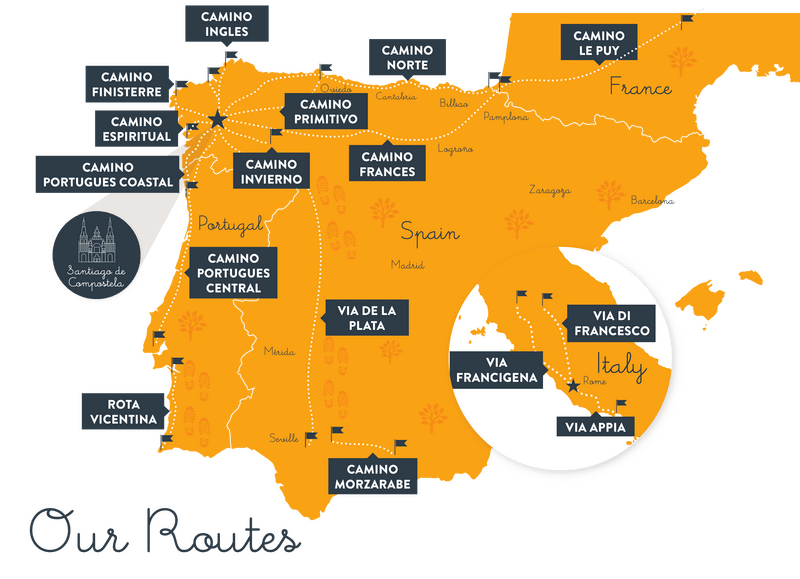
The Camino de Santiago is not a single trail but a network of more than 10 official pilgrimage routes that all converge at the Cathedral of Santiago de Compostela. Each route has its own character, distance, difficulty and history — from the bustling Camino Francés through northern Spain to the coastal beauty of the Camino Portugués, the rugged Camino del Norte along the Atlantic, or the long-distance Via Francigena from Canterbury to Rome.
The route you choose depends on how many days you have, your fitness level, the scenery you want to experience and how social or solitary you’d like your pilgrimage to be. Below is a quick comparison of the most popular Camino routes.
Not sure which route is right for you? Each Camino offers a completely different pilgrim experience. The Camino Francés remains the most-walked route — particularly its last 100 km from Sarria to Santiago, the classic first-timer choice. The Camino Portugués Coastal from Vigo is the second most popular starting point, offering gentler terrain and Atlantic views. For those seeking solitude, the Camino Primitivo and Camino del Norte are the most rewarding alternatives.
👉 Compare all Camino routes side by side — including distances, terrain, accommodation, and ideal walker profile — in our complete Camino de Santiago Routes Guide.
Cycling the Camino de Santiago
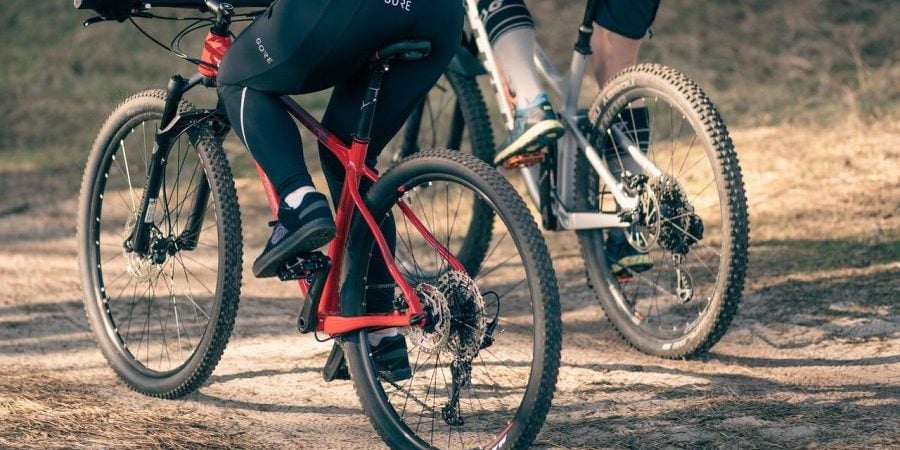
In 2025, 93% of pilgrims walked the Camino, while around 4% cycled the route — known as ‘Bicigrinos’ or ‘Bicigrinas’ (bike pilgrims). The rest completed it on horseback, by sailboat or in a wheelchair, according to the Pilgrim’s Office in Santiago.
Cycling the Camino allows you to experience the trail on two wheels and in turn, you cover more ground daily. However, you’ll need to cycle at least 200km to receive your Compostela certificate in Santiago (as opposed to 100km walking).
Hitting the trail on a mountain bike is a thrilling experience, but we only recommend it to experienced cyclists and those familiar with bike maintenance.
Who walks the Camino de Santiago?
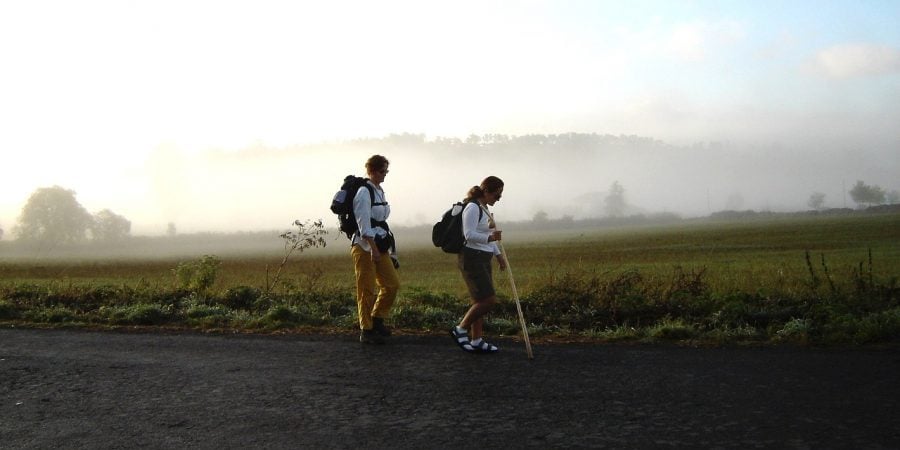
People of all ages and backgrounds walk and cycle the Camino routes each year. In 2025, pilgrims from more than 190 countries completed the Camino, with a record 530,919 Compostelas issued, according to the Pilgrim’s Office in Santiago.
Women make up the majority of pilgrims (53%), and the gender split has remained stable for years. Spaniards remain the largest national group (~42%), followed by Americans (8%), Italians, Germans, Portuguese and British pilgrims.
Motivations are also diverse: 46% walk for religious reasons, 33% for mixed religious and personal reasons, and 21% for purely non-religious purposes such as culture, fitness or self-discovery. Whatever the motivation, the Camino welcomes everyone.
Why should I walk the Camino de Santiago?
The Camino de Santiago attracts pilgrims from all over the world. A record 530,919 Compostela certificates were issued in 2025 — compared to just over 1,200 in 1985 — giving you an idea of how the Camino has grown into one of the world’s most popular pilgrimage routes, according to data from the Pilgrim’s Office in Santiago de Compostela.
The reason modern pilgrims walk the Camino ancient trail has evolved, and it’s now a rewarding experience for anyone who enjoys walking or cycling.
There are many ways to embark on this unique challenge and you will meet some wonderful people along the route and visit beautiful Spanish sites. Here are just a few things to enjoy along the way:
- Admire historic sites and monuments.
- With every Camino Way different, you can sample various cultures.
- Enjoy the various landscapes travelling across the country, from coastal Camino routes to vineyards, mountains, or tiny hamlets.
- Taste delicious tapas at every stopping point. In Galicia, they also have lovely pintxos to accompany your favourite evening drink.
- Meet other walkers worldwide and learn about their reasons for taking on this long-loved adventure.
- Discover yourself!
How far do I need to walk?
The beauty of the Camino routes is that you can walk as much or as little as you want; you could spend weeks walking from Le Puy to Santiago, one month walking from St Jean Pied de Port, a week or just a few days.
There is a Camino route for everyone but the one thing to keep in mind is that in order to receive your Compostela pilgrim certificate, you will need to walk at least the last 100km into Santiago de Compostela or cycle the last 200km.
You’ll also need to collect at least two stamps per day in your Pilgrim Passport during the final 100 km — usually obtained at albergues, churches, cafés and town halls — as official proof of your journey.
When is the best time to walk the Camino de Santiago?
The best months to walk the Camino de Santiago are May, June, September and early October, when temperatures are mild (15–25°C), daylight hours are long, and the trail is busy enough to be social but not overcrowded. July and August are the hottest and most crowded months — daytime temperatures regularly exceed 30°C across Spain, and accommodation books out weeks in advance. Winter (December–February) is the quietest season but many albergues and rural hotels close, especially on the Camino del Norte and Camino Primitivo.
Camino de Santiago weather and crowds by month
| Month | Weather | Crowds | Recommended? |
|---|---|---|---|
| January | Cold, wet, possible snow in mountains | Very low | Experienced winter walkers only |
| February | Cold and rainy, short days | Very low | Experienced winter walkers only |
| March | Cool, variable, early spring | Low | Yes — services reopening |
| April | Mild (10–18°C), spring blooms, occasional rain | Moderate | Excellent |
| May | Mild to warm (15–22°C), green landscapes | High | ⭐ Best month |
| June | Warm (18–26°C), long days, busy | Very high | ⭐ Excellent |
| July | Hot (25–32°C), peak crowds, St James festivities | Very high | Avoid unless you book early |
| August | Very hot (28–35°C), crowded, Spanish holidays | Very high | Avoid |
| September | Warm (20–27°C), grape harvest in Galicia | High | ⭐ Best month |
| October | Cool (12–20°C), beautiful autumn colours | Moderate | Excellent (early Oct) |
| November | Cool to cold, rainy, short days | Low | Possible but check services |
| December | Cold, wet, many services closed | Very low | Experienced winter walkers only |
How do I follow the Camino de Santiago trail?
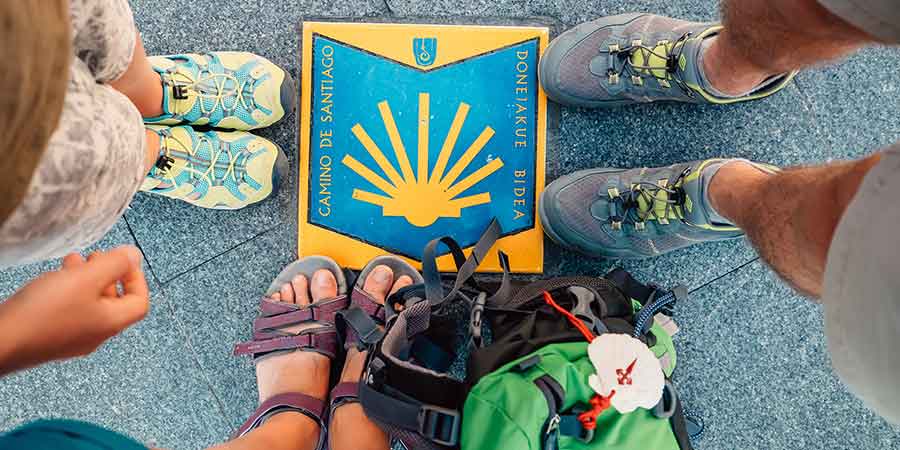
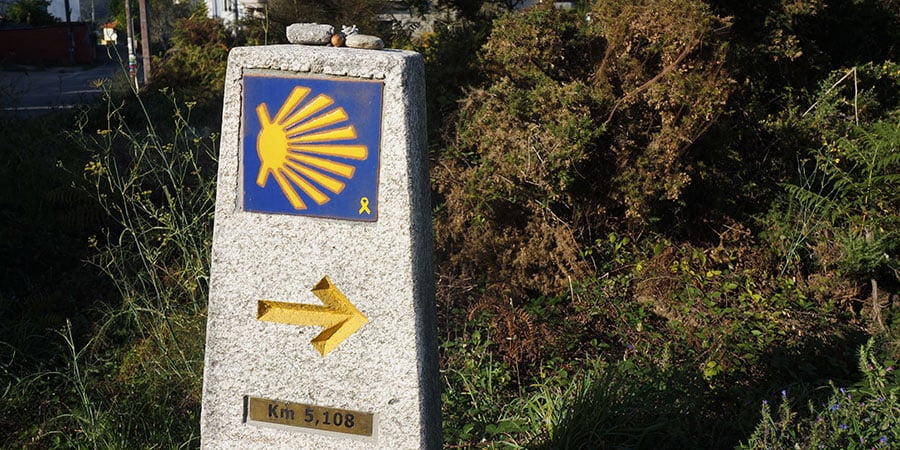
The Camino de Santiago trails are very well marked with scallop shells and Camino markings painted everywhere (trees, roads, walls…). All you have to do is simply follow the yellow arrows and they’ll guide you to Santiago de Compostela! In Galicia, you’ll also see stone waymarkers called mojones, which display the remaining distance to Santiago in kilometres — a satisfying countdown for every pilgrim approaching the Cathedral.
👉 If you’d like a personalised itinerary, try our Award Winning Camino Planner.
FAQ
It depends on the route you choose. The full Camino Francés from Saint Jean Pied de Port takes around 5 weeks, while the last 100 km can be completed in about a week.
Yes, you can also do the Camino by bike. Keep in mind that to earn your Compostela certificate, you’ll need to cover at least 200 km by bike (compared to 100 km on foot).
Yes, the Camino de Santiago is consistently rated one of the safest long-distance walking routes in the world. Around 50% of pilgrims walk the Camino solo, and approximately half of all pilgrims are women. The route is exceptionally well-marked with yellow arrows and scallop shells, villages with cafés and accommodation appear every 5–10 km, and the constant flow of fellow pilgrims means you’re rarely walking alone for long. Spanish and Portuguese authorities maintain a strong presence along the main routes, and the Guardia Civil operates a dedicated Camino patrol during peak season (May–October). Most solo travellers report feeling safer on the Camino than in their home cities.
Not at all. While the Camino has spiritual roots, today many pilgrims walk it for cultural, personal, or fitness reasons, or simply as a life-changing challenge. There’s a Camino for everyone.
It’s the “passport” that identifies you as a pilgrim. You’ll need to collect stamps along the way at albergues, churches, cafés, or town halls to prove you’ve walked the required distance and receive your Compostela in Santiago.
The best route depends on your time, fitness, and interests. The Camino Francés is ideal for first-timers seeking tradition and camaraderie. The Camino Portugués Coastal is best for coastal scenery and easier terrain. The Camino del Norte offers dramatic Atlantic views with fewer crowds. The Camino Primitivo suits experienced hikers looking for solitude. The Camino Inglés is perfect for short holidays, and the Via Francigena for those wanting Italy instead of Spain.
Most first-time pilgrims choose the last 100 km of the Camino Francés from Sarria to Santiago. It takes about 6-7 days, qualifies for the Compostela certificate, has excellent infrastructure, and offers the classic social Camino experience. The Camino Portugués Coastal from Vigo is another great first-time option — flatter, quieter, and scenic along the Atlantic coast.
Yes. Most routes are suitable for families with children and walkers in their 60s, 70s, or beyond. Daily distances can be shortened, luggage transfers remove the physical strain, and the pace can be adjusted to suit any fitness level. The Camino Portugués Coastal from Vigo and the Camino Francés from Sarria are particularly popular family-friendly options with gentle terrain and plenty of rest stops.
A reliable Camino tour operator should be officially licensed, have at least 10 years of Camino-specific experience, offer 24/7 in-country support and hold strong independent reviews on TripAdvisor or Trustpilot. Booking a pilgrimage through a specialist operator removes the logistical burden of accommodation, luggage transfer and route planning — letting you focus on the walking experience itself.
Yes. Most Camino specialist operators offer guided group tours led by experienced English-speaking tour leaders, ideal for pilgrims who prefer the social experience of walking with a group. Guided tours typically include daily walks with a local guide, accommodation, luggage transfers, group meals and cultural visits. Popular guided options include the Camino Francés from Sarria, the Camino Portugués Coastal and special St James Day departures in July.
Is it year round?
Hi Dan, yes, you can walk the Camino de Santiago year-round. However, some routes close a lot of their services during winter, and the weather in summer can be unpleasant if you aren’t used to the heat. The best times to walk the Camino are in late spring and autumn, from May until the end of October. You can plan your route on our planner https://caminoways.com/camino-de-santiago-planner or you can also contact us, and we can help plan out and create the best trip for you – https://caminoways.com/contact-us
Thank you your page has been very helpful. This has been an intrest for me for a few years now after watching ..the way starring Martin sheen. Cliche I know but for some reason I feel it would be something beneficial to me, both mentally and physically. I may watch the film again and research more to see what my starting point would be based on my home life and being able to escape for a certain time frame etc. Children, work and money etc.
Hi Eithne, thanks for taking the time to write a comment. We’re delighted you’ve found our website useful! And don’t worry about cliches, they are cliches for a reason! Take your time thinking about doing the Camino and if you need any advice, tips or help, our blog is full of articles. We also run monthly webinars on our Facebook page for more information. You can also contact us by email as well. Happy researching 🙂
Hi! Are some of the routes better suited for cycling than others?
Can you recommend where to find more detailed information on cycling, bike rentals etc?
Hi Dee, thanks for your message. You can learn all about our cycling routes and how it works here:
How it works: https://caminoways.com/cycling-the-camino-de-santiago-how-it-works
Routes: https://caminoways.com/cycling-the-camino-routes
Buen Camino!
What are the actual high day time temps the last 100 km in late summer? Thanks!
Hi Elizabeth, thanks for your message. I would recommend checking a weather app for the actual temperatures of the past summer (2022). Unfortunately, there is no way to give actual temperatures ahead of time. You can check averages and general information about the weather on the individual route pages and here: https://caminoways.com/weather-on-the-camino-de-santiago
Hello Sarah, I know there are several Caminos, and you could probably take as long as you’d like on any of them, but which “Camino” is the 1000 mile 30 day Camino?
Hi Joe,
The longest route is the via de la plata (1000km) and we offer the last 100km of this route from Ourense to Santiago. You can walk the full French Way from St Jean to Santiago (780km) in 30 days. You can read more about our routes here: https://caminoways.com/camino-de-santiago-routes and if you have any other questions, please do contact us here: https://caminoways.com/contact-us
Is it at all possible to undertake the Camino De Santiago by coach (bus) from Reading, Berkshire, UK please ?
Thanking you in anticipation,
Kind regards,
Bruce and Marisa Hayes (age 84 and 86)
Hi Bruce, thank you for your message. Unfortunately, no. All of our tours begin at a starting point in Spain, France, Portugal or Italy.
I did the Camino at the end of May for 3 weeks in 2019
Starting in Leon
WE had an incredible time looking forward to doit again in 2024
this time we will start in Pamplona
Cheers
Where do you sleep at night during the treks? Are there hotels, hostels or bed & breakfasts that are on the routes or is it more of backpacking and tents?
Hi Sherry, thanks for your comment. There are many different accommodation options along the Camino. You can read more about them here: https://caminoways.com/camino-de-santiago-accommodation
If you travel with us, we use hotels, from standard to superior depending on availability and your preference when booking.
Do you include a service of moving my suitcase from one hotel to the next evening’s?
Hi Elvira, thanks for your message. We do of course, please see this page for information about our luggage transfer service: https://caminoways.com/camino-luggage-transfers
Is it safe?
Hi Jessica, thanks for your message. The Camino is a safe destination and the majority of people actually walk it solo, men and women. You do have the option to walk the Camino as part of a guided group tour as well.
Is there a way I could do it if I only have 2 weeks off from work?
Hi Daisy, thanks for your message. Yes of course, 2 weeks is plenty of time to get a taste of the Camino. The last 100km of the routes usually takes about a week to walk. You can see these routes here: https://caminoways.com/walking-camino-last-100km-collection
You can also cycle many sections of the routes in under 2 weeks or choose to walk a specific section of the Camino Frances for example. You can have a look at our Camino Planner to help customise your ideal route and duration: https://caminoways.com/camino-de-santiago-planner
Please do also email us or create a quote and we can help you with your planning from there.
Hope this helps!
Hello
Consider to take ALeave ans walk with 10 and 16 year old. What is the best time to avoid heat but not to worry about temperature below +22
Hi Victoria,
It depends on the kind of temperature you are used to. Most people find September/October and the end of April/May to be the most pleasant in terms of walking.
Hello, If I just arrived and started walking along one of the routes would there be accommodation available? Or, would I need to book everything in advance a long the route? Thank you.
Hi Amanda, it is possible but it will depend on demand and whether or not you’re travelling during a busy period. Here’s more information about the accommodation options on the Camino -> https://caminoways.com/camino-de-santiago-accommodation
Hello,
I was thinking of doing the last 100km from mid March to Early April. Is that a good time where most trails would be open?
Hi Kuma, yes Everything reopen from March onwards. March is a good time to walk to Camino anywhere! Please contact us is you need anything else 🙂
I’m still in the dreaming phase of my trip. I really appreciate this website, everyone’s questions and Sarah’s answers. Thank you!
Hi there,
In case if something happens and I wont be able to walk anymore, can I take a taxi or so?
Hi Ellie, if some unforeseen event occurs and you can no longer walk, we provide contact details for local taxis for you (at your own expense). But of course you can take a taxi.
Me and my husband are planning to do the Camino by our selves (DIY) instead of joining a group tour. Is it possible? If so, where can we get our Credentials or Pilgrim Passports?
Are there guided tours, or group tours? Where do you sleep at night? What is the walking/rest recommendations?
Hi Cleofe, Yes it is possible and we would be more than happy to help with your travel arrangements, we offer different levels of accommodations and luggage transfer services. We can also arrange airport transfers for you.
Hi Griselda, yes we have guided tours available, you can see all the available tours and dates here https://caminoways.com/camino-de-santiago-guided-tours. We offer a range of accommodation options and have the breakdown on all of the routes and distances on our website pages. Alternatively you can create your own route using our Santiago Planner to customise your pilgrimage https://caminoways.com/camino-de-santiago-planner
Looking to do the C Walk in 2025. Thanks for your info in the above article.
Pingback: Finding Peace on the Camino | CaminoWays.com