The Camino Litoral doesn’t shout for attention. It doesn’t need to. While the officially marked Coastal route (Caminho da Costa) weaves between ocean and inland villages, the Litoral takes a simpler approach: stay as close to the Atlantic as possible and let the waves guide you north.
Here’s what you need to understand: The Coastal and Litoral routes are one branch (and the most popular) of the wider Camino Portugués, which begins in Lisbon and splits in Porto into three main options: the inland Camino Portugués Central, the Camino Portugués Coastal & Litoral routes, and, later in Galicia, the Camino Portugués Variante Espiritual. All three paths reconnect before Santiago de Compostela.
From Porto to Redondela, the Coastal and Litoral routes split and merge repeatedly, sometimes more than once in a single stage. You’re not choosing between two completely different Caminos — you’re choosing between two ways of walking the same coastal branch, often on the same day.
Table of contents
- The key difference: Ocean vs. inland variation
- Where the routes differ most
- What walking the Litoral actually feels like
- Why the Litoral isn’t a separate product (and why that matters)
- How this connects to the wider Portuguese Way
- Practical considerations: What you need to know
- Who should choose the Litoral (and when)
- Food, culture and the Portuguese coastal experience
- Two paths, one journey
- Frequently Asked Questions
The key difference: Ocean vs. inland variation
- The Coastal Route (Caminho da Costa) is the officially marked Camino, clearly waymarked with yellow arrows. It follows the ocean at times, but often turns inland through villages, forests and farmland. Overall, roughly 30% of this route runs close to the sea. It works well for both walkers and those cycling the Camino routes, offering shade, services and consistent signage.
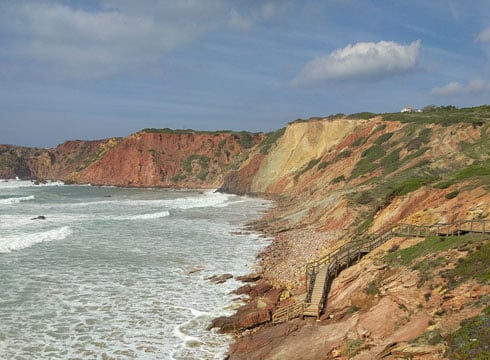
- The Litoral Way (Senda Litoral) stays as close to the Atlantic as physically possible. Around 80% of it follows promenades, wooden boardwalks, beaches, and coastal paths. It’s flatter and more open, but less consistently marked. Navigation is usually straightforward—the route simply follows the coastline north—yet some pilgrims prefer to use a map or GPS for reassurance.
The most important point: You don’t need to choose a single route for the entire journey. Both options start and finish each stage in the same towns. Most pilgrims naturally mix them, choosing the Litoral on calm, clear days and the Coastal route when they want shade, shelter, or clearer signage. This flexibility is part of what makes the Camino de Santiago routes so rewarding—you adapt to conditions, mood and energy as you go.
Where the routes differ most
The biggest contrasts appear on a few key sections:
- Porto to Vila do Conde: The Coastal route heads inland through Matosinhos and traditional villages. The Litoral hugs the coast almost entirely, following the Atlantic promenade with continuous ocean views. On a clear morning, the difference is stark—one feels like a Portuguese town walk, the other like a seaside meditation.
- Esposende to Viana do Castelo: Again, the routes diverge. The Coastal path cuts through agricultural land and small settlements. The Litoral stays on boardwalks and beaches, crossing the Lima River estuary near Viana with the ocean always in sight. This is one of the most beautiful stretches of the entire Portuguese Way.
- Baiona to Vigo (in Galicia): Here, the Litoral follows the ría (estuary) coastline closely, while the Coastal route takes a more inland trajectory. Both are scenic, but the Litoral gives you unbroken water views and a sense of walking the absolute edge of land.
For those curious about how other Camino routes compare in terrain and scenery, our Camino del Norte guide explores Spain’s dramatic northern coast, while the Camino Francés offers a completely different inland experience through historic villages and mountain passes.
What walking the Litoral actually feels like
Let’s be practical. The Litoral is not a wilderness trail. You’re walking along developed coastline—past beach towns, fishing ports and resort areas. But development doesn’t mean crowds or noise. Much of the route feels surprisingly peaceful, especially early in the morning or late afternoon when locals have gone home and day tourists haven’t yet arrived.
- Surfaces vary constantly. You’ll walk wooden boardwalks over wild dunes, paved seaside promenades, sandy stretches where you kick off your shoes, and occasionally cobbled streets through fishing villages. It’s never monotonous, but it does require decent footwear. Our Camino packing list includes specific recommendations for mixed coastal terrain.
- Weather matters more on the Litoral than on the inland Coastal route. You’re exposed to Atlantic winds, which can be refreshing in summer but biting in spring or autumn. Mornings are often cool and misty; afternoons clear and bright. Rain passes quickly but offers no shelter—there are fewer trees, fewer cafés mid-stage. If conditions turn rough, you can always switch to the Coastal route for that day. Understanding the best time to walk the Camino helps you choose optimal months for coastal walking.
- Solitude is real. Even when the main Coastal route sees heavy traffic in peak season, the Litoral stays quieter. You’ll meet other pilgrims at breakfast and dinner, but during the walk itself, you often have long stretches entirely to yourself. For many people, that’s the whole point.
Why the Litoral isn’t a separate product (and why that matters)
We don’t offer “the Litoral” as a standalone tour because it isn’t a standalone route—it’s a variation within the Coastal Camino. Our Camino Portugués Coastal itineraries give you both options naturally. The routes share the same start and end points each day, the same accommodation, the same luggage transfer service.
What we provide are detailed route notes that clearly explain where the Litoral and Coastal paths diverge, what each offers and how to navigate both. You decide each morning which feels right, more ocean or more village, more exposure or more shelter. That flexibility is built into every Coastal tour we organize.
This is fundamentally different from choosing between, say, the Camino Primitivo and the Camino Inglés—those are completely separate routes with different starting points, different infrastructure, different experiences. The Litoral and Coastal routes are variations of the same journey, and most pilgrims walk both at different times.
How this connects to the wider Portuguese Way
The Portuguese Way is remarkably flexible. It begins in Lisbon (or even further south) and offers choices all the way to Santiago:
- Lisbon to Porto: One main route, inland through historic towns like Coimbra and Santarém
- Porto to the Spanish border: Three options (Central, Coastal/Litoral, and later the Espiritual variant)
- Spanish border to Santiago: Routes converge, though small variants still exist
The Coastal and Litoral routes represent the most popular choice from Porto northward. They attract pilgrims who want ocean air, gentler terrain, and a different rhythm than the traditional inland Central route. For context on how the entire network fits together, see our Camino de Santiago information hub.
After reaching Santiago, many pilgrims extend their journey to Camino Finisterre, walking three more days to the Atlantic coast—a fitting conclusion to a journey that began beside the same ocean further south.
Practical considerations: What you need to know
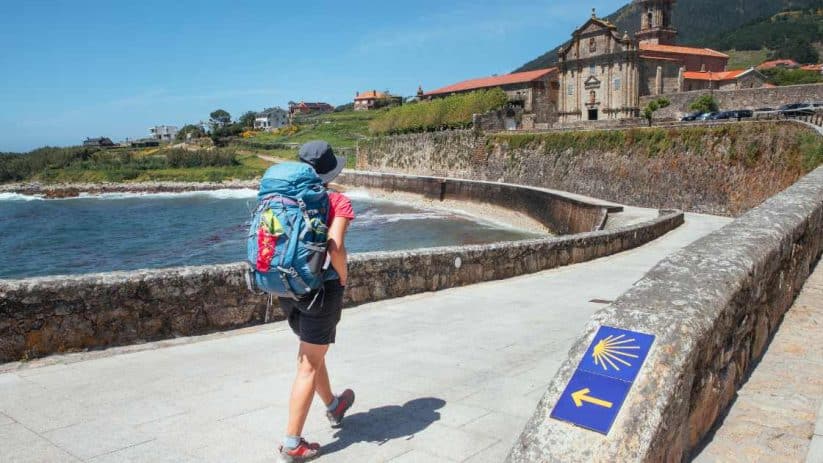
- Navigation: The Coastal route is better marked (yellow arrows, scallop shells). The Litoral is less consistent but usually obvious—just follow the coast. On unclear sections, both routes are close enough that you can easily switch. Many pilgrims use a GPS app as backup.
- Services: Both routes pass through the same towns, so accommodation, restaurants and shops are identical. You’re never far from help. Our support is available on both variations.
- Fitness level: The Litoral is slightly easier—flatter, no climbs. The Coastal route has gentle hills when it moves inland. Both are suitable for most fitness levels. Check our Camino fitness plan if you’re preparing for your first long walk.
- Cycling: The Coastal route is better for bikes (clearer paths, less sand). The Litoral includes boardwalks and beaches that don’t work well for cycling. If you’re considering cycling the Camino, stick primarily to the Coastal option.
- Best seasons: May–June and September–October offer ideal conditions—mild temperatures, stable weather, fewer crowds. Summer works but can be warmer; the ocean breeze helps. Winter is possible but wetter and windier, especially on exposed Litoral sections.
Who should choose the Litoral (and when)
Choose the Litoral when you want:
- Maximum ocean contact. This is as close to the Atlantic as you can walk.
- Flat easy terrain. Boardwalks and promenades require less effort than inland hills.
- Solitude. Even in busy seasons, the Litoral is quieter.
- Open sky and big views. There’s something meditative about endless horizon.
Choose the Coastal route when you want:
- Shade and shelter. Inland sections offer tree cover and protection from wind.
- Clear waymarking. Yellow arrows make navigation effortless.
- Village atmosphere. More cafés, more interaction with local life.
- Cycling-friendly paths. The Coastal route works much better for bikes.
Most pilgrims don’t choose—they mix both throughout their journey. That’s the beauty of this branch of the Camino Portugués. You’re not locked into one path. You adapt day by day.
For first-time pilgrims unsure which variation suits them best, our beginners guide to walking the Camino offers detailed advice on matching routes to personal preferences and fitness levels.
Camino Litoral vs Camino Coastal
Detailed comparison of the two Portuguese coastal route variants
| Aspect | 🐚 Camino Coastal (Official) | 🌊 Camino Litoral |
|---|---|---|
| Ocean Contact | ~30% by the sea, alternates between coast and inland villages | ~80% along the Atlantic, boardwalks, beaches and coastal paths |
| Waymarking | ExcellentYellow arrows and shells clearly marked | ModerateLess consistent, generally obvious (follows the coast) |
| Terrain & Surfaces | Dirt paths, asphalt, gentle hills when going inland | Boardwalks, wooden walkways, beaches, flatter and more open |
| Difficulty Level | ModerateGentle hills when going inland | EasyFlatter, no significant climbs |
| Shade & Shelter | AbundantForests, villages, wind protection | LimitedVery exposed, fewer trees |
| Crowds | BusyMain official route in high season | QuietLong stretches in solitude |
| Services on Route | FrequentMore towns and cafés along the way | ModerateFewer options during stages |
| Cycling Suitable | YesClear trails, good surfaces | NoSand, boardwalks, narrow paths |
| Weather Exposure | ModerateProtection in inland sections | HighAtlantic winds, no shelter |
| Village Atmosphere | RichMore interaction with local life | ModerateMainly coastal towns |
| Scenic Views | Varied: fields, forests, ocean glimpses | SpectacularContinuous ocean horizon |
| Best Time of Year | May-June, September-October (works year-round) | May-June, September-October (avoid windy days) |
| Route Flexibility |
🐚 Both routes share the same start/end towns each day You can switch between them based on weather, energy, and preferences! |
|
Food, culture and the Portuguese coastal experience
Coastal Portugal is seafood country. Expect fresh grilled sardines, octopus salad, caldeirada (fish stew) and percebes (goose barnacles) in season. Beach towns take pride in their catch—many restaurants source directly from local boats.
Breakfasts are included in your accommodation. Dinners are easy to find in every town, with menus ranging from traditional tascas (taverns) to modern seafood restaurants, especially abundant in spring and summer when outdoor seating fills coastal squares. We also organize dinners as part of your journey if you prefer the convenience of having everything arranged in advance. Coffee culture is strong—espresso stops punctuate the day naturally.
For deeper insight into what you’ll eat along the way, see our guides to Camino food and 10 most delicious Galician dishes you’ll encounter once you cross into Spain.
Two paths, one journey
The Litoral isn’t a different Camino—it’s a different way of walking the Coastal Camino. Some days you’ll crave the ocean’s constancy, the rhythm of waves, the openness of sky meeting water. Other days you’ll want shade, village sounds, the comfort of yellow arrows guiding you forward.
Both are valid. Both are beautiful. Both lead to Santiago.
The Coastal Camino (encompassing both variations) remains one of the most rewarding walks in Europe precisely because of this flexibility. You’re not forced to choose between authenticity and comfort, between challenge and ease, between solitude and company. You navigate those balances daily, which is exactly what pilgrimage has always been about.
Understanding the Litoral helps you make better choices during your walk. It’s not about picking the “right” path—it’s about knowing your options and adapting to what each day offers.
Frequently Asked Questions
Is the Litoral a separate Camino route?
No. The Litoral is a variation within the Coastal Camino Portugués. Both routes start and end in the same towns each day, allowing you to switch between them freely.
How much of the Coastal Camino actually runs by the ocean?
The official Coastal route is about 30% coastal. The Litoral variation is roughly 80% coastal, following beaches, boardwalks, and ocean promenades.
Can I walk both the Litoral and Coastal routes?
Yes, and most pilgrims do. You can choose which variation to walk each morning based on weather, mood, or energy. Both options are included in Coastal Camino itineraries.
Which is easier, the Litoral or the Coastal route?
The Litoral is slightly flatter and more exposed. The Coastal route has gentle inland hills but offers more shade and shelter. Both are suitable for most fitness levels.
Is the Litoral well marked?
Less consistently than the Coastal route, but navigation is usually straightforward—you simply follow the coastline north. Many pilgrims use GPS as backup.
Do I need different luggage transfer for the Litoral?
No. Both variations use the same accommodation in each town, so luggage transfer works identically regardless of which path you walk that day.
When should I choose the Litoral over the Coastal route?
Choose the Litoral on clear, calm days when you want maximum ocean contact and solitude. Choose the Coastal route when you want shade, shelter, clearer waymarking, or village atmosphere.
Can I cycle the Litoral?
Not recommended. Many Litoral sections include sand, boardwalks, and narrow coastal paths unsuitable for bikes. The Coastal route is much better for cycling.
If you’d like a personalised itinerary for the Coastal Camino (including both Litoral and Coastal variations), try our Award Winning Camino Planner.