
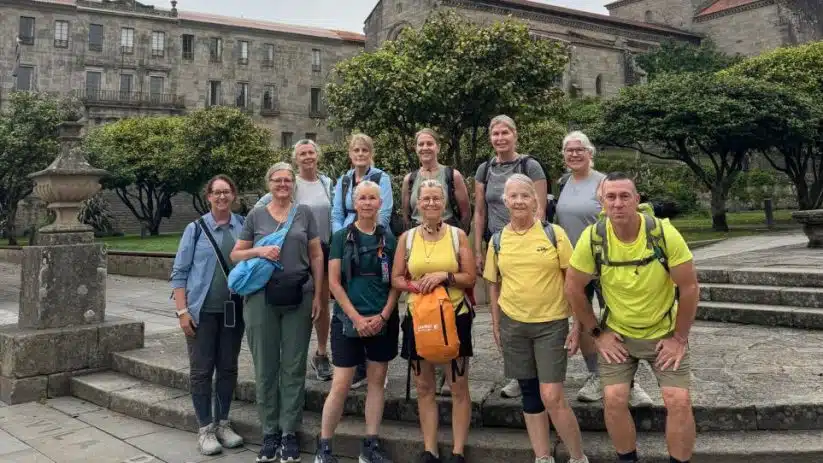
To stay fit and healthy on the Camino de Santiago, train for a few months beforehand, pack light (or use a luggage transfer), wear well-broken-in shoes, stay hydrated, eat balanced meals, look after your feet daily and rest well. Pacing yourself and listening to your body matters far more than speed. Here are 15 practical tips.
Table of contents
- 1. Prepare Physically
- 2. Choose the Right Gear
- 3. Select the Right Route
- 4. Don’t Carry Too Much
- 5. Stay Hydrated
- 6. Eat Nutritiously
- 7. Listen to Your Body
- 8. Protect Yourself from the Sun
- 9. Look After Your Feet
- 10. Maintain Personal Hygiene
- 11. Use Health Services When Needed
- 12. Travel with Insurance
- 13. Stretch After You Walk
- 14. Sleep Well
- 15. Take Mental Breaks
- FAQ
1. Prepare Physically
The most crucial step to staying fit and healthy on the Camino is to train properly before you set out. Begin several months in advance, starting with shorter walks and gradually extending the distance over varied terrain. Not sure you’re ready? First check whether you’re fit enough to walk the Camino, then follow our free 6-month Camino Fitness Plan for a month-by-month routine. You can also download our free Camino Fitness eBook for extra workouts and tips.
2. Choose the Right Gear
The weather along the Camino varies greatly with the seasons, making it essential to wear appropriate footwear to prevent blisters and injuries. Ensure your shoes are well-fitted, properly broken in, and designed for long-distance walking. Additionally, packing lightweight and breathable clothing will help you adjust comfortably to the fluctuating weather conditions. Check out our Camino de Santiago Packing list and our free ‘Camino Packing eBook‘
3. Select the Right Route
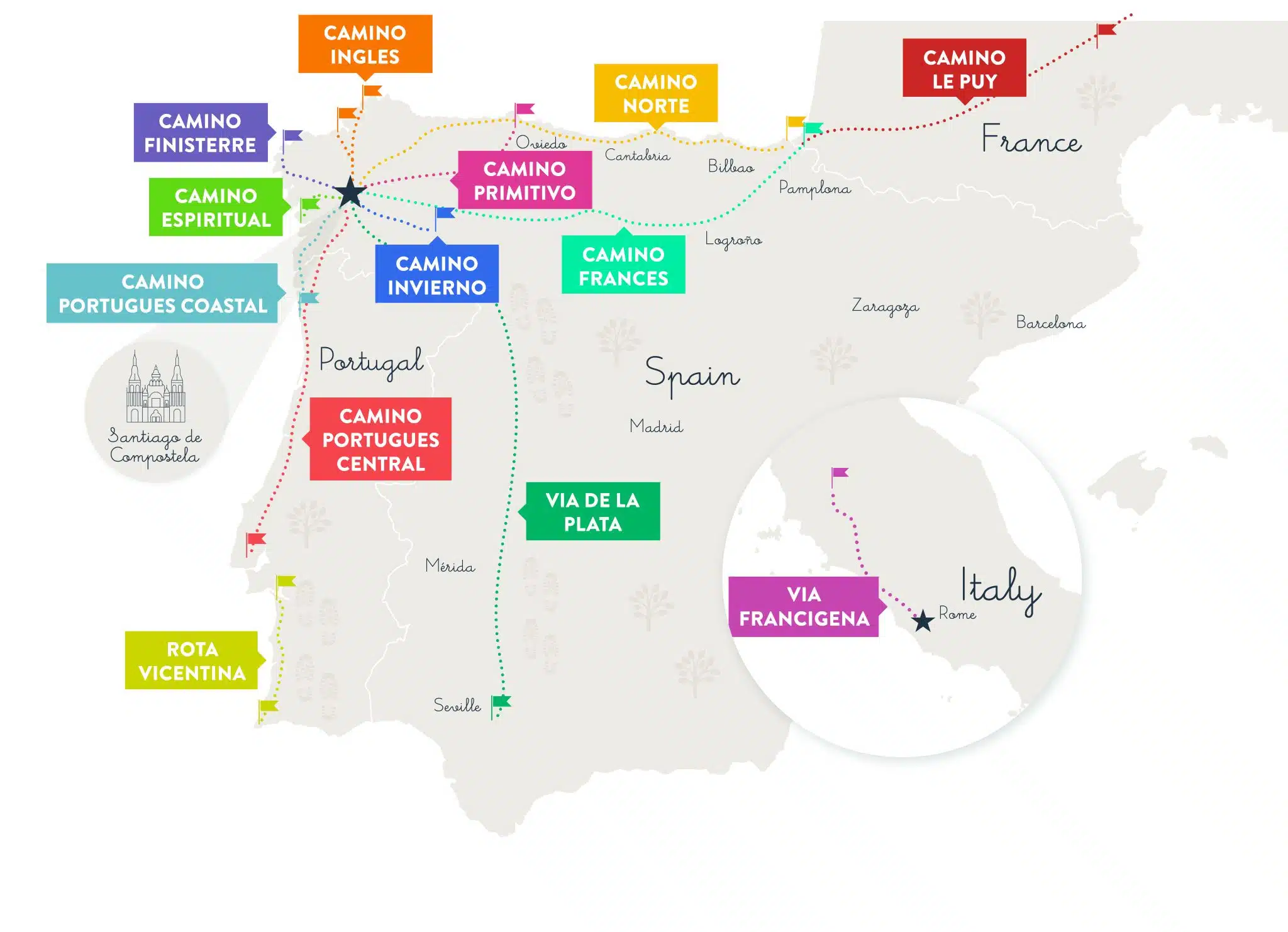
Choose a Camino de Santiago route that suits your fitness level and plan your walking stages carefully. If you’re aiming to tackle longer distances, a sensible approach is to increase your walking distance gradually. Begin with shorter stages and progressively extend them.
4. Don’t Carry Too Much
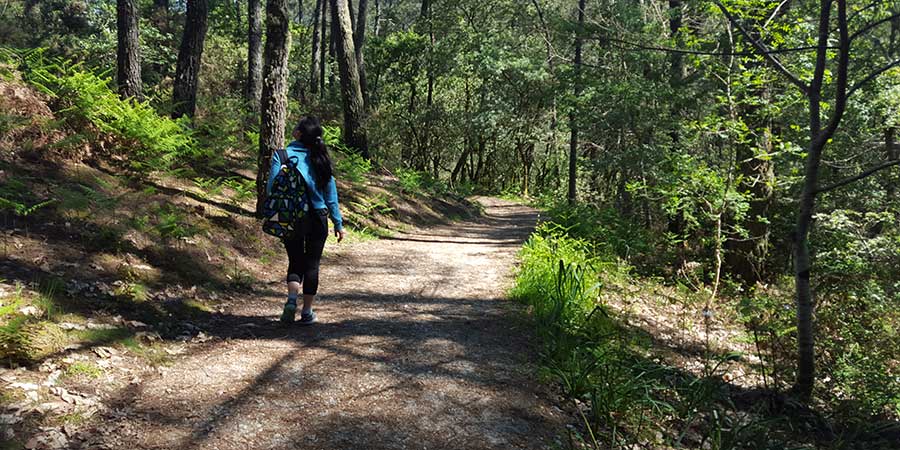
Pack only the essentials to keep your backpack light. A heavy pack increases the strain on your body and can lead to back and shoulder pain. Reevaluate your pack contents regularly and send ahead or discard items you don’t need. Camino luggage transfer services allow you to carry only your essentials while your suitcases are dropped off at your next destination. Take a look at our ‘Camino Packing eBook‘ for more comprehensive advice on what to bring.
5. Stay Hydrated
Given the increased physical activity and the likelihood of sweating more, especially during summer, you’ll need to drink more water than usual. It’s important to stay hydrated by consistently drinking water throughout your journey. Using a refillable water bottle supports sustainability and ensures that you can conveniently refill it at numerous points along the route. For more information on sustainability, check out our Sustainable Travel on the Camino blog.
6. Eat Nutritiously
Maintain your energy levels by eating balanced meals and healthy snacks. The Camino passes through towns where you can sample local cuisine, which is part of the cultural experience and a great way to fuel your body with fresh, nutritious ingredients. Fruits like bananas, apples, and plums offer sustained energy because they are rich in fibre, antioxidants, and slow-releasing carbohydrates that help maintain your blood glucose levels.

7. Listen to Your Body
Listen carefully to your body’s signals. If you feel tired or uncomfortable, take a rest and avoid pushing beyond your limits. By recognising early signs of fatigue or discomfort, you can take necessary precautions to prevent more severe problems in the future. It’s crucial to prioritize your well-being as you go.
8. Protect Yourself from the Sun
Keep in mind that the summer sun in Spain can be extremely intense, so protecting yourself is essential. Wear a sun hat, apply SPF 50 sunscreen frequently, cover your skin with light clothing, and aim to walk during the cooler parts of the day to avoid the harsh midday heat. For more, see our tips for walking the Camino in hot weather.
9. Look After Your Feet
Give your feet extra attention every day. Wash and dry them well, use moisturiser to avoid dryness and cracking, and inspect them for blisters, protecting any hot spots with tape or plasters. Choose appropriate footwear and consider soaking your feet in the evenings to relieve them. For a full routine, see our guide to footcare on the Camino and how to avoid blisters.
10. Maintain Personal Hygiene
Maintaining personal hygiene on the Camino de Santiago can be challenging but essential to prevent infections and stay healthy. Carry hand sanitiser, wash your hands regularly, and ensure you have access to clean facilities.
11. Use Health Services When Needed
If you encounter significant discomfort or sustain an injury, do not hesitate to seek medical assistance. Most towns along the Camino are equipped with pharmacies and clinics, where the staff are experienced in addressing health issues commonly faced by pilgrims. Prompt medical attention can ensure a safer and healthier journey.
12. Travel with Insurance
Obtaining travel insurance that adequately covers medical emergencies, loss, and theft is crucial. Such coverage offers you reassurance, knowing that you are protected and can access assistance quickly should any unforeseen events arise during your travels. This preparation helps ensure a safer and more secure journey.
13. Stretch After You Walk
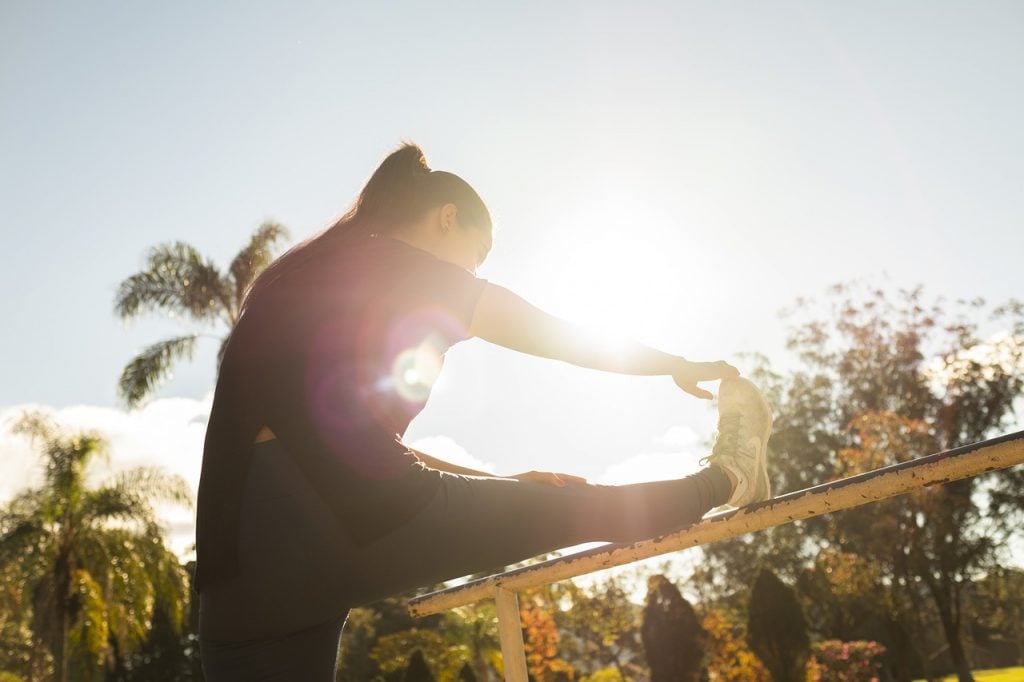
Finish each day with a series of stretches to aid muscle recovery and avoid stiffness. Concentrate on your legs, back and shoulders to improve flexibility and minimise the risk of injury — this helps prepare your body for the next day. Follow along with our short video of useful stretches for walkers.
14. Sleep Well
Getting adequate rest is crucial for the Camino. Ensure you have a comfortable sleeping arrangement, whether in Albergues/hostels or hotels and try to maintain a regular sleep schedule to support your body’s recovery. Explore the variety of hotels and accommodations available on the Camino.
15. Take Mental Breaks
The Camino is not just a physical challenge; it’s also mentally taxing. Take time to relax mentally, whether by meditating, reading or simply spending a few moments in silence, enjoying the natural surroundings.
Watch our video summary of these fitness tips
Following these comprehensive tips will help ensure that you can fully engage with the physical and spiritual aspects of your Camino journey, making it a safe, healthy, and enriching experience. We hope that you found these tips to stay fit and healthy while on the Camino beneficial. Stay safe, and Buen Camino!
For more information about the Camino de Santiago routes or to book your Camino trip, contact us.
FAQ
Train beforehand, pace yourself, stay hydrated, eat balanced meals, protect your feet and skin, and rest well each night. Carrying less (or using a luggage transfer) and listening to your body are the biggest day-to-day factors.
Wear well-broken-in shoes and moisture-wicking socks, keep your feet clean and dry, and treat hot spots early with tape or blister plasters. See our full guide to footcare on the Camino.
Drink steadily throughout the day rather than in large amounts at once, and more in summer when you sweat more. A refillable bottle lets you top up at the many fountains along the route.
Balanced meals plus slow-release snacks like bananas, nuts and dried fruit. See our guide to the best snacks for walking the Camino
Yes, if you struggle with a full pack. Carrying just a light daypack greatly reduces strain on your back, knees and feet and makes the daily distances far more manageable.
Stretch your legs, back and shoulders, rehydrate, eat well and prioritise a good night’s sleep. Recovery is what lets you repeat the distance the next day.
