New Year’s Eve is a time of celebration all around the world, even on the Camino de Santiago. From counting down to midnight and whatever New Year’s Eve tradition you adopt at home, it’s a time when we reflect on the good things the year has brought (and maybe even say good riddance to some less pleasant memories).
Keeping that New Year cheer in mind, let’s look at a fun New Year’s Eve tradition in Spain, one I definitely want to adopt this year. To celebrate the transition between the old and the new, it’s customary to eat 12 grapes.
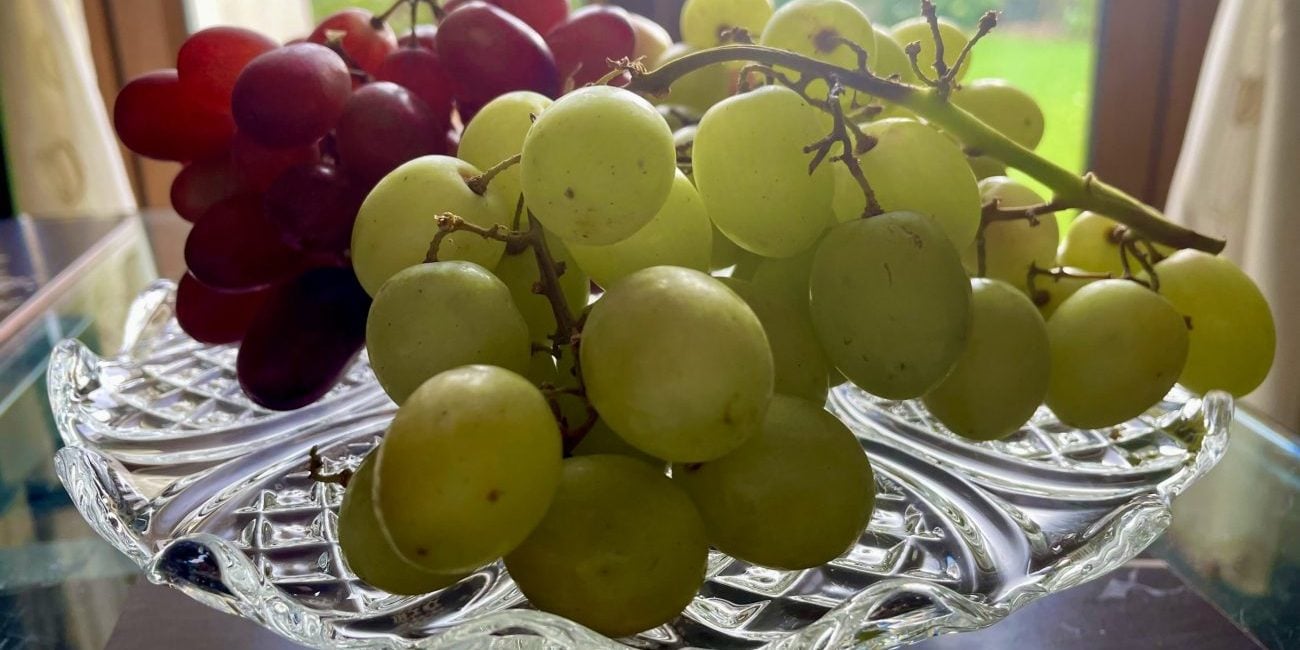
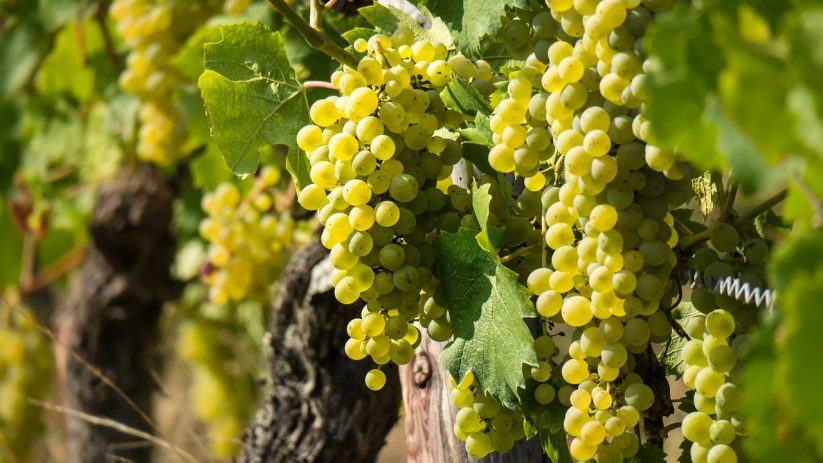
These lucky grapes (usually white grapes rather than red) must be eaten as the clock strikes midnight, with one grape to be consumed with each strike of the clock. Sounds tricky? Well, getting a lucky edge on the New Year isn’t supposed to be too easy!
If you manage to eat all 12 grapes in time, legend has it that the grapes will bring you luck for the New Year. And if don’t manage to finish them, at least you played a fun game!
I can see this getting out of hand in some competitive households though. Pro tip: choose the smaller grapes to give you an advantage!
Where Do Spaniards Eat the 12 Grapes?
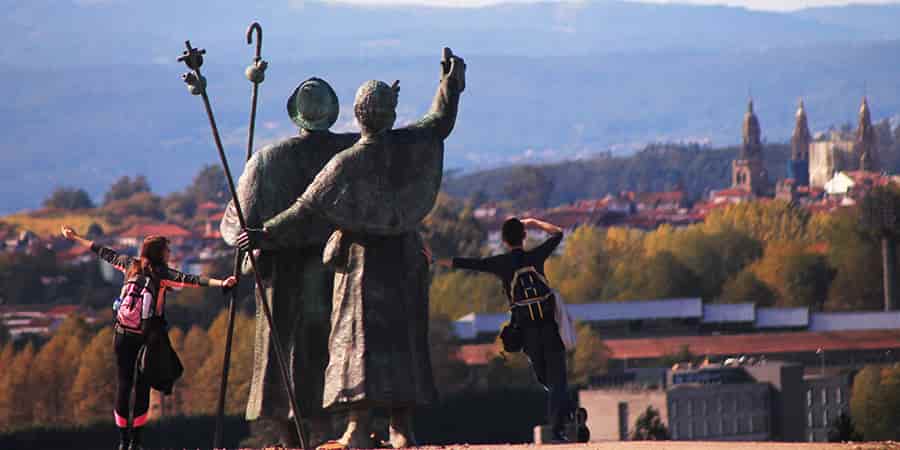
Across Spain, the way people eat the 12 grapes is almost as much fun as the tradition itself. In cities, crowds traditionally gather outside in the main square to see in the New Year together, grapes in hand and ready for the countdown. The most famous spot of all is the Puerta del Sol in Madrid, where thousands pack the square beneath the iconic clock, whose chimes set the rhythm for the whole country. In Santiago de Compostela, locals and pilgrims gather at the Praza do Obradoiro, right in front of the cathedral — a magical place to welcome the New Year at the end of the Camino.
For most families, though, New Year’s Eve is a cosy affair at home. Friends and relatives gather in front of the TV to watch ‘las Uvas’ (‘the grapes’) broadcast live: the Spanish national channels show the countdown from Madrid’s Puerta del Sol, while Galician TV broadcasts from the Praza do Obradoiro in Santiago. Everyone counts down together, popping a grape with each of the twelve chimes — amid plenty of laughter (and the odd grape that doesn’t quite make it in time!).
Once the last grape is down and the New Year has been toasted, usually with a glass of cava, the celebrations really begin. Many people head out to parties or gather with friends to dance and socialise into the early hours — because in Spain, New Year’s Eve is only just getting started at midnight.
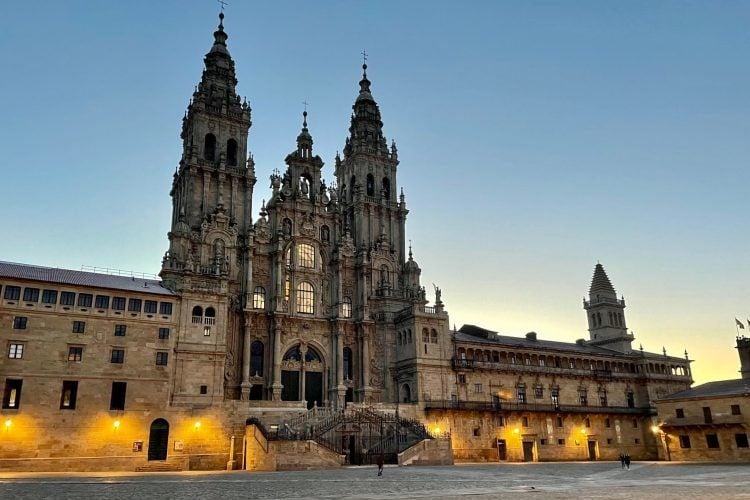
But mostly, friends and families gather in front of the TV to watch the ‘Uvas’ (‘the grapes’) being broadcast live from the city, usually from Madrid for the Spanish TV channels and Praza do Obradoiro in Santiago de Compostela for Galician TV. After the grapes are all digested, people tend to hit the down for a bit of dancing and socialising.
So, where did this particular New Year’s Eve tradition even come from?
So, where did this particular New Year’s Eve tradition even come from? Like many good customs, its origins are a mix of history and clever marketing. The most widely told story dates back to the early 1900s, when growers in the Alicante region were faced with a bumper harvest of white grapes and needed a creative way to sell the surplus. Their solution was brilliantly simple: promote the idea of eating twelve grapes at midnight to welcome the New Year — and the custom quickly caught on across the country.
There are hints, though, that the tradition may go back a little further. Some accounts suggest that in the late 1800s, well-to-do families in Madrid had adopted the French custom of seeing in the New Year with grapes and champagne, and that ordinary Madrileños playfully took up the grapes as a way of poking fun at the bourgeoisie. Whichever version you believe, it was that clever Alicante campaign of the early 20th century that turned the twelve grapes into the beloved nationwide ritual it is today.
More than a century later, the tradition is stronger than ever — a small, joyful gesture that unites families and friends all over Spain (and now well beyond it) in the very first moments of the New Year. Not bad for what began as a way to shift a surplus of grapes!
If you would like to learn more about the Way of St. James, the Camino routes and some Camino rituals, you can visit our blog or feel free to contact us. You can also stay up-to-date with the latest news on our Facebook page.
Buen Camino and a Happy New Year!