St Jean Pied de Port to Pamplona: the first days of the Camino Francés
The opening section of the Camino Francés runs from St Jean Pied de Port in France over the Pyrenees to Pamplona, around 67km in three or four walking days. It contains the hardest climb of the entire route on day one, and it is where most pilgrims setting out from France find their legs.
The stages
| Stage | Distance |
|---|---|
| Day 1 · St Jean Pied de Port → Roncesvalles | ~25km |
| Day 2 · Roncesvalles → Zubiri | ~22km |
| Day 3 · Zubiri → Pamplona | ~21km |
| Total | ~68km |
Many walkers split the first day at Orisson, about 8km up from St Jean, turning the Pyrenees crossing into two gentler halves. It’s the single most useful decision you can make on this section. See the whole route on our Camino Francés map.
Starting in St Jean Pied de Port
A small, walled Basque town on the French side of the Pyrenees, and after Sarria the most popular place to begin the Camino Francés. Of the roughly 500,000 pilgrims who reached Santiago in 2025, a significant share set out from here.
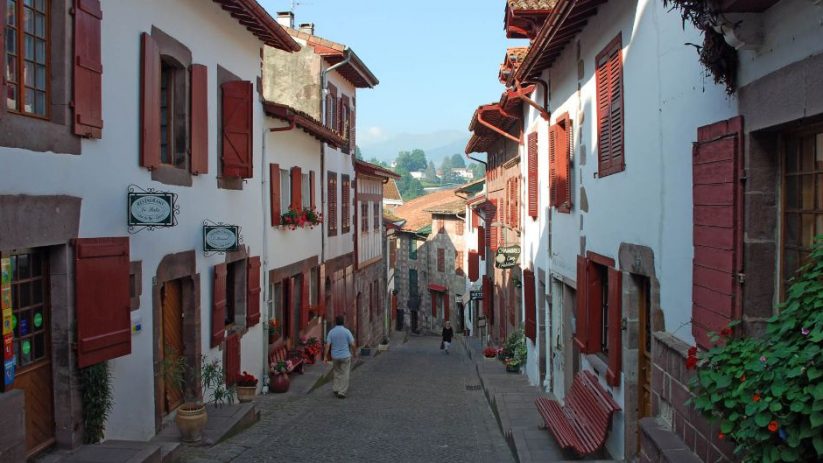
The village is small but anything but quiet. The atmosphere on a spring morning is unlike anywhere else on the route — packs being weighed on the Rue de la Citadelle, boots being laced, people who have flown across the world standing in the same narrow street. There is more on the town in our guide to St Jean Pied de Port.
Crossing the Pyrenees
There are two ways over, and the choice matters more than any other decision on this section.
The Route Napoléon climbs high and open across the mountain, with the views that end up in everyone’s photographs. The Valcarlos route follows the valley instead — lower, more sheltered, and the sensible choice in poor weather or snow, when the high route is often closed outright.
Either way, this is the hardest day on the Camino Francés, and it arrives before your legs have adjusted to walking. That is precisely why so many pilgrims break it at Orisson.
Roncesvalles
You come down out of the mountains into Spain at Roncesvalles, a collegiate monastery that has been receiving pilgrims since the twelfth century. There is little else here — essentially the monastery, its albergue and a great deal of silence — and after a day on the mountain that is rather the point.
Arriving in Pamplona
The first proper city of the Camino, and the end of this section. Pamplona is best known for San Fermín and the running of the bulls each July, but there is plenty to see all year round — the cathedral, the old walls, and some of the best pintxos bars in northern Spain.
For pilgrims it marks a shift: the Camino stops being a mountain crossing and starts being a walk through Spain. From here the route heads on into La Rioja and towards Burgos.
Watch our team walk it
We don’t just sell these routes — we walk them. Juanma, Rodrigo, Inesa and Sophie from the CaminoWays team set out from St Jean Pied de Port and filmed the whole thing: the climb over the Pyrenees, the descent into Roncesvalles, and a fair amount of Camino culture along the way.
It’s the same stage described above, seen from the trail rather than the map. If you’re wondering what the first days actually feel like — the weather, the gradient, the faces at the end of day one — this is the honest version.
Walking this section
- The full Camino Francés from St Jean to Santiago — the complete route, beginning exactly here and crossing the Pyrenees on day one
- The Camino Francés from St Jean Pied de Port — shorter itineraries from the traditional starting point
- The Camino Francés from Pamplona — the same route without the mountain crossing
- The easy Camino Francés — shorter daily distances throughout
All itineraries include accommodation booked ahead, luggage transfer between stages and support on the road.
Still deciding? Read how difficult the Camino Francés really is, how far it is from St Jean to Santiago, or compare the best starting points.

FAQ
Three days, or four if you break the Pyrenees crossing at Orisson. Around 68km in total.
It is the hardest day on the whole Camino Francés — a sustained climb from St Jean up to the pass and then a steep descent into Roncesvalles. It also comes before your legs have adjusted, which is why so many walkers split it.
If you can. Orisson sits about 8km up from St Jean and turns one punishing day into two manageable halves. It is small and books up months ahead, so decide early.
The Route Napoléon climbs high and open, with the best views on the section. Valcarlos follows the valley — lower, more sheltered and the safer option in poor weather.
Yes. The high Route Napoléon is normally closed through the winter months because of snow risk, and walkers are directed to the Valcarlos route instead. Check locally before setting out.
Yes. The Camino Francés from Pamplona begins after the mountains, which is a common choice for walkers short on time or wary of the climb.