
Richard walked the Via Francigena in Tuscany from San Miniato to Siena and came back with the kind of detail that only comes from actually doing it. Not the postcard version — the practical one. How to get there, how the trail is marked, what each stage feels like underfoot, and what to eat when you get in each evening.
If you want to know what it feels like to walk this route rather than what it looks like on paper, read Juanma’s personal account: The Via Francigena in Tuscany — A Walk for the Senses. This guide covers everything else.
Table of contents
Getting There: Flying into Pisa
The most convenient airport for the San Miniato to Siena section is Pisa — well connected from most of Europe and a straightforward starting point.
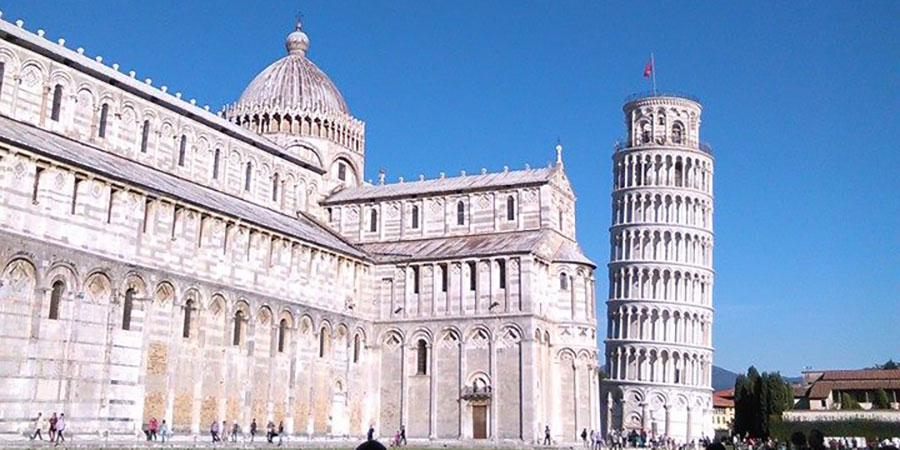
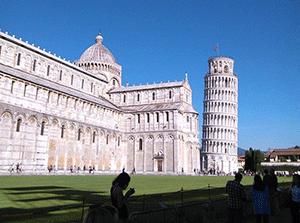
From Pisa airport, a shuttle bus runs directly to Pisa Centrale train station. If you arrive early and your bag is going on ahead by luggage transfer, the station has a bag drop (around €8 per day) — useful for leaving your pack while you explore the city before your train. From the station, it’s a ten-minute walk to the River Arno and the bridges over it, and another ten minutes north to the Leaning Tower. Worth the detour if you have a few hours.
From Pisa Centrale, direct trains run to both Lucca and San Miniato. The journey to San Miniato takes around 40 minutes.
Arriving in San Miniato
San Miniato is one of those towns that rewards a second look. On first arrival the lower town feels unremarkable — a small suburban centre like many others. But call your hotel and they’ll send someone to collect you and take you up to the old town on the hill, and the whole picture changes. Up here, the views of the Tuscan countryside open out in every direction, the streets narrow and wind between medieval buildings, and the restaurants are the authentic kind, not the tourist kind.
This is where the Via Francigena in Tuscany really begins to announce itself. Take an evening to walk the old town before your first stage — you’ll leave in a better mood for it.
Trail Marking: Hard to Get Lost
One of the first things you notice on this section is how well the route is marked. Red and white trail markers appear regularly, accompanied by arrow signs with Via Francigena clearly written on them. From the old town of San Miniato, the route heads straight through before running parallel to the main road for approximately 2km. At this point the paths diverge slightly depending on whether you’re doing the standard Lucca to Siena walk or the Easy Via Francigena from San Miniato — both are well signed.
In general, losing your way on this section requires genuine determination. The marking is consistent enough that you can walk without a map for long stretches, though having one available is always sensible in the smaller villages.
Stage by Stage: What to Expect
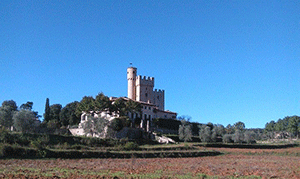
- San Miniato to Gambassi Terme The first stage sets the tone for everything that follows. You leave the old town and almost immediately the Tuscan countryside takes over — rolling hills, farmland tracks, occasional woodland, and the first long views across the Val d’Elsa. The walk ends with an elevated approach into Gambassi Terme, a thermal town that is fairly modest in itself but a perfectly comfortable place to stop for the night. The scenery along the way more than compensates for any plainness at the finish.
- Gambassi Terme to San Gimignano This is the day that tends to appear in everyone’s photographs. Leaving Gambassi, the route passes through a long tunnel of leafy trees before emerging onto the open hillside — and then, gradually, the medieval towers of San Gimignano begin to appear on the horizon. First one, then two, then more with every step. The approach is one of the most satisfying arrivals on the entire Via Francigena.
- San Gimignano itself is popular with tourists — its UNESCO status and extraordinary skyline see to that — but it earns every visitor. The Collegiate Church and the Church of Sant’Agostino both contain frescoes worth stopping for. Local wine from the town’s own Vernaccia vineyards, or from the nearby Chianti region, is available in almost every shop and bar. If you’re doing the Easy Walk, this is where you stop for the night. If you’re on the full route, you push on to Colle di Val d’Elsa.
- San Gimignano to Colle di Val d’Elsa (full route) A shorter stage, but one with genuine character. Colle di Val d’Elsa sits perched on a hilltop above its lower modern town — quiet, steep-streeted, and surprisingly good for dinner. It’s a place that rewards wandering rather than sightseeing.
- Colle di Val d’Elsa to Monteriggioni The walking here is predominantly off-road — gravel tracks through oak woods, chestnut forests, olive groves and vineyards. Classic Tuscan landscape in the most complete sense. The destination, Monteriggioni, is one of the most photogenic stops on the entire route: a near-perfectly preserved circular walled village that appears suddenly on a low hill across open fields. It looks exactly as it did in the Middle Ages, and arriving on foot makes the entrance through the old gate feel genuinely medieval.
- Monteriggioni to Siena The final stage. You leave Monteriggioni, pass through the village of Funghaia, and then it’s mostly farmland and gentle hills all the way to Siena. The city appears on the horizon with some time to go — which is both motivating and slightly maddening, as the last stretch into the centro storico is longer than it looks. When you reach the road sign reading SIENA, stop for the photograph. You’ve earned it.
Food: What to Expect on the Trail
The food along this section is one of its genuine pleasures, and worth planning around rather than leaving to chance.
Breakfast at your guesthouse or hotel will typically be generous by Italian standards — coffee, pastries, bread, local cured meats and cheeses. Eat well before you start: the morning stages cover most of the day’s distance.
Lunch on the trail is the one thing to plan in advance. Between villages there are almost no cafés or bars, so carrying food with you is essential. Pick up bread, cheese, and something local the evening before or first thing in the morning — most village alimentari open early. The resting areas along the route make for good picnic spots.
Dinner is where the route really delivers. The towns along this section — Gambassi, San Gimignano, Colle di Val d’Elsa, Siena — all have excellent restaurants at a range of prices. Pasta, local wine, cured meats, and seasonal vegetables dominate the menus. In autumn, truffle dishes begin to appear from San Miniato onwards — the white truffle season in this area is October and November, and even a modest restaurant will have something worth ordering.
Practical Tips
Luggage transfers are available throughout this section and strongly recommended if you prefer to walk light. CaminoWays luggage transfers move your bag between accommodations daily so you carry only a daypack. Most walkers find this transforms the experience, particularly on longer stages.
Accommodation along the route ranges from small family-run guesthouses and agriturismos to modest hotels. Booking in advance is recommended for spring and autumn, when the route is busiest. Siena in particular fills up quickly — add an extra night if you want time to explore the city properly at the end.
Footwear matters more than most things. The trail surface varies — gravel tracks, cobbled town streets, some tarmac, occasional mud in wet weather. Broken-in walking shoes or light hiking boots are the right call. Don’t attempt this in new footwear.
Water is available in the towns but not always between them. Carry at least a litre and refill at village fountains — most are drinkable and clearly marked.
Mobile signal is generally good across the Tuscan section, though it drops occasionally in more rural stretches between villages.
When to Walk
Spring (April–June) and autumn (September–October) are the best months for this section. Temperatures are comfortable for walking, the landscape is at its most vivid, and autumn adds the bonus of harvest season — the grape and truffle seasons in particular make the food along the route exceptional. July and August are walkable but hot — temperatures regularly exceed 30°C on exposed stretches. For full detail on timing across all sections of the route, see our best time to walk the Via Francigena guide.
Ready to Book?
For itineraries, pricing, and everything included on the Via Francigena in Tuscany, visit our San Miniato to Siena and Lucca to Siena pages, or use our Camino Planner to build your own itinerary. Our travel specialists are also available to help, get in touch with any questions.
And if you’d like to know what the walk really feels like before you commit — the smells, the sounds, the thunderstorm into Siena — read Juanma’s personal account: The Via Francigena in Tuscany — A Walk for the Senses.
