Camino Preparation Tip #2: T-Rex Syndrome
Planning to walk the Camino de Santiago? Tip #2 of the Camino Preparation Programme by Peter from D-Pete Health & Fitness Clinic in Dublin tackles one of the most common training mistakes pilgrims make: T-Rex Syndrome.
Most people preparing for the Camino focus almost entirely on their legs — but strong legs alone are not enough. Your core, hips, and upper back play a critical role in keeping you injury-free over long daily walking distances. Whether you are just starting out or already following our Camino Fitness Plan, this is one tip that could make a significant difference to how you feel on the trail.
NOTE: It is very common to have a weak stomach, hips, and/or lower back.
Risk factors include:
- Prolonged sitting (desk-based job, driving)
- Lack of exercise
- Poor posture (sitting, standing, performing repetitive movements)
Some Guidance:
- Get assessed
- What are the areas that need to be strengthened?
- Find out what fitness program will be best suited to you.
- Look at Core Strength training exercises
- Upper body exercise
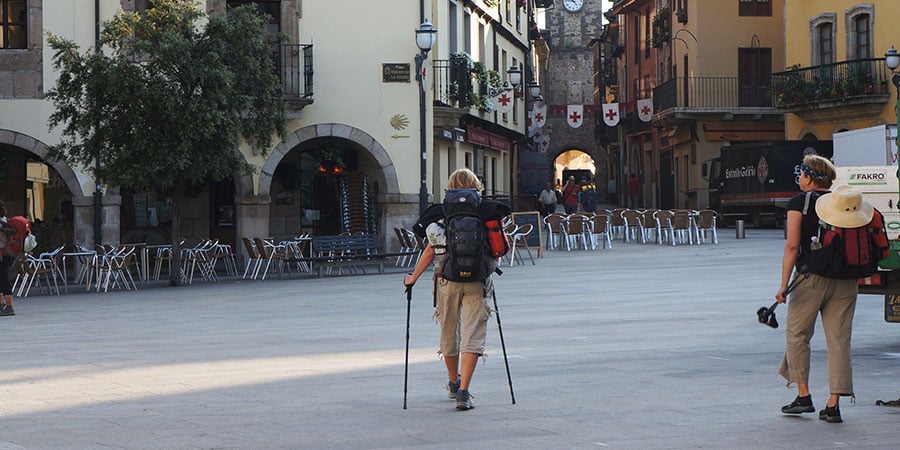
Your Camino will consist of long walks. You will have your backpack and your walking poles so making sure you have good upper body strength will go a very long way on the Camino.
Be prepared to enjoy your Camino!
Continue reading our preparation and fitness plan by D-Pete:
- How to prevent chafing, Camino Preparation Tip #3
- Motivation, Camino Preparation Tip #4
- Heel Pain, Camino Preparation Tip #5
- Shin Splints, Camino Preparation Tip #6
- Camino Fitness Plan – 6-month Preparation Programme
- Know yourself, Camino Preparation Tip #1
Let us know if you have any questions about being ready for your upcoming trip by filling out the form below:

FAQ
T-Rex Syndrome is the tendency to focus all training on the legs while neglecting the upper body and core. On the Camino, this is one of the most common mistakes pilgrims make — strong legs alone are not enough if your hips and back cannot support the load of a full day’s walking with a backpack.
Your core — including your stomach, hips, and lower back — acts as the central hub for distributing the weight of your upper body into your legs. A weak core means your knees and ankles absorb far more stress than they should, increasing the risk of injury over long walking days. Our guide on am I fit enough to walk the Camino can help you assess your overall readiness before you begin training.
Common signs include lower back pain after prolonged sitting or walking, poor posture, and discomfort when climbing stairs. The best way to find out is to get a professional assessment before you start training. Starting your preparation early — ideally following a structured six-month Camino Fitness Plan — gives you enough time to address any weaknesses before they become problems on the trail.
Core strength training is the best starting point — planks, bridges, and hip strengthening exercises are particularly effective. Upper body work such as rows and shoulder exercises will also help you carry your pack more comfortably throughout the day. Remember that your walking poles will also engage your upper body, so building strength there is just as important as training your legs.
People with desk-based jobs, those who drive long distances regularly, or anyone who has been relatively inactive are most likely to have weak core and hip muscles. The good news is that with the right training programme, these areas can be strengthened effectively before your Camino. It is also worth considering your emotional and mental preparation for the Camino alongside your physical training — arriving in the right headspace makes a real difference when the body is being tested.