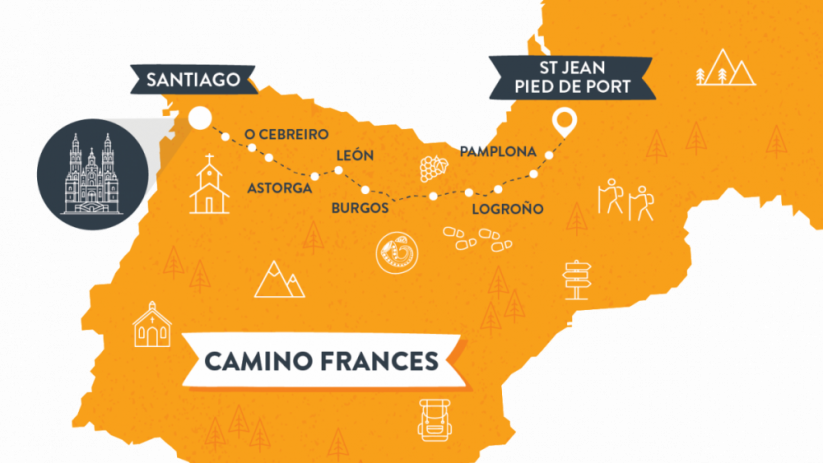
This Camino Frances Map is a handy visual representation of the most famous route on the Camino de Santiago.
The Camino Frances or French Way is well known for many films, books, and documentaries.
The French Way or Camino Francés is the most famous and popular of the Camino de Santiago routes, attracting nearly 70% of all Camino pilgrims.
Starting in St Jean Pied de Port, at the foot of the Pyrenees, the Camino Frances makes its way across Northern Spain taking pilgrims all the way to Santiago de Compostela, in Galicia, and its spectacular cathedral.
The vineyards of La Rioja, Burgos Cathedral, Ponferrada Castle, and the mountains of O Cebreiro are some of the most magnificent sights along this epic 800 km Camino route.
Camino Frances Map
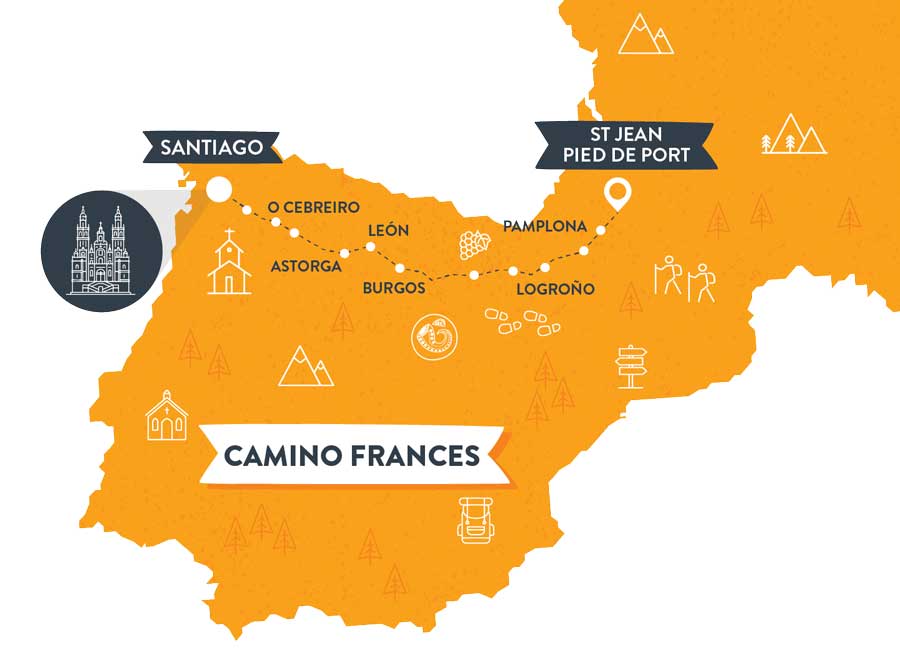
It should take just over a month to complete the Full Camino Frances route on foot but you can also choose to start at different points along the way.
The most popular starting points on the Camino Frances are: Sarria, St Jean Pied de Port, Leon, O Cebreiro and Ponferrada. You can also cycle the Camino Francés in 15 days.
Highlights on the Camino Frances Map
The Camino Frances Map highlights some of the key stages on the full route. Here are some of the highlights you can see:
Pyrenees
After you leave St Jean Pied de Port you will walk across the Pyrenees Mountains. This is the most challenging section of the Camino Frances but also one of the most beautiful. The views are worth the effort of the climbs.
Pamplona
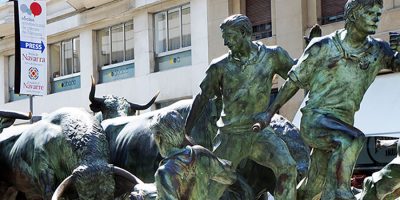
Most people will know Pamploma from the famous San Fermin festival which includes the ‘running from the bulls’. The city itself is well worth a visit even outside of festival time with colourful streets, friendly locals and delicious pinxtos.
Rioja Region
This is one for the wine lovers out there. Around Logrono you will find the Rioja Region where you will be surrounded by vineyards.
Burgos
Burgos is home to one of the most magnificent Cathedrals in Spain. This is a great warm up for a trip to Santiago!
Leon
Leon is another town with a gorgeous cathedral, famed for its Gothic architecture and magnificent stained-glass windows. Enjoy dinner in the old town followed by a glass of local wine or beer.
O Cebreiro
This spot is unique due to its circular granite homes with thatched roofs. You will be nearing the end of your Camino at this point and you are reminded of all of the footsteps that will have passed this town throughout history.
Santiago de Compostela
This is the last stop on the Camino Frances. Marvel at the atmosphere in front of the famous cathedral and spend some time exploring the walled streets of the old town. Santiago is one of the prettiest cities in Europe!
Check out our Downloadable Camino De Santiago Map for our other Camino routes.
For more information about the Camino Frances, other Camino de Santiago routes or to book your Camino trip, contact our travel specialists

FAQs: Camino Francés Map and Route
The full Camino Francés is approximately 780 km from Saint-Jean-Pied-de-Port (France) to Santiago de Compostela (Spain). It typically takes 30-35 days to walk, depending on your pace, daily distances and rest days. Pilgrims with limited time can walk shorter sections starting from Pamplona, Logroño, Burgos, León, Astorga, Ponferrada, O Cebreiro or Sarria.
The Camino Francés starts in Saint-Jean-Pied-de-Port, a town in the French Pyrenees near the Spanish border, and ends at the Cathedral of Santiago de Compostela in Galicia, northwestern Spain. The route crosses four Spanish regions: Navarra, La Rioja, Castilla y León and Galicia.
The Camino Francés is traditionally divided into 31-33 stages averaging 20-25 km per day, depending on the guidebook. CaminoWays itineraries can be customised — you can shorten or extend stages, add rest days in larger towns, or combine stages depending on your fitness and available time.
Sarria is by far the most popular starting point on the Camino Francés. Just over 100 km from Santiago, it’s the minimum distance required to qualify for the Compostela certificate. Walking from Sarria to Santiago takes 5-7 days and is the most accessible Camino experience for first-time pilgrims.
The highest point on the Camino Francés is the Col de Lepoeder at 1,430 metres, on the first stage crossing the Pyrenees from Saint-Jean-Pied-de-Port to Roncesvalles. Other notable high points include Cruz de Ferro (1,505 m) — although technically slightly higher, this is on a more gradual ascent — and O Cebreiro (1,300 m) at the entrance to Galicia.
The Camino Francés passes through several major cities: Pamplona (San Fermín festival), Logroño (capital of La Rioja wine region), Burgos (UNESCO Cathedral), León (Gothic Cathedral with stained glass windows), Astorga (Roman heritage and Gaudí’s Episcopal Palace) and Ponferrada (Templar Castle). Each city makes a great rest stop with rich history, food and accommodation.
The last 100 km from Sarria to Santiago de Compostela typically takes 5-7 days. The total distance is around 111 km over manageable terrain through rural Galicia. Stages typically end in Portomarín, Palas de Rei, Melide, Arzúa, O Pedrouzo and Santiago.
Yes. Cycling the Camino Francés typically takes 12-15 days depending on your fitness and route. Cyclists need to cover at least 200 km (rather than 100 km for walkers) to qualify for the Compostela. CaminoWays cycling packages on the Camino Francés from Ponferrada, including bike rental, daily luggage transfers and accommodation.
The best months are May, June, September and October, offering mild weather and manageable crowds. April can be wet but beautiful with spring blooms. July and August are the hottest and busiest. Winter (November-March) is challenging on the Pyrenees and high mountain sections, but the last 100 km from Sarria is walkable year-round.