
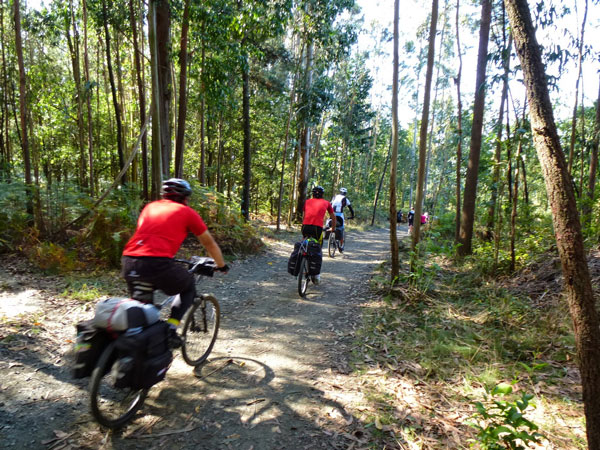
Cycling or walking the Camino? That is a question we get asked quite a lot! This article helps you decide whether walking or cycling the Camino is the right choice for you.
To give you an idea, in 2019 approximately 6% of all ‘Compostela’ certificates are issued to bike-pilgrims or ‘bicigrinos’; while most other pilgrims choose to make their way to Santiago the traditional way: on foot.
A small percentage will choose other means, such as horseback.
If you are considering cycling the Camino de Santiago instead of walking, bear in mind we generally recommend cycling only if you cycle regularly and if you are familiar with basic bike maintenance.
While other pilgrims are generally very helpful, it is good to have some knowledge about how to fix your bike on the road, if necessary.
Making the decision: cycling or walking the Camino?
Some people assume that cycling the Camino is automatically easier than walking. In reality, this is only true if you already have some cycling experience. Understanding how cycling the Camino works can help set realistic expectations before choosing this option.
Most Camino cycling itineraries cover roughly double the daily distance of walking itineraries. On average, cyclists cover between 45 and 70 km per day, while walkers usually walk 15 to 25 km per day. This means that while cycling allows you to cover more ground in less time, it can also be more physically intense.
That said, it’s also possible to follow a walking itinerary by bike, covering shorter daily distances. This can slow the pace and make the experience more relaxed. It’s a particularly popular option for families walking or cycling the Camino, as the stages are more manageable and enjoyable for both children and adults.
Ultimately, choosing between cycling or walking comes down to what you feel you’ll enjoy most. Taking the time to consider your fitness level, travel style, and who you’re travelling with will help you decide which experience is right for you.
Walking the Camino: who it’s best for
Another element to keep in mind is the social aspect of the Camino de Santiago, particularly along the Camino Frances.
Walking the Camino is a more sociable experience, so if you are keen to meet new people and interact with pilgrims along the way, walking will be a better option for you.
We also firmly believe in the benefits of “Slow travel” a concept by Penny Watson which we wrote about earlier this year.
While overall we feel that slowing down and walking the Camino is the ultimate Camino experience, we also know that cycling the Camino can be a very enjoyable experience particularly with a group or your family.
Both are great options so choose for yourself!
Cycling the Camino: who it’s best for
Cycling the Camino can be a fantastic choice if you enjoy being on a bike and like covering longer distances each day. It’s especially well suited to travellers who are short on time, travelling with family or friends, or looking for a more flexible daily rhythm.
Some of our most popular cycling routes include the Camino Francés (last 200 km) and the Coastal Camino from Porto.
If you’re curious about how cycling works in practice, you can learn more in our overview of cycling the Camino de Santiago. And if you decide that cycling is right for you, you may also find it useful to read how to prepare for cycling the Camino, which covers practical tips on training, gear, and planning your stages.
For more information about cycling or walking the Camino de Santiago or to book your Camino holiday, contact our travel specialists on the form below:

