
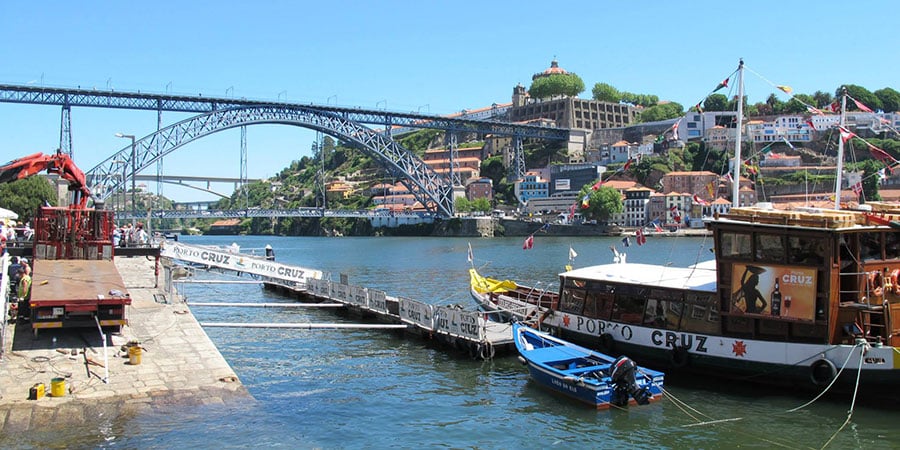
The Camino Portugués from Porto has two starting points, depending on which route you choose. The Camino Portugués Central starts at Porto Cathedral (Sé do Porto) in the historic centre. The Camino Portugués Coastal starts on the seafront at Matosinhos, reached by metro Line A from the city centre to Senhor de Matosinhos station (around 30-40 minutes, €1.40). From either starting point, follow the yellow arrows north towards Santiago de Compostela. CaminoWays clients receive detailed route notes and starting-point maps as part of their travel pack.
Starting Your Camino in Porto: A Step-by-Step Guide
If you are starting your Camino de Santiago walk in Porto, it can sometimes be a little tricky trying to figure out where exactly this Porto Starting Point is located.
To help make things a bit clearer for pilgrims walking the Camino Portugués, I followed the trail to the beginning of the Camino in Porto, utilising Google Maps and yellow arrows and I’m going to take you through the whole process now.
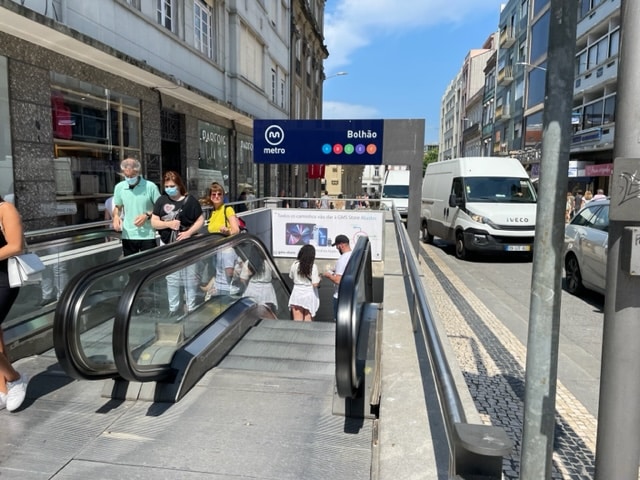
Part 1: Getting on the Right Train
It’s very easy to get to the coastline from the centre of Porto. I travelled from the Bolhão metro station and boarded the train on platform 1. The destination of the train you want is A: Senhor de Matoshinhos.
If you have a contactless debit card, you can pay with that and this also means that you don’t have to queue to get a ticket.
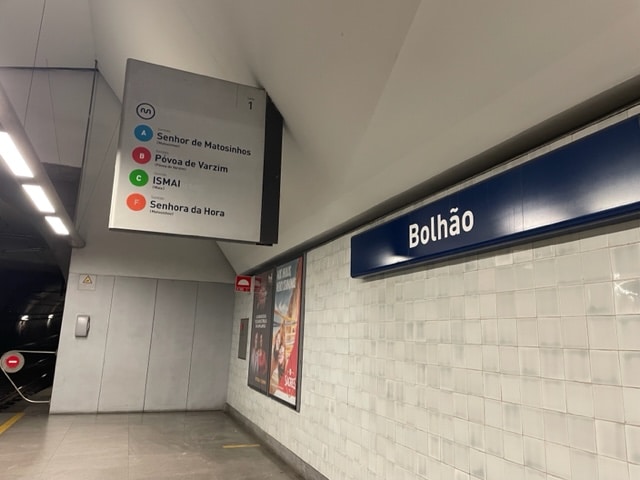
I tested this route on a Saturday morning between 11 and 11.30 am and the train appears to come every 15 minutes. The train departed Bolhão at 11.33 am and arrived at Mercado just after noon at 12.07.
Part 2: Crossing The Bridge
Once you disembark at Mercado, you will see a cafe and a set of stairs. Please note: this staircase is now closed. Instead, keep to the right-hand side of the staircase and walk approximately 50 metres uphill along the street to reach the entrance to the bridge.
There are no Camino markers along this short stretch, so don’t worry if you can’t see a yellow arrow — keep going uphill until you reach the bridge. Once you are on the bridge you are back on the waymarked route.
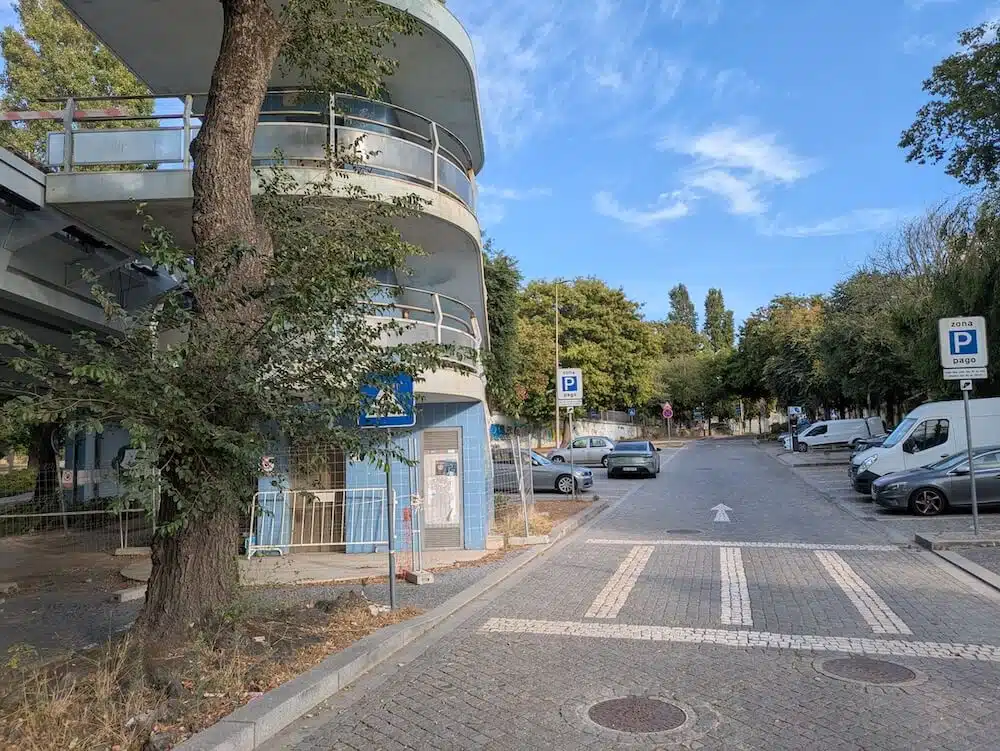
Walk on the bridge as it takes you across the river from Matosinhos to Rua Hintze Ribeiro. You will already be seeing yellow arrows to guide you on your way as you enjoy a lovely sea breeze from the bridge.
Once you cross the bridge, you will immediately see a yellow arrow directing you to the left. This road will take you down to the coast.
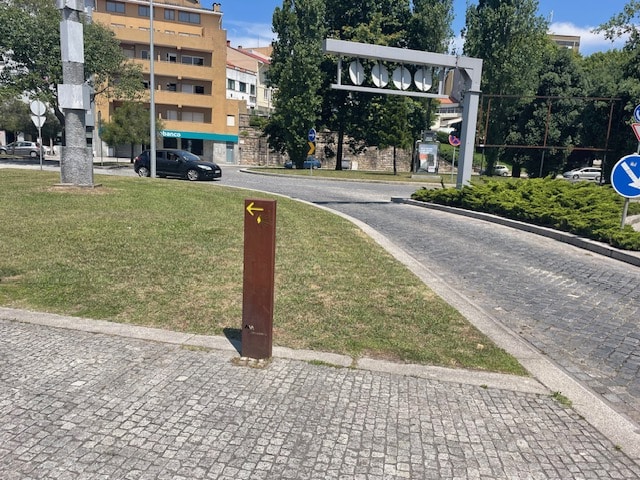
Part 3: Following The Yellow Arrows To The Coast
As you walk to the coastal starting point, you will pass a few cafes on the way. If you walk on the footpath on the left side of the road, you will see the yellow arrows every few hundred metres.
It’s a completely straight road though so it’s unlikely you’d get lost. The street name to look out for is R Hernez Riberiao. Another bonus is that it’s a nice and shaded walk for the most part which is great if you’re walking in the sun.
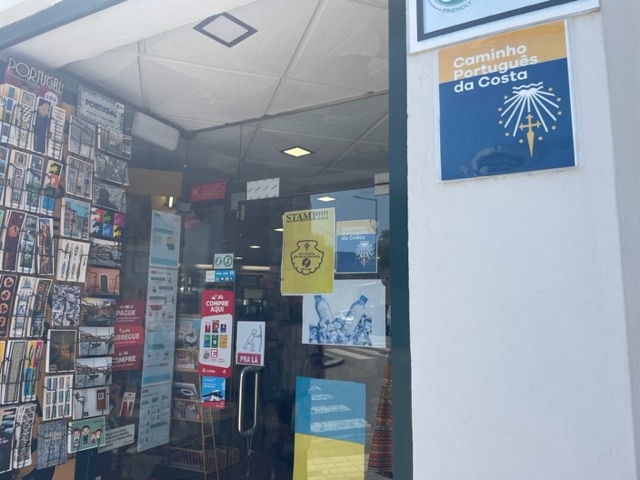
Don’t worry if you don’t come across an arrow for a while, just keep walking straight on this road and you’ll be fine. On this road, you will pass a pharmacy in case you’re in need of more suncream, blister plasters, etc and you will also pass a shop where you can get a stamp for your Pilgrim Passport.
Part 4: Reach The Coast And Begin Your Walk
Soon you’ll notice the road start to gradually slope downwards and you’ll see the sea in the distance (but not far away). You’re almost on the coast and the sea breeze will be most welcome.
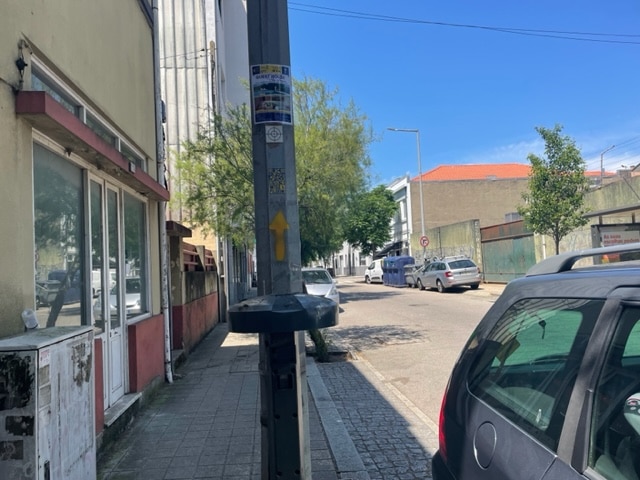
As you walk towards the sea, you will notice a lot of the yellow arrows are on poles over bins on the street so make sure to keep your head up if you’re confused.
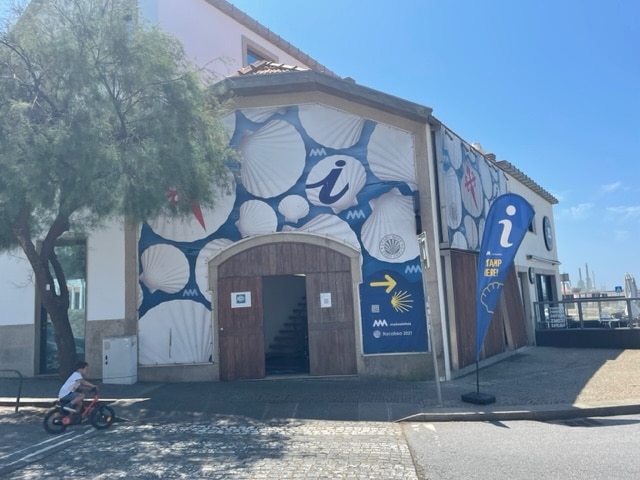
Once you reach the coast, you will be met by a bright blue sea with rich rolling waves and arrows directing you to turn right and walk along the Camino Portugués towards Santiago de Compostela with the sea on your left. There’s also a tourist office located here in case you’re in need of any information.
The Camino From Porto
Starting in colourful UNESCO-listed Porto, the Camino Portugues from Porto to Santiago will take you through charming seaside towns and villages in northern Portugal, along the superb Atlantic coast.
Over at least 12 days, you will stay in small picturesque cities and visit the most charming towns and villages from the coast to the mountains.
From Caminha, you will journey to A Guarda, in Galicia, and the heart of the Rías Baixas, to continue this memorable journey as it veers inland to more countryside landscapes towards Santiago.
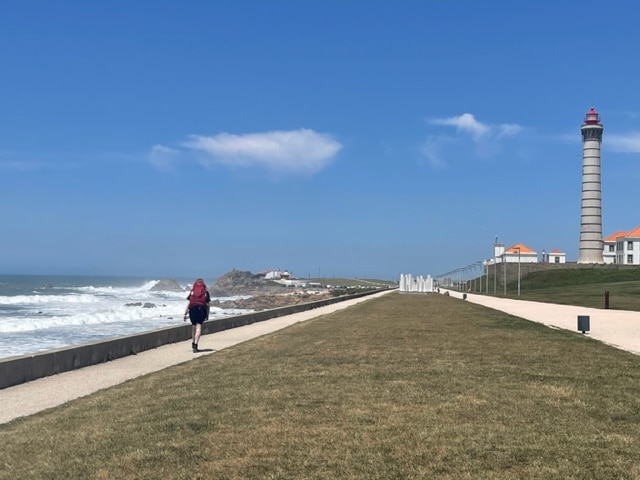
Discover the wild Atlantic beauty and sandy beaches of northern Portugal and southern Galicia, through the Full Camino Portugues Coastal.
For more information about the Camino Portugues or any of the Camino routes or if you would like some help planning your very own Camino experience, please don’t hesitate to contact us.
FAQs: Starting the Camino in Porto
The Camino de Santiago has two starting points in Porto, depending on which route you walk. The Camino Portugués Central starts at Porto Cathedral (Sé do Porto) in the historic centre. The Camino Portugués Coastal starts in Matosinhos, on the Atlantic seafront, reached by metro Line A in about 30 minutes from the city centre.
Take metro Line A (blue line) from any central station such as Bolhão, Trindade or São Bento. Get off at Senhor de Matosinhos (some maps show this as “Mercado”). The journey takes around 30-40 minutes and a single ticket costs around €1.40. From Matosinhos, follow the yellow arrows north along the coast to start your Camino.
The official starting point is on the Atlantic seafront in Matosinhos, reached by walking up the staircase opposite the cafe at Mercado station, crossing the bridge over the river towards Rua Hintze Ribeiro, then following the yellow arrows down to the coast. There’s a tourist office at the seafront where you can also get your first stamp for the Pilgrim Passport.
The Camino Portugués Central traditionally starts at Porto Cathedral (Sé do Porto) in the historic city centre. From the Cathedral plaza, follow the yellow arrows and shell waymarkers north out of the city. The first stage typically ends in Vilarinho or Vairão, around 25 km away.
Both are excellent choices and similar in length:
The Coastal Camino offers Atlantic Ocean views, beaches, fishing villages and a fresh sea breeze — ideal in summer.
The Central Camino runs inland through historic towns (Barcelos, Ponte de Lima, Tui), traditional rural Portugal and wine country — more historic and varied.
Most pilgrims spend at least one night in Porto before starting the Camino — both to rest after travel and to explore the city. Stay in the Ribeira or Cedofeita districts for character and convenience. CaminoWays Camino Portugués packages include the option to add extra nights in Porto before you set off.
Can I walk from Porto Airport directly to the Camino?
You can, but most pilgrims take the metro from the airport (Line E, purple) to the city centre first. The official starting points are in central Porto (Cathedral) or Matosinhos seafront — not at the airport itself.
Yes. Both the Coastal and Central Camino routes from Porto are well marked with yellow arrows and scallop shells. Some sections, especially around the city outskirts, can be slightly tricky — but as long as you keep heading north along the coast (Coastal) or follow the inland yellow arrows (Central), you won’t get lost. CaminoWays clients receive detailed route notes and digital maps.
Yes. CaminoWays offers self-guided, guided and cycling Camino Portugués packages from Porto, including the Coastal Camino (from €1,583), the shorter last 100 km from Vigo (from €708), and the easy walking version with shorter daily stages. Contact a CaminoWays travel specialist for current pricing and dates.

Thank You Sarah – that information in your article is very clear and should greatly help walkers commencing from Porto. However, I have made several camino journeys but never commenced at 11.00am. it would have been good to advise the commencement time of the train each morning. In my experience most walkers were on their way between 5/6/7am at latest, usually a lovely time to get on one’s way for the day! Thanks, Mary
Do you not need to start at the cathedral in the city center?
Thank you for this, but I have to point out that after you cross the bridge from Matosinhos, the street’s name is HINTZE RIBEIRO. I know this because that’s where I was born and went to school.
Thank you.
M
Hi Trina, no it is not necessary to start at the Cathedral
Hi Margarida, thank you for this, I’ve updated the blog now to include Rua Hintze Ribeiro.
Great article about starting the Portuguese Camino from Porto. The Coastal Route in Northern Portugal has enormous potential, especially around Póvoa de Varzim and Estela, combining the Camino with the Atlantic coast. I own a licensed hostel and yoga retreat in Estela and have seen how special this area is for pilgrims and international visitors. We recently created hostelforsaleportugal.com with more information about the property and its location on the Portuguese Coastal Camino. Thanks for sharing such useful information about the route!