
Full Camino Portugues Central (from Lisbon via Tui)

Rate:
Price: From €3,458 per person
  • Activity Walking or Easy Walking or Cycling or Easy Cycling
  • Distance 650 km
  • Duration Up to 29 Nights
  • Difficulty Moderate +
  • Tour Type Self-Guided Caminos
  • Time To Go April to October

Full Camino Portugues Central (from Lisbon via Tui)

The Full Camino Portugués Central from Lisbon to Santiago via Tui is the most traditional way to walk the Portuguese Camino from start to finish. It follows the historic inland pilgrim route used for centuries, linking Portugal’s great cities, farming regions, and river valleys before crossing into Galicia at Tui and continuing to Santiago de Compostela.

Beginning in Lisbon, this Camino is a long, steady journey that gradually unfolds over almost a month. The early stages are quiet and rural, passing through vineyard land, market towns, and small villages where daily life still shapes the rhythm of the trail. This is not a route of dramatic first impressions. Instead, it rewards patience, curiosity, and a love of slow travel.

As you move north, the landscape gently changes. You’ll walk through historic towns such as Santarém and Coimbra, follow ancient Roman roads, and arrive in Porto, where many pilgrims join the Camino. From Porto onwards, the Camino Portugues Central route continues inland through Barcelos and Ponte de Lima, crossing into Spain at Tui via the River Minho.

From Tui, the Camino feels more familiar to many pilgrims, with well-marked paths, historic bridges, and a growing sense of shared purpose as walkers converge on Santiago. You’ll pass through Redondela, Pontevedra, Caldas de Reis, and Padrón, before reaching the cathedral city.

If you are drawn to coastal scenery, you may prefer the Full Camino Portugués Coastal (Lisbon to Santiago via Vigo), which follows the Atlantic after Porto. The Central route, however, remains the classic pilgrim path, shaped by history, agriculture, and inland Portuguese life. It is ideal for walkers who want depth, tradition, and a strong sense of continuity from Lisbon to Santiago.


Map of the Full Camino Portugues Central

Itinerary Of The Full Camino Portugues Central

Lisbon

Stage: Lisbon

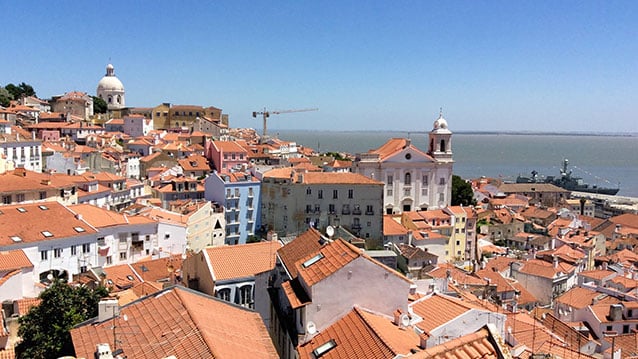
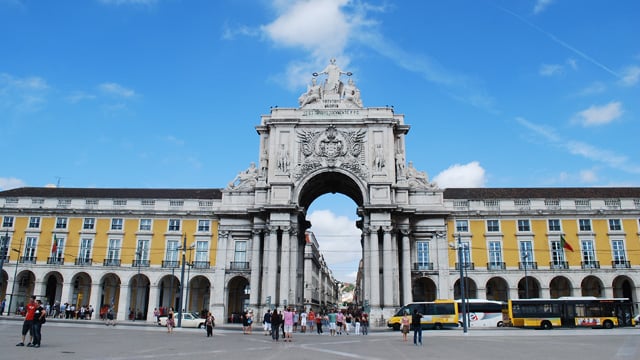
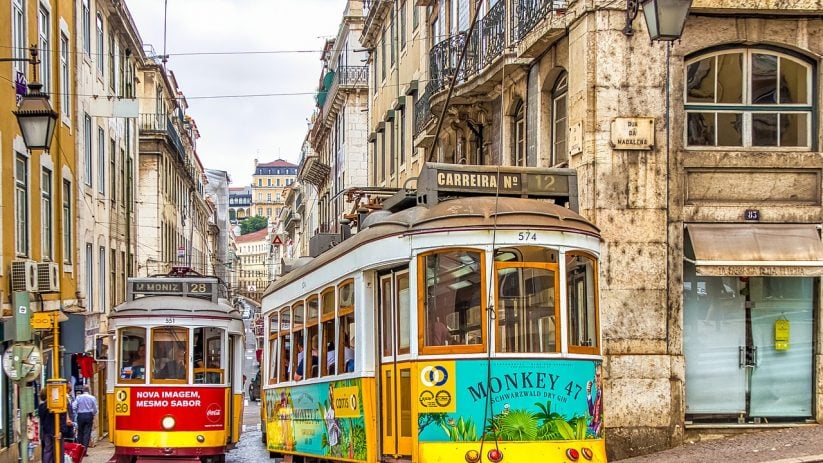
You arrive in Lisbon, Portugal’s historic capital, set where the River Tagus meets the Atlantic. Before starting your Camino, take time to explore its cobbled streets, tiled façades, and hilltop viewpoints. Lisbon sets the tone for the journey ahead, blending maritime history, religious heritage, and everyday Portuguese life.

23 km

Santa Iria de Azoia

Stage: Santa Iria de Azoia

Leaving Lisbon, the Camino follows the River Tagus through parks and open spaces before reaching Santa Iria de Azoia. This gentle first stage allows your body to adjust, with mostly flat terrain and riverside paths. Urban areas slowly fade, replaced by quieter surroundings and a sense of leaving the city behind.

26 km

Vila Franca de Xira

Stage: Vila Franca de Xira

Today’s walk continues alongside the Tagus, passing farmland and wetlands known for birdlife. Vila Franca de Xira has deep agricultural traditions and is closely linked to Portuguese river culture. The stage is straightforward, helping pilgrims settle into the daily rhythm of walking.

19 km

Azambuja

Stage: Azambuja

The Camino heads inland through open plains associated with horse and bull breeding. Azambuja is a traditional Ribatejo town, and the route here feels expansive and calm. Long straight paths make this stage mentally steady rather than physically demanding.

32 km

Santarém

Stage: Santarém

Vineyards, orchards, and crop fields lead you towards Santarém, dramatically set on a hill above the Tagus valley. Known as a former Moorish stronghold, the town rewards effort with wide views and historic churches. It is one of the most memorable inland towns on the Portuguese Camino.

32 km

Golega

Stage: Golega

Walking through quiet country lanes, you pass farms and small hamlets before reaching Golegã. Famous for its equestrian heritage, the town has a relaxed, rural feel. The terrain is mostly flat, making this a long but manageable day.

30 km

Tomar

Stage: Tomar

This stage brings you through rolling countryside and peaceful villages before arriving in Tomar. Once the seat of the Knights Templar in Portugal, Tomar has a strong spiritual presence. Its historic centre and river setting make it a natural place to pause and reflect.

31 km

Alvaiazere

Stage: Alvaiazere

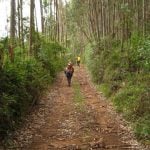
The landscape becomes more rugged as you move through woodland, valleys, and old Roman tracks. This is one of the more physically demanding stages, with steady climbs and descents. The effort is balanced by quiet surroundings and a strong sense of progress northward.

14 km

Ansião

Stage: Ansião

A short but varied stage, beginning with a sharp climb and easing into gentler terrain. Olive groves and farmland surround the trail, and the shorter distance allows time to rest and recover after tougher days.

31 km

Condeixa A Nova

Stage: Condeixa A Nova

You cross historic bridges and shaded paths lined with eucalyptus and pine. This stage feels calm and green, with long forest stretches offering protection from the sun. Condeixa-a-Nova sits close to important Roman ruins, reflecting the deep history beneath the Camino.

19 km

Coimbra

Stage: Coimbra

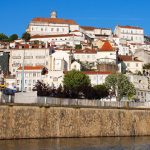
The approach to Coimbra includes rolling countryside and a final climb before entering the city. Once Portugal’s capital, Coimbra is defined by its ancient university and lively atmosphere. It marks a cultural high point on the Central route.

23 km

Mealhada

Stage: Mealhada

Leaving Coimbra, the Camino alternates between rural tracks and small urban areas. Roman road remains appear along the way, and vineyards dominate the landscape. Mealhada is known for local food and wine, making it a pleasant stopping point.

25 km

Águeda

Stage: Águeda
17 km

Albergaria A Velha

Stage: Albergaria A Velha

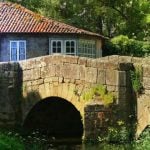
Following the ancient Via Romana XVI, this stage passes through forest and over a Roman bridge. The walking is gentle overall, with history quietly woven into the route.

29 km

São João da Madeira

Stage: São João da Madeira

The Camino moves through woodland and gradually becomes more urban. Rolling hills lead into São João da Madeira, where industry and tradition meet. It is a transitional stage as you approach Porto.

33 km

Porto

Stage: Porto

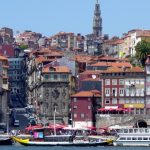
Arriving in Porto is a major milestone. The city’s historic centre, riverfront, and bridges reflect centuries of trade and pilgrimage. Many pilgrims join the Camino here, adding new energy to the route.

23 km

Gião

Stage: Gião

Leaving Porto, the trail quickly becomes quieter. Gião sits in a rural setting, and this stage introduces the more traditional northern Portuguese Camino atmosphere, with stone paths and village life.

12 km

Arcos

Stage: Arcos

This stage passes through small settlements and farmland. The walking is steady, with gentle hills and shaded sections. Arcos feels deeply local, offering insight into everyday life along the route.

20 km

Barcelos

Stage: Barcelos

Known for its famous rooster symbol, Barcelos combines history with a lively town centre. The approach follows riverside paths and country lanes, making it one of the more varied northern stages.

16 km

Balugães

Stage: Balugães

A shorter, calmer stage through rural countryside. Balugães offers a peaceful overnight stop, with traditional architecture and a strong sense of community.

18 km

Ponte de Lima

Stage: Ponte de Lima

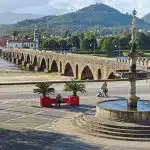
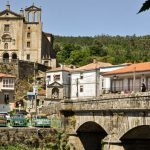
Often considered one of the prettiest towns on the Portuguese Camino, Ponte de Lima is reached via historic paths and river crossings. Its medieval bridge and old town are highlights of the Central route.

18 km

Rubiães

Stage: Rubiães

A challenging but rewarding stage, with one of the toughest climbs in Portugal. Forest trails and mountain paths dominate, creating a strong feeling of transition before reaching Spain.

20 km

Tui

Stage: Tui

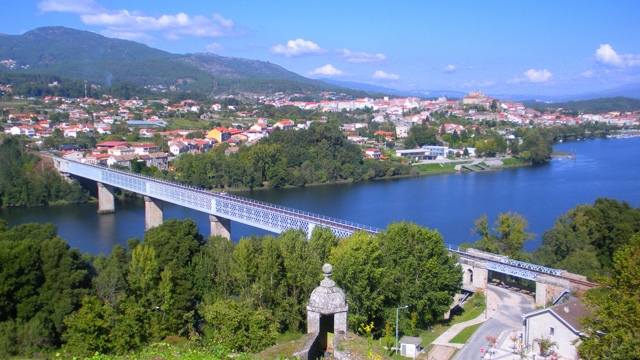
Crossing the River Minho, you enter Spain and arrive in Tui. Its cathedral overlooks the river, marking both a physical and symbolic border crossing on the Camino.

17 km

O Porriño

Stage: O Porriño

Industrial areas mix with forest paths on this stage. Despite its reputation, there are pleasant green sections that ease you further into Galicia.

17 km

Redondela

Stage: Redondela

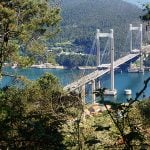
The route climbs and descends through woodland, offering views over the Ría de Vigo. Redondela is known for its viaducts and welcoming pilgrim atmosphere.

20 km

Pontevedra

Stage: Pontevedra

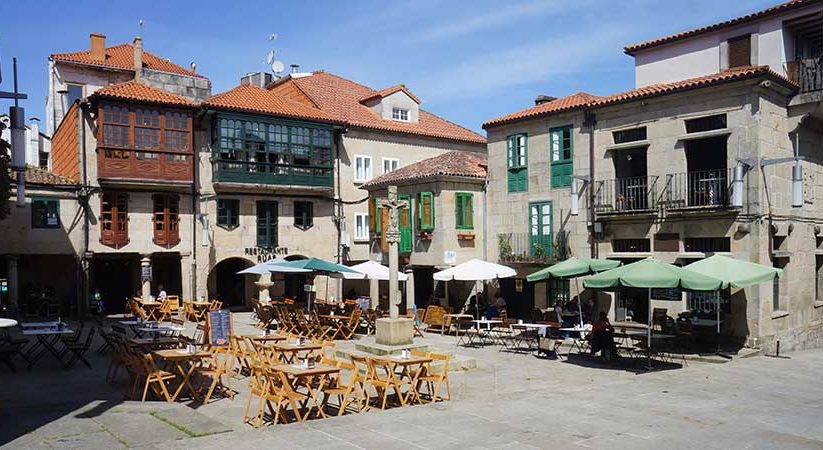
Stone paths, forests, and historic bridges lead into Pontevedra’s beautiful old town. Traffic-free streets and elegant squares make this a favourite stop for many pilgrims.

22 km

Caldas de Reis

Stage: Caldas de Reis

The Camino passes through woodland and small villages, ending in this historic spa town. Thermal waters have been used here since Roman times.

18 km

Padrón

Stage: Padrón

Following rivers and gentle hills, you reach Padrón, traditionally linked to the arrival of Saint James’ remains. It carries deep symbolic meaning on the final approach.

25 km

Santiago de Compostela

Stage: Santiago de Compostela

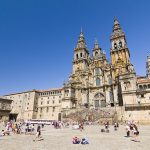
The final stage brings you into Santiago, where narrow streets open onto the cathedral square. Reaching the cathedral marks the end of the Camino and the completion of a journey shaped by time, effort, and quiet moments along the way.

Accommodation

Country Cottages

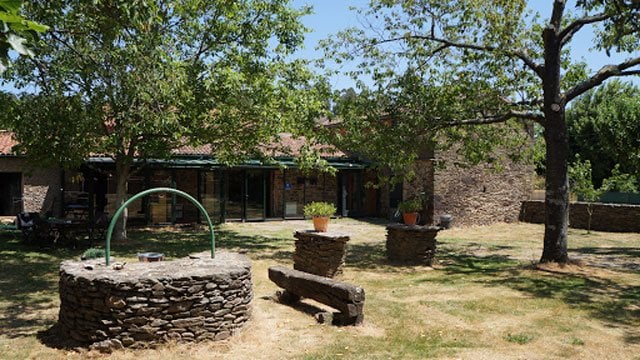
Country Cottages or  'Casas Rurales' are beautifully restored country homes and farmhouses in the heart of peaceful rural communities. Our Country Cottages are renowned for their exceptional food, unique settings and personal touch. Rest assured when you select Country Cottage you will enjoy the full experience of our collection of beautiful Casa Rurales when and where this option is available, however, bear in mind, that sometimes due to location factors, only our choice of standard collection hotels and guesthouses may be available. All rooms are en-suite.

Country Cottages

Standard Hotels

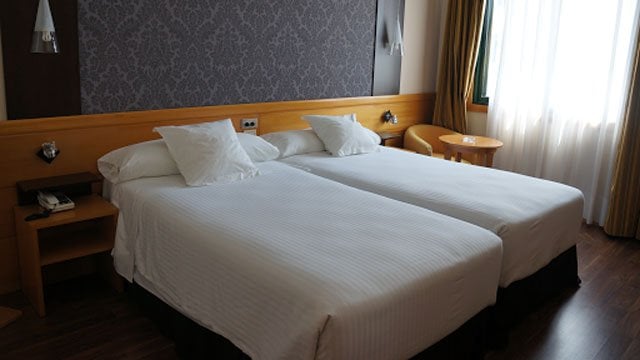
We have hand-picked hotels and guesthouses along the Camino for their character and warm hospitality. Up to 3-stars, you will be staying in the centre of town and close to your Camino trail. All rooms are en-suite with bathroom. For our family packages, we have hand-picked establishments with outdoor space and swimming pools where possible. Where accommodation with private outdoor space is not available, we have selected comfortable hotels with spacious common areas as well as a convenient location close to recreational areas and sights. As your comfort is our priority, we try to book hotels located within walking distance of the Camino. Despite our effort, on rare occasions your accommodation can be located a few kilometers away from the trail, so we organise transportation to/from your accommodation.

Standard Hotel & Guesthouse

Superior Collection

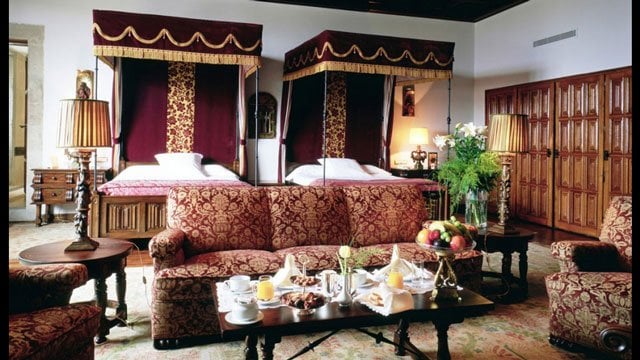
Stay in very special hotels and unique properties along the Camino.  We have selected luxurious 4 and 5-star hotels, boutique guesthouses, relaxing country homes and stunning heritage ‘Parador’ hotels so you can feel pampered. Rest assured when you select Superior Collection, you will enjoy the full experience of our best hotels and top guesthouses when and where this option is available, however, bear in mind, that sometimes due to location factors, only our choice of standard collection hotels and guesthouses may be available. All rooms are en-suite.

Superior Collection

Access

How to Get There

Live information on Rome2Rio. We can also arrange private transfers if you prefer, just ask us.

Lisbon

Lisbon Airport 6km: From Lisbon airport to you can take the metro or bus to the city centre. See www.toandfromtheairport.com for an overview. The bus no. 9 (Aerobus) links the airport with the city centre, see www.golisbon.com

Santarem

Lisbon Airport 70km: There is a train connection from Santarém to Lisbon Oriente station, available regularly (taking approx 35min). There is also a bus connection almost every 2 hours (taking approx. 1h). See www.rede-expressos.pt for bus and www.cp.pt for train connections.From Lisbon Oriente you can get to the airport on the city bus (no. 5). The bus no. 9 (Aerobus) also connects Lisbon city centre with the airport. See www.toandfromtheairport.com

Porto Airport 255km: There is a train between Santarém and Porto-Campanha (main train station) at least every 2 hours (travel time approx. 2h30). See www.cp.pt. There are also some daily buses but the connection quality differ (travel time between 3h15 and 5h30). See www.rede-expressos.pt.
The best way to get from Porto-Campanha or city centre to Porto airport is by metro. The purple line (line E) links them, every 5-9 minutes. See: www.metrodoporto.pt.

Coimbra

Porto Airport 135km: The easiest way to get from Porto airport to Porto-Campanha station and city centre is by metro. The purple line (line E) links them every 5-9 minutes. See: www.metrodoporto.pt.
From Porto-Campanha (main train station) you can take a train to Coimbra-b, there is one nearly every hour (1h travel time approx.). See www.cp.pt. There are also regular buses (1h30 travel time approx.). See www.rede-expressos.pt.

Lisbon Airport 195km: From Lisbon airport to the city centre or Lisbon Oriente station you can either take the city bus (no. 5) or the Aerobus (no. 9). See www.toandfromtheairport.com. From Lisbon Oriente station you can take a train to Coimbra, as there is one nearly every hour (taking 1h30-2h). There is also a bus every hour (taking 2h30). See www.rede-expressos.pt for bus and www.cp.pt for train connections.

Porto

Porto Airport 12km: The easiest way to get to Porto airport from the city is taking the metro (line E), departing every 5-9 minutes. See: www.metrodoporto.pt.

Tui

Vigo Airport 25km: There are 2 daily train connections between Tui and Vigo, with a travel time of approx. 40min. See www.renfe.com. There are also buses connecting Tui and Vigo, see: http://atsahorarios.com/. From Vigo train station (Estación de Ferrocarril), you can take a bus (C9A) to the airport. See www.aena.es

Porto Airport 105km: You can take a train from Tui to Porto-Campanha (main train station) twice a day (travel time approx. 2h15). Valenca do Minho is only across the river from Tui (2km, a short taxi ride) and has regular trains to Porto. See schedule: www.cp.pt The easiest way to get to Porto airport from Porto-Campanha is by metro (purple line line E, every 5-9 minutes). See: www.metrodoporto.pt/en.

Santiago de Compostela Airport 110km: There are 2 daily train connections between Tui and Santiago, one with a change in Vigo Guixar (departing close to noon), the other one with a change in Redondela (departing in the late evening). Both of them take approx. 2h30. See www.renfe.com.
There is a direct bus to Santiago bus station from Tui (4 per day) taking approximately 2 hours. See www.alsa.es for schedule.
From Santiago train station and bus station you can take the shuttle bus to the airport in Santiago, departing every 30min. See Rome2Rio.

Santiago de Compostela

Santiago de Compostela Airport 11km: There is shuttle bus from Santiago city centre to the airport, departing every 30min. Bus stops are: city centre (Plaza de Galicia),  train station (Estación de Ferrocarril) and bus station (Estación de Autobuses). See: Rome2Rio.

Vigo Airport 90km: From Santiago you can take a train to Vigo Guixar (see www.renfe.com) or a bus to Travesia de Vigo (every hour). You should then take a city bus from Travesia de Vigo to Vigo Airport (every 30 min).

A Coruna Airport 70km: From Santiago you can take a train to A Coruña (30 min approximately) and then take a bus from Alfonso Molina (line 4051) to the airport (every 30 min, takes 20 min approximately). Monbus has services from Santiago to A Coruña Airport (every 3 hours), see monbus.es/en for details.

Porto Airport 210km: There is a direct bus connection between Santiago (Estación de Autobuses) and Porto airport once or twice a day (taking 4h or 6h resp.). See www.alsa.es.

Whats Included

  • Included: Selected accommodation with private bathrooms, Holiday Pack on your mobile phone (Route ebook and Google Maps) and a 24/7 support number providing assistance during your trip, for instance organising a support vehicle if needed.
  • Not included: Flights, drinks, city tax, Travel Insurance (Recommended)
  • Optional: Luggage transfers (On by default. One bag up to 20kg per person), dinners (On by default, where available), bike rental (On by default) and airport transfers, etc…

Note on Accommodation: We aim to book you into each of the towns listed on the itinerary, however in case of low availability we may book you 2 nights in the same town with provided transfers. If you are booking Superior collection or Country cottages, please note it is subject to availability and therefore cannot be guaranteed. Superior/Country cottage accommodation may be away from the route with included transfers. More details.


FAQs – Full Camino Portugués Central

Q: How is the Central route different from the Coastal route?
A: The Central route stays inland after Porto and crosses into Spain at Tui, while the Coastal route follows the Atlantic via Vigo.

Q: How long does the Full Camino Portugués Central take?
A: Most pilgrims take around 28–30 days, depending on rest days and stage length.

Q: Is this route suitable for a first Camino?
A: It can be, but it suits walkers with good fitness and time, as it is long and includes several demanding stages.

Q: When is the best time to walk the Central route?
A: April to October offers the best balance of weather and daylight.

Q: Does this route qualify for the Compostela?
A: Yes, starting in Lisbon far exceeds the minimum distance required.

Specialist:Marta Ponte

More byMarta Ponte
Marta Ponte

Specialist:Marta Ponte

Living in Astorga, on the Camino de Santiago 🥾 I’m surrounded by stories every day. I love capturing those moments and sharing the spirit of the Camino through words.

More byMarta Ponte

Join Our Newsletter

Plan your CaminoPlan
Scroll to Top